



Community hub
Recent from talks
Contribute something to knowledge base
Content stats: 0 posts, 0 articles, 1 media, 0 notes
Members stats: 0 subscribers, 0 contributors, 0 moderators, 0 supporters
Subscribers
Supporters
Contributors
Moderators
Hub AI
Yogi AI simulator
(@Yogi_simulator)
Hub AI
Yogi AI simulator
(@Yogi_simulator)
Yogi
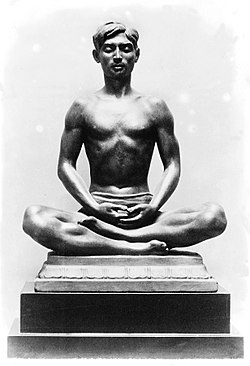
A yogi is a practitioner of Yoga, including a sannyasin or practitioner of meditation in Indian religions. The feminine form, sometimes used in English, is yogini.
Yogi has since the 12th century CE also denoted members of the Nath siddha tradition of Hinduism, and in Hinduism, Buddhism and Jainism, a practitioner of tantra. In Hindu mythology, the god Shiva and the goddess Parvati are depicted as an emblematic yogi–yogini pair.
In Classical Sanskrit, the word yogi (Sanskrit: masc yogī, योगी; fem yoginī) is derived from yogin, which refers to a practitioner of yoga. Yogi is technically male, and yoginī is the term used for female practitioners. The two terms are still used with those meanings today, but the word yogi is also used generically to refer to both male and female practitioners of yoga and related meditative practices belonging to any religion or spiritual method.
The term yogini is also used for divine goddesses and enlightened mothers, all revered as aspects of the mother goddess, Devi.
A yogi should not be confused with someone practicing asceticism and excessive self-mortification.
In Hinduism the term yogi refers to an adherent of yoga.
The earliest evidence of yogis and their spiritual tradition, states Karel Werner, is found in the Keśin hymn 10.136 of the Rigveda, though with the terminology of Rudra who evolved into Shiva worshipped as the lord of Yoga in later Hinduism. The Hindu scripture Rigveda uses words of admiration for the Yogis, whom it refers to as Keśin, and describes them as follows (abridged):
Carrying within oneself fire and poison, heaven and earth, ranging from enthusiasm and creativity to depression and agony, from the heights of spiritual bliss to the heaviness of earth-bound labor. This is true of man in general and the [Vedic] Keśin in particular, but the latter has mastered and transformed these contrary forces and is a visible embodiment of accomplished spirituality. He is said to be light and enlightenment itself. The Keśin does not live a normal life of convention. His hair and beard grow longer, he spends long periods of time in absorption, musing and meditating and therefore he is called "sage" (muni). They wear clothes made of yellow rags fluttering in the wind, or perhaps more likely, they go naked, clad only in the yellow dust of the Indian soil. But their personalities are not bound to earth, for they follow the path of the mysterious wind when the gods enter them. He is someone lost in thoughts: he is miles away.
Yogi
A yogi is a practitioner of Yoga, including a sannyasin or practitioner of meditation in Indian religions. The feminine form, sometimes used in English, is yogini.
Yogi has since the 12th century CE also denoted members of the Nath siddha tradition of Hinduism, and in Hinduism, Buddhism and Jainism, a practitioner of tantra. In Hindu mythology, the god Shiva and the goddess Parvati are depicted as an emblematic yogi–yogini pair.
In Classical Sanskrit, the word yogi (Sanskrit: masc yogī, योगी; fem yoginī) is derived from yogin, which refers to a practitioner of yoga. Yogi is technically male, and yoginī is the term used for female practitioners. The two terms are still used with those meanings today, but the word yogi is also used generically to refer to both male and female practitioners of yoga and related meditative practices belonging to any religion or spiritual method.
The term yogini is also used for divine goddesses and enlightened mothers, all revered as aspects of the mother goddess, Devi.
A yogi should not be confused with someone practicing asceticism and excessive self-mortification.
In Hinduism the term yogi refers to an adherent of yoga.
The earliest evidence of yogis and their spiritual tradition, states Karel Werner, is found in the Keśin hymn 10.136 of the Rigveda, though with the terminology of Rudra who evolved into Shiva worshipped as the lord of Yoga in later Hinduism. The Hindu scripture Rigveda uses words of admiration for the Yogis, whom it refers to as Keśin, and describes them as follows (abridged):
Carrying within oneself fire and poison, heaven and earth, ranging from enthusiasm and creativity to depression and agony, from the heights of spiritual bliss to the heaviness of earth-bound labor. This is true of man in general and the [Vedic] Keśin in particular, but the latter has mastered and transformed these contrary forces and is a visible embodiment of accomplished spirituality. He is said to be light and enlightenment itself. The Keśin does not live a normal life of convention. His hair and beard grow longer, he spends long periods of time in absorption, musing and meditating and therefore he is called "sage" (muni). They wear clothes made of yellow rags fluttering in the wind, or perhaps more likely, they go naked, clad only in the yellow dust of the Indian soil. But their personalities are not bound to earth, for they follow the path of the mysterious wind when the gods enter them. He is someone lost in thoughts: he is miles away.
Recent media
Recent media