
Recent from talks
Yohannes IV
Knowledge base stats:
Talk channels stats:
Members stats:
Yohannes IV
Yohannes IV (Tigrinya: ዮሓንስ ፬ይ Rabaiy Yōḥānnes; horse name Abba Bezbiz also known as Kahśsai; born Lij Kahssai Mercha; 11 July 1837 – 10 March 1889) was Emperor of Ethiopia from 1871 to his death in 1889 at the Battle of Gallabat, and king of Tigray from 1869 to 1871. During his reign he successfully defended Ethiopia against a large-scale Egyptian invasion.
In his earlier years, he rebelled against Tewodros II; having risen to power in the 1860s, he maintained the policy of Tewodros, that of continued unification and also implemented a policy of touring entire regions and meetings with governors. He assisted the British in their British expedition to Abyssinia which ended in Tewodros' suicide, from which Yohannes was rewarded in ammunition and artillery. He regarded Islam as a hindrance to the stability of the state and worked to strengthen Christian dominance in Ethiopia. Its estimated that he had converted 550,000 Oromos and Jebertis to Christianity. In foreign policy, he had disagreements and military conflicts with both Isma'il Pasha of the Khedivate of Egypt and Muhammad Ahmad during the latter's Mahdist War.
On the side of his father, Mercha Wolde Kidan, Yohannes descended from the ruling family of Tembien where both his father and grandfather bore the traditional title of šum Tembien, while his mother, Silas Dimtsu, was a daughter of balgäda Demtsu of Enderta and Tabotu Woldu of Agame, hence a niece of Sabagadis Woldu. He thus descended from the ruling families of Tembien, Agame, and Enderta. Yohannes Solomonic lineage is through his paternal grandmother Woizero Workewoha KaleKristoss of Adwa, the granddaughter of Ras Mikael Sehul and his wife Aster Iyasu, daughter of Empress Mentewab and Melmal Iyasu, who was a Solomonic prince and nephew of Emperor Bakaffa. Therefore yohannes is descended from the Gondrar-Branch of the Solomonic dynasty.
The first half of his life is poorly documented, with the date of his birth given between 1831 and 1837. The available sources indicate that he was the youngest of his siblings, that he had a seriously ailing childhood, that he received some church education, and that he was initiated to manhood after killing some wild animals (lions and/or elephants) for trophies. The first mention of his appearance in the political arena comes up in connection with his visit to the imperial court of Tewodros II in 1864–1865 in the company of his brothers, Gugsa and Maru. Gugsa was given the title of däjazmač, and Maru that of fit’awrari. The lowest title, of balambaras, was bestowed upon Kaśa, who was subsequently assigned to administer a sub-district within the governorship of his elder brother, Gugsa.
Shortly after their return to Tigray, Kaśa rebelled against the rule of Tewodros. What prompted his rebellion is not well established. Often two explanations, which are not essentially contradictory, are forwarded by the sources: the first is related to his dissatisfaction with the rank and function given to him by the sovereign, while the second interprets his rebellion as a response to the appeal of abunä Salama who in 1867 wrote from prison to many notables condemning his perceived injustices of Tewodros. In any case, for some time he (together with his followers) retired to the eastern lowlands and found refuge among the Afar, from which ethnic group he married a Muslim after she had been baptized with the name Tebaba Sellasie.
Returning to the highlands, he raised more men and began his military campaign: in the years 1864–1867, he consecutively defeated šum seraye Gebre Mikael, däjazmač Barya'u Gebre Sadeq of Adwa and däjazmač Tekle Giyorgis Qalos of Shire. Barya'u transferred his allegiance to Kaśa whom he served faithfully until he was killed in a battle some ten years later. Tekle Giyorgis (who had killed Kaśa's mother, Silass) fell in battle, and Kaśa subsequently assumed his title of däjazmač. Kaśa then formed an alliance with wag šum Gobez Gebre Medhin of Lasta against Tewodros and began to harass the imperial representatives on both sides of the Mareb River. He defeated the governors of Selewa and Kilte Awulaelo. In Hamasien, däjazmač Haylu Tewolde Medhen, who contemplated resistance, was confined and replaced with däjazmač (later ras) Woldemichael Solomon who had actively participated in Kaśa's military campaign against the imperial officials in Tigray. A French explorer described him as:
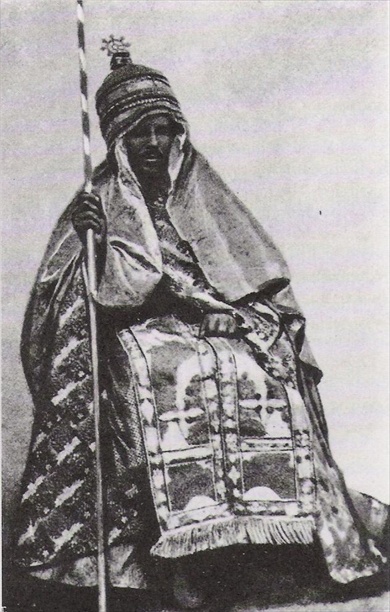
The Negus of Ethiopia is a man of great strength of body, and energy of mind, as well as force of will. He is about forty years of age, of middle height, but sinewy and muscular; with most aristocratic hands and feet, although, like his subjects, he marches with bare feet, placing only his great toe in the stirrup, when on horseback, in Abyssinian fashion. His face is oval, with high forehead, large restless eyes, an aquiline nose and wide mouth. His skin is not black, but of a dark olive tint; his hair plaited in an infinite number of small tresses, carefully knotted together at the nape of the neck with a silken cord. He looks more like a Greek or Portuguese than an African. In anger his eyes blaze like burning coals. In speech he is brief, clear and persuasive.
The imperial ambitions of Behaile Selassie are consolidated towards the end of the reign of Tewodros II; as early as 1867, he presented himself, during a correspondence with the British, as ruler of Ethiopia. During the same year, a diplomatic dispute between Tewodros and the British government led the expedition to Abyssinia in order to free the European captives imprisoned there by Tewodros. From February 1868, Yohannes came into contact with British officers, including the commander of the expedition, Sir Robert Napier, who sends Major James Augustus Grant, a British explorer, to meet the ruler of Tigray. Yohannes is then perceived by James as a “weak and easily manipulated man, aspiring to become a great leader of Ethiopia." After three hearings, Yohannes officially agrees to help Napier. This then facilitates the provisioning of the troops by installing markets near the main camp sites. Yohannes assures the British that he will help them “with all [his] power."
Hub AI
Yohannes IV AI simulator
(@Yohannes IV_simulator)
Yohannes IV
Yohannes IV (Tigrinya: ዮሓንስ ፬ይ Rabaiy Yōḥānnes; horse name Abba Bezbiz also known as Kahśsai; born Lij Kahssai Mercha; 11 July 1837 – 10 March 1889) was Emperor of Ethiopia from 1871 to his death in 1889 at the Battle of Gallabat, and king of Tigray from 1869 to 1871. During his reign he successfully defended Ethiopia against a large-scale Egyptian invasion.
In his earlier years, he rebelled against Tewodros II; having risen to power in the 1860s, he maintained the policy of Tewodros, that of continued unification and also implemented a policy of touring entire regions and meetings with governors. He assisted the British in their British expedition to Abyssinia which ended in Tewodros' suicide, from which Yohannes was rewarded in ammunition and artillery. He regarded Islam as a hindrance to the stability of the state and worked to strengthen Christian dominance in Ethiopia. Its estimated that he had converted 550,000 Oromos and Jebertis to Christianity. In foreign policy, he had disagreements and military conflicts with both Isma'il Pasha of the Khedivate of Egypt and Muhammad Ahmad during the latter's Mahdist War.
On the side of his father, Mercha Wolde Kidan, Yohannes descended from the ruling family of Tembien where both his father and grandfather bore the traditional title of šum Tembien, while his mother, Silas Dimtsu, was a daughter of balgäda Demtsu of Enderta and Tabotu Woldu of Agame, hence a niece of Sabagadis Woldu. He thus descended from the ruling families of Tembien, Agame, and Enderta. Yohannes Solomonic lineage is through his paternal grandmother Woizero Workewoha KaleKristoss of Adwa, the granddaughter of Ras Mikael Sehul and his wife Aster Iyasu, daughter of Empress Mentewab and Melmal Iyasu, who was a Solomonic prince and nephew of Emperor Bakaffa. Therefore yohannes is descended from the Gondrar-Branch of the Solomonic dynasty.
The first half of his life is poorly documented, with the date of his birth given between 1831 and 1837. The available sources indicate that he was the youngest of his siblings, that he had a seriously ailing childhood, that he received some church education, and that he was initiated to manhood after killing some wild animals (lions and/or elephants) for trophies. The first mention of his appearance in the political arena comes up in connection with his visit to the imperial court of Tewodros II in 1864–1865 in the company of his brothers, Gugsa and Maru. Gugsa was given the title of däjazmač, and Maru that of fit’awrari. The lowest title, of balambaras, was bestowed upon Kaśa, who was subsequently assigned to administer a sub-district within the governorship of his elder brother, Gugsa.
Shortly after their return to Tigray, Kaśa rebelled against the rule of Tewodros. What prompted his rebellion is not well established. Often two explanations, which are not essentially contradictory, are forwarded by the sources: the first is related to his dissatisfaction with the rank and function given to him by the sovereign, while the second interprets his rebellion as a response to the appeal of abunä Salama who in 1867 wrote from prison to many notables condemning his perceived injustices of Tewodros. In any case, for some time he (together with his followers) retired to the eastern lowlands and found refuge among the Afar, from which ethnic group he married a Muslim after she had been baptized with the name Tebaba Sellasie.
Returning to the highlands, he raised more men and began his military campaign: in the years 1864–1867, he consecutively defeated šum seraye Gebre Mikael, däjazmač Barya'u Gebre Sadeq of Adwa and däjazmač Tekle Giyorgis Qalos of Shire. Barya'u transferred his allegiance to Kaśa whom he served faithfully until he was killed in a battle some ten years later. Tekle Giyorgis (who had killed Kaśa's mother, Silass) fell in battle, and Kaśa subsequently assumed his title of däjazmač. Kaśa then formed an alliance with wag šum Gobez Gebre Medhin of Lasta against Tewodros and began to harass the imperial representatives on both sides of the Mareb River. He defeated the governors of Selewa and Kilte Awulaelo. In Hamasien, däjazmač Haylu Tewolde Medhen, who contemplated resistance, was confined and replaced with däjazmač (later ras) Woldemichael Solomon who had actively participated in Kaśa's military campaign against the imperial officials in Tigray. A French explorer described him as:
The Negus of Ethiopia is a man of great strength of body, and energy of mind, as well as force of will. He is about forty years of age, of middle height, but sinewy and muscular; with most aristocratic hands and feet, although, like his subjects, he marches with bare feet, placing only his great toe in the stirrup, when on horseback, in Abyssinian fashion. His face is oval, with high forehead, large restless eyes, an aquiline nose and wide mouth. His skin is not black, but of a dark olive tint; his hair plaited in an infinite number of small tresses, carefully knotted together at the nape of the neck with a silken cord. He looks more like a Greek or Portuguese than an African. In anger his eyes blaze like burning coals. In speech he is brief, clear and persuasive.
The imperial ambitions of Behaile Selassie are consolidated towards the end of the reign of Tewodros II; as early as 1867, he presented himself, during a correspondence with the British, as ruler of Ethiopia. During the same year, a diplomatic dispute between Tewodros and the British government led the expedition to Abyssinia in order to free the European captives imprisoned there by Tewodros. From February 1868, Yohannes came into contact with British officers, including the commander of the expedition, Sir Robert Napier, who sends Major James Augustus Grant, a British explorer, to meet the ruler of Tigray. Yohannes is then perceived by James as a “weak and easily manipulated man, aspiring to become a great leader of Ethiopia." After three hearings, Yohannes officially agrees to help Napier. This then facilitates the provisioning of the troops by installing markets near the main camp sites. Yohannes assures the British that he will help them “with all [his] power."
Recent media