



Community hub
Recent from talks
Knowledge base stats:
Talk channels stats:
Members stats:
Youth International Party
The Youth International Party (YIP), whose members were commonly called Yippies, was an American youth-oriented radical and countercultural revolutionary offshoot of the free speech and anti-war movements of the late 1960s. It was founded on December 31, 1967. They employed theatrical gestures to mock the social status quo, such as advancing a pig called "Pigasus the Immortal" as a candidate for President of the United States in 1968. They have been described as a highly theatrical, anti-authoritarian, and anarchist youth movement of "symbolic politics".
Since they were well known for street theater, protesting against the criminalization of cannabis in the United States with smoke-ins, and politically themed pranks, they were either ignored or denounced by many of the Old Left. According to ABC News, "The group was known for street theater pranks and was once referred to as the 'Groucho Marxists'."
The Yippies had no formal membership or hierarchy. The organization was founded by Abbie and Anita Hoffman, Jerry Rubin, Nancy Kurshan, and Paul Krassner, at a meeting in the Hoffmans' New York apartment on December 31, 1967. According to his own account, Krassner coined the name. "If the press had created 'hippie,' could not we five hatch the 'yippie'?" Abbie Hoffman wrote.
Other activists associated with the Yippies include Stew Albert, Judy Gumbo, Ed Sanders, Robin Morgan, Phil Ochs, Robert M. Ockene, William Kunstler, Jonah Raskin, Wavy Gravy, Steve Conliff, Jerome Washington, John Sinclair, Jim Retherford, Dana Beal, Betty (Zaria) Andrew, Joanee Freedom, Danny Boyle, Ben Masel, Tom Forcade, Paul Watson, David Peel, Bill Weinberg, Aron Kay, Tuli Kupferberg, Jill Johnston, Daisy Deadhead, Leatrice Urbanowicz, Bob Fass, Mayer Vishner, Alice Torbush, Patrick K. Kroupa, Judy Lampe, Steve DeAngelo, Dean Tuckerman, Dennis Peron, Jim Fouratt, Steve Wessing, John Penley, Pete Wagner and Brenton Lengel.
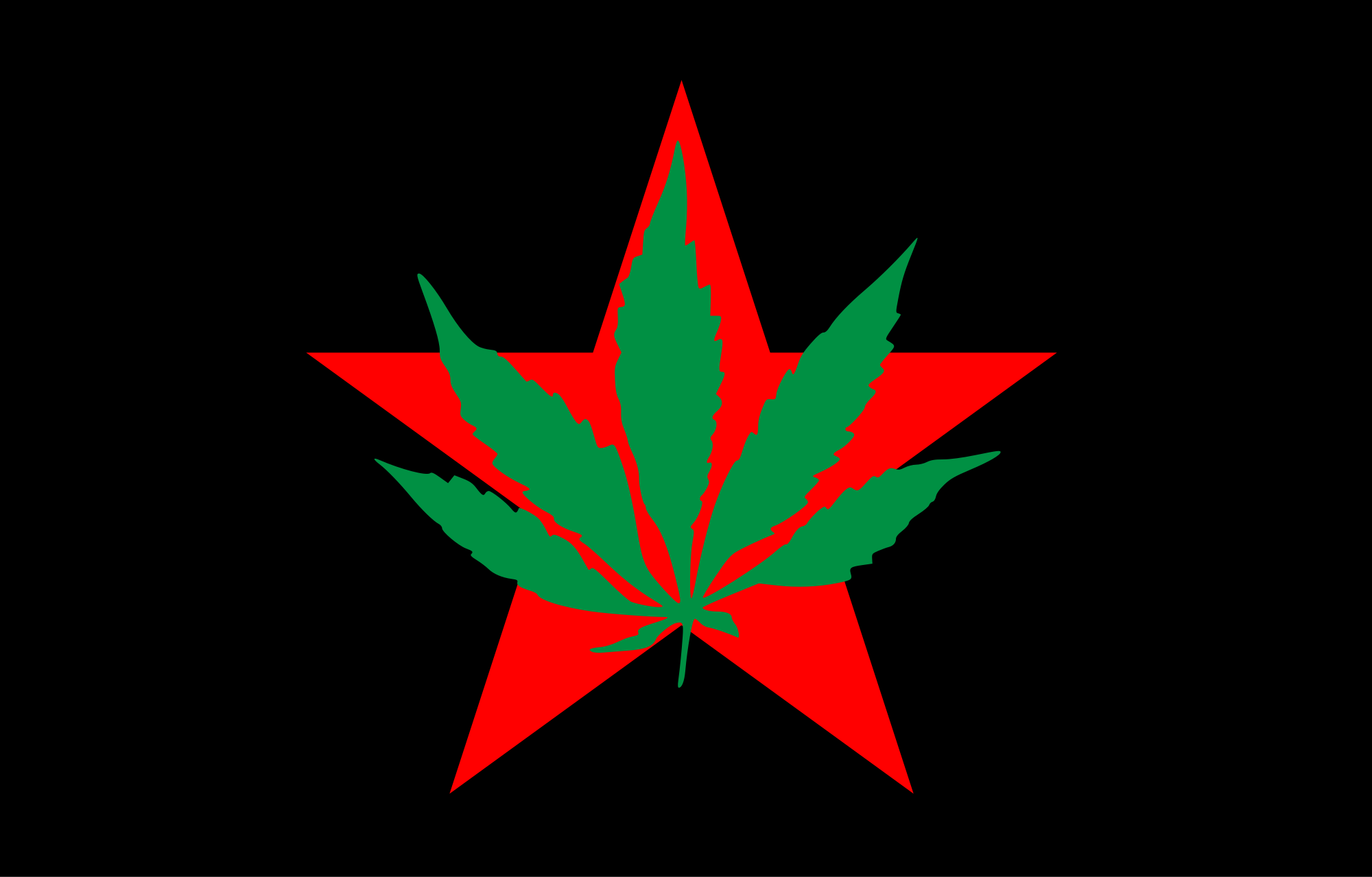
A Yippie flag was often seen at anti-war demonstrations. The flag had a black background with a five-pointed red star in the center, and a green cannabis leaf superimposed over it. When asked about the Yippie flag, an anonymous Yippie identified only as "Jung" told The New York Times that "The black is for anarchy. The red star is for our five point program. And the leaf is for marijuana, which is for getting ecologically stoned without polluting the environment." This flag is also mentioned in Hoffman's Steal This Book.
Abbie Hoffman and Jerry Rubin became the most famous Yippies—and bestselling authors—in part due to publicity surrounding the five-month Chicago Seven Conspiracy trial of 1969. They both used the phrase "ideology is a brain disease" to separate the Yippies from mainstream political parties that played the game by the rules. Hoffman and Rubin were arguably the most colorful of the seven defendants accused of criminal conspiracy and inciting to riot at the August 1968 Democratic National Convention. Hoffman and Rubin used the trial as a platform for Yippie antics—at one point, they showed up in court attired in judicial robes.
The term Yippie was invented by Krassner, as well as Abbie and Anita Hoffman, on New Year's Eve 1967. Paul Krassner wrote in a January 2007 article in the Los Angeles Times:
We needed a name to signify the radicalization of hippies, and I came up with Yippie as a label for a phenomenon that already existed, an organic coalition of psychedelic hippies and political activists. In the process of cross-fertilization at antiwar demonstrations, we had come to share an awareness that there was a linear connection between putting kids in prison for smoking pot in this country and burning them to death with napalm on the other side of the planet.
Hub AI
Youth International Party AI simulator
(@Youth International Party_simulator)
Youth International Party
The Youth International Party (YIP), whose members were commonly called Yippies, was an American youth-oriented radical and countercultural revolutionary offshoot of the free speech and anti-war movements of the late 1960s. It was founded on December 31, 1967. They employed theatrical gestures to mock the social status quo, such as advancing a pig called "Pigasus the Immortal" as a candidate for President of the United States in 1968. They have been described as a highly theatrical, anti-authoritarian, and anarchist youth movement of "symbolic politics".
Since they were well known for street theater, protesting against the criminalization of cannabis in the United States with smoke-ins, and politically themed pranks, they were either ignored or denounced by many of the Old Left. According to ABC News, "The group was known for street theater pranks and was once referred to as the 'Groucho Marxists'."
The Yippies had no formal membership or hierarchy. The organization was founded by Abbie and Anita Hoffman, Jerry Rubin, Nancy Kurshan, and Paul Krassner, at a meeting in the Hoffmans' New York apartment on December 31, 1967. According to his own account, Krassner coined the name. "If the press had created 'hippie,' could not we five hatch the 'yippie'?" Abbie Hoffman wrote.
Other activists associated with the Yippies include Stew Albert, Judy Gumbo, Ed Sanders, Robin Morgan, Phil Ochs, Robert M. Ockene, William Kunstler, Jonah Raskin, Wavy Gravy, Steve Conliff, Jerome Washington, John Sinclair, Jim Retherford, Dana Beal, Betty (Zaria) Andrew, Joanee Freedom, Danny Boyle, Ben Masel, Tom Forcade, Paul Watson, David Peel, Bill Weinberg, Aron Kay, Tuli Kupferberg, Jill Johnston, Daisy Deadhead, Leatrice Urbanowicz, Bob Fass, Mayer Vishner, Alice Torbush, Patrick K. Kroupa, Judy Lampe, Steve DeAngelo, Dean Tuckerman, Dennis Peron, Jim Fouratt, Steve Wessing, John Penley, Pete Wagner and Brenton Lengel.
A Yippie flag was often seen at anti-war demonstrations. The flag had a black background with a five-pointed red star in the center, and a green cannabis leaf superimposed over it. When asked about the Yippie flag, an anonymous Yippie identified only as "Jung" told The New York Times that "The black is for anarchy. The red star is for our five point program. And the leaf is for marijuana, which is for getting ecologically stoned without polluting the environment." This flag is also mentioned in Hoffman's Steal This Book.
Abbie Hoffman and Jerry Rubin became the most famous Yippies—and bestselling authors—in part due to publicity surrounding the five-month Chicago Seven Conspiracy trial of 1969. They both used the phrase "ideology is a brain disease" to separate the Yippies from mainstream political parties that played the game by the rules. Hoffman and Rubin were arguably the most colorful of the seven defendants accused of criminal conspiracy and inciting to riot at the August 1968 Democratic National Convention. Hoffman and Rubin used the trial as a platform for Yippie antics—at one point, they showed up in court attired in judicial robes.
The term Yippie was invented by Krassner, as well as Abbie and Anita Hoffman, on New Year's Eve 1967. Paul Krassner wrote in a January 2007 article in the Los Angeles Times:
We needed a name to signify the radicalization of hippies, and I came up with Yippie as a label for a phenomenon that already existed, an organic coalition of psychedelic hippies and political activists. In the process of cross-fertilization at antiwar demonstrations, we had come to share an awareness that there was a linear connection between putting kids in prison for smoking pot in this country and burning them to death with napalm on the other side of the planet.