
Recent from talks
Yrsa
Knowledge base stats:
Talk channels stats:
Members stats:
Yrsa
Yrsa, Yrse, Yrs or Urse (fl. 6th century) was a tragic heroine of early Scandinavian legend. She is typically characterized as the wife of Swedish king Eadgils and mother of Danish king Hrólfr Kraki.
Her legacy is recorded in several different versions. In all versions, she is regarded as a desirable and charming girl. The general nucleus of her character arc is that incestual sexual relations occur between her and her father, Halga, both of them at first ignorant of their kinship. In most versions, Yrsa is forcibly raped by Halga, and both of them learn later on from Halga's Queen Oluf, that they are actually related. This leads to Yrsa leaving Halga, and in one version Halga wants to pursue their incestual relationship regardless. In other versions, Halga commits suicide from the torment of his guilty conscience.
Yrsa's saga narrative is connected to King Beowulf's narrative. Halga is identified as the younger brother of King Hrothgar who receives aid from Beowulf, and king Hrólfr Kraki's identity as Halga's son is evidenced by the Yrsa tradition. Translators such as Burton Raffel have conjectured an amendment of her name from a corrupt line in the manuscript of Beowulf.
The name Yrsa is not known from other Norse sources and may be derived from Latin Ursus ("bear"). It has been suggested that if she had any historic antecedent, she may have been Frankish and captured by Danish king Helgi in one of his raids. Scholars have noted chronological inconsistencies, in the traditions on Yrsa, in studies on whether there is a historical background. When Aðils was old enough to marry, Yrsa would already have been rather old, and they would have married for political reasons. According to a theory, she would have been the sister of Helgi, and before marrying Aðils, she would have been the wife of his brother Áli. In this way an emended line in Beowulf (1. 62) would be explained.
In Hrólfr Kraki's saga, Helgi (i.e. Halga) went to the Saxons wanting to woo their warlike Queen Oluf. She was, however, not interested and humiliated Helgi by shaving his head and covering him with tar, while he was asleep, and sending him back to his ship. Some time later, Helgi returned and through a ruse, he kidnapped the queen for a while during which time he made her pregnant.
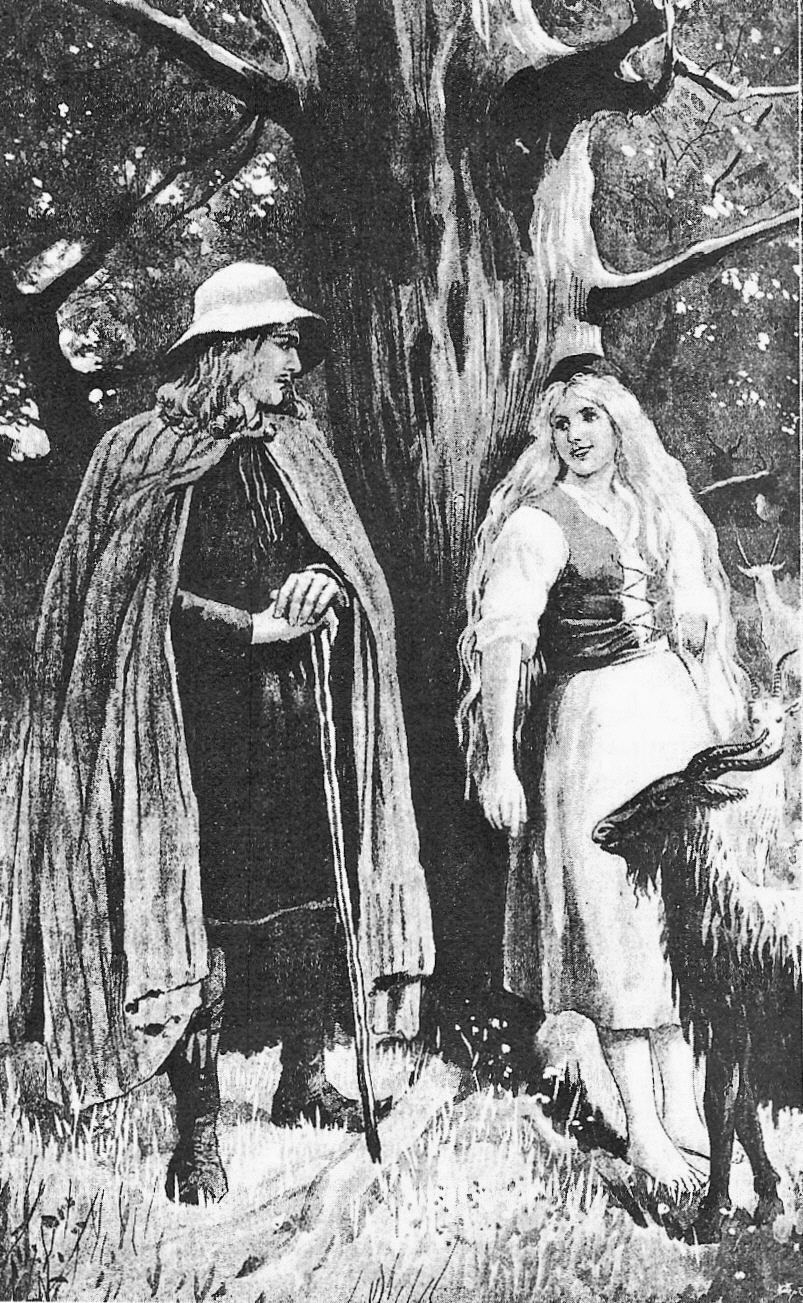
Having returned to her kingdom, the queen bore a child, a girl which she named Yrsa after her dog. Yrsa was sent to live as a shepherd, until she was 12 years old, when she met her father Helgi who fell in love with her, not knowing it was his daughter. Oluf kept quiet about the parentage and saw it as her revenge that Helgi would wed his own daughter. Helgi and Yrsa had the son Hrólfr Kraki (Hroðulf).
Learning that Helgi and Yrsa lived happily together, Queen Oluf travelled to Denmark to tell her daughter the truth. Yrsa was shocked and although Helgi wanted their relationship to remain as it was, Yrsa insisted on leaving him to live alone. She was later taken by the Swedish king Aðils (Eadgils) as his queen, which made Helgi even unhappier.
Missing Yrsa, Helgi went to Uppsala to fetch her, but was killed by Aðils in battle. Yrsa was naturally upset that the man who was closest to her was killed by her husband, and promised Aðils that his berserkers would all be slain if she could help it. She was no happier in the king's company and she was not interested in making up with him either. Later, when a young Swedish warrior named Svipdag arrived to test his skills, she greatly supported him in his fights with the berserkers who eventually were all slain. Svipdag chose not to remain with King Eadils and instead he sought service with Yrsa's son Hrólfr who had succeeded Helgi as the king of Denmark.
Hub AI
Yrsa AI simulator
(@Yrsa_simulator)
Yrsa
Yrsa, Yrse, Yrs or Urse (fl. 6th century) was a tragic heroine of early Scandinavian legend. She is typically characterized as the wife of Swedish king Eadgils and mother of Danish king Hrólfr Kraki.
Her legacy is recorded in several different versions. In all versions, she is regarded as a desirable and charming girl. The general nucleus of her character arc is that incestual sexual relations occur between her and her father, Halga, both of them at first ignorant of their kinship. In most versions, Yrsa is forcibly raped by Halga, and both of them learn later on from Halga's Queen Oluf, that they are actually related. This leads to Yrsa leaving Halga, and in one version Halga wants to pursue their incestual relationship regardless. In other versions, Halga commits suicide from the torment of his guilty conscience.
Yrsa's saga narrative is connected to King Beowulf's narrative. Halga is identified as the younger brother of King Hrothgar who receives aid from Beowulf, and king Hrólfr Kraki's identity as Halga's son is evidenced by the Yrsa tradition. Translators such as Burton Raffel have conjectured an amendment of her name from a corrupt line in the manuscript of Beowulf.
The name Yrsa is not known from other Norse sources and may be derived from Latin Ursus ("bear"). It has been suggested that if she had any historic antecedent, she may have been Frankish and captured by Danish king Helgi in one of his raids. Scholars have noted chronological inconsistencies, in the traditions on Yrsa, in studies on whether there is a historical background. When Aðils was old enough to marry, Yrsa would already have been rather old, and they would have married for political reasons. According to a theory, she would have been the sister of Helgi, and before marrying Aðils, she would have been the wife of his brother Áli. In this way an emended line in Beowulf (1. 62) would be explained.
In Hrólfr Kraki's saga, Helgi (i.e. Halga) went to the Saxons wanting to woo their warlike Queen Oluf. She was, however, not interested and humiliated Helgi by shaving his head and covering him with tar, while he was asleep, and sending him back to his ship. Some time later, Helgi returned and through a ruse, he kidnapped the queen for a while during which time he made her pregnant.
Having returned to her kingdom, the queen bore a child, a girl which she named Yrsa after her dog. Yrsa was sent to live as a shepherd, until she was 12 years old, when she met her father Helgi who fell in love with her, not knowing it was his daughter. Oluf kept quiet about the parentage and saw it as her revenge that Helgi would wed his own daughter. Helgi and Yrsa had the son Hrólfr Kraki (Hroðulf).
Learning that Helgi and Yrsa lived happily together, Queen Oluf travelled to Denmark to tell her daughter the truth. Yrsa was shocked and although Helgi wanted their relationship to remain as it was, Yrsa insisted on leaving him to live alone. She was later taken by the Swedish king Aðils (Eadgils) as his queen, which made Helgi even unhappier.
Missing Yrsa, Helgi went to Uppsala to fetch her, but was killed by Aðils in battle. Yrsa was naturally upset that the man who was closest to her was killed by her husband, and promised Aðils that his berserkers would all be slain if she could help it. She was no happier in the king's company and she was not interested in making up with him either. Later, when a young Swedish warrior named Svipdag arrived to test his skills, she greatly supported him in his fights with the berserkers who eventually were all slain. Svipdag chose not to remain with King Eadils and instead he sought service with Yrsa's son Hrólfr who had succeeded Helgi as the king of Denmark.
Recent media