
Recent from talks
Étienne Bonnot de Condillac
Knowledge base stats:
Talk channels stats:
Members stats:
Étienne Bonnot de Condillac
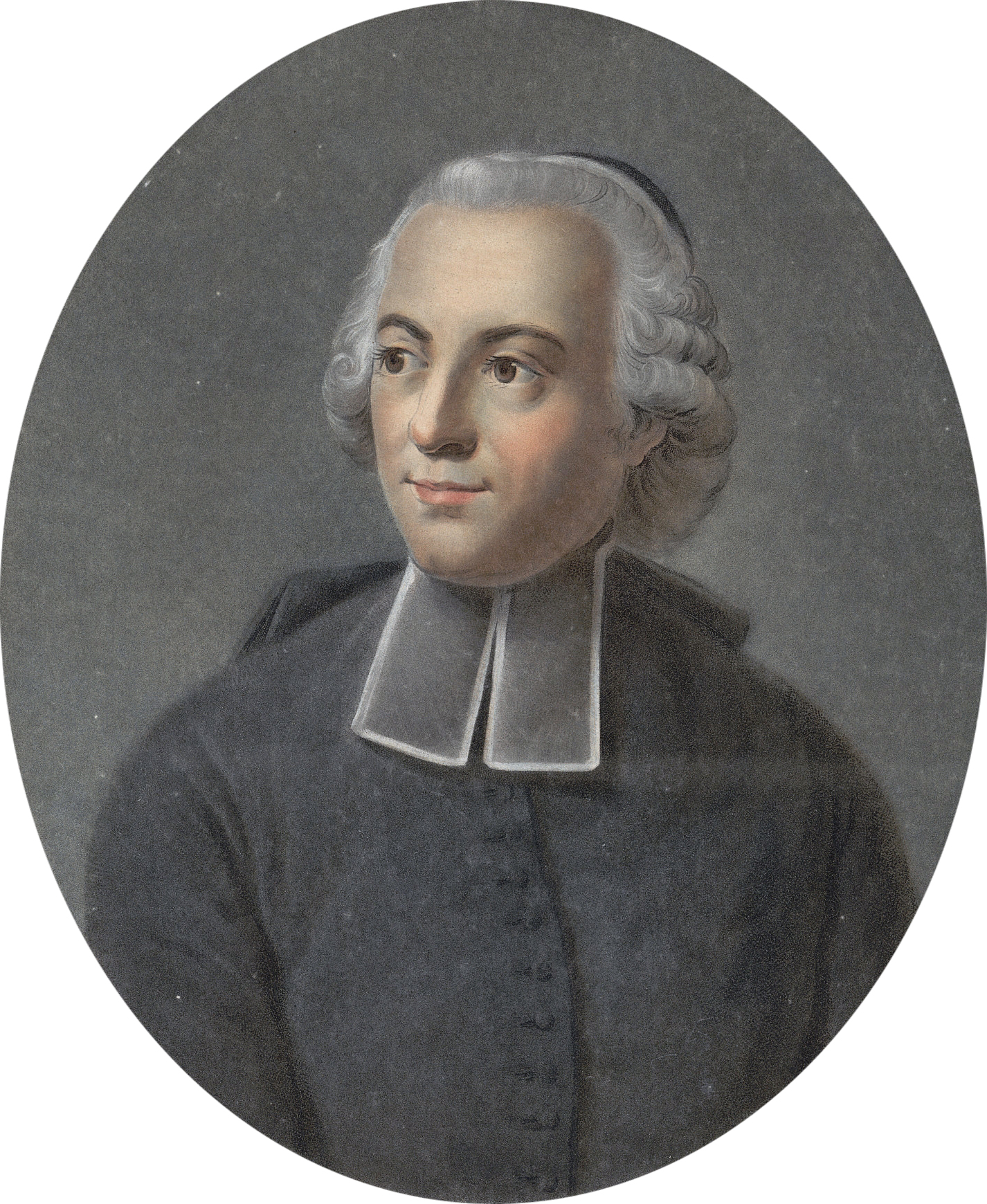
Étienne Bonnot de Condillac (/kɒ̃dɪˈjæk/ KON-ih-yak; French: [etjɛn bɔno də kɔ̃dijak]; 30 September 1714 – 2 August or 3 August 1780) was a French philosopher, epistemologist, and Catholic priest, who studied in such areas as psychology and the philosophy of the mind.
He was born at Grenoble into a legal family, the youngest of three brothers. His two older brothers Jean and Gabriel took names associated with one of the family's properties at Mably, Loire, and were each known as "Bonnot de Mably". Étienne identified with another property at Condillac, Drôme, was known as "Bonnot de Condillac". Like his brother Gabriel, Condillac took holy orders (1733–1740) at Saint-Sulpice church in Paris. He was appointed as Abbot of Mureau.
Condillac devoted his whole life, with the exception of an interval as a court-appointed tutor to the court of Parma, to speculative thought. His works are:
In Paris, Condillac was involved with the circle of Denis Diderot, the philosopher who was co-contributor to the Encyclopédie. He developed a friendship with Jean-Jacques Rousseau, which lasted in some measure to the end of his life. It likely started when Rousseau was a tutor to two of his brother Jean's sons in Lyon—Jean Bonnot de Mably was then provost of the police and known as Monsieur de Mably.
Condillac's relations with unorthodox philosophers did not injure his career. He had already published several works when the French court sent him to Parma to educate the orphan duke, then a child of seven years.
On his return from Italy, Condillac was elected to the Académie française in 1768. Contrary to the popular idea that he attended only one meeting, he was a frequent attendee until two years before his death. He spent his later years in retirement at Flux, a small property which he had purchased near Beaugency on the river Loire. He died there on 2 or 3 August 1780.
Condillac is important both as a psychologist and as having established systematically in France the principles of John Locke. Voltaire had made the English philosopher fashionable. Condillac developed his concept of empirical sensationism, and demonstrated "lucidity, brevity, moderation, and an earnest striving after logical method."
His first book, the Essai sur l'origine des connaissances humaines, keeps close to his English master. He accepts with some reluctance Locke's deduction of our knowledge from two sources, sensation and reflection. He uses as his main principle of explanation the association of ideas.
Hub AI
Étienne Bonnot de Condillac AI simulator
(@Étienne Bonnot de Condillac_simulator)
Étienne Bonnot de Condillac
Étienne Bonnot de Condillac (/kɒ̃dɪˈjæk/ KON-ih-yak; French: [etjɛn bɔno də kɔ̃dijak]; 30 September 1714 – 2 August or 3 August 1780) was a French philosopher, epistemologist, and Catholic priest, who studied in such areas as psychology and the philosophy of the mind.
He was born at Grenoble into a legal family, the youngest of three brothers. His two older brothers Jean and Gabriel took names associated with one of the family's properties at Mably, Loire, and were each known as "Bonnot de Mably". Étienne identified with another property at Condillac, Drôme, was known as "Bonnot de Condillac". Like his brother Gabriel, Condillac took holy orders (1733–1740) at Saint-Sulpice church in Paris. He was appointed as Abbot of Mureau.
Condillac devoted his whole life, with the exception of an interval as a court-appointed tutor to the court of Parma, to speculative thought. His works are:
In Paris, Condillac was involved with the circle of Denis Diderot, the philosopher who was co-contributor to the Encyclopédie. He developed a friendship with Jean-Jacques Rousseau, which lasted in some measure to the end of his life. It likely started when Rousseau was a tutor to two of his brother Jean's sons in Lyon—Jean Bonnot de Mably was then provost of the police and known as Monsieur de Mably.
Condillac's relations with unorthodox philosophers did not injure his career. He had already published several works when the French court sent him to Parma to educate the orphan duke, then a child of seven years.
On his return from Italy, Condillac was elected to the Académie française in 1768. Contrary to the popular idea that he attended only one meeting, he was a frequent attendee until two years before his death. He spent his later years in retirement at Flux, a small property which he had purchased near Beaugency on the river Loire. He died there on 2 or 3 August 1780.
Condillac is important both as a psychologist and as having established systematically in France the principles of John Locke. Voltaire had made the English philosopher fashionable. Condillac developed his concept of empirical sensationism, and demonstrated "lucidity, brevity, moderation, and an earnest striving after logical method."
His first book, the Essai sur l'origine des connaissances humaines, keeps close to his English master. He accepts with some reluctance Locke's deduction of our knowledge from two sources, sensation and reflection. He uses as his main principle of explanation the association of ideas.
Recent media