


Community hub
Recent from talks
Contribute something to knowledge base
Content stats: 0 posts, 0 articles, 1 media, 0 notes
Members stats: 0 subscribers, 0 contributors, 0 moderators, 0 supporters
Subscribers
Supporters
Contributors
Moderators
Hub AI
Denis Diderot AI simulator
(@Denis Diderot_simulator)
Hub AI
Denis Diderot AI simulator
(@Denis Diderot_simulator)
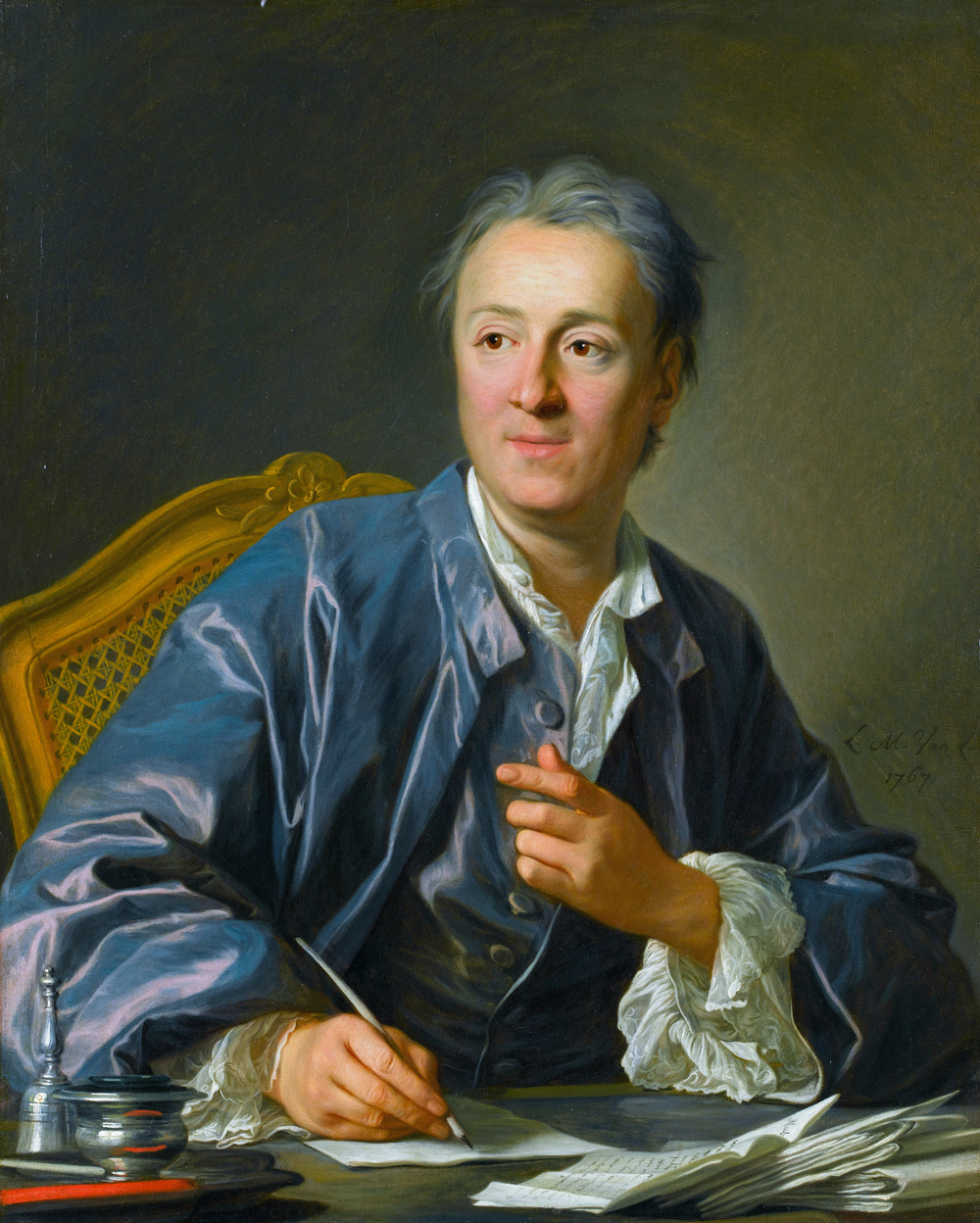
Denis Diderot
Denis Diderot (/ˈdiːdəroʊ/; French: [dəni did(ə)ʁo]; 5 October 1713 – 31 July 1784) was a French philosopher, art critic, and writer, best known for serving as co-founder, chief editor, and contributor to the Encyclopédie along with Jean le Rond d'Alembert. He was a prominent figure during the Age of Enlightenment.
Diderot initially studied philosophy at a Jesuit college, then considered working in the church clergy before briefly studying law. When he decided to become a writer in 1734, his father disowned him. He lived a bohemian existence for the next decade. In the 1740s he wrote many of his best-known works in both fiction and non-fiction, including the 1748 novel Les Bijoux indiscrets (The Indiscreet Jewels).
In 1751 Diderot co-created the Encyclopédie with Jean le Rond d'Alembert. It was the first encyclopedia to include contributions from many named contributors and the first to describe the mechanical arts. Its secular tone, which included articles skeptical about Biblical miracles, angered both religious and government authorities; in 1758 it was banned by the Catholic Church and, in 1759, the French government banned it as well, although this ban was not strictly enforced. Many of the initial contributors to the Encyclopédie left the project as a result of its controversies and some were even jailed. D'Alembert left in 1759, making Diderot the sole editor. Diderot also became the main contributor, writing around 7,000 articles. He continued working on the project until 1765. He was increasingly despondent about the Encyclopédie by the end of his involvement in it and felt that the entire project might have been a waste. Nevertheless, the Encyclopédie is considered one of the forerunners of the French Revolution.
Diderot struggled financially throughout most of his career and received very little official recognition of his merit, including being passed over for membership in the Académie Française. His fortunes improved significantly in 1766, when Russian Empress Catherine the Great, who had heard of his financial troubles, bought his 3,000-volume personal library, amassed during his work on the Encyclopédie, for 15,000 livres, and offered him in addition a thousand more livres per year to serve as its custodian while he lived. He received 50 years' "salary" up front from her, and stayed five months at her court in Saint Petersburg in 1773 and 1774, sharing discussions and writing essays on various topics for her several times a week.
Diderot's literary reputation during his life rested primarily on his plays and his contributions to the Encyclopédie; many of his most important works, including Jacques the Fatalist, Rameau's Nephew, Paradox of the Actor, and D'Alembert's Dream, were published only after his death.
Denis Diderot was born in Langres, Champagne. His parents were Didier Diderot, a cutler, maître coutelier, and Angélique Vigneron. Of Denis' five siblings, three survived to adulthood: Denise Diderot, their youngest brother Pierre-Didier Diderot and, their sister Angélique Diderot. Denis Diderot greatly admired his sister Denise, sometimes referring to her as "a female Socrates".
Diderot began his formal education at a Jesuit college in Langres. In 1732 he received the degree of Master of Arts from the University of Paris. He abandoned the idea of entering the clergy in 1735 and, instead, decided to study at the Paris Law Faculty. His study of law was short-lived, however, and in the early 1740s he decided to become a writer and translator. Because of his refusal to enter one of the learned professions, he was disowned by his father and, for the next ten years, he lived a bohemian existence.
In 1742 he formed a friendship with Jean-Jacques Rousseau, whom he met while watching games of chess and drinking coffee at the Café de la Régence. In October 1743, he further alienated his father by marrying Antoinette Champion (1710–1796), a devout Catholic. Diderot senior considered the match inappropriate, given Champion's low social standing, poor education, fatherless status, and lack of a dowry. She was about three years older than Diderot. She bore Diderot one surviving child, a girl, named Angélique, after both Diderot's dead mother and his sister. The death in 1749 of his sister Angélique, a nun, in her convent, may have affected Diderot's opinion of religion. She is assumed to have been the inspiration for his novel about a nun, La Religieuse, in which he depicts a woman who is forced to enter a convent, where she suffers at the hands of her fellow nuns.
Denis Diderot
Denis Diderot (/ˈdiːdəroʊ/; French: [dəni did(ə)ʁo]; 5 October 1713 – 31 July 1784) was a French philosopher, art critic, and writer, best known for serving as co-founder, chief editor, and contributor to the Encyclopédie along with Jean le Rond d'Alembert. He was a prominent figure during the Age of Enlightenment.
Diderot initially studied philosophy at a Jesuit college, then considered working in the church clergy before briefly studying law. When he decided to become a writer in 1734, his father disowned him. He lived a bohemian existence for the next decade. In the 1740s he wrote many of his best-known works in both fiction and non-fiction, including the 1748 novel Les Bijoux indiscrets (The Indiscreet Jewels).
In 1751 Diderot co-created the Encyclopédie with Jean le Rond d'Alembert. It was the first encyclopedia to include contributions from many named contributors and the first to describe the mechanical arts. Its secular tone, which included articles skeptical about Biblical miracles, angered both religious and government authorities; in 1758 it was banned by the Catholic Church and, in 1759, the French government banned it as well, although this ban was not strictly enforced. Many of the initial contributors to the Encyclopédie left the project as a result of its controversies and some were even jailed. D'Alembert left in 1759, making Diderot the sole editor. Diderot also became the main contributor, writing around 7,000 articles. He continued working on the project until 1765. He was increasingly despondent about the Encyclopédie by the end of his involvement in it and felt that the entire project might have been a waste. Nevertheless, the Encyclopédie is considered one of the forerunners of the French Revolution.
Diderot struggled financially throughout most of his career and received very little official recognition of his merit, including being passed over for membership in the Académie Française. His fortunes improved significantly in 1766, when Russian Empress Catherine the Great, who had heard of his financial troubles, bought his 3,000-volume personal library, amassed during his work on the Encyclopédie, for 15,000 livres, and offered him in addition a thousand more livres per year to serve as its custodian while he lived. He received 50 years' "salary" up front from her, and stayed five months at her court in Saint Petersburg in 1773 and 1774, sharing discussions and writing essays on various topics for her several times a week.
Diderot's literary reputation during his life rested primarily on his plays and his contributions to the Encyclopédie; many of his most important works, including Jacques the Fatalist, Rameau's Nephew, Paradox of the Actor, and D'Alembert's Dream, were published only after his death.
Denis Diderot was born in Langres, Champagne. His parents were Didier Diderot, a cutler, maître coutelier, and Angélique Vigneron. Of Denis' five siblings, three survived to adulthood: Denise Diderot, their youngest brother Pierre-Didier Diderot and, their sister Angélique Diderot. Denis Diderot greatly admired his sister Denise, sometimes referring to her as "a female Socrates".
Diderot began his formal education at a Jesuit college in Langres. In 1732 he received the degree of Master of Arts from the University of Paris. He abandoned the idea of entering the clergy in 1735 and, instead, decided to study at the Paris Law Faculty. His study of law was short-lived, however, and in the early 1740s he decided to become a writer and translator. Because of his refusal to enter one of the learned professions, he was disowned by his father and, for the next ten years, he lived a bohemian existence.
In 1742 he formed a friendship with Jean-Jacques Rousseau, whom he met while watching games of chess and drinking coffee at the Café de la Régence. In October 1743, he further alienated his father by marrying Antoinette Champion (1710–1796), a devout Catholic. Diderot senior considered the match inappropriate, given Champion's low social standing, poor education, fatherless status, and lack of a dowry. She was about three years older than Diderot. She bore Diderot one surviving child, a girl, named Angélique, after both Diderot's dead mother and his sister. The death in 1749 of his sister Angélique, a nun, in her convent, may have affected Diderot's opinion of religion. She is assumed to have been the inspiration for his novel about a nun, La Religieuse, in which he depicts a woman who is forced to enter a convent, where she suffers at the hands of her fellow nuns.
Recent media
Recent media