
Recent from talks
103rd Aero Squadron
Knowledge base stats:
Talk channels stats:
Members stats:
103rd Aero Squadron
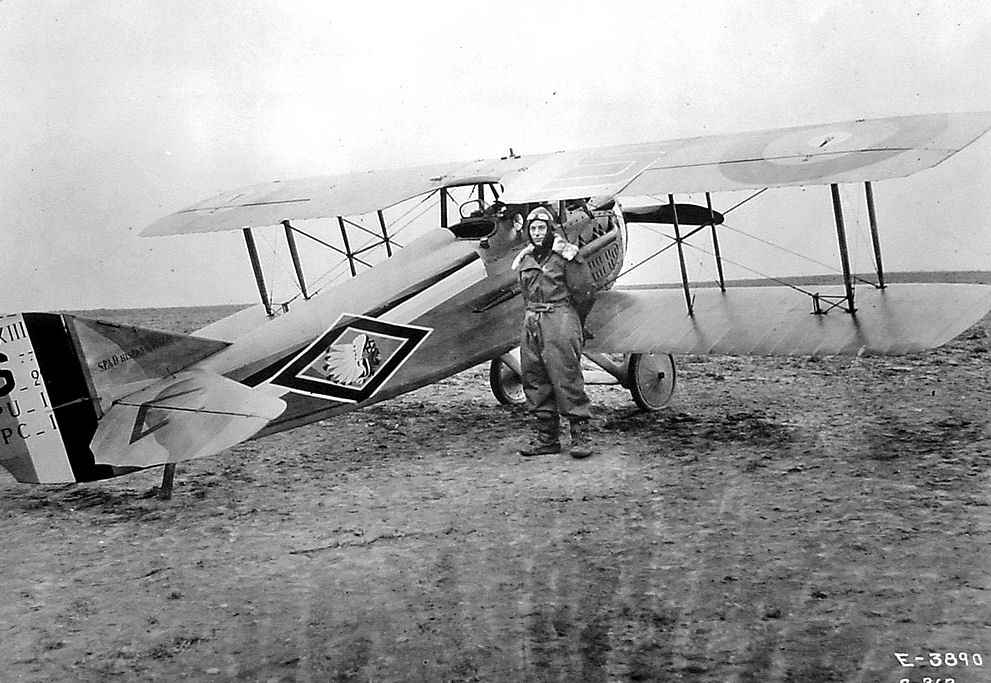
The 103rd Aero Squadron was an aviation pursuit squadron of the U.S. Air Service that served in combat in France during World War I. Its original complement included pilots from the disbanded Lafayette Escadrille and Lafayette Flying Corps. One of those pilots, Paul F. Baer, became the first ace of an American unit in World War I.
The 103rd Aero Squadron was the first U.S. pursuit squadron in action during World War I and had the longest combat service, from 19 February to 11 November 1918. It earned six battle participation credits, flew 470 combat missions, engaged in 327 combats, destroyed 45 German aircraft in aerial combat and claimed an additional 40 as probably destroyed, shot down two balloons, flew 3,075 hours over the front lines, and dropped 4,620 pounds of bombs. Its casualties were five killed in action, two killed in flying accidents, four prisoners of war, three wounded in action, and one injured in a forced landing.
The commander of the 1st Pursuit Wing, in general orders, said of the 103rd:
"In February last the Lafayette Escadrille of the French Army was transferred to the 103rd Aero Squadron, United States Army. It was the first, and for nearly two months it was the only American Air Service organization on the front. Since that time it is not too much to say that pilots who served in this squadron have formed the backbone of American Pursuit Aviation on the front...No task was too arduous or too hazardous for it to perform successfully. In the recent decisive operations of the First American Army the 103rd Aero Squadron has done its share." – Lt. Col. Burt M. Atkinson, 16 November 1918
The history and lineage of the 103rd Aero Squadron continues as part of the 94th Fighter Squadron of the United States Air Force.
The 103rd Aero Squadron was organized on 31 August 1917 at Kelly Field, Texas, where its enlisted members, drawn from other units, trained until being moved to Garden City, New York for preparation for overseas movement. On 23 November 1917 the unit sailed on board the RMS Baltic from its port of embarkation at New York City. The Baltic joined a convoy at Halifax, Nova Scotia and arrived at Liverpool on 7 December 1917. Because of a measles outbreak, it was quarantined at Winnall Down Camp outside Winchester until 23 December 1917, when it proceeded to France through Southampton and Le Havre. The squadron arrived at Issoudun on 28 December 1917, where it spent the month of January constructing hangars for the instructional school being built there. On 1 February it resumed training for combat at the front.
On 11 February 1918 Major William Thaw, formerly with the Lafayette Escadrille, took command of the 103rd Squadron at the Ferme de La Noblette, near La Cheppe, followed on 18 February by the assignment of 17 former pilots of the Lafayette Escadrille and Lafayette Flying Corps. Combat operations began almost immediately in early March, using Spad VII fighters, and flying with the newly formed Groupe de Combat 21 (21st Pursuit Group) of the Aéronautique Militaire in support of the French 4th Army, and the squadron recorded its first aerial victory on 11 March.
At La Noblette, the squadron was relieved by another French Escadrille and moved west on 10 April to the Reims area, in support of the French 6th Army, then north to the coast of the North Sea at Leffrinckoucke on 2 May, to support the French Detachment of Army of the North until 29 June. While at Leffrinckoucke its airdrome was subjected to frequent air attacks, and it received a citation 22 October 1918 from the commander in chief of the French Armies of the North and Northeast for its "brilliance" in operations in the face of adversity.
Hub AI
103rd Aero Squadron AI simulator
(@103rd Aero Squadron_simulator)
103rd Aero Squadron
The 103rd Aero Squadron was an aviation pursuit squadron of the U.S. Air Service that served in combat in France during World War I. Its original complement included pilots from the disbanded Lafayette Escadrille and Lafayette Flying Corps. One of those pilots, Paul F. Baer, became the first ace of an American unit in World War I.
The 103rd Aero Squadron was the first U.S. pursuit squadron in action during World War I and had the longest combat service, from 19 February to 11 November 1918. It earned six battle participation credits, flew 470 combat missions, engaged in 327 combats, destroyed 45 German aircraft in aerial combat and claimed an additional 40 as probably destroyed, shot down two balloons, flew 3,075 hours over the front lines, and dropped 4,620 pounds of bombs. Its casualties were five killed in action, two killed in flying accidents, four prisoners of war, three wounded in action, and one injured in a forced landing.
The commander of the 1st Pursuit Wing, in general orders, said of the 103rd:
"In February last the Lafayette Escadrille of the French Army was transferred to the 103rd Aero Squadron, United States Army. It was the first, and for nearly two months it was the only American Air Service organization on the front. Since that time it is not too much to say that pilots who served in this squadron have formed the backbone of American Pursuit Aviation on the front...No task was too arduous or too hazardous for it to perform successfully. In the recent decisive operations of the First American Army the 103rd Aero Squadron has done its share." – Lt. Col. Burt M. Atkinson, 16 November 1918
The history and lineage of the 103rd Aero Squadron continues as part of the 94th Fighter Squadron of the United States Air Force.
The 103rd Aero Squadron was organized on 31 August 1917 at Kelly Field, Texas, where its enlisted members, drawn from other units, trained until being moved to Garden City, New York for preparation for overseas movement. On 23 November 1917 the unit sailed on board the RMS Baltic from its port of embarkation at New York City. The Baltic joined a convoy at Halifax, Nova Scotia and arrived at Liverpool on 7 December 1917. Because of a measles outbreak, it was quarantined at Winnall Down Camp outside Winchester until 23 December 1917, when it proceeded to France through Southampton and Le Havre. The squadron arrived at Issoudun on 28 December 1917, where it spent the month of January constructing hangars for the instructional school being built there. On 1 February it resumed training for combat at the front.
On 11 February 1918 Major William Thaw, formerly with the Lafayette Escadrille, took command of the 103rd Squadron at the Ferme de La Noblette, near La Cheppe, followed on 18 February by the assignment of 17 former pilots of the Lafayette Escadrille and Lafayette Flying Corps. Combat operations began almost immediately in early March, using Spad VII fighters, and flying with the newly formed Groupe de Combat 21 (21st Pursuit Group) of the Aéronautique Militaire in support of the French 4th Army, and the squadron recorded its first aerial victory on 11 March.
At La Noblette, the squadron was relieved by another French Escadrille and moved west on 10 April to the Reims area, in support of the French 6th Army, then north to the coast of the North Sea at Leffrinckoucke on 2 May, to support the French Detachment of Army of the North until 29 June. While at Leffrinckoucke its airdrome was subjected to frequent air attacks, and it received a citation 22 October 1918 from the commander in chief of the French Armies of the North and Northeast for its "brilliance" in operations in the face of adversity.
Recent media