



Community hub
Recent from talks
Knowledge base stats:
Talk channels stats:
Members stats:
127th Command and Control Squadron
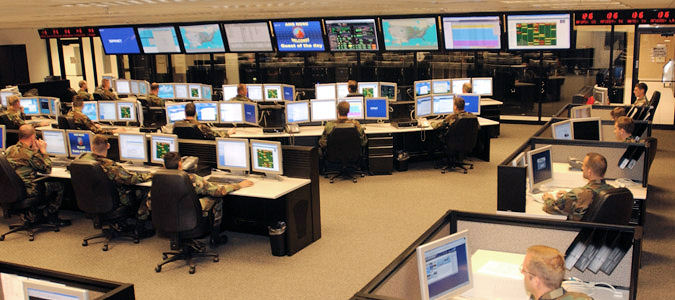
The 127th Command and Control Squadron (127 CACS) was a unit of the Kansas Air National Guard 184th Intelligence Wing stationed at McConnell Air Force Base, Wichita, Kansas. The 127th was a non-flying squadron operating the Distributed Common Ground System. The unit was inactivated on 29 September 2014.
The squadron is a descendant organization of the Kansas National Guard 127th Observation Squadron, established on 30 July 1940. It is one of the 29 original National Guard Observation Squadrons of the United States Army National Guard formed before World War II.
The mission of the 127 CACS was to provide communication support to the U.S. Government at all levels, including United States Department of Defense, Department of Homeland Security, Federal Emergency Management Agency, state, and local agencies. These agencies are provided redundant communities during Peace Time, Natural Disasters and National Emergencies. Equipment utilized in support of the mission is flexible and state of the art, enabling the 127th to provide services in a full spectrum of situations.
Established by the National Guard Bureau on 30 July 1940 as the 127th Observation Squadron, and activated in August 1941. Initially the squadron had 115 men in its ranks. It was, however, still short of officers since it only had nine officers but was authorized a total of thirty-one. Moved to Sherman Field at Fort Leavenworth, by November 1941 the squadron had one BE-1, one O-47A, one O-38E and several L-1's. All of the aircraft were single engine observation/liaison planes.
The 127th was ordered to federal service on 6 October 1941, became a training unit for observation and liaison pilots. According to the original plans, the squadron was to be based at Brownwood Army Airfield, Texas until the "emergency" was over and it could return to its home base at Wichita. The 7 December 1941 Japanese attack on Pearl Harbor changed all plans for American military units. A number of 127th personnel were off the base that Sunday (7 December) and returned to find it almost impossible to get back on base. Was moved to Tullahoma Army Air Base, Tullahoma, Tennessee.
Tullahoma Army Air Base was situated in close proximity to Camp Forrest, Tennessee, the site of a major infantry center. Trained on missions cooperating with the 33d and 80th Infantry divisions, both of which were stationed in the vicinity. At the same time the 124th Observation Squadron from the Iowa National Guard was stationed at Tullahoma. Beginning in 1942, the squadron was assigned to the 75th Observation Group (headquartered in Birmingham, Alabama) for its higher headquarters. The squadron left Tullahoma on 5 September 1942, for Barksdale Army Airfield, Shreveport, Louisiana to participate in the largest war games ever staged by the United States Army. During the Louisiana Maneuvers the 127th worked in close cooperation with their higher headquarters, the 75th Observation Group.
On 19 August 1943, the 127th was reassigned to the First Air Support Command (headquarters at Morris Field, Charlotte, North Carolina). This command would soon become the First Tactical Air Division. Beginning in April 1944 the squadron received indications that it would not remain a training organization much longer. on 10 November 1944, three years after mobilization, the squadron left the United States for the Pacific Theater. Docked at Bombay, India on 10 December 1944 being assigned to the Tenth Air Force in the China Burma India Theater.
Squadron pilots were constantly involved in duties supporting the British Army. Their missions included such activities as photographic and reconnaissance duties, evacuation of wounded, supply drops, courier duties, and cargo flights. They were entrusted with secret messages, regular mail and with transporting fresh blood to the front. Their operations were directed from the Tactical Air Command headquarters of the Fifteenth Corps of the British Army (their actual higher headquarters in this period was the Second Air Commando Group, United States Army Air Corps). The 127th Liaison Squadron (Commando) cooperated with the British Army from the beginning of the Burma offensive in February until the latter part of April 1945. Through this campaign, every pilot that participated (with one exception) flew sufficient hours and missions to entitle him to an Air Medal with one Oak Leaf Cluster, the Distinguished Flying Cross, and most of the pilots were eligible for a second Oak Leaf Cluster to the Air Medal.
Hub AI
127th Command and Control Squadron AI simulator
(@127th Command and Control Squadron_simulator)
127th Command and Control Squadron
The 127th Command and Control Squadron (127 CACS) was a unit of the Kansas Air National Guard 184th Intelligence Wing stationed at McConnell Air Force Base, Wichita, Kansas. The 127th was a non-flying squadron operating the Distributed Common Ground System. The unit was inactivated on 29 September 2014.
The squadron is a descendant organization of the Kansas National Guard 127th Observation Squadron, established on 30 July 1940. It is one of the 29 original National Guard Observation Squadrons of the United States Army National Guard formed before World War II.
The mission of the 127 CACS was to provide communication support to the U.S. Government at all levels, including United States Department of Defense, Department of Homeland Security, Federal Emergency Management Agency, state, and local agencies. These agencies are provided redundant communities during Peace Time, Natural Disasters and National Emergencies. Equipment utilized in support of the mission is flexible and state of the art, enabling the 127th to provide services in a full spectrum of situations.
Established by the National Guard Bureau on 30 July 1940 as the 127th Observation Squadron, and activated in August 1941. Initially the squadron had 115 men in its ranks. It was, however, still short of officers since it only had nine officers but was authorized a total of thirty-one. Moved to Sherman Field at Fort Leavenworth, by November 1941 the squadron had one BE-1, one O-47A, one O-38E and several L-1's. All of the aircraft were single engine observation/liaison planes.
The 127th was ordered to federal service on 6 October 1941, became a training unit for observation and liaison pilots. According to the original plans, the squadron was to be based at Brownwood Army Airfield, Texas until the "emergency" was over and it could return to its home base at Wichita. The 7 December 1941 Japanese attack on Pearl Harbor changed all plans for American military units. A number of 127th personnel were off the base that Sunday (7 December) and returned to find it almost impossible to get back on base. Was moved to Tullahoma Army Air Base, Tullahoma, Tennessee.
Tullahoma Army Air Base was situated in close proximity to Camp Forrest, Tennessee, the site of a major infantry center. Trained on missions cooperating with the 33d and 80th Infantry divisions, both of which were stationed in the vicinity. At the same time the 124th Observation Squadron from the Iowa National Guard was stationed at Tullahoma. Beginning in 1942, the squadron was assigned to the 75th Observation Group (headquartered in Birmingham, Alabama) for its higher headquarters. The squadron left Tullahoma on 5 September 1942, for Barksdale Army Airfield, Shreveport, Louisiana to participate in the largest war games ever staged by the United States Army. During the Louisiana Maneuvers the 127th worked in close cooperation with their higher headquarters, the 75th Observation Group.
On 19 August 1943, the 127th was reassigned to the First Air Support Command (headquarters at Morris Field, Charlotte, North Carolina). This command would soon become the First Tactical Air Division. Beginning in April 1944 the squadron received indications that it would not remain a training organization much longer. on 10 November 1944, three years after mobilization, the squadron left the United States for the Pacific Theater. Docked at Bombay, India on 10 December 1944 being assigned to the Tenth Air Force in the China Burma India Theater.
Squadron pilots were constantly involved in duties supporting the British Army. Their missions included such activities as photographic and reconnaissance duties, evacuation of wounded, supply drops, courier duties, and cargo flights. They were entrusted with secret messages, regular mail and with transporting fresh blood to the front. Their operations were directed from the Tactical Air Command headquarters of the Fifteenth Corps of the British Army (their actual higher headquarters in this period was the Second Air Commando Group, United States Army Air Corps). The 127th Liaison Squadron (Commando) cooperated with the British Army from the beginning of the Burma offensive in February until the latter part of April 1945. Through this campaign, every pilot that participated (with one exception) flew sufficient hours and missions to entitle him to an Air Medal with one Oak Leaf Cluster, the Distinguished Flying Cross, and most of the pilots were eligible for a second Oak Leaf Cluster to the Air Medal.