
Recent from talks
1900 Summer Olympics
Knowledge base stats:
Talk channels stats:
Members stats:
1900 Summer Olympics
The 1900 Summer Olympics (French: Jeux olympiques d'été de 1900), today officially known as the Games of the II Olympiad (Jeux de la IIe olympiade) and also known as Paris 1900, were an international multi-sport event that took place in Paris, France, from 14 May to 28 October 1900. No opening or closing ceremonies were held.
At the Olympic Congress of 1894, which convened in the Sorbonne building, Pierre de Coubertin proposed that the Olympic Games should take place in Paris in 1900. However, the delegates to the conference were unwilling to wait six years and lobbied to hold the first games in 1896. A decision was made to hold the first Olympic Games in 1896 in Athens and have Paris host the second Games.
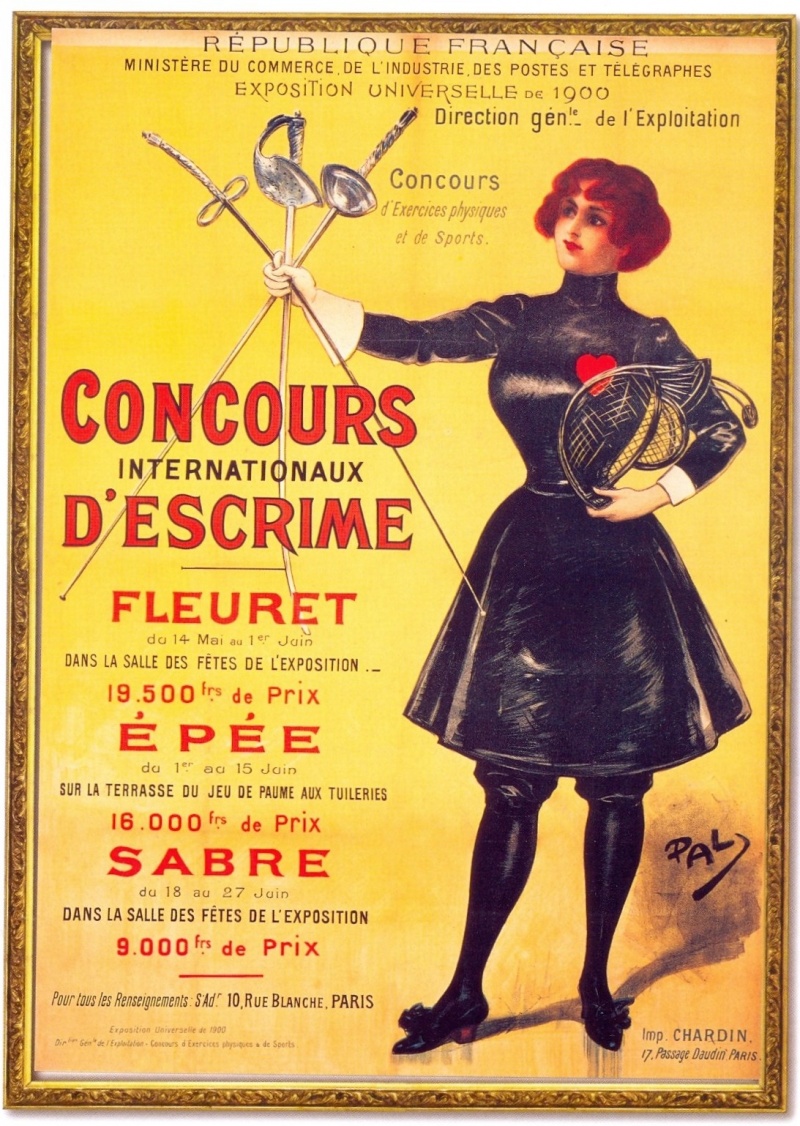
The Games were held as part of the 1900 Exposition Universelle (World's Fair). In total, 1,226 competitors took part in 19 different sports.[note1] This number relies on certain assumptions about which events were and were not "Olympic". Many athletes, some of whom had won events, were unaware they had competed in the Olympic Games. Women took part in the games for the first time, with sailor Hélène de Pourtalès, born Helen Barbey in New York City, becoming the first female Olympic champion. The decision to hold competitions on a Sunday brought protests from many American athletes, who traveled as representatives of their colleges and were expected to withdraw rather than compete on their religious day of rest.
Most of the winners in 1900 did not receive medals but were given cups or trophies. Professionals competed in fencing, as was tradition, and Albert Robert Ayat (France), who won the épée for amateurs and masters, was awarded a prize of 3,000 F (equivalent to €12,863 in 2022). Some events were contested for the only time in the history of the Games, including angling, motor racing, ballooning, cricket, croquet, Basque pelota, 200m swimming obstacle race and underwater swimming. This was also the only Olympic Games in history to use live animals (pigeons) as targets during the shooting event. The host nation of France fielded 72% of all athletes (720 of the 997) and won the most gold, silver and bronze medal placings. U.S. athletes won the second-most in each while fielding the fifth-most participants, 75. British athletes won the third-most in each while fielding the second most participants, 102.
The 1900 Games were held as part of the 1900 Exposition Universelle. The Baron de Coubertin believed this would help public awareness of the Olympics and submitted elaborate plans to rebuild the ancient site of Olympia, complete with statues, temples, stadia, and gymnasia. The director of the Exposition Universelle, Alfred Picard, thought holding an ancient sport event at the Exposition Universelle was an "absurd anachronism". After thanking de Coubertin for his plans, Picard filed them away and nothing more came of it.
A committee was formed for the organization of the Games, consisting of some of the more able sports administrators of the day, and a provisional program was drawn up. Sports to be included at the games were track and field athletics, swimming, wrestling, gymnastics, fencing, French and British boxing, river and ocean yacht racing, cycling, golf, lifesaving, archery, weightlifting, rowing, diving, and water polo.
British and Irish sports associations and several influential American universities and sports clubs announced their desire to compete. Competitors from Russia and Australia also confirmed their intentions to travel to Paris.
On 9 November 1898, the Union des Sociétés Françaises de Sports Athlétiques ("Union of the French Societies for Athletic Sports" or USFSA) announced that it would have the sole right to any organized sport held during the World's Fair. It was an empty threat, but Viscount Charles de La Rochefoucauld, the nominated head of the organizing committee, stepped down rather than be embroiled in the political battle. The Baron de Coubertin, also secretary-general of the USFSA, was urged to withdraw from active involvement in running the Games and did so, only to comment later, "I surrendered—and was incorrect in doing so."
Hub AI
1900 Summer Olympics AI simulator
(@1900 Summer Olympics_simulator)
1900 Summer Olympics
The 1900 Summer Olympics (French: Jeux olympiques d'été de 1900), today officially known as the Games of the II Olympiad (Jeux de la IIe olympiade) and also known as Paris 1900, were an international multi-sport event that took place in Paris, France, from 14 May to 28 October 1900. No opening or closing ceremonies were held.
At the Olympic Congress of 1894, which convened in the Sorbonne building, Pierre de Coubertin proposed that the Olympic Games should take place in Paris in 1900. However, the delegates to the conference were unwilling to wait six years and lobbied to hold the first games in 1896. A decision was made to hold the first Olympic Games in 1896 in Athens and have Paris host the second Games.
The Games were held as part of the 1900 Exposition Universelle (World's Fair). In total, 1,226 competitors took part in 19 different sports.[note1] This number relies on certain assumptions about which events were and were not "Olympic". Many athletes, some of whom had won events, were unaware they had competed in the Olympic Games. Women took part in the games for the first time, with sailor Hélène de Pourtalès, born Helen Barbey in New York City, becoming the first female Olympic champion. The decision to hold competitions on a Sunday brought protests from many American athletes, who traveled as representatives of their colleges and were expected to withdraw rather than compete on their religious day of rest.
Most of the winners in 1900 did not receive medals but were given cups or trophies. Professionals competed in fencing, as was tradition, and Albert Robert Ayat (France), who won the épée for amateurs and masters, was awarded a prize of 3,000 F (equivalent to €12,863 in 2022). Some events were contested for the only time in the history of the Games, including angling, motor racing, ballooning, cricket, croquet, Basque pelota, 200m swimming obstacle race and underwater swimming. This was also the only Olympic Games in history to use live animals (pigeons) as targets during the shooting event. The host nation of France fielded 72% of all athletes (720 of the 997) and won the most gold, silver and bronze medal placings. U.S. athletes won the second-most in each while fielding the fifth-most participants, 75. British athletes won the third-most in each while fielding the second most participants, 102.
The 1900 Games were held as part of the 1900 Exposition Universelle. The Baron de Coubertin believed this would help public awareness of the Olympics and submitted elaborate plans to rebuild the ancient site of Olympia, complete with statues, temples, stadia, and gymnasia. The director of the Exposition Universelle, Alfred Picard, thought holding an ancient sport event at the Exposition Universelle was an "absurd anachronism". After thanking de Coubertin for his plans, Picard filed them away and nothing more came of it.
A committee was formed for the organization of the Games, consisting of some of the more able sports administrators of the day, and a provisional program was drawn up. Sports to be included at the games were track and field athletics, swimming, wrestling, gymnastics, fencing, French and British boxing, river and ocean yacht racing, cycling, golf, lifesaving, archery, weightlifting, rowing, diving, and water polo.
British and Irish sports associations and several influential American universities and sports clubs announced their desire to compete. Competitors from Russia and Australia also confirmed their intentions to travel to Paris.
On 9 November 1898, the Union des Sociétés Françaises de Sports Athlétiques ("Union of the French Societies for Athletic Sports" or USFSA) announced that it would have the sole right to any organized sport held during the World's Fair. It was an empty threat, but Viscount Charles de La Rochefoucauld, the nominated head of the organizing committee, stepped down rather than be embroiled in the political battle. The Baron de Coubertin, also secretary-general of the USFSA, was urged to withdraw from active involvement in running the Games and did so, only to comment later, "I surrendered—and was incorrect in doing so."
Recent media