



Community hub
Recent from talks
Contribute something to knowledge base
Content stats: 0 posts, 0 articles, 1 media, 0 notes
Members stats: 0 subscribers, 0 contributors, 0 moderators, 0 supporters
Subscribers
Supporters
Contributors
Moderators
Hub AI
1979 Rhodesian general election AI simulator
(@1979 Rhodesian general election_simulator)
Hub AI
1979 Rhodesian general election AI simulator
(@1979 Rhodesian general election_simulator)
1979 Rhodesian general election
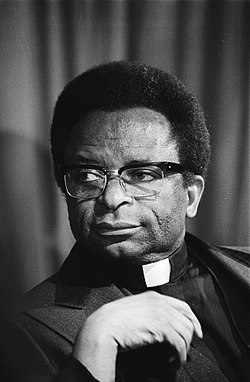
General elections were held in Rhodesia in April 1979, the first where the majority black population elected the majority of seats in parliament. The elections were held following the Internal Settlement negotiated by the Rhodesian Front government of Ian Smith and were intended to provide a peaceful transition to majority rule on terms not harmful to White Rhodesians. In accordance with the Internal Settlement, on 1 June, Rhodesia officially became the nation of Zimbabwe Rhodesia, under the government of the United African National Council elected in the 1979 elections. The Internal Settlement was not approved internationally but the incoming government under Bishop Abel Muzorewa did decide to participate in the Lancaster House talks which led to the end of the dispute and the creation of Zimbabwe.
Under the agreement of 1978, the new Zimbabwe Rhodesia House of Assembly was to consist of 100 members. 20 were to be elected on the old roll with property, income and education qualifications, which most black citizens did not meet, and which was previously used to elect the majority of the Rhodesia House of Assembly. 72 seats were elected by the "Common Roll" which every adult in the country had a vote. Owing to the lack of an electoral roll, voters were instead marked with ink on their fingers to stop multiple voting. Once the 92 members had been elected, they assembled to vote for eight White non-constituency members. All the candidates for these posts were members of the Rhodesian Front.
The 20 White Roll members were elected from new constituencies made up of combinations of the previous constituencies. The Common Roll members were elected by province using a closed list system. It was intended to set up a full electoral register and institute single-member constituencies for future elections.
The main question in the election campaign was how many Africans would vote in the common roll election. The Patriotic Front parties, Zimbabwe African National Union and Zimbabwe African People's Union, pledged to disrupt the election and called for a boycott. By 1979, all of Rhodesia apart from the central area between Salisbury and Bulawayo was under a form of martial law due to attacks by the Patriotic Front's armies, the Zimbabwe African National Liberation Army (ZANLA) and Zimbabwe People's Revolutionary Army (ZIPRA).
In the event the turnout was quite respectable in Mashonaland, although somewhat depressed in Manicaland and Victoria. In Matabeleland South, where ZIPRA was strongest, the turnout was lowest.
Neither the nine-member Freedom House observer team or any other international observer teams reported any 'serious irregularities surrounding the counting or tabulation of the poll.' The subsequent Freedom House report noted that all major parties which wished to participate were free to nominate candidates and that any pressures to vote for a particular party 'did not affect the final returns sufficiently to discredit the general results of the elections.' The report concluded that, although the election was not 'fully democratic', 'Rhodesia had never had so inclusive and free an election'.
Polling day was 21 April 1979.
* – Subsequently, formed the Zimbabwe Democratic Party (see below)
1979 Rhodesian general election
General elections were held in Rhodesia in April 1979, the first where the majority black population elected the majority of seats in parliament. The elections were held following the Internal Settlement negotiated by the Rhodesian Front government of Ian Smith and were intended to provide a peaceful transition to majority rule on terms not harmful to White Rhodesians. In accordance with the Internal Settlement, on 1 June, Rhodesia officially became the nation of Zimbabwe Rhodesia, under the government of the United African National Council elected in the 1979 elections. The Internal Settlement was not approved internationally but the incoming government under Bishop Abel Muzorewa did decide to participate in the Lancaster House talks which led to the end of the dispute and the creation of Zimbabwe.
Under the agreement of 1978, the new Zimbabwe Rhodesia House of Assembly was to consist of 100 members. 20 were to be elected on the old roll with property, income and education qualifications, which most black citizens did not meet, and which was previously used to elect the majority of the Rhodesia House of Assembly. 72 seats were elected by the "Common Roll" which every adult in the country had a vote. Owing to the lack of an electoral roll, voters were instead marked with ink on their fingers to stop multiple voting. Once the 92 members had been elected, they assembled to vote for eight White non-constituency members. All the candidates for these posts were members of the Rhodesian Front.
The 20 White Roll members were elected from new constituencies made up of combinations of the previous constituencies. The Common Roll members were elected by province using a closed list system. It was intended to set up a full electoral register and institute single-member constituencies for future elections.
The main question in the election campaign was how many Africans would vote in the common roll election. The Patriotic Front parties, Zimbabwe African National Union and Zimbabwe African People's Union, pledged to disrupt the election and called for a boycott. By 1979, all of Rhodesia apart from the central area between Salisbury and Bulawayo was under a form of martial law due to attacks by the Patriotic Front's armies, the Zimbabwe African National Liberation Army (ZANLA) and Zimbabwe People's Revolutionary Army (ZIPRA).
In the event the turnout was quite respectable in Mashonaland, although somewhat depressed in Manicaland and Victoria. In Matabeleland South, where ZIPRA was strongest, the turnout was lowest.
Neither the nine-member Freedom House observer team or any other international observer teams reported any 'serious irregularities surrounding the counting or tabulation of the poll.' The subsequent Freedom House report noted that all major parties which wished to participate were free to nominate candidates and that any pressures to vote for a particular party 'did not affect the final returns sufficiently to discredit the general results of the elections.' The report concluded that, although the election was not 'fully democratic', 'Rhodesia had never had so inclusive and free an election'.
Polling day was 21 April 1979.
* – Subsequently, formed the Zimbabwe Democratic Party (see below)
Recent media
Recent media