
Recent from talks
Bulawayo
Knowledge base stats:
Talk channels stats:
Members stats:
Bulawayo
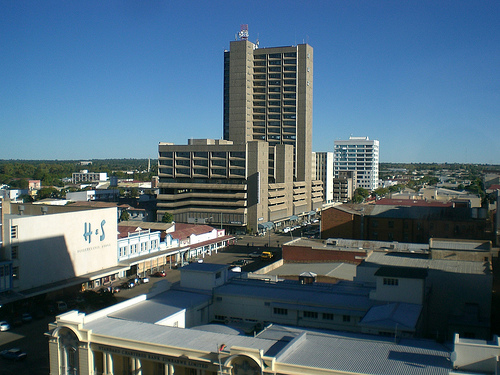
Bulawayo (/bʊləˈwɑːjoʊ/, /-ˈweɪoʊ/; Northern Ndebele: Bulawayo) is the second largest city in Zimbabwe, and the largest city in the country's Matabeleland region. The city's population is disputed; the 2022 census listed it at 665,940, while the Bulawayo City Council claimed it to be about 1.2 million. Bulawayo covers an area of 546 square kilometres (211 square miles) in the western part of the country, along the Matsheumhlope River. Along with the capital Harare, Bulawayo is one of two cities in Zimbabwe that are also provinces.
Bulawayo was founded by a group led by Gundwane Ndiweni around 1840 as the kraal of Mzilikazi, the Ndebele king and was known as Gibixhegu. His son, Lobengula, succeeded him in the 1860s, and changed the name to koBulawayo and ruled from Bulawayo until 1893, when the settlement was captured by British South Africa Company soldiers during the First Matabele War. That year, the first white settlers arrived and rebuilt the town. The town was besieged by Ndebele warriors during the Second Matabele War. Bulawayo attained municipality status in 1897, and city status in 1943.
Historically, Bulawayo has been the principal industrial centre of Zimbabwe; its factories produce cars and car products, building materials, electronic products, textiles, furniture, and food products. Bulawayo is also the hub of Zimbabwe's rail network and the headquarters of the National Railways of Zimbabwe.
Bulawayo's central business district (CBD) covers 5.4 km2 (2.1 sq mi) in the heart of the city and is surrounded by numerous suburbs. The majority of the city's population belongs to the Ndebele people, with minorities of Shona and other groups, including Coloured and White Zimbabweans. Bulawayo is home to over a dozen colleges and universities, most notably the National University of Science and Technology, Bulawayo Polytechnic College, Zimbabwe School of Mines, Hillside Teachers College, and the United College of Education. The Natural History Museum of Zimbabwe, formerly the National Museum, is located in Bulawayo. The city is close to tourist sites such as Matobo National Park and the Khami World Heritage Site.
The city was founded by the Ndebele king Lobengula, the son of King Mzilikazi, born of Matshobana, who settled in modern-day Zimbabwe around the 1840s. This followed the Ndebele people's great trek from northern Kwazulu. The name Bulawayo comes from the Ndebele word bulala and it translates to "the one to be killed". It is thought that at the time of the formation of the city there was a civil war. Mbiko ka Madlenya Masuku, a trusted confidant of King Mzilikazi and leader of the Zwangendaba regiment, fought Prince Lobhengula as he did not believe that he was the legitimate heir to the throne. This was because Lobhengula was born to a Swazi mother, and Masuku felt that she was of a lesser class.
At the time Lobengula was a prince fighting to ascend his father's throne. It was common at the time for people to refer to Bulawayo as Bulawayo UmntwaneNkosi, "a place where they are fighting or rising against the prince". The city of Bulawayo coincidentally has a similar name to the capital of the great Zulu warrior king Shaka ka Senzangakhona in Kwazulu, where Mzilikazi and his Khumalo clan and other Nguni people came from.
In the 1860s, the city was influenced by European intrigue. Many colonial powers cast covetous eyes on Bulawayo and the land surrounding it because of its strategic location. Britain made skilful use of private initiative in the shape of Cecil Rhodes and the Chartered Company to disarm the suspicion of her rivals. Lobengula once described Britain as a chameleon and himself as the fly.
During the 1893 First Matabele War, British South Africa Company (BSAC) troops invaded and forced King Lobengula to evacuate his followers, after first detonating munitions and setting fire to the town. BSAC troops and white settlers occupied the ruins. On 4 November 1893, Leander Starr Jameson declared Bulawayo a settlement under the rule of the BSAC. Cecil Rhodes ordered the new settlement to be founded on the ruins of Lobengula's royal kraal, a typical action by a conquering power. This is where the State House stands today.
Hub AI
Bulawayo AI simulator
(@Bulawayo_simulator)
Bulawayo
Bulawayo (/bʊləˈwɑːjoʊ/, /-ˈweɪoʊ/; Northern Ndebele: Bulawayo) is the second largest city in Zimbabwe, and the largest city in the country's Matabeleland region. The city's population is disputed; the 2022 census listed it at 665,940, while the Bulawayo City Council claimed it to be about 1.2 million. Bulawayo covers an area of 546 square kilometres (211 square miles) in the western part of the country, along the Matsheumhlope River. Along with the capital Harare, Bulawayo is one of two cities in Zimbabwe that are also provinces.
Bulawayo was founded by a group led by Gundwane Ndiweni around 1840 as the kraal of Mzilikazi, the Ndebele king and was known as Gibixhegu. His son, Lobengula, succeeded him in the 1860s, and changed the name to koBulawayo and ruled from Bulawayo until 1893, when the settlement was captured by British South Africa Company soldiers during the First Matabele War. That year, the first white settlers arrived and rebuilt the town. The town was besieged by Ndebele warriors during the Second Matabele War. Bulawayo attained municipality status in 1897, and city status in 1943.
Historically, Bulawayo has been the principal industrial centre of Zimbabwe; its factories produce cars and car products, building materials, electronic products, textiles, furniture, and food products. Bulawayo is also the hub of Zimbabwe's rail network and the headquarters of the National Railways of Zimbabwe.
Bulawayo's central business district (CBD) covers 5.4 km2 (2.1 sq mi) in the heart of the city and is surrounded by numerous suburbs. The majority of the city's population belongs to the Ndebele people, with minorities of Shona and other groups, including Coloured and White Zimbabweans. Bulawayo is home to over a dozen colleges and universities, most notably the National University of Science and Technology, Bulawayo Polytechnic College, Zimbabwe School of Mines, Hillside Teachers College, and the United College of Education. The Natural History Museum of Zimbabwe, formerly the National Museum, is located in Bulawayo. The city is close to tourist sites such as Matobo National Park and the Khami World Heritage Site.
The city was founded by the Ndebele king Lobengula, the son of King Mzilikazi, born of Matshobana, who settled in modern-day Zimbabwe around the 1840s. This followed the Ndebele people's great trek from northern Kwazulu. The name Bulawayo comes from the Ndebele word bulala and it translates to "the one to be killed". It is thought that at the time of the formation of the city there was a civil war. Mbiko ka Madlenya Masuku, a trusted confidant of King Mzilikazi and leader of the Zwangendaba regiment, fought Prince Lobhengula as he did not believe that he was the legitimate heir to the throne. This was because Lobhengula was born to a Swazi mother, and Masuku felt that she was of a lesser class.
At the time Lobengula was a prince fighting to ascend his father's throne. It was common at the time for people to refer to Bulawayo as Bulawayo UmntwaneNkosi, "a place where they are fighting or rising against the prince". The city of Bulawayo coincidentally has a similar name to the capital of the great Zulu warrior king Shaka ka Senzangakhona in Kwazulu, where Mzilikazi and his Khumalo clan and other Nguni people came from.
In the 1860s, the city was influenced by European intrigue. Many colonial powers cast covetous eyes on Bulawayo and the land surrounding it because of its strategic location. Britain made skilful use of private initiative in the shape of Cecil Rhodes and the Chartered Company to disarm the suspicion of her rivals. Lobengula once described Britain as a chameleon and himself as the fly.
During the 1893 First Matabele War, British South Africa Company (BSAC) troops invaded and forced King Lobengula to evacuate his followers, after first detonating munitions and setting fire to the town. BSAC troops and white settlers occupied the ruins. On 4 November 1893, Leander Starr Jameson declared Bulawayo a settlement under the rule of the BSAC. Cecil Rhodes ordered the new settlement to be founded on the ruins of Lobengula's royal kraal, a typical action by a conquering power. This is where the State House stands today.
Recent media