
Recent from talks
1988 Formula One World Championship
Knowledge base stats:
Talk channels stats:
Members stats:
1988 Formula One World Championship
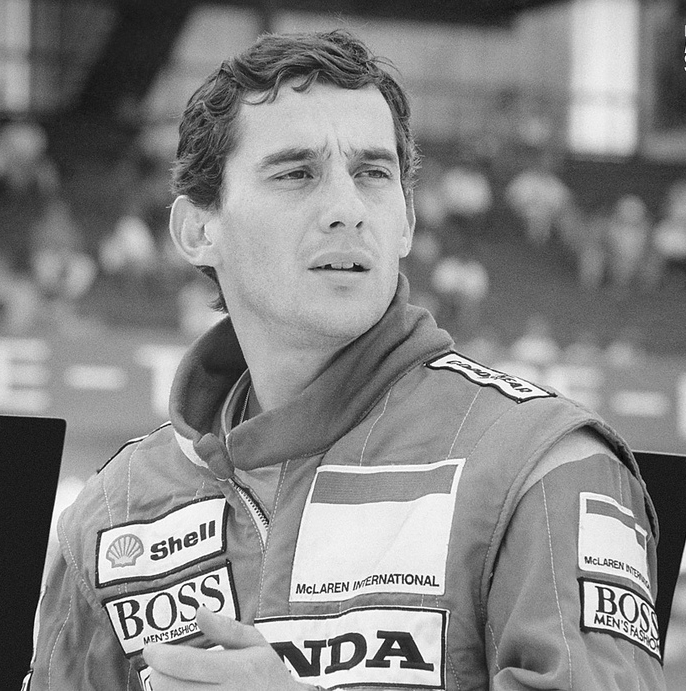
The 1988 FIA Formula One World Championship was the 42nd season of FIA Formula One motor racing. It featured the 1988 Formula One World Championship for Drivers and the 1988 Formula One World Championship for Constructors, which were contested concurrently over a sixteen-race series that commenced on 3 April and ended on 13 November. The World Championship for Drivers was won by Ayrton Senna, and the World Championship for Constructors by McLaren-Honda. Senna and McLaren teammate Alain Prost won fifteen of the sixteen races between them; the only race neither driver won was the Italian Grand Prix, where Ferrari's Gerhard Berger took an emotional victory four weeks after the death of team founder Enzo Ferrari. McLaren's win tally has only been bettered or equalled in seasons with more than sixteen races; their Constructors' Championship tally of 199 points, more than three times that of any other constructor, was also a record until 2002. Defending Constructors' Champions Williams were never in championship contention, failing to win a single race and scoring just two podiums all season, having been forced to run during this season with underpowered naturally-aspirated Judd V8 engines having lost their previous supply of turbo V6 Honda engines at the end of the previous season.
The following drivers and constructors competed in the 1988 season. All teams competed with tyres supplied by Goodyear.
The Austrian Grand Prix was dropped from the 1988 calendar due to safety concerns with the Österreichring, the narrow pit straight resulting in the 1987 race having to be restarted twice and Stefan Johansson hitting a small reindeer during the practice session, destroying his car and breaking his ribs in the process. This led to a re-organisation of the calendar, with the Belgian Grand Prix being moved from late May to late August to fill the slot traditionally occupied by the Austrian Grand Prix, and the Mexican Grand Prix being moved from mid-October to late May.
The Canadian Grand Prix returned after a year away, taking place in mid-June as the second race in a three-race North American tour, preceded by the Mexican Grand Prix and followed by the Detroit Grand Prix the following week.
The FIA continued their strategy from 1987, to make naturally aspirated engines more attractive, ahead of the ban on turbocharged engines from 1989 on:
The FIA also introduced some new safety measures:
The pre-season was a very contentious time, with many theories of the championship flying around: whether the Honda engines would prove successful with McLaren; whether Ferrari would be able to continue the trend set by the last two rounds of 1987, in which Gerhard Berger scored successive victories in Japan and Australia; whether Williams would be able to continue their success without Honda and Nelson Piquet; and whether reigning world champion Piquet could succeed in defending his title with the Honda-powered Lotus.
Pre-season testing in Rio de Janeiro at the newly named Autódromo Internacional Nelson Piquet (formerly known as the Jacarepaguá Circuit) was dominated by Ferrari seemingly continuing on with the form that saw Gerhard Berger win the final two races of 1987. Both Berger and Michele Alboreto set times during the Rio tests which were significantly faster than anyone else, and faster than had been recorded during the 1987 Brazilian Grand Prix, prompting rumours that the Scuderia had been running their cars without the FIA's mandatory pop-off valve, or had the valve set at 1987's 4.0 bar limit. The rumours seemed to carry weight when just a month later for the opening race at the same circuit when the pop-off valves were to be in use, neither Berger nor Alboreto could get near their testing times from the previous month, and both were well down on top speed compared to the McLaren and Lotus-Hondas.
Hub AI
1988 Formula One World Championship AI simulator
(@1988 Formula One World Championship_simulator)
1988 Formula One World Championship
The 1988 FIA Formula One World Championship was the 42nd season of FIA Formula One motor racing. It featured the 1988 Formula One World Championship for Drivers and the 1988 Formula One World Championship for Constructors, which were contested concurrently over a sixteen-race series that commenced on 3 April and ended on 13 November. The World Championship for Drivers was won by Ayrton Senna, and the World Championship for Constructors by McLaren-Honda. Senna and McLaren teammate Alain Prost won fifteen of the sixteen races between them; the only race neither driver won was the Italian Grand Prix, where Ferrari's Gerhard Berger took an emotional victory four weeks after the death of team founder Enzo Ferrari. McLaren's win tally has only been bettered or equalled in seasons with more than sixteen races; their Constructors' Championship tally of 199 points, more than three times that of any other constructor, was also a record until 2002. Defending Constructors' Champions Williams were never in championship contention, failing to win a single race and scoring just two podiums all season, having been forced to run during this season with underpowered naturally-aspirated Judd V8 engines having lost their previous supply of turbo V6 Honda engines at the end of the previous season.
The following drivers and constructors competed in the 1988 season. All teams competed with tyres supplied by Goodyear.
The Austrian Grand Prix was dropped from the 1988 calendar due to safety concerns with the Österreichring, the narrow pit straight resulting in the 1987 race having to be restarted twice and Stefan Johansson hitting a small reindeer during the practice session, destroying his car and breaking his ribs in the process. This led to a re-organisation of the calendar, with the Belgian Grand Prix being moved from late May to late August to fill the slot traditionally occupied by the Austrian Grand Prix, and the Mexican Grand Prix being moved from mid-October to late May.
The Canadian Grand Prix returned after a year away, taking place in mid-June as the second race in a three-race North American tour, preceded by the Mexican Grand Prix and followed by the Detroit Grand Prix the following week.
The FIA continued their strategy from 1987, to make naturally aspirated engines more attractive, ahead of the ban on turbocharged engines from 1989 on:
The FIA also introduced some new safety measures:
The pre-season was a very contentious time, with many theories of the championship flying around: whether the Honda engines would prove successful with McLaren; whether Ferrari would be able to continue the trend set by the last two rounds of 1987, in which Gerhard Berger scored successive victories in Japan and Australia; whether Williams would be able to continue their success without Honda and Nelson Piquet; and whether reigning world champion Piquet could succeed in defending his title with the Honda-powered Lotus.
Pre-season testing in Rio de Janeiro at the newly named Autódromo Internacional Nelson Piquet (formerly known as the Jacarepaguá Circuit) was dominated by Ferrari seemingly continuing on with the form that saw Gerhard Berger win the final two races of 1987. Both Berger and Michele Alboreto set times during the Rio tests which were significantly faster than anyone else, and faster than had been recorded during the 1987 Brazilian Grand Prix, prompting rumours that the Scuderia had been running their cars without the FIA's mandatory pop-off valve, or had the valve set at 1987's 4.0 bar limit. The rumours seemed to carry weight when just a month later for the opening race at the same circuit when the pop-off valves were to be in use, neither Berger nor Alboreto could get near their testing times from the previous month, and both were well down on top speed compared to the McLaren and Lotus-Hondas.
Recent media