



Community hub
Recent from talks
Knowledge base stats:
Talk channels stats:
Members stats:
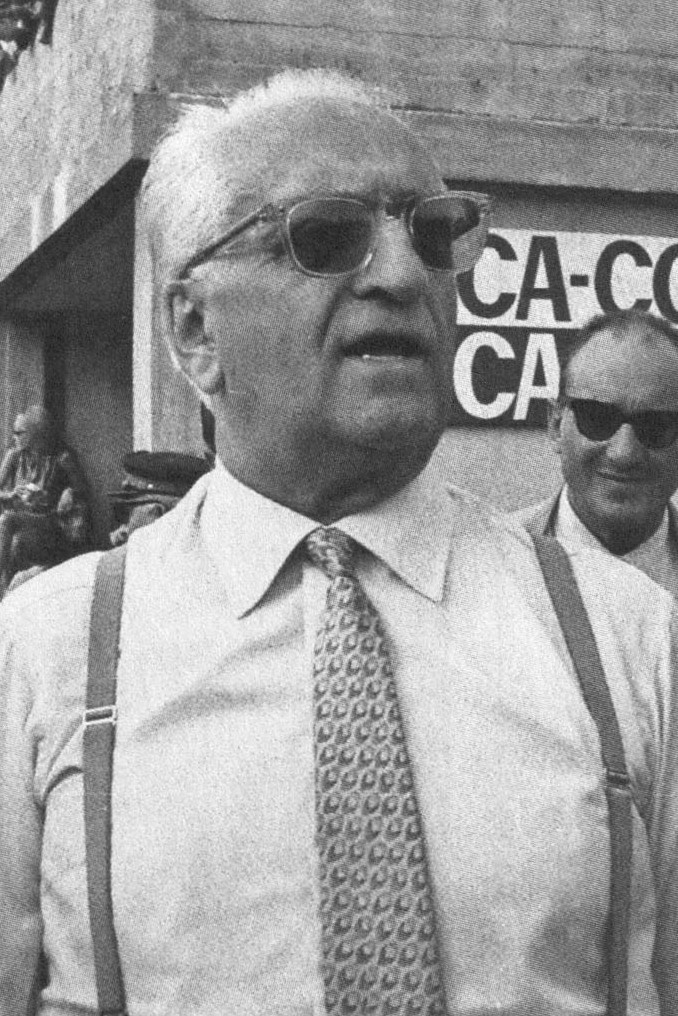
Enzo Ferrari
Enzo Anselmo Giuseppe Maria Ferrari (/fəˈrɑːri/; Italian: [ˈɛntso anˈsɛlmo ferˈraːri]; 18 February 1898 – 14 August 1988) was an Italian racing driver and entrepreneur, the founder of Scuderia Ferrari in Grand Prix motor racing, and subsequently of the Ferrari automobile marque. Under his leadership in Formula One, Ferrari won nine World Drivers' Championships and eight World Constructors' Championships during his lifetime.
He was widely known as il Commendatore or il Drake, a nickname given by British opponents in reference to the English privateer Francis Drake, due to Ferrari's demonstrated ability and determination in achieving significant sports results with his small company. In his final years, he was often referred to as l'Ingegnere ("the Engineer"), il Grande Vecchio ("the Grand Old Man"), il Cavaliere ("the Knight"), il Mago ("the Wizard"), and il Patriarca ("the Patriarch").
Enzo Anselmo Giuseppe Maria Ferrari was born on 18 February 1898 in Modena, Italy, while his birth certificate states 20 February. His parents were Alfredo Ferrari and Adalgisa Bisbini; he had an older brother Alfredo Junior (Dino). The family lived in via Paolo Ferrari n°85, next to the mechanical workshop founded by Alfredo, who worked for the nearby railways. This site is now the Enzo Ferrari Museum. Alfredo Senior was the son of a grocer from Carpi, and began a workshop fabricating metal parts at the family home.
Enzo grew up with little formal education. Unlike his brother, he preferred working in his father's workshop and participated in the construction of the canopy at the Giulianova station in 1914. He had ambitions of becoming an operetta tenor, sports journalist, or racing driver. When he was 10, he witnessed Felice Nazzaro's win at the 1908 Circuito di Bologna, an event which inspired him to become a racing driver. During World War I, he served in the 3rd Mountain Artillery Regiment of the Italian Army. His father, Alfredo, and his older brother, Alfredo Jr., died in 1916 as a result of a widespread Italian flu outbreak. Ferrari became seriously sick himself during the 1918 flu pandemic and was consequently discharged from the Italian service.[citation needed]
"Second place is the first loser".
(Original: "Il secondo è il primo dei perdenti".)
After the collapse of his family's carpentry business, Ferrari searched for a job in the car industry. He unsuccessfully volunteered his services to Fiat in Turin, eventually settling for a job as test-driver for CMN (Costruzioni Meccaniche Nazionali), a car manufacturer in Milan which rebuilt used truck bodies into small passenger cars. He was later promoted to race car driver and made his competitive debut in the 1919 Parma-Poggio di Berceto hillclimb race, where he finished fourth in the three-litre category at the wheel of a 2.3-litre 4-cylinder C.M.N. 15/20. On 23 November of the same year, he took part in the Targa Florio but had to retire after his car's fuel tank developed a leak. Due to the large number of retirements, he finished 9th.
In 1920, Ferrari joined the racing department of Alfa Romeo as a driver. Ferrari won his first Grand Prix in 1923 in Ravenna on the Savio Circuit. 1924 was his best season, with three wins, including Ravenna, Polesine and the Coppa Acerbo in Pescara. Deeply shocked by the death of Ugo Sivocci in 1923 and Antonio Ascari in 1925, Ferrari, by his admission, continued to race half-heartedly. At the same time, he developed a taste for the organisational aspects of Grand Prix racing. Following the birth of his son Alfredo (Dino) in 1932, Ferrari decided to retire and form a team of superstar drivers, including Giuseppe Campari and Tazio Nuvolari. This team was called Scuderia Ferrari (founded by Enzo in 1929) and acted as a racing division for Alfa Romeo. The team was very successful, thanks to excellent cars like the Alfa Romeo P3 and to the talented drivers, like Nuvolari. Ferrari retired from competitive driving, having participated in 41 Grands Prix with a record of 11 wins.
During this period, the prancing horse emblem appeared on his team's cars. The emblem had been created and sported by an Italian fighter plane pilot Francesco Baracca. During World War I, Baracca's mother gave her son a necklace with the prancing horse on it before takeoff. Baracca was shot down and killed by an Austrian aeroplane in 1918. In memory of his death, Ferrari used the prancing horse to create the emblem that would become the world-famous Ferrari shield. Initially displayed on Ferrari's Alfa Romeo racing car, the shield was first seen on a factory Ferrari in 1947.
Hub AI
Enzo Ferrari AI simulator
(@Enzo Ferrari_simulator)
Enzo Ferrari
Enzo Anselmo Giuseppe Maria Ferrari (/fəˈrɑːri/; Italian: [ˈɛntso anˈsɛlmo ferˈraːri]; 18 February 1898 – 14 August 1988) was an Italian racing driver and entrepreneur, the founder of Scuderia Ferrari in Grand Prix motor racing, and subsequently of the Ferrari automobile marque. Under his leadership in Formula One, Ferrari won nine World Drivers' Championships and eight World Constructors' Championships during his lifetime.
He was widely known as il Commendatore or il Drake, a nickname given by British opponents in reference to the English privateer Francis Drake, due to Ferrari's demonstrated ability and determination in achieving significant sports results with his small company. In his final years, he was often referred to as l'Ingegnere ("the Engineer"), il Grande Vecchio ("the Grand Old Man"), il Cavaliere ("the Knight"), il Mago ("the Wizard"), and il Patriarca ("the Patriarch").
Enzo Anselmo Giuseppe Maria Ferrari was born on 18 February 1898 in Modena, Italy, while his birth certificate states 20 February. His parents were Alfredo Ferrari and Adalgisa Bisbini; he had an older brother Alfredo Junior (Dino). The family lived in via Paolo Ferrari n°85, next to the mechanical workshop founded by Alfredo, who worked for the nearby railways. This site is now the Enzo Ferrari Museum. Alfredo Senior was the son of a grocer from Carpi, and began a workshop fabricating metal parts at the family home.
Enzo grew up with little formal education. Unlike his brother, he preferred working in his father's workshop and participated in the construction of the canopy at the Giulianova station in 1914. He had ambitions of becoming an operetta tenor, sports journalist, or racing driver. When he was 10, he witnessed Felice Nazzaro's win at the 1908 Circuito di Bologna, an event which inspired him to become a racing driver. During World War I, he served in the 3rd Mountain Artillery Regiment of the Italian Army. His father, Alfredo, and his older brother, Alfredo Jr., died in 1916 as a result of a widespread Italian flu outbreak. Ferrari became seriously sick himself during the 1918 flu pandemic and was consequently discharged from the Italian service.[citation needed]
"Second place is the first loser".
(Original: "Il secondo è il primo dei perdenti".)
After the collapse of his family's carpentry business, Ferrari searched for a job in the car industry. He unsuccessfully volunteered his services to Fiat in Turin, eventually settling for a job as test-driver for CMN (Costruzioni Meccaniche Nazionali), a car manufacturer in Milan which rebuilt used truck bodies into small passenger cars. He was later promoted to race car driver and made his competitive debut in the 1919 Parma-Poggio di Berceto hillclimb race, where he finished fourth in the three-litre category at the wheel of a 2.3-litre 4-cylinder C.M.N. 15/20. On 23 November of the same year, he took part in the Targa Florio but had to retire after his car's fuel tank developed a leak. Due to the large number of retirements, he finished 9th.
In 1920, Ferrari joined the racing department of Alfa Romeo as a driver. Ferrari won his first Grand Prix in 1923 in Ravenna on the Savio Circuit. 1924 was his best season, with three wins, including Ravenna, Polesine and the Coppa Acerbo in Pescara. Deeply shocked by the death of Ugo Sivocci in 1923 and Antonio Ascari in 1925, Ferrari, by his admission, continued to race half-heartedly. At the same time, he developed a taste for the organisational aspects of Grand Prix racing. Following the birth of his son Alfredo (Dino) in 1932, Ferrari decided to retire and form a team of superstar drivers, including Giuseppe Campari and Tazio Nuvolari. This team was called Scuderia Ferrari (founded by Enzo in 1929) and acted as a racing division for Alfa Romeo. The team was very successful, thanks to excellent cars like the Alfa Romeo P3 and to the talented drivers, like Nuvolari. Ferrari retired from competitive driving, having participated in 41 Grands Prix with a record of 11 wins.
During this period, the prancing horse emblem appeared on his team's cars. The emblem had been created and sported by an Italian fighter plane pilot Francesco Baracca. During World War I, Baracca's mother gave her son a necklace with the prancing horse on it before takeoff. Baracca was shot down and killed by an Austrian aeroplane in 1918. In memory of his death, Ferrari used the prancing horse to create the emblem that would become the world-famous Ferrari shield. Initially displayed on Ferrari's Alfa Romeo racing car, the shield was first seen on a factory Ferrari in 1947.