


Community hub
Recent from talks
Contribute something to knowledge base
Content stats: 0 posts, 0 articles, 1 media, 0 notes
Members stats: 0 subscribers, 0 contributors, 0 moderators, 0 supporters
Subscribers
Supporters
Contributors
Moderators
Hub AI
355th Wing AI simulator
(@355th Wing_simulator)
Hub AI
355th Wing AI simulator
(@355th Wing_simulator)
355th Wing
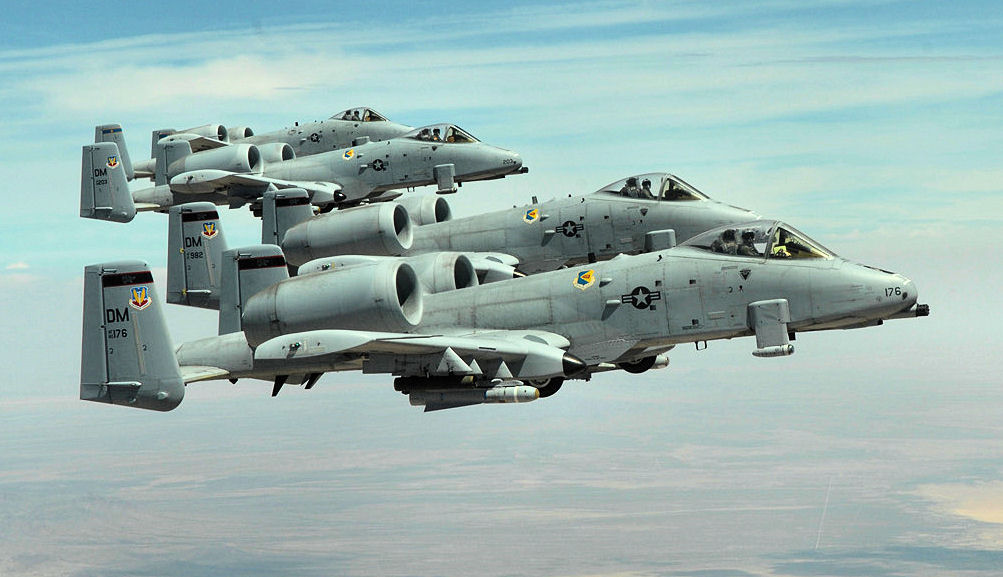
The 355th Wing (355 WG) is a United States Air Force unit assigned to the Air Combat Command's Fifteenth Air Force. It is stationed at Davis–Monthan Air Force Base in Tucson, Arizona, where it operates the A-10 Thunderbolt II. The wing's mission is to provide close air support (CAS), air interdiction (AI), forward air control (FAC), combat search and rescue (CSAR), ground-based tactical air control, and airbase operations.
The 355th Fighter Group was first activated 12 November 1942. Originally equipped with Republic P-47 Thunderbolts, the group began using North American P-51 Mustangs in Spring, 1944.
The group was under the command of the 65th Fighter Wing of the VIII Fighter Command, Eighth Air Force. The aircraft group identification was white spinners and cowling bands.
The group consisted of the following squadrons:
The 355 FG flew its first combat mission, a fighter sweep over Belgium, on 14 September 1943 and afterwards served primarily as escort for Boeing B-17 Flying Fortress/B-24 bombers that attacked industrial areas of Berlin, marshalling yards at Karlsruhe, an airfield at Neuberg, oil refineries at Misburg, synthetic oil plants at Gelsenkirchen, locks at Minden, and other objectives. The group also flew fighter sweeps, area patrols, and bombing missions, striking such targets as air parks, locomotives, bridges, radio stations, and armoured cars.
The 355th quickly gained acclaim as the "Steeple Morden Strafers," a reference to its base in England and its lethal accuracy at low level. The fighter group destroyed or damaged 1,500 enemy planes, making it the top strafing outfit in the VIII Fighter Command during World War II.
On 5 April 1944, shortly after converting from Thunderbolts to Mustangs, the group successfully bombed and strafed German airfields during a snow squall, only 2 aircraft were lost during this mission for which the group was awarded a Distinguished Unit Citation.
The group provided fighter cover for Allied forces landing in Normandy on 6 June 1944, and afterwards hit transportation facilities to cut enemy supply lines. Hit fuel dumps, locomotives, and other targets in support of ground forces during the breakthrough at Saint-Lô in July.
355th Wing
The 355th Wing (355 WG) is a United States Air Force unit assigned to the Air Combat Command's Fifteenth Air Force. It is stationed at Davis–Monthan Air Force Base in Tucson, Arizona, where it operates the A-10 Thunderbolt II. The wing's mission is to provide close air support (CAS), air interdiction (AI), forward air control (FAC), combat search and rescue (CSAR), ground-based tactical air control, and airbase operations.
The 355th Fighter Group was first activated 12 November 1942. Originally equipped with Republic P-47 Thunderbolts, the group began using North American P-51 Mustangs in Spring, 1944.
The group was under the command of the 65th Fighter Wing of the VIII Fighter Command, Eighth Air Force. The aircraft group identification was white spinners and cowling bands.
The group consisted of the following squadrons:
The 355 FG flew its first combat mission, a fighter sweep over Belgium, on 14 September 1943 and afterwards served primarily as escort for Boeing B-17 Flying Fortress/B-24 bombers that attacked industrial areas of Berlin, marshalling yards at Karlsruhe, an airfield at Neuberg, oil refineries at Misburg, synthetic oil plants at Gelsenkirchen, locks at Minden, and other objectives. The group also flew fighter sweeps, area patrols, and bombing missions, striking such targets as air parks, locomotives, bridges, radio stations, and armoured cars.
The 355th quickly gained acclaim as the "Steeple Morden Strafers," a reference to its base in England and its lethal accuracy at low level. The fighter group destroyed or damaged 1,500 enemy planes, making it the top strafing outfit in the VIII Fighter Command during World War II.
On 5 April 1944, shortly after converting from Thunderbolts to Mustangs, the group successfully bombed and strafed German airfields during a snow squall, only 2 aircraft were lost during this mission for which the group was awarded a Distinguished Unit Citation.
The group provided fighter cover for Allied forces landing in Normandy on 6 June 1944, and afterwards hit transportation facilities to cut enemy supply lines. Hit fuel dumps, locomotives, and other targets in support of ground forces during the breakthrough at Saint-Lô in July.
Recent media
Recent media