
Recent from talks
57th Fighter-Interceptor Squadron
Knowledge base stats:
Talk channels stats:
Members stats:
57th Fighter-Interceptor Squadron
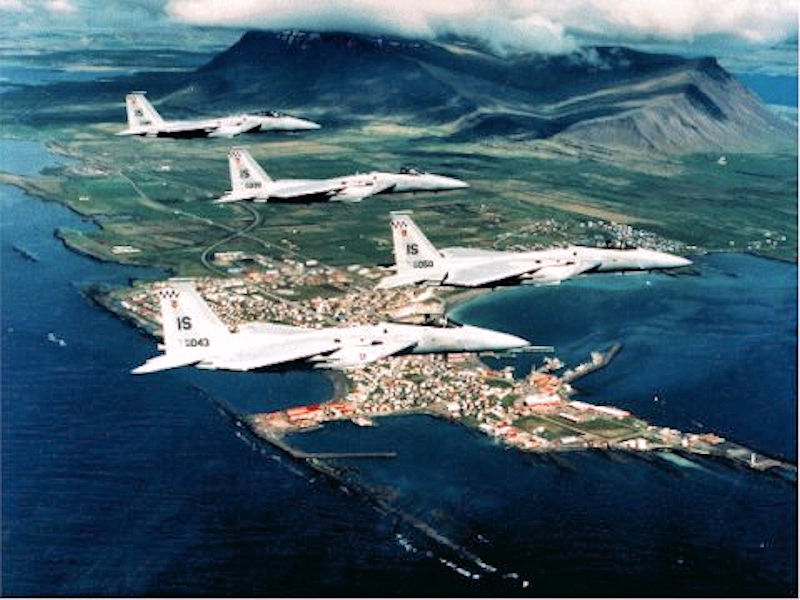
The 57th Fighter Squadron (57 FS), also known as "The Black Knights", is an active United States Air Force unit that is assigned to the 85th Fighter Group. The squadron was reactivated at Ebbing Air National Guard Base, Arkansas, on 2 July 2024 as an F-35A Lightning II training unit focused on NATO and Allied pilots. Although located on an Arkansas Air National Guard installation at a joint civil-military airport, the 57 FS is an active duty USAF command that functions as a geographically separated unit (GSU) of the Air Combat Command's (ACC) 33rd Fighter Wing (33 FW) at Eglin AFB, Florida. The 57th Fighter-Interceptor Squadron (57 FIS) was previously stationed at Naval Air Station Keflavik, Iceland, between 1954 and 1995, from where it policed the GIUK gap.
The squadron was activated at Hamilton Field, California as the 57th Pursuit Squadron on 15 January 1941 as one of the three original squadrons of the 54th Pursuit Group. It trained with Curtiss P-36 Hawks and Curtiss P-40 Warhawks, then moved to Everett Army Air Field, Washington where it served as a part of the air defense force for the Pacific coast during the first few months of World War II. It was formed with a cadre from the 35th Pursuit Group. The squadron was redesignated as a fighter unit in May 1942.
On 20 June 1942, the air echelon of the 54th PG (now FG) took its P-40s and newly assigned Bell P-39 Airacobras to Elmendorf Field, Alaska, where it served in combat against the Japanese forces that invaded the Aleutian Islands during the summer of 1942. The unit did not in itself take any part in the action against the Japanese in the Aleutians, but a detachment of eleven of the pilots saw service with the 42d which was based at Adak Army Air Field, Alaska and between them got three confirmed victories and two probables.[citation needed] On 4 August 1942, the 57th was moved to Kodiak Adak AAF and there replaced the 42d. All its pilots were rotated to Adak to gain combat experience.[citation needed] Squadron pilots were credited with the destruction of three enemy aircraft while deployed to Alaska.
The air echelon returned to the United States in December 1942 and rejoined the group, which had been assigned to Third Air Force in Louisiana, and became a replacement training unit (RTU) for North American P-51 Mustang pilots. RTUs were oversized units training individual pilots or aircrews. The unit's P-39s were to be flown to Duncan Field, Texas for depot-level overhaul.[citation needed] It was reequipped with the North American P-51A Mustang, thereby becoming the first P-51 unit in the AAF.[citation needed]
In early May 1943, the 54th Fighter Group began a split operation, with headquarters and the 56th and 57th Fighter Squadrons relocating to Bartow Army Air Field, Florida, while the group's other squadron was at Hillsborough Army Air Field. However, the Army Air Forces (AAF) was finding that standard military units, based on relatively inflexible tables of organization, were proving less well adapted to the training mission. Accordingly, a more functional system was adopted in which each base was organized into a separate numbered unit. As a result, in 1944 the squadron was disbanded as the AAF converted to the AAF Base Unit system. The units at Bartow were replaced by the 340th AAF Base Unit (Replacement Training Unit, Fighter),
The unit was reactivated under Air Defense Command (ADC) on 24 March 1947 as an Air Force Reserve fighter squadron at Davis-Monthan Field, Arizona. The unit was not fully manned or equipped. It was inactivated in June 1949 when Continental Air Command reorganized its reserve units under the Wing Base Organization system.
In March 1953, the squadron was reactivated as the 57th Fighter-Interceptor Squadron, flying Northrop F-89 Scorpions. It was activated at Presque Isle Air Force Base, Maine as the 528th Air Defense Group's second operational squadron. A second swap of units began when the 82d Fighter Interceptor Squadron arrived from Iceland. The 57th FIS then moved to Iceland and was reassigned away from the group in November of the same year.
The 57th was reactivated as a regular squadron at Presque Isle AFB, Maine, on 20 March 1953 under Air Defense Command and designated the 57th Fighter-Interceptor Squadron. It was equipped with Northrop F-89C Scorpion interceptors, and assigned to the 528th Air Defense Group. It maintained a 24-hour alert at Presque Isle. The squadron was known as "Black Knights of Aroostook". While at Presque Isle, the unit was awarded two Presidential Unit Citations. The unit suffered several air crashes of F-89C aircraft resulting in loss of life. The unit later moved to Iceland.
Hub AI
57th Fighter-Interceptor Squadron AI simulator
(@57th Fighter-Interceptor Squadron_simulator)
57th Fighter-Interceptor Squadron
The 57th Fighter Squadron (57 FS), also known as "The Black Knights", is an active United States Air Force unit that is assigned to the 85th Fighter Group. The squadron was reactivated at Ebbing Air National Guard Base, Arkansas, on 2 July 2024 as an F-35A Lightning II training unit focused on NATO and Allied pilots. Although located on an Arkansas Air National Guard installation at a joint civil-military airport, the 57 FS is an active duty USAF command that functions as a geographically separated unit (GSU) of the Air Combat Command's (ACC) 33rd Fighter Wing (33 FW) at Eglin AFB, Florida. The 57th Fighter-Interceptor Squadron (57 FIS) was previously stationed at Naval Air Station Keflavik, Iceland, between 1954 and 1995, from where it policed the GIUK gap.
The squadron was activated at Hamilton Field, California as the 57th Pursuit Squadron on 15 January 1941 as one of the three original squadrons of the 54th Pursuit Group. It trained with Curtiss P-36 Hawks and Curtiss P-40 Warhawks, then moved to Everett Army Air Field, Washington where it served as a part of the air defense force for the Pacific coast during the first few months of World War II. It was formed with a cadre from the 35th Pursuit Group. The squadron was redesignated as a fighter unit in May 1942.
On 20 June 1942, the air echelon of the 54th PG (now FG) took its P-40s and newly assigned Bell P-39 Airacobras to Elmendorf Field, Alaska, where it served in combat against the Japanese forces that invaded the Aleutian Islands during the summer of 1942. The unit did not in itself take any part in the action against the Japanese in the Aleutians, but a detachment of eleven of the pilots saw service with the 42d which was based at Adak Army Air Field, Alaska and between them got three confirmed victories and two probables.[citation needed] On 4 August 1942, the 57th was moved to Kodiak Adak AAF and there replaced the 42d. All its pilots were rotated to Adak to gain combat experience.[citation needed] Squadron pilots were credited with the destruction of three enemy aircraft while deployed to Alaska.
The air echelon returned to the United States in December 1942 and rejoined the group, which had been assigned to Third Air Force in Louisiana, and became a replacement training unit (RTU) for North American P-51 Mustang pilots. RTUs were oversized units training individual pilots or aircrews. The unit's P-39s were to be flown to Duncan Field, Texas for depot-level overhaul.[citation needed] It was reequipped with the North American P-51A Mustang, thereby becoming the first P-51 unit in the AAF.[citation needed]
In early May 1943, the 54th Fighter Group began a split operation, with headquarters and the 56th and 57th Fighter Squadrons relocating to Bartow Army Air Field, Florida, while the group's other squadron was at Hillsborough Army Air Field. However, the Army Air Forces (AAF) was finding that standard military units, based on relatively inflexible tables of organization, were proving less well adapted to the training mission. Accordingly, a more functional system was adopted in which each base was organized into a separate numbered unit. As a result, in 1944 the squadron was disbanded as the AAF converted to the AAF Base Unit system. The units at Bartow were replaced by the 340th AAF Base Unit (Replacement Training Unit, Fighter),
The unit was reactivated under Air Defense Command (ADC) on 24 March 1947 as an Air Force Reserve fighter squadron at Davis-Monthan Field, Arizona. The unit was not fully manned or equipped. It was inactivated in June 1949 when Continental Air Command reorganized its reserve units under the Wing Base Organization system.
In March 1953, the squadron was reactivated as the 57th Fighter-Interceptor Squadron, flying Northrop F-89 Scorpions. It was activated at Presque Isle Air Force Base, Maine as the 528th Air Defense Group's second operational squadron. A second swap of units began when the 82d Fighter Interceptor Squadron arrived from Iceland. The 57th FIS then moved to Iceland and was reassigned away from the group in November of the same year.
The 57th was reactivated as a regular squadron at Presque Isle AFB, Maine, on 20 March 1953 under Air Defense Command and designated the 57th Fighter-Interceptor Squadron. It was equipped with Northrop F-89C Scorpion interceptors, and assigned to the 528th Air Defense Group. It maintained a 24-hour alert at Presque Isle. The squadron was known as "Black Knights of Aroostook". While at Presque Isle, the unit was awarded two Presidential Unit Citations. The unit suffered several air crashes of F-89C aircraft resulting in loss of life. The unit later moved to Iceland.
Recent media