
Recent from talks
Abakuá
Knowledge base stats:
Talk channels stats:
Members stats:
Abakuá
Abakuá, also sometimes known as Ñañiguismo, is a Cuban initiatory religious fraternity founded in 1836. The society is open only to men and those initiated take oaths to not reveal the secret teachings and practices of the order. Members are typically known as Abanékues and are divided amongst lodges or chapters called juegos. Abakuá derives largely from the Ékpè society of West Africa, but displays adaptations like the inclusion of Roman Catholic symbolism.
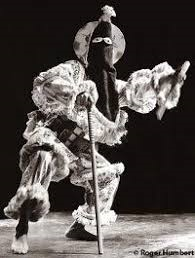
The society teaches the existence of a supreme divinity named Abasí who supplied humanity with a form of power which holds a central place in Abakuá's origin myth. Rituals are called plantes and typically take place in a secluded room, the fambá. Many of the details of these ceremonies are kept secret although they usually involve drumming. Some of the Abakuá society's ceremonies take place in public. Most notable are the public parades on the Day of the Three Kings, when members dress as íremes, or spirits of the dead.
Abakuá derives much from the Ékpè society, which was established by Efik people living around the Cross River basin of West Africa during the 18th century. Ékpè was involved in facilitating trade, including the Atlantic slave trade, as a result of which various enslaved Efik people — including Ékpè members — were transported to Cuba. It was there, in 1836, that Abakuá was formed in Regla. The society soon spread to other areas and split into two branches, the Efó and the Efí. Although membership was initially restricted to Afro-Cubans, by the 1860s it also had members from other ethnic backgrounds. Through its membership, the society became increasingly influential in the stevedore, transportation, and local manufacturing industries of Cuba's ports, also attracting a reputation for criminal activity. After the Cuban Revolution, Abakuá continued to face persecution but benefitted from the liberalising reforms of the 1990s as it became increasingly important in the Cuban tourist industry.
Abakuá represents a confraternity. It is a religious group, often seen as a religion by its practitioners, and it seeks to provide spiritual protection for its members. It also operates as a mutual aid society, offering economic assistance to its members. Only men are permitted entry—although gay men are typically excluded—with these members regarding each other as brothers. These members are referred to as Abanékues, or as ecobios. A once common term for members was Ñáñigos, a term potentially deriving from the nyanya raffia chest piece worn on many Ekpe and Abakuá ritual costumes. Abakuá has been described as "an Afro-Cuban version of Freemasonry".
The term Abakuá likely comes from Àbàkpà (Qua-Éjághám), one of the peoples from Calabar. Abakuá is one of three major Afro-Cuban religions present on the island, the other two being Santería, which derives largely from the Yoruba religion of West Africa, and Palo, which has its origins among the Kongo religion of Central Africa. Another Afro-Cuban religion is Arará, which derives from practices among the Ewe and Fon. In Cuba, practitioners of these traditions often see these different religions as offering complementary skills and mechanisms to solve problems. Thus, some Abakuá members also practice Palo, or Santería, or alternatively are babalawos, initiates in the divinatory system of Ifá.
Operating along a highly organised structure, the Abakuá society displays a complex hierarchy. Different members play different functions in the society. Members pay fees to join the society and subsequent dues, money which finances the operation of the society. Members are bound to oaths of secrecy not to reveal details of the group's beliefs and practices.
Chapters are referred to as juegos, potencias, tierras, and partidos. The creation of a new chapter requires the permission of the society's elders as well as a collective consensus in favor of its establishment. The formation of a new lodge requires consecrated drums. Each juego has between 13 and 25 dignitaries, or plazas, who govern it. Each dignitary has a different title that indicate which ritual tasks are their responsibility. If there is a disagreement within a juego, members can branch off to form their own group. In 2014, the scholar Ivor Miller noted that there were then approximately 150 lodges active in Cuba.
Initiation may only take place in Cuba itself. The oaths of loyalty to the Abakuá society's sacred objects, members, and secret knowledge taken by initiates are a lifelong pact that creates a sacred kinship among the members. The duties of an Abakuá member to his ritual brothers at times surpass even the responsibilities of friendship. The phrase "Friendship is one thing, and the Abakuá another" is often heard. A member's loyalty is primarily owed to their lodge and its lineage. Members identify each other through coded handshakes, phrases, or, in certain circumstances, specific whistles.
Hub AI
Abakuá AI simulator
(@Abakuá_simulator)
Abakuá
Abakuá, also sometimes known as Ñañiguismo, is a Cuban initiatory religious fraternity founded in 1836. The society is open only to men and those initiated take oaths to not reveal the secret teachings and practices of the order. Members are typically known as Abanékues and are divided amongst lodges or chapters called juegos. Abakuá derives largely from the Ékpè society of West Africa, but displays adaptations like the inclusion of Roman Catholic symbolism.
The society teaches the existence of a supreme divinity named Abasí who supplied humanity with a form of power which holds a central place in Abakuá's origin myth. Rituals are called plantes and typically take place in a secluded room, the fambá. Many of the details of these ceremonies are kept secret although they usually involve drumming. Some of the Abakuá society's ceremonies take place in public. Most notable are the public parades on the Day of the Three Kings, when members dress as íremes, or spirits of the dead.
Abakuá derives much from the Ékpè society, which was established by Efik people living around the Cross River basin of West Africa during the 18th century. Ékpè was involved in facilitating trade, including the Atlantic slave trade, as a result of which various enslaved Efik people — including Ékpè members — were transported to Cuba. It was there, in 1836, that Abakuá was formed in Regla. The society soon spread to other areas and split into two branches, the Efó and the Efí. Although membership was initially restricted to Afro-Cubans, by the 1860s it also had members from other ethnic backgrounds. Through its membership, the society became increasingly influential in the stevedore, transportation, and local manufacturing industries of Cuba's ports, also attracting a reputation for criminal activity. After the Cuban Revolution, Abakuá continued to face persecution but benefitted from the liberalising reforms of the 1990s as it became increasingly important in the Cuban tourist industry.
Abakuá represents a confraternity. It is a religious group, often seen as a religion by its practitioners, and it seeks to provide spiritual protection for its members. It also operates as a mutual aid society, offering economic assistance to its members. Only men are permitted entry—although gay men are typically excluded—with these members regarding each other as brothers. These members are referred to as Abanékues, or as ecobios. A once common term for members was Ñáñigos, a term potentially deriving from the nyanya raffia chest piece worn on many Ekpe and Abakuá ritual costumes. Abakuá has been described as "an Afro-Cuban version of Freemasonry".
The term Abakuá likely comes from Àbàkpà (Qua-Éjághám), one of the peoples from Calabar. Abakuá is one of three major Afro-Cuban religions present on the island, the other two being Santería, which derives largely from the Yoruba religion of West Africa, and Palo, which has its origins among the Kongo religion of Central Africa. Another Afro-Cuban religion is Arará, which derives from practices among the Ewe and Fon. In Cuba, practitioners of these traditions often see these different religions as offering complementary skills and mechanisms to solve problems. Thus, some Abakuá members also practice Palo, or Santería, or alternatively are babalawos, initiates in the divinatory system of Ifá.
Operating along a highly organised structure, the Abakuá society displays a complex hierarchy. Different members play different functions in the society. Members pay fees to join the society and subsequent dues, money which finances the operation of the society. Members are bound to oaths of secrecy not to reveal details of the group's beliefs and practices.
Chapters are referred to as juegos, potencias, tierras, and partidos. The creation of a new chapter requires the permission of the society's elders as well as a collective consensus in favor of its establishment. The formation of a new lodge requires consecrated drums. Each juego has between 13 and 25 dignitaries, or plazas, who govern it. Each dignitary has a different title that indicate which ritual tasks are their responsibility. If there is a disagreement within a juego, members can branch off to form their own group. In 2014, the scholar Ivor Miller noted that there were then approximately 150 lodges active in Cuba.
Initiation may only take place in Cuba itself. The oaths of loyalty to the Abakuá society's sacred objects, members, and secret knowledge taken by initiates are a lifelong pact that creates a sacred kinship among the members. The duties of an Abakuá member to his ritual brothers at times surpass even the responsibilities of friendship. The phrase "Friendship is one thing, and the Abakuá another" is often heard. A member's loyalty is primarily owed to their lodge and its lineage. Members identify each other through coded handshakes, phrases, or, in certain circumstances, specific whistles.
Recent media