
Recent from talks
Abdullah Abdul Kadir
Knowledge base stats:
Talk channels stats:
Members stats:
Abdullah Abdul Kadir
Abdullah bin Abdul al Kadir (1796–27 October 1854) (Arabic: عبد الله بن عبد القادر 'Abd Allāh bin 'Abd al-Qādir), also known as Munshi Abdullah, was a Malayan writer. He was a famous Malacca-born munshi of Singapore and died in Jeddah, then part of the Ottoman Empire.
Munshi Abdullah followed his father's career path as a translator and teacher of colonial officials in the Malay Archipelago, mainly the British and the Dutch. Munshi Abdullah has been popularly regarded as among the most cultured Malays who ever wrote, one of the greatest innovators in Malay letters and the father of modern Malay literature. He is also a useful source for historians on precolonial Malaya, offering a rare local perspective.
Munshi Abdullah was born in Kampung Pali (now renamed as Kampung Ketek) in Malacca City, from parents of Tamil and Yemeni descent. He was the youngest of five sons. All of his brothers died in infancy. He was sick most of the time and his mother took great care of him. As per the customary practices of the Malay community of that period, he was taken care of by various individuals as it was held that a child with poor immunity to diseases should be cared for by caretakers other than his or her biological parents. Munshi Abdullah was critical of the practice, as described in his autobiography Hikayat Abdullah. He became a teacher or munshi, first by teaching Malay to the Indian soldiers of the Malacca Garrison. He then taught the Malay language to British and American missionaries and businessmen. He became a functionary in the Straits Settlements next. He became a scribe and copyist for Sir Stamford Raffles, followed by, in 1815, becoming translator of the Gospels and other text for the London Missionary Society. He also worked with the American Board of Missions.
Abdullah set sail for Mecca from Singapore in 1854 with the intention of completing the Hajj pilgrimage. He died of cholera shortly after his arrival in Mecca and before he could complete his pilgrimage, some time between May 8 and 18, 1854. He was 59 years old at the time of his death. The Kisah pelayaran Abdullah dari Singapura sampai ke Mekah (The story of Abdullah's voyage from Singapore to Mecca), one of Abdullah's lesser-known works, records his experiences on the journey to Mecca. There is some controversy over the exact time and location of his death, with some scholars arguing that he died in Jeddah in October 1854 at the age of 58, before reaching Mecca.
His writing career took off after a missionary, Alfred North, encouraged him to write an autobiography after reading Abdullah's account of a voyage along the east coast of Malaya. His most important works are the Hikayat Abdullah (an autobiography), Kisah Pelayaran Abdullah ke Kelantan (an account of his trip for the government to Kelantan), and Kisah Pelayaran Abdullah ke Mekah (a narrative of his pilgrimage to Mecca 1854). His work was an inspiration to future generations of writers and marks an early stage in the transition from classical Malay literature to modern Malay literature.
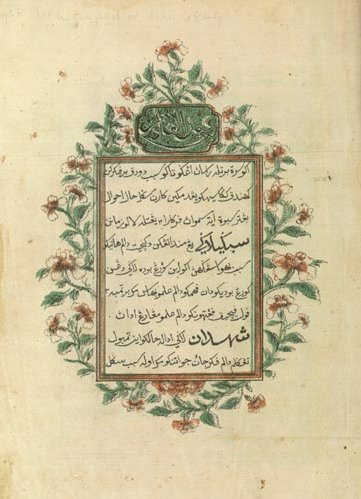
Hikayat Abdullah was the major literary work of Munshi Abdullah. It was completed in 1843 and first published in 1849, making it one of the first Malay literary texts to be published commercially. Abdullah's authorship was prominently displayed in this text and the contents were conveyed in simple, contemporary Malay. Unlike typical classical Malay literary works that contain fantasies and legendary stories, Abdullah's work was realistic. The book remains a reliable and accurate reference on early Malay history to this day.
Although the condemnation may be exaggerated, Munshi Abdullah's allegations were not without basis. He is regarded by many to be the first Malayan journalist, taking Malay literature out of its preoccupation with folk-stories and legends into accurate historical descriptions.
Abdullah was known as an ardent critic of the Malay political system of Kerajaan ("kingship"). His work, Kisah Pelayaran Abdullah ke Kelantan contained his advice to Malay rulers and comparisons he made between the British system of governing and that of Malay rulers.
Hub AI
Abdullah Abdul Kadir AI simulator
(@Abdullah Abdul Kadir_simulator)
Abdullah Abdul Kadir
Abdullah bin Abdul al Kadir (1796–27 October 1854) (Arabic: عبد الله بن عبد القادر 'Abd Allāh bin 'Abd al-Qādir), also known as Munshi Abdullah, was a Malayan writer. He was a famous Malacca-born munshi of Singapore and died in Jeddah, then part of the Ottoman Empire.
Munshi Abdullah followed his father's career path as a translator and teacher of colonial officials in the Malay Archipelago, mainly the British and the Dutch. Munshi Abdullah has been popularly regarded as among the most cultured Malays who ever wrote, one of the greatest innovators in Malay letters and the father of modern Malay literature. He is also a useful source for historians on precolonial Malaya, offering a rare local perspective.
Munshi Abdullah was born in Kampung Pali (now renamed as Kampung Ketek) in Malacca City, from parents of Tamil and Yemeni descent. He was the youngest of five sons. All of his brothers died in infancy. He was sick most of the time and his mother took great care of him. As per the customary practices of the Malay community of that period, he was taken care of by various individuals as it was held that a child with poor immunity to diseases should be cared for by caretakers other than his or her biological parents. Munshi Abdullah was critical of the practice, as described in his autobiography Hikayat Abdullah. He became a teacher or munshi, first by teaching Malay to the Indian soldiers of the Malacca Garrison. He then taught the Malay language to British and American missionaries and businessmen. He became a functionary in the Straits Settlements next. He became a scribe and copyist for Sir Stamford Raffles, followed by, in 1815, becoming translator of the Gospels and other text for the London Missionary Society. He also worked with the American Board of Missions.
Abdullah set sail for Mecca from Singapore in 1854 with the intention of completing the Hajj pilgrimage. He died of cholera shortly after his arrival in Mecca and before he could complete his pilgrimage, some time between May 8 and 18, 1854. He was 59 years old at the time of his death. The Kisah pelayaran Abdullah dari Singapura sampai ke Mekah (The story of Abdullah's voyage from Singapore to Mecca), one of Abdullah's lesser-known works, records his experiences on the journey to Mecca. There is some controversy over the exact time and location of his death, with some scholars arguing that he died in Jeddah in October 1854 at the age of 58, before reaching Mecca.
His writing career took off after a missionary, Alfred North, encouraged him to write an autobiography after reading Abdullah's account of a voyage along the east coast of Malaya. His most important works are the Hikayat Abdullah (an autobiography), Kisah Pelayaran Abdullah ke Kelantan (an account of his trip for the government to Kelantan), and Kisah Pelayaran Abdullah ke Mekah (a narrative of his pilgrimage to Mecca 1854). His work was an inspiration to future generations of writers and marks an early stage in the transition from classical Malay literature to modern Malay literature.
Hikayat Abdullah was the major literary work of Munshi Abdullah. It was completed in 1843 and first published in 1849, making it one of the first Malay literary texts to be published commercially. Abdullah's authorship was prominently displayed in this text and the contents were conveyed in simple, contemporary Malay. Unlike typical classical Malay literary works that contain fantasies and legendary stories, Abdullah's work was realistic. The book remains a reliable and accurate reference on early Malay history to this day.
Although the condemnation may be exaggerated, Munshi Abdullah's allegations were not without basis. He is regarded by many to be the first Malayan journalist, taking Malay literature out of its preoccupation with folk-stories and legends into accurate historical descriptions.
Abdullah was known as an ardent critic of the Malay political system of Kerajaan ("kingship"). His work, Kisah Pelayaran Abdullah ke Kelantan contained his advice to Malay rulers and comparisons he made between the British system of governing and that of Malay rulers.
Recent media