Hubbry Logo
Stamford RafflesStamford RafflesMain
Open search
Stamford Raffles
Community hub
Stamford Raffles
logo
8 pages, 0 posts
0 subscribers
Be the first to start a discussion here.
Contribute something
Stamford Raffles
Stamford Raffles
from Wikipedia

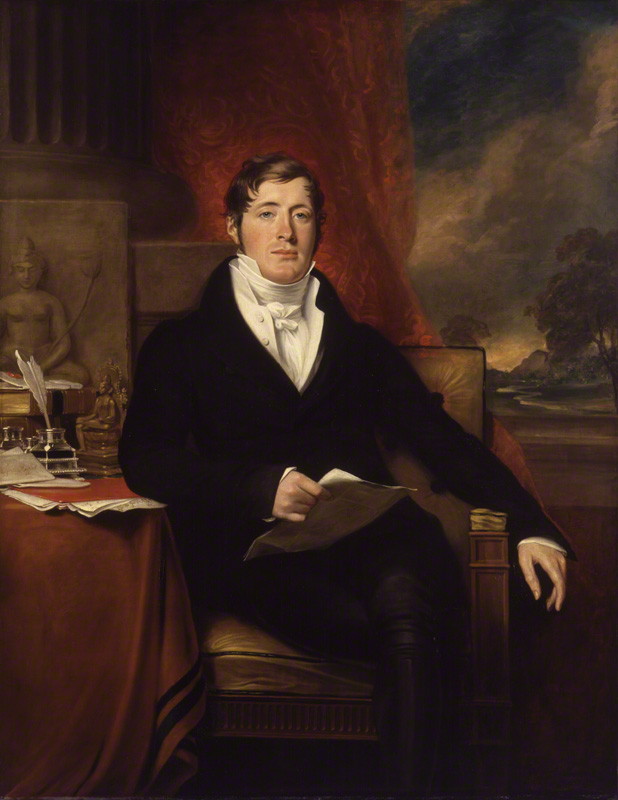
Sir Thomas Stamford Bingley Raffles FRS FRAS (5 July 1781 – 5 July 1826)[1][2] was a British colonial official and a Free Mason[3] who served as the governor of the Dutch East Indies between 1811 and 1816 and lieutenant-governor of Bencoolen between 1818 and 1824. Raffles was involved in the capture of the Indonesian island of Java from the Dutch during the Napoleonic Wars. It was returned under the Anglo–Dutch Treaty of 1824. He also wrote The History of Java in 1817, describing the history of the island from ancient times.[4] The Rafflesia flowers were named after him.[5]

Key Information

Raffles also played a role in further establishing the British Empire's reach in East and Southeast Asia. He secured control over the strategically located Singapore from local rulers in 1819 to secure British access along the Strait of Singapore and the nearby seas in the region, particularly the Indian Ocean and the South China Sea. His actions were initially not endorsed by the British government and led to tensions between the British and the Dutch. The Anglo–Dutch Treaty of 1824 established their respective spheres of influence, the Dutch relinquishing their claims to Singapore while the British ceded Bencoolen to them. A transshipment port was subsequently established in Singapore for maritime trade between Europe and Asia.

While Raffles was largely credited for the founding of contemporary Singapore, the early running of day-to-day operations was mostly done by William Farquhar, who served as the first Resident of Singapore from 1819 to 1823.[6] Raffles soon returned to England in 1824, where he died on his birthday in 1826 at the age of 45. His legacy while complex remains significant in Singapore, most notably the Raffles's Landing Site, as well as his name being a common sight in numerous entities and institutions throughout the country.

Early life

[edit]

Thomas Stamford Bingley Raffles was born on (1781-07-05)5 July 1781 on board the ship Ann, off the coast of Port Morant, Jamaica,[2] to Captain Benjamin Raffles (1739, London – 23 November 1811, Deptford) and Anne Raffles (née Lyde) (1755 – 8 February 1824, London).[1] Benjamin served as a ship master for various ships engaged in the direct trade between England and the West Indies. Although some biographers have suggested that Benjamin was involved in the slave trade, modern historians have refuted such claims. When Benjamin ended his involvement in the West India trade in 1800, it caused his family considerable hardship.[7]

The little money the family had went into sending the young Raffles to the Mansion House Academy, Hammersmith, a moderately priced boarding school, offering Latin, Greek, French, arithmetic, bookkeeping and geography, that specialised in preparing boys for clerkships or the army.[8] In 1795, at the age of 14, Raffles started working in London as a clerk for the East India Company. Nine years later, in 1804, the 23-year-old Raffles married Olivia Mariamne Devenish, a widow 10 years his senior,[1]: 57, 73, 107  who was formerly married to Jacob Cassivelaun Fancourt, an assistant surgeon in Madras, who had died in 1800.[1]: 59, 69 

In 1805, he was sent to Prince of Wales Island, Malaya, starting his long association with Southeast Asia. He started as assistant secretary, under the Honourable Philip Dundas, the new governor of Penang.[9] At this time, he also made the acquaintance of Thomas Otho Travers, who would accompany him for the next 20 years.[7]

Java Island

[edit]

British invasion of Java

[edit]

His knowledge of the Malay language, as well as his wit and ability, gained him favour with Lord Minto, the governor-general of India, and he was sent to Malacca.

In 1811, after the annexation of the Kingdom of Holland by France during Napoleon's war, Raffles had no choice but to leave the country. He mounted a military expedition against the Dutch and French in Java, in the Dutch East Indies. The war was swiftly conducted by Admiral Robert Stopford, General Frederick Augustus Wetherall, and Colonel Robert Rollo Gillespie,[10] who led a well-organised army against an opposing army of mostly French conscripts with little proper leadership.

The previous Dutch governor, Herman Willem Daendels, had built a well-defended fortification at Meester Cornelis, now Jatinegara. His successor, Governor Jan Willem Janssens, who coincidentally had surrendered to the British five years earlier at the Cape Colony, mounted a brave but ultimately futile defence at the fortress. The British, led by Colonel Gillespie, stormed the fort and captured it within three hours. Governor Janssens attempted to escape inland but was captured.

The British invasion of Java took a total of 45 days, during which Raffles was appointed the lieutenant-governor of the Dutch East Indies by Lord Minto before hostilities formally ceased. He took his residence at Buitenzorg, and despite having a small group of Britons as his senior staff, kept many of the Dutch civil servants in the governmental structure.

Rule

[edit]

During the relatively brief period of British rule in Java, Raffles negotiated several peace treaties along with ordering several military expeditions against local rulers. Rumours of plans by the Yogyakarta Sultanate to launch an attack against the British led to uneasiness among Britons in Java. On 20 June 1812, Raffles led a 1,200-strong British force to capture the Royal Palace of Yogyakarta. Yogyakarta forces, surprised by the attack, were easily defeated; the palace fell in one day, and was subsequently sacked and burnt. Raffles ordered much of the palace's archives to be removed, taking them back with him. The attack was unprecedented in Javanese history, as it was the first time an indigenous palace had been captured by a European army, humiliating the Yogyakarta Sultanate.[11]

Although peace returned to Central Java in the immediate aftermath of the attack, it may have fuelled the deep-seated instability and hostility to European involvement in the region that ultimately gave rise to the Java War during the 1820s.[12] Raffles also ordered an expedition to Palembang, Sumatra to depose local sultan Mahmud Badaruddin II. The expedition was also ordered to occupy the nearby Bangka Island in order to establish a permanent British presence in the area, in case Java returned to Dutch rule after the end of the War of the Sixth Coalition in Europe.[citation needed]

The memorial to Olivia Mariamne Raffles, Raffles's first wife, erected by him along the Kanarielaan in the National Botanical Gardens (now the Bogor Botanical Gardens). Raffles re-landscaped these gardens, which were established in 1744 in Buitenzorg (now Bogor), West Java.

During his lieutenant-governorship, Raffles placed some restrictions on the local slave trade in line with wider British policy across its Asian territories, although slavery remained widespread and Raffles himself was served by a large retinue of slaves at his official residences in Java.[13] Raffles also attempted a replacement of the Dutch system of forced agricultural deliveries-in-kind with a cash-based land tenure system of land management, probably influenced by the earlier anti-feudal critiques of Dirk van Hogendorp. He was advised by a holdover from the previous Dutch regime on Java, the president of the High Court of Java, Herman Warner Muntinghe, especially in the matter of the reform of the public finances of the colony, and its system of taxation.[14]

Under Raffles's aegis, a large number of ancient monuments in Java were systematically catalogued for the first time. The first detailed English-language account of Prambanan was prepared by Colin Mackenzie, while the Buddhist temple of Borobudur was surveyed and cleared of vegetation by H. C. Cornelius.[15]

When his wife, Olivia, died on 26 November 1814, Raffles was devastated. In 1815, he left again for England shortly before the island of Java was returned to control of the Netherlands following the Napoleonic Wars, under the terms of the Anglo-Dutch Treaty of 1814. Raffles had been removed from his post by the East India Company ahead of the handover, and officially replaced by John Fendall Jr. on account of the poor financial performance of the colony during his administration, and allegations of financial impropriety on his own part. He sailed to England in early 1816 to clear his name and, en route, visited Napoleon, who was in exile at St. Helena, but found him unpleasant and unimpressive.

Interlude in England

[edit]

In 1817, Raffles wrote and published The History of Java,[16] describing the history of the island from ancient times as well as its geography, flora, and fauna.

In 1817, Raffles was created a Knight Bachelor by the Prince Regent George IV, whose daughter, Princess Charlotte, was particularly close to him. At the publication of the book, he also stopped using the name 'Thomas', preferring to use his middle name, 'Stamford', possibly to avoid confusion amongst his associates with Sir Thomas Sevestre, or his cousin, Thomas Raffles, who both bore the same first name.

On 22 February, he married his second wife, Sophia Hull,[9][17][18] and later set sail to Bencoolen (present-day Bengkulu in Indonesia) to take up his new post with his new wife.

Bencoolen and Malaya

[edit]
Territory of Bencoolen (pink)
Stamford Raffles

Raffles arrived in Bencoolen on Sumatra on 19 March 1818, where he was appointed as the lieutenant-governor of Bencoolen on 22 March 1818. Despite the prestige connected with the title of Lieutenant-Governor, Bencoolen was a colonial backwater, whose only real export was pepper, and only the murder of a previous Resident, Thomas Parr, gained it any attention back home in Britain. Raffles found the place wrecked, and set about reforms immediately, mostly similar to what he had done on Java; abolishing slavery and limiting cockfighting and such games. To replace the slaves, he used a contingent of convicts, already sent to him from India.

It was at this point that he realised the importance of a British presence that both challenged the Dutch hegemony in the area, and could remain consistently profitable, unlike Bencoolen or Batavia. However, the strategic importance of poorly maintained but well-positioned British possessions, such as Penang or Bencoolen, made it impossible for the British to abandon the unprofitable colonies in such proximity to the Dutch in Java.

The competition in the area, between Raffles and the aggressive Dutch commissioner-general, Cornelis Theodorus Elout, and later Raffles' former advisor on Java, Muntinghe, now a member of the new High Government of the Dutch East Indies, who Elout had put in power,[a] certainly led at least in part to the later Anglo-Dutch Treaty of 1824. Raffles looked into alternatives in the area; namely Bangka, which had been ceded to the Dutch after its conquest by the British during its occupation of Java. Bintan was also under consideration. Despite the fact that Francis Light overlooked the island before settling upon Penang in 1786, the Riau Archipelago was an attractive choice just to the south of the Malay Peninsula, for its proximity to Malacca.

In his correspondences with Calcutta, Raffles also emphasised the need to establish a certain amount of influence with the native chiefs, which had greatly waned since the return of the Dutch. Raffles sent Thomas Travers as an ambassador to the Dutch, to possibly negotiate an expansion of British economic interests. When this failed, and when Raffles's own expeditions into his new dominion found only treacherous terrain and few exportable goods, his desire to establish a better British presence was cemented.

However, the Anglo-Dutch Convention of 1814 was not completely clear, especially on the issue of certain possessions such as Padang. The Convention of 1814 only returned Dutch territory that was held before 1803, which did not include Padang. Raffles asserted the British claim personally, leading a small expedition to the Kingdom of Pagaruyung. Yet, as Raffles confirmed with the sultan regarding the absolute British influence of the area, he realised that the local rulers had only limited power over the well-cultivated and civilised country, and the treaty was largely symbolic, and had little actual force.

Founding of modern Singapore

[edit]
Statue of Sir Stamford Raffles in Singapore, based on the original by Thomas Woolner

Major-General William Farquhar, the British Resident of Malacca, had been attempting to negotiate commercial treaties with the local chiefs of the Riau Archipelago, especially before Raffles' arrival. Farquhar was compelled to sign the treaty not with the official head of the sultanate, but rather, the Raja Muda (Regent or Crown Prince) of Riau. He noted it as a success, and reported it as such to Raffles.

Raffles sailed to Malacca in late 1818, to personally secure a British presence in the Riau area, especially Singapura, which was favoured by him both through the readings of Malayan histories, and by Farquhar's explorations. Despite Lord Hastings' less-than-stellar opinion of Raffles before (which had necessitated his trip to England to clear his name at the end of his tenure as Lieutenant-Governor of Java), the now well-connected and successful Raffles was able to secure permission to set up a settlement. At this point in Singaporean history, the name Lion City was applied. The city was in a strategically advantageous position; however, he was ordered not to provoke the Dutch, and his subsequent actions were officially disavowed by the British government.

In London, Lord Castlereagh attempted to quell Dutch fears, and continuing efforts were made to reach an agreement between the nations that eventually became the Anglo-Dutch Treaty of London of 1824. As well as the treaty, instructions were sent out to Raffles to undertake far less intrusive actions; however, the long distance between the Far East and Europe meant that the orders had no chance of reaching Raffles in time.

Establishment

[edit]

After a brief survey of the Karimun Islands, on 29 January 1819, he established a post at the southern tip of the Malay Peninsula. It was established that there was no Dutch presence on the island of Singapore. Johor also no longer had any control of the area, so contact was made with the Temenggong Abdul Rahman. The contacts were friendly, and Raffles, knowledgeable about the muddled political situation, took advantage to provide a rudimentary treaty between the nominal chiefs of the area that called for the exclusivity of trade, and the British protection of the area. Members of Raffles's party surveyed the island, and proceeded to request the presence of the sultan, or whoever at the time had supreme nominal power, to sign a formal treaty, while Major Farquhar was ordered to do the same in Rhio (Riau).

The writings of Raffles and Farquhar indicate that the British found Temenggong Abdul Rahman with 400 to 500 residents in Singapore in January 1819. Another member of the 1819 expedition party, Captain John Crawford, recalled in his diary an encounter with "upwards of 100" of Chinese. British colonial documentations revealed that Temenggong Abdul Rahman had provided these Chinese who were Teochews the cost and expenses of opening gambier plantations at Mount Stamford (now Pearl’s Hill) prior to British arrival. He had also "in some instances" advanced money to the Teochew cultivators on the understanding he would be repaid in the form of gambier or other produce. Farquhar had the impressions that the Temenggong’s interests in these plantations were represented by a brother-in-law of his named Baba Ketchil and the first Captain China of Singapore, a Teochew merchant named Tan Heng Kim ((陈亨钦), was "one of the principal persons concerned".[20]

A few days later, the formal treaty was signed by Hussein Shah who claimed to be the "lawful sovereign of the whole of territories extending from Lingga and Johor to Mount Muar". Although Hussein Shah had had no previous contact with the British, he had certainly heard of the strength of the Royal Navy, and was in no position to argue against the terms. Raffles reassured him that the Dutch posed no threat in the area. Hussein Shah had been the crown Prince of Johor, but while he was away in Pahang to get married, his father died, and his younger brother was made sultan, supported by some of the court officials and the Dutch. To circumvent the situation of having to negotiate with a sultan influenced by the Dutch, Raffles decided to recognise, on behalf of the British Crown, Hussein Shah as being the rightful ruler of Johor.

Farquhar's attempt to establish a more favourable treaty in Rhio (Riau) was met with greater challenge, as the Dutch were present, and made for a rather awkward position. The Dutch were alarmed, and sent a small contingent to the island. Despite a covert offer of subterfuge against the Dutch offered by the Raja of Rhio (Riau), Farquhar returned, and an official protest was sent by the Raja to Java regarding the matter.

Raffles declared the foundation of what was to become modern Singapore on 6 February, securing the transfer of control of the island to the East India Company. With much pomp and ceremony, the official treaty was read aloud in languages representing all nations present, as well as the Malay and Chinese inhabitants.

Sultan Hussein Shah was paid 5,000 Spanish dollars a year, while Temenggong Abdul Rahman received 3,000 a year, both massive sums at the time, roughly equivalent to £287,000 and £172,000 now.[21][22]

Farquhar was officially named the Resident of Singapore, and Raffles was named as 'Agent to the Most Noble the Governor-General with the States of Rhio (Riau), Lingin (Lingga) and Johor'. Although ownership of the post was to be exclusively British, explicit orders were given to Farquhar to maintain free passage of ships through the Strait of Singapore, and a small military presence was established alongside the trading post. After issuing orders to Farquhar and the remaining Europeans, Raffles left the next day, 7 February 1819.

Achin, and the early conflict with the Dutch

[edit]

Raffles also planned to start a British presence in Achin, on the northern tip of Sumatra. As soon as he had departed, the Raja of Rhio (Riau) sent letters to the Dutch, disclaiming the deal, protesting innocence, and blaming British encroachment. Meanwhile, in Malacca, the Dutch acted at once, commanding that no Malays could go to Singapore. Raffles's bold claim of Singapore created a curious geographic situation: although Penang was clearly closer in distance to Singapore, Raffles, in his capacity as Lieutenant-Governor of Bencoolen, was nominally still in control. This undoubtedly irked the authorities in Penang, to the point where they refused to send any sepoys to Singapore to complete the garrison.

Official Dutch complaints came before the end of the month, and Raffles attempted to appease the situation by instructing Farquhar to not interfere with the politics of surrounding islands. Despite numerous threats and serious considerations by the Dutch governor-general Van der Capellen in Java, they did not take any military action. The confused political situation in Johore and Rhio also created a certain uneasiness and instability for the two nations. Tengku Long was claimed to be a pretender to the throne, and, since the succession laws in the Malay sultanates were not clear cut, treaties signed between native rulers and the European powers always seemed to be on the verge of invalidation; especially if a sultan should be deposed by one of his siblings or other pretenders.

Nonetheless, amidst uncertainty and intrigue, Raffles landed in Achin on 14 March 1819, with the begrudging help of Penang. Once again, it seems that multiple people were in power, but none wanted to formally deal with the British. The hostile atmosphere created allowed Raffles to cancel the only meeting he was able to arrange, with Panglima Polim, a powerful divisional chief, fearing treachery. As the influential merchant John Palmer, Raffles, and fellow commissioner John Monckton Coombs of Penang sat offshore, awaiting a response, Calcutta debated whether to reinforce the port city. Evacuation plans were made, but the Dutch never acted, and ultimately Lord Hastings prompted Colonel Bannerman, the governor of Penang, to send funds to bolster Singapore. Finally Raffles was capable of convincing his fellow commissioners to sign a treaty with Jauhar al-Alam Shah, the ruler of Achin, which installed a British Resident, as well as guaranteeing the exclusivity of bilateral trade.

By the time Raffles had returned to Singapore, on 31 May, much of the immediate crisis that the colony had caused in Penang and Calcutta had passed. By then, the initial five-hundred villagers had grown to become five-thousand merchants, soldiers, and administrators, packed onto the island. Raffles was determined to destroy the Dutch mercantile monopoly in the area, to replace it with a gateway for trade with China and Japan. The latter he had attempted but failed to reach an agreement with while governing Java.

First year of Singapore

[edit]

While in Singapore, Raffles established schools and churches in the local languages. He allowed missionaries and local businesses to flourish. Certain colonial aspects remained: a European town was quickly built to segregate the population, separated by a river; carriage roads were built, and cantonments constructed for the soldiers. Otherwise, no other duties were imposed.

Confident that Farquhar would follow his instructions well, Raffles sailed for Bencoolen once again on 28 June.

Bencoolen, once again

[edit]

Raffles was still the lieutenant-governor of Bencoolen when he returned. Raffles started more reforms that were, by now, almost trademarks of his rule over the colonies. Forced labour was abolished when he first arrived, and he declared Bencoolen a free port as well. The currency was regulated and, as he had an excess of out-of-work civil servants, they formed committees to advise him on the daily running of the colony. However, Bencoolen was not as self-sufficient as Singapore. The area was poor and disease-ridden: the first reports from the committees reflected very poorly upon the condition of the colony. Unlike the salutary neglect Raffles granted upon Singapore, he delayed European-inspired reforms, emphasising only the cultivation of whatever land was available.

Native authorities were given power in their respective districts, and were answerable only to the lieutenant-governor. The slave-debtor system was brought in,[23] instead of the old slavery system that Raffles had abolished in Java, Borneo, and initially in Bencoolen. Slave-debtors were registered, and educational reforms started to focus on children, instead of the entire population. Raffles looked into a long-term plan for the slow reform of Bencoolen.

Unlike many other European adventurers, Raffles did not impose upon the colonised the alien language or culture of the coloniser. In addition to preserving the artifacts, fauna, and flora of his colonies, he also allowed religious freedom, which was especially important as the Malay states were largely Muslim. Christian schools were started by missionaries in all of his colonies.

Consolidation of the Eastern Isles

[edit]

Colonel Bannerman's death in Penang in October 1819 brought new opportunities for Raffles to expand his power to also include the other minor British factories and outposts; from Sumatra to Cochin China. He sailed to Calcutta, and as Lord Hastings sought to consolidate all of the small British possessions in the East Indies. During his sojourn, he had the opportunity to argue for free trade, and the protection of the private enterprise. Education and the retention of small British outposts were also discussed.

The Dutch claim on the Sultanate of Johore and hence, Rhio, and the diplomatic exchanges between Baron Godert van der Capellen and Calcutta continued throughout this time. The legitimacy of the British treaties was also questioned once again, but finally, as Singapore grew at an exponential rate, the Dutch gave up their claim on the island, allowing the colony to continue as a British possession. However, the pressures put upon Calcutta ensured that no single governor of all British possessions in the Strait or on Sumatra was appointed, and Raffles, whose health was slowly ailing, returned to Bencoolen.

Administration of Bencoolen, 1820–1822

[edit]

Raffles returned to Bencoolen in ill-health, but as his health improved, he continued on his quest to learn about the island he now called home. He studied the Batak cannibals of Tapanuli, and their rituals and laws regarding the consumption of human flesh, writing in detail about the transgressions that warranted such an act, as well as their methods. He also noted the rise of the Sikh religion in certain parts of Sumatra.

By early 1820, Tengku Long had firmly established himself as the Sultan of Johor to the British, but the political situation in the area remained a befuddled mess, with the old sultan dying, and many new ones attempting to gain either the crown or regency. As Farquhar was involving himself poorly in local politics, Raffles appointed Travers as the Resident of Singapore, replacing Farquhar. Upon his arrival, Travers found the colony a delightful smörgåsbord of different races and cultures, numbering over six thousand. He also found that Singapore's trade was slowly overtaking that of Java.

As in Java, Raffles collected samples of local species of plant and animal, as well as describing them in his journals. He located other tribes, and recorded their customs, especially their religions and laws. Bringing the island of Nias under British rule, he noted its civilised state and high production yields of rice.

Yet the production of food remained a problem. In Bencoolen, Raffles paid special attention to the agricultural methods of the Chinese, including an introduction to the only issue of Proceedings of the Agricultural Society. To remedy the shortages, his employer, the East India Company, concerned themselves only with profit-taking. Even as Raffles lived like a country gentleman, and ran his colony like an estate, his expenditure on nature preservation was seriously frowned upon. In both Calcutta and London, they discussed his removal from office, while Castlereagh continued negotiations with the Dutch regarding the ongoing diplomatic conflicts.

Luckily, the Singapore issue had its supporters in the House, so as negotiations continued in Europe, Raffles remained largely idle in Bencoolen. The only major issue, outside the politics of the local sultans, involved the replacement of Farquhar, who decided that he had no intention of leaving his post voluntarily, causing a moment of tension between him and Travers. Raffles's request for Travers to deliver dispatches to India nullified the issue late in the year, and Farquhar remained in charge of Singapore, with its survival still in doubt for many in both India and London, who believed that it would either be handed over to the Dutch, or taken violently by force when Castlereagh's negotiations had ended. Still William Farquhar stirred up more trouble, especially with local English merchants over trivial matters of self-importance, and overreaction over small infractions of white traders, for some of which he was reprimanded by Calcutta officially. Public works, commissioned by Raffles but undertaken by Farquhar, were becoming overwhelmingly expensive.

Personal tragedies also started for Raffles. His eldest son, Leopold Stamford (b. 1818), died during an epidemic on 4 July 1821. The oldest daughter, Charlotte (b. 1818), was also sick with dysentery by the end of the year, but it would be his youngest son, Stamford Marsden (b. 1820), who would perish first with the disease, on 3 January 1822, with Charlotte to follow 10 days later. For the good part of four months, the couple remained devastated. The year would be eventful with the suicide of Castlereagh, and the appointment of Lord Amherst as the governor-general of India, replacing Hastings. As Raffles grew restless and depressed, he decided to visit Singapore before retiring and heading home to England. Accompanying him would be his wife Sophia and their only surviving child, Ella.

Raffles was elected a member of the American Antiquarian Society (AAS) in 1822.[24]

Singapore (1822–1823)

[edit]
The Plan of the Town of Singapore, also known more commonly as the Jackson Plan or Raffles Town Plan

Raffles returned to Singapore in October 1822. Raffles was pleased with the fact that Singapore had grown exponentially in such a short period of time. The colony was a bustling hub of trade and economic activity. Even so, Farquhar's administration was deemed unsatisfactory, for example, he allowed merchants to encroach on government areas, permitted vices such as gambling, and tolerated slave trade.[25]: 38 [26] In response, Raffles instituted new policies, and set up a committee headed by the colony's engineer, Philip Jackson to draw up a plan, now known as the Jackson Plan or Raffles Town Plan, based on instructions by Raffles. The plan was still racially segregated, giving the best land to the Europeans. Yet it was considered remarkably scientific for the time. Raffles also supervised the levelling of a small hill south of Singapore River to create Commercial Square (now Raffles Place).[27]

It was also during the re-planning and reconstruction of the port town that Farquhar dramatically argued with Raffles, who now considered him unfit for the position of Resident. Raffles dismissed Farquhar in April 1823, and took direct control. He had written to Calcutta declaring Farquhar to be incompetent in January 1823, and repeated efforts were made to persuade Calcutta to send a replacement for Farquhar; but they remained unanswered. Raffles made Johor a British protectorate, raising a protest from Van der Capellen. Eventually, Calcutta appointed John Crawfurd, who had followed Raffles for over twenty years, as the new Resident of Singapore, while Captain William Gordon MacKenzie took over Bencoolen. In March 1823, coincidentally the same day he was replaced, he received an official reprimand from London for the takeover of Nias.

Raffles convened a meeting on 1 April 1823, with the intention of opening a Malay college in Singapore, based on his observations on his years in southeast Asia, and his belief of the importance of both the local and the European languages. Raffles personally gave $2,000[clarification needed] towards the effort, the East India Company gave $4,000, with the contributions from various subscribers totalling $17,495. This would be the founding of Raffles Institution.[28]

In the final few weeks of his stay in Singapore, in 1823, Raffles drafted a series of administrative regulations for Singapore that aimed to govern Singapore in a fair manner, but also reflected his stance on various moral and social issues. A registration system was first instituted for all land, regardless of ownership, and the repossession of the land by the government if land remained unregistered. This act asserted the power of the British government as it covered land previously owned by the Sultan as well. This is followed by laws regarding the port and freedom of trade. In May 1823, he outlawed gambling, imposed heavy taxation on what he considered social evils such as drunkenness and opium-smoking, and banned slavery.[25]: 40  A police force and magistracy were also set up on British principles, turning a trading post into a proper city with some semblance of order. A specific regulation in the constitution called for the multi-ethnic population to remain as they were; and no crimes were entirely based on racial principles. Raffles worked on drafting laws, defining exactly 'what' constituted a criminal act. However, Raffles tolerated the practice of regulated debt-slavery, which gave the appearance of free labour while remaining a cheap option for labour.[23]

A view of Singapore from the sea, sketched by Lt. Philip Jackson shortly before Raffles's departure in 1823. Found amongst documents belonging to Raffles[29]

Finally, on 9 June 1823, feeling that his work in establishing Singapore was finished, he boarded a ship for home, but not before a stop in Batavia to visit his old home, and adversary, van der Capellen. A final stop in Bencoolen followed. Tragedy befell Raffles once more when his youngest daughter, Flora Nightingall, born on 19 September, died a little over one month later on 28 November while still in Bencoolen.

On 2 February 1824, Raffles and his family embarked on the East Indiaman Fame for England. She caught fire 80 km (50 mi) from Bencoolen the evening after she sailed. All aboard were able to take to her boats and were saved, although the ship herself was totally destroyed.[30][31] The fire claimed most of his drawings and papers.[32]

The Anglo-Dutch Treaty of 1824 finally settled the score in the East Indies. The British gained dominance in the north, while the entirety of Sumatra became Dutch. The Malay Peninsula and the Indian subcontinent were both free of Dutch interference. Raffles finally returned to England on 22 August 1824, over a year after he left Singapore. His longest tenure in Singapore was only eight months, but he was considered the founder of Singapore nevertheless.

Return to Britain and death

[edit]
Arms of Stamford Raffles

Upon arrival in England in poor health, Sir Stamford and Lady Raffles convalesced in Cheltenham until September 1824, after which he entertained distinguished guests in both London and his home. He also made plans to stand for parliament, but this ambition was never realised. They moved to a London address at Berners Street at the end of November 1824, just in time to have a war of words with Farquhar, who had also arrived in the city, in front of the Court of Directors of the East India Company regarding Singapore. Despite raising several severe charges against Raffles, Farquhar was ultimately unable to discredit him; he was denied a chance to be restored to Singapore, but was given a military promotion instead.[clarification needed]

With the Singapore matter settled, Raffles turned to his other great interests: botany and zoology. He was elected a member of the Linnean Society of London on 5 February 1825.[33] Raffles was a founder (in 1825) and first president (elected April 1826) of the Zoological Society of London (ZSL) and the London Zoo.

Meanwhile, he was not only not granted a pension, but was called to pay over £22,000 sterling for losses incurred during his administration. Raffles replied by clarifying his actions: and he decided to move to his country estate, Highwood, North London, but before the issue was resolved, he was already much too ill.

He died of apoplexy at Highwood House in Mill Hill, north London, on his 45th birthday, 5 July 1826. The most likely underlying cause of death is that of a dural arteriovenous fistula.[34] His estate amounted to around £10,000 sterling, which was paid to the company to cover his outstanding debt. Because of his anti-slavery position, he was refused burial inside the local parish church (St Mary's Church, Hendon) by the vicar, Theodor Williams, whose family had made its money in Jamaica in the slave trade.[citation needed] A brass tablet was finally placed in 1887, but the actual whereabouts of his body was not known until 1914, when it was found in a vault. When the church was extended in the 1920s, his tomb was incorporated into the body of the building, and a square floor tablet with inscription marked the spot.

Raffles was survived by his second wife Sophia Hull and daughter Ella, and predeceased by his other four children in Bencoolen.[18]

Ella died in 1840, aged nineteen. Sophia remained at Highwood House until her death in 1858, at the age of 72. Her tomb and memorial may be seen in St Paul's Church graveyard, Mill Hill, close to the rear door of the church. All his other children remained buried overseas. Thirty-three years after his death, Raffles' substantial collection of Indonesian antiquities and ethnography was donated to the British Museum by his nephew, Rev William Charles Raffles Flint.[9]

Memorial sculpture in Westminster Abbey, London

[edit]
Raffles statue in Westminster Abbey

A life-size figure in white marble by Sir Francis Chantrey depicts Raffles in a seated position in Westminster Abbey, London, England. The sculpture was completed in 1832, and it is in the north choir aisle.[35]

The inscription reads:

To the memory of Sir Thomas Stamford Raffles, L.L.D. F.R.S. Lieut. Governor of Java and first President of the Zoological Society of London. Born 1781 Died 1826. Selected at an early age to conduct the government of the British conquests in the Indian ocean, by wisdom, vigour, and philanthropy, he raised Java to happiness and prosperity unknown under former rulers. After the surrender of that island to the Dutch, and during his government in Sumatra he founded an emporium at Singapore, where in establishing freedom of person as the right of the soil, and freedom of trade as the right of the port, he secured to the British flag the maritime superiority of the eastern seas. Ardently attached to science, he laboured successfully to add to the knowledge and enrich the museums of his native land, in promoting the welfare of the people committed to his charge, he sought the good of his country, and the glory of God.

Legacy

[edit]

In Singapore, and in other parts of the world, his name lives on in numerous entities, including:

Natural history

[edit]
Rafflesia arnoldii from Indonesia.

A number of species are named after him:

While in Sumatra Raffles commissioned artists to make drawings of his collections of animals and plants. The surviving drawings are held by the British Library.[32]

Most natural history specimens collected by Raffles were lost with the sinking of Fame.[32] A few sent earlier, and some collected later, survive at the Natural History Museum, London and World Museum.

Places and landmarks

[edit]

Business

[edit]

Education

[edit]

Sports and recreation

[edit]

Transport

[edit]

Three public statues in Singapore, one made of white polymarble along the Singapore River, another made of bronze in front of the Victoria Theatre and Concert Hall and a contemporary bronze sculpture installed at Fort Canning Park.

See also

[edit]

Notes

[edit]

References

[edit]

Sources

[edit]

Further reading

[edit]
[edit]
Revisions and contributorsEdit on WikipediaRead on Wikipedia
from Grokipedia

Sir Thomas Stamford Bingley Raffles (5 July 1781 – 5 July 1826) was a British East India Company administrator renowned for establishing the trading post of Singapore in 1819, which evolved into a pivotal British colony and modern city-state, and for his tenure as Lieutenant-Governor of Java from 1811 to 1816 during the British occupation. Rising from modest origins, Raffles joined the East India Company at age 14 and advanced through administrative roles in Penang and Malacca before orchestrating the acquisition of Singapore from local rulers via treaty, prioritizing free trade and strategic naval positioning against Dutch influence in Southeast Asia. In Java, he implemented reforms including land tenure surveys, suppression of forced labor, and promotion of education and local arts, authoring the seminal The History of Java (1817) that documented its culture, history, and natural resources. A dedicated naturalist, Raffles amassed extensive collections of Southeast Asian specimens, including mammals, birds, and plants from Sumatra and Java, contributing to early zoological knowledge and co-founding the Zoological Society of London in 1826 shortly before his death from a brain tumor. His abolition of slavery in administered territories and advocacy for indigenous rights reflected utilitarian principles amid imperial expansion, though his initiatives often clashed with Company fiscal conservatism, leading to professional setbacks upon Java's retrocession to the Dutch.

Early Life and Education

Childhood and Family Background

Thomas Stamford Bingley Raffles was born on 5 July 1781 aboard the ship Ann, off the coast of Port Morant, Jamaica, while his father commanded the vessel in the West India trade. His father, Captain Benjamin Raffles (1739–1811), had risen from modest origins as the son of Thomas Raffles (1710–1784), a London clerk who served as Keeper of Wills; Benjamin himself engaged in maritime commerce but struggled financially in later years. His mother, Ann Lyde (1755–1824), came from similarly unremarkable circumstances, with the couple's union reflecting the working seafaring class rather than established wealth or influence. The Raffles family endured ongoing economic hardship, prompting frequent relocations from as early as 1779 due to mounting pressures that eroded any stability from Benjamin's voyages. By 1795, acute funds shortage forced the termination of young Raffles' schooling at approximately age 14, compelling him to seek employment to alleviate the household's burdens amid his father's diminishing maritime prospects after retiring from active service around 1800. This environment of debt and precarity shaped his early self-reliance, with no evidence of inherited privilege or extensive familial networks to cushion the family's trajectory.

Entry into East India Company Service

Thomas Stamford Raffles entered the service of the British on November 3, 1795, at the age of fourteen, securing an unpaid clerkship in the company's counting house at . This step was driven by acute family financial distress, as his father, Benjamin Raffles, a former ship's cook turned captain, had suffered repeated setbacks including shipwrecks and business failures that left the household unable to support Raffles's continued education or basic needs for his mother and siblings. The appointment, initially probationary and requiring personal guarantees from relatives, was facilitated by connections such as his uncle Charles Hammond, a with ties to company directors. In his early role, Raffles performed rote tasks like copying ledgers and dispatches amid the company's vast correspondence on trade, shipping, and colonial administration, gaining exposure to Southeast Asian affairs through archived documents on Malay states and Dutch rivalries. Despite the drudgery and lack of formal training, he pursued self-directed study during off-hours, mastering , commercial arithmetic, and Oriental languages including Hindustani and basic Malay from company grammars and interactions with lascar seamen. By 1803, his diligence and linguistic aptitude earned commendations from superiors, positioning him for overseas assignment as the company expanded amid disruptions to European trade routes.

Early Career in Southeast Asia

Assignments in Penang

In 1805, at the age of 23, Raffles was appointed assistant secretary to the government of , a newly established British presidency under Governor Philip Dundas, following the Company's decision to formalize its administrative structure there. He arrived in in September of that year after a voyage during which he self-taught the to a proficient level, enabling him to serve as a translator and deepen his engagement with local affairs. Raffles's initial duties centered on administrative correspondence, record-keeping, and supporting the governor's office amid Penang's role as a counterweight to Dutch influence in the . His diligence and linguistic abilities led to rapid promotions: by August 1806, he acted as during the incumbent's illness, and in 1807, he received the full appointment as chief to the . Beyond routine secretarial work, Raffles immersed himself in regional studies, mastering Malay and collaborating with scholars like John Leyden to compile intelligence on Malay politics, history, and the broader archipelago's dynamics, which informed British strategic interests against Dutch monopolies. He advocated for assertive policies, including visits to to assess its value and authoring a detailed minute in opposing its proposed abandonment to the Dutch, arguing that retaining such outposts was essential for trade expansion and countering European rivals. This period solidified Raffles's reputation as a capable administrator focused on empirical assessment of local conditions and long-term imperial positioning, rather than short-term fiscal constraints favored by some officials. By October 1810, his expertise earned him selection by Lord Minto as personal secretary for the impending Java expedition, marking the end of his Penang tenure.

Preparations for Java Expedition

In mid-1810, Raffles sailed from to Calcutta, where he advocated for a British expedition to seize from Dutch control under French influence during the , emphasizing the strategic and commercial opportunities presented by the island. His arguments, informed by his knowledge of Malay affairs and regional politics gained during his tenure, convinced Lord Minto of the feasibility and necessity of the operation, leading to formal planning by the . In October 1810, Minto appointed Raffles as Agent to the with the Malay States, tasking him with preparing the ground for the through gathering and diplomatic overtures. By late 1810, Raffles established operations in , selecting it as the expedition's forward headquarters due to its proximity to and established trade networks. From there, he coordinated the collection of detailed on Dutch military dispositions, fortifications, and troop strengths across Java's key ports like Batavia and , drawing on Malay manuscripts, local informants, and captured documents. Raffles dispatched secret agents and letters to Javanese rajahs and sultans, urging them to withhold support from the Dutch and promising British protection in exchange for intelligence or neutrality, thereby aiming to sow discord and identify potential landing sites away from heavily defended areas. He authored comprehensive memoranda outlining optimal invasion routes via the , assessments of Java's agricultural resources and slave trade networks, and arguments for long-term British retention of the island as a counterweight to Dutch resurgence post-war. Logistically, he assembled supplies including firearms, diplomatic gifts, and currency for bribing local leaders, while ensuring coordination with naval commanders on fleet assembly under Pellew. These preparations culminated in May-June 1811, when Raffles finalized documentation and briefings in , enabling the expedition's departure; on 18 June 1811, he embarked alongside Lord Minto aboard the Modeste, joining a force of approximately 13,000 troops and supporting vessels for the assault. His proactive role, leveraging linguistic skills in Malay and networks cultivated since 1805, minimized risks from inadequate and positioned the British for a swift campaign.

Administration of Java

British Invasion and Establishment of Control

The British expedition against Java was launched in 1811 amid the Napoleonic Wars, targeting the Dutch colony which had fallen under French influence following the 1810 incorporation of the Netherlands into the French Empire. Governor-General Lord Minto of India authorized the operation to neutralize the threat to British trade routes and possessions in the East Indies, drawing on intelligence and planning contributions from Stamford Raffles, who had been appointed Agent to the Governor-General with headquarters in Malacca since June 1810. Raffles, leveraging his regional expertise from prior service in Penang, compiled detailed reports on Javanese politics, Dutch defenses, and potential landing sites, advocating for the conquest to secure British strategic dominance. The invasion force, comprising approximately 10,000 troops from the and Madras armies supplemented by King's regiments, embarked under military command of Colonel Robert Gillespie and naval escort led by Edward Pellew, departing in early summer 1811. On August 4, 1811, the fleet anchored off Batavia (modern ), and troops disembarked unopposed at Chillinching in Batavia Bay, bypassing initial Dutch fortifications weakened by prior governance under Marshal Herman Daendels and subsequent General . British advances met limited resistance as Dutch-French forces, numbering around 10,000 but plagued by low morale and supply shortages, fragmented; Batavia fell swiftly, prompting Janssens to retreat eastward toward . Janssens' capitulation on September 18, 1811, after failed attempts to rally Javanese princes and mount defenses, concluded the phase, yielding British control over without large-scale battles and minimal casualties on either side. Raffles, who had accompanied Minto and advised on political overtures to local rulers during the campaign, was immediately appointed Lieutenant-Governor on the same date, tasked with administering an island population exceeding 6.5 million across diverse principalities. To ensure stable transition, he formed a Lieutenant-Governor's incorporating Gillespie for affairs and Dutch holdovers like fiscal expert Hermann Muntinghe and merchant Nicolaas Crase, prioritizing continuity in revenue collection and local alliances while subordinating residual Dutch elements. This framework secured initial British authority, averting widespread unrest and enabling subsequent administrative consolidation amid ongoing regional threats from figures like the of .

Reforms and Governance Policies

Upon assuming the role of Lieutenant-Governor of in 1811, Raffles implemented a series of administrative reforms aimed at dismantling the exploitative Dutch colonial framework, which relied heavily on monopolies, arbitrary exactions, and coerced production. He prioritized a system grounded in direct assessment of land productivity to generate revenue while alleviating burdens on cultivators, drawing from principles of economic and empirical evaluation of local agrarian conditions. Central to these policies was the introduction of the land rent system in , which replaced the Dutch model of forced deliveries and speculative farming contracts with a structured taxation based on the estimated net produce of landholdings. Revenues were assessed at rates typically ranging from one-third to one-half of the , payable in cash, kind, or labor equivalents, with surveys conducted to classify lands by fertility and output potential; this approach sought to incentivize agricultural efficiency by tying payments to actual productivity rather than fixed quotas, yielding an estimated annual revenue of around 4-5 million Spanish dollars by 1815. Raffles also abolished forced labor practices, including the rodi system of compulsory unpaid work and the "contingents" mandating export crops like and at below-market prices, which had previously extracted up to 20-30% of peasant output under duress. These measures were enforced through proclamations in 1812 and 1813, substituting voluntary contracts and market-driven cultivation to foster among Javanese villagers, though implementation faced resistance from entrenched local elites accustomed to the prior regime. Governance reforms emphasized decentralized administration by restoring authority to indigenous rulers ( and village heads) under British oversight, reducing the Dutch-style centralized bureaucracy that had proliferated over 2,000 European officials. Judicial procedures were streamlined with codes promoting equitable trials, suppression of via audits, and promotion of free internal trade by eliminating tolls and monopolies on staples like and salt, which expanded but strained short-term fiscal stability amid wartime expenses exceeding £1 million annually. While these policies aligned with British utilitarian ideals of benevolent rule, their brevity—ending with Java's retrocession to the Dutch in 1816—limited long-term impact, though the Netherlands East Indies later adapted elements like land rents into their cultuurstelsel system, underscoring the causal shift from coercion to incentivized production Raffles initiated.

Military Actions and Controversies

Following the British capture of Batavia on 26 August 1811 and the surrender of Dutch forces under General ' successor on 18 September 1811, Raffles as Lieutenant-Governor initiated military expeditions to suppress resistance from Javanese principalities aligned with or tolerant of Dutch interests. These actions aimed to consolidate control amid ongoing Napoleonic hostilities, where local rulers like the of , Hamengkubuwono II, withheld tribute, harbored Dutch sympathizers, and plotted against British authority following territorial concessions promised by Raffles in December 1811. In June 1812, Raffles authorized a punitive campaign against after intelligence of an impending uprising, deploying approximately 1,200 European and troops under Colonel . On 20 June, British forces stormed the fortified kraton (palace complex), overcoming fierce resistance that resulted in over 100 British casualties and hundreds of Javanese deaths, including the who was captured and died in custody shortly after; his brother was installed as a more compliant ruler. The operation yielded British seizure of archives, treasures, and , which Raffles later utilized for his scholarly work The History of Java (1817), though it involved documented plundering that violated prize regulations prohibiting private soldier acquisitions outside government auctions. Concurrently, in April 1812, Raffles independently ordered an expedition to on —within his expanded jurisdiction—to depose Sultan Mahmud Badaruddin II, who had massacred a Dutch garrison and threatened British trade routes and tin resources. Led by Gillespie with 800 troops, the force navigated swamps to capture the capital by 16 May, deposing the sultan after initial resistance; he was later executed following recapture. Accounts describe harsh tactics, including village burnings and reprisals, amid reports of prior sultanate atrocities against Europeans, though the expedition's unilateral nature and high costs drew scrutiny from authorities. These campaigns, while securing nominal submission from principalities like and , fueled controversies over excessive force and fiscal drain—Java's administration accrued deficits exceeding £1 million by 1815, partly from military outlays—prompting later accusations against Raffles by Gillespie for mismanagement and overreach. Critics in Britain, including parliamentary debates, questioned the Java interregnum's legality and sustainability, viewing it as an unauthorized expansion beyond anti-French aims, though defenders emphasized its role in disrupting Dutch colonial revival.

Interlude in England

Personal Life and Marriages

Raffles married Olivia Mariamne Devenish in March 1805, shortly before departing for ; she was a widow whose previous husband, Jacob Cassivelaun Fancourt, an assistant surgeon in Madras, had died in 1800. The couple had no children, and Olivia accompanied Raffles to his early postings in and later to , where she died of tropical fever on 26 November 1814 at age 43. After returning to in 1816 following the end of British rule in , Raffles married his second wife, Sophia Hull, on 22 February 1817 at St Marylebone Church in . Sophia, born 5 May 1786 in to a family, supported Raffles' administrative and scientific endeavors, including documentation of natural history specimens during their travels. The marriage produced five children, but high claimed four, leaving only their daughter Ella to survive Raffles upon his death in 1826; Sophia herself lived until 12 December 1858.

Intellectual Pursuits and Publications

During his return to in 1816 following the administration of , Raffles focused on scholarly endeavors, compiling extensive notes, manuscripts, and specimens gathered during his time in into publishable works. His principal publication from this period, The History of Java, appeared in two volumes in 1817 through the London firm Black, Parbury, and Allen. This comprehensive study integrated historical narratives from ancient Hindu-Buddhist eras through Dutch colonial rule with analyses of Javanese , , —including detailed descriptions of , , and —and cultural elements such as literature, arts, religion, and social customs. Drawing directly from administrative records, field observations, and consultations with local scholars, the book advanced European knowledge of the region, emphasizing empirical data over prior speculative accounts, though it reflected Raffles's utilitarian perspective favoring British administrative models. Raffles's intellectual pursuits extended beyond history to natural sciences, where he organized shipments of biological and geological specimens from to British collections, facilitating taxonomic descriptions by experts like Sir Joseph Banks and . These included plant species, , and mammals, contributing verifiable data to early 19th-century ; for instance, his surveys documented over 200 bird species and numerous botanical varieties, many illustrated in accompanying plates. Such efforts underscored his commitment to causal analysis of environmental factors influencing island ecosystems, predating formalized . In parallel, Raffles corresponded with orientalists and linguists on Malayan scripts and Javanese , publishing shorter pieces on these topics in periodicals to refine understandings of Austronesian languages based on primary inscriptions and vocabularies he transcribed. These activities, conducted amid personal recovery from illness, positioned him within London's scientific networks, culminating in recognition from bodies like , though formal fellowships such as the Royal Society followed later upon his subsequent returns. His approach prioritized firsthand evidence and interdisciplinary synthesis, avoiding unsubstantiated traditions in favor of observable patterns in , , and .

Governorship of Bencoolen

Administrative Challenges

Raffles assumed the role of Lieutenant-Governor of Bencoolen in March 1818, inheriting a remote and dilapidated British outpost on Sumatra's west coast that had long suffered from chronic underfunding and mismanagement under the . The settlement's annual maintenance costs reached approximately £85,000 by 1824, yet it generated negligible profits, primarily from declining pepper exports, rendering it a persistent financial drain on the . Limited European investment and subordination to distant authorities exacerbated resource shortages, hindering infrastructure development and administrative efficiency. The region's notoriously unhealthy climate posed a severe ongoing challenge, with high mortality rates from , , and other tropical diseases afflicting settlers, slaves, and officials alike. Raffles personally endured this toll, as four of his young children succumbed to illness during his tenure: Leopold in June 1821 at age two, followed by Stamford Marsden, Charlotte, and another in 1822 from and related fevers. These losses, compounded by the deaths of associates and naturalists, underscored the demographic fragility of the small European and Chinese communities, which struggled to sustain amid epidemics. Agricultural self-sufficiency remained elusive, with food production chronically inadequate due to poor soil, unreliable local cultivation practices, and dependence on imports that strained logistics in the isolated location. Raffles initiated reforms to diversify crops, including , , , and spices, proposing ventures like a sugar plantation model at one-sixth the cost of Jamaican operations, but these efforts encountered setbacks from insufficient capital, labor shortages post-abolition of forced systems, and historical failures of monopolistic controls by local . Governance reforms, including the abolition of and forced labor upon arrival, declaration of a free port, and attempts to regulate currency and , met resistance from entrenched local elites and skepticism from the profit-oriented , which prioritized short-term returns over long-term development. Limited military presence further complicated enforcement against semi-autonomous Malay chiefs, while Raffles' expansionist forays, such as the 1819 intervention in , diverted resources without resolving core vulnerabilities. These compounded pressures contributed to the outpost's cession to the Dutch under the 1824 Anglo-Dutch Treaty, completed in 1825.

Anti-Slavery Initiatives and Reforms

Upon assuming the Lieutenant-Governorship of Bencoolen on 22 March 1818, Raffles promptly emancipated slaves owned by the , numbering several dozen negroes held for administrative purposes, and publicly addressed native chiefs to explain British principles of abolition. This action aligned with his prior reforms in , where he had imposed taxes on slave ownership, banned imports of children under 14, mandated annual registries (freeing unregistered slaves), and allowed slaves to own property or buy freedom after seven years of service, though those measures lapsed upon Java's return to Dutch control in 1816. In Bencoolen, Raffles extended anti-slavery efforts by abolishing forced labor systems tied to pepper cultivation on 29 , aiming to replace coercive practices with voluntary agriculture to sustain the colony's primary export while reducing dependency on . He also suppressed associated vices like cock-fighting and gaming farms, which exacerbated debt leading to bondage, and established schools for native children, including those of former slaves, to promote and economic . To target regional slave trading, Raffles in 1821 placed under British authority, establishing a station there explicitly for suppression, as the island served as a hub for raids and sales from Sumatra's interior. These initiatives faced substantial resistance, as Bencoolen's pepper plantations relied on imported slaves—estimated at over 1,000 in the settlement by 1818—for labor-intensive work, and local European planters opposed fearing . Raffles responded by regulating rather than fully eradicating private , introducing a debtor- system to distinguish voluntary bondage from chattel ownership, though this compromise preserved elements of coercion amid limited enforcement resources and directives from the Court of Directors criticizing his haste. Outcomes included partial success in freeing slaves and curbing overt abuses, but persistent and illicit trade undermined total abolition, with 's economic entrenchment contributing to Bencoolen's eventual to the Dutch in under the Anglo-Dutch Treaty.

Founding and Development of Singapore

Strategic Motivations and Dutch Rivalry

Raffles, appointed Lieutenant-Governor of Bencoolen on 22 March , viewed the outpost's location on Sumatra's west coast as strategically deficient, as it lay distant from the vital eastern trade routes through the and , over which the Dutch exerted predominant influence following their reacquisition of Indonesian territories after the . This positioning hampered British access to lucrative trade, prompting Raffles to advocate for a forward British presence in to safeguard commerce, promote , and radiate British influence as a counter to Dutch monopoly. In a likely drafted by himself, Raffles secured broad discretion from in September to establish a settlement at sites such as Rhio or , prioritizing control of the Strait's southern approaches without direct collision with Dutch authorities. The expedition departed Penang on 19 January 1819, with Raffles landing at Singapore on 29 January; he concluded a preliminary agreement the next day with Temenggong Abdul Rahman, hoisting the British flag and securing rights for a trading factory in exchange for an annual stipend of 5,000 Spanish dollars. A formal treaty followed on 6 February 1819 with Sultan Hussein Shah of Johor, recognizing British possession of Singapore while affirming the Sultan's titular sovereignty and providing additional payments of 15,000 dollars plus monthly allowances. These actions directly challenged Dutch claims, derived from their 1784 and 1818 treaties with the Johor-Riau sultanate, which encompassed Singapore as vassal territory under Lingga's influence; Dutch Governor-General Godert van der Capellen protested formally on 16 December 1819, decrying the occupation as an infringement on Netherlands supremacy in the archipelago. The ensuing Anglo-Dutch rivalry manifested in diplomatic haggling and Dutch countermeasures, including reoccupation of Malacca on 17 August 1818 and escalating tariffs on Singapore-origin goods—rising to 24% by 1823—to stifle British competition. British authorities, initially wary of Raffles' , affirmed the settlement's value for trade security, leading to protracted negotiations starting in 1820, suspended amid reports on Singapore's viability, and resuming in 1823 on Dutch initiative. The Anglo-Dutch Treaty of 17 March 1824 resolved the impasse: Article 12 compelled the Dutch to withdraw all objections to Singapore, while subsequent clauses delineated spheres—British dominance north of the Singapore Strait (encompassing Malaya) and Dutch south ()—with Britain ceding Bencoolen and receiving a 100,000-pound , formalizing mutual non-interference and averting further conflict.

Treaty Negotiations and Initial Settlement

On 29 January 1819, Stamford Raffles arrived at Singapore aboard the schooner Indiana and promptly initiated negotiations with local rulers to secure a British foothold. He first met Temenggong Abdul Rahman, the local chieftain controlling the southern territories, and obtained a preliminary agreement on 30 January allowing the East India Company to land and establish a trading factory free from interference. This step addressed immediate possession, as the island featured only scattered Malay kampungs, Chinese vegetable gardens, and nomadic Orang Laut communities, with an estimated population of around 1,000 inhabitants engaged primarily in fishing and limited trade. Negotiations extended to Sultan Hussein Shah of Johor, a claimant to the throne displaced by internal rivalries and Dutch influence in the Riau-Lingga archipelago, whom Raffles invited to affirm legitimacy for the arrangement. On 6 February 1819, Raffles, representing the , signed the and Alliance with Hussein and in a public ceremony, formally granting the Company rights to perpetual occupation, trade without duties, and jurisdiction over British subjects at . In exchange, the Company pledged annual stipends to the and Temenggong, recognizing the Sultan's nominal sovereignty while effectively ceding administrative control to the British. The was hoisted that day, symbolizing the establishment of the settlement. Initial settlement proceeded under Raffles' directives before his departure in late February, with Lieutenant Colonel appointed as Resident and a modest of sepoys from Bencoolen. Efforts focused on clearing for godowns, barracks, and a basic township layout, while incentives like low duties attracted regional traders; Chinese junks and Indian vessels soon arrived, swelling the to over 5,000 by year's end through influxes of merchants, laborers, and administrators. This rapid growth stemmed from Singapore's strategic location and free-port status, outpacing prior Dutch-restricted ports, though early challenges included , threats, and rudimentary .

Economic Policies and Early Growth

Upon establishing the settlement in 1819, Raffles declared Singapore a free port open to ships of all nations, exempting imports and exports from duties or discrimination to undermine Dutch commercial dominance in the Indonesian archipelago and foster unrestricted trade. This policy aligned with broader East India Company objectives to secure British access to regional markets, particularly for opium, cotton, and spices, while relying on land sales for revenue rather than tariffs. The free port status spurred immediate economic activity, attracting merchants previously deterred by Dutch restrictions in ports like Batavia and . Resident , overseeing daily operations, reported rapid influxes of Chinese traders from the and , alongside and Malay vessels, leading to the development of waterfront godowns and shipping facilities along the . By 1823, trade had diversified into entrepôt activities, handling goods rerouted from regional networks, with initial revenue from auctions funding basic such as roads and administrative buildings. Complementing trade liberalization, Raffles' 1822 town plan allocated land zones by ethnic and functional use—European commercial district, Chinese and Indian residential-commercial areas, and Malay kampongs—to optimize administrative efficiency and commercial interactions without imposing heavy regulations. This zoning facilitated specialized markets, such as Chinese-dominated retail near the river mouth, while reserving government hill for oversight. Population expanded from under 1,000 scattered inhabitants in 1819 to about 5,000 by 1821, reflecting immigrant laborers and traders drawn by opportunities, culminating in the 1824 census tally of 10,683 residents, including 3,317 Chinese, 4,580 Malays, and 756 Indians. These measures catalyzed early growth, positioning as a neutral hub amid European rivalries, with vessel traffic increasing manifold by mid-decade and laying foundations for sustained expansion beyond Raffles' tenure.

Later Administrative Roles

Return to Bencoolen and Regional Consolidation

Raffles returned to Bencoolen in March 1820 after establishing the Singapore settlement, resuming his duties as Lieutenant-Governor amid deteriorating health from the and administrative strains. Despite these challenges, he prioritized bolstering British authority on against the resurgent Dutch presence following the ' end, viewing Dutch commercial monopolies and territorial claims as direct threats to trade routes. His strategy emphasized proactive diplomacy and limited military actions to secure key economic assets, such as tin mines and pepper plantations, while fostering alliances with local Malay rulers wary of Dutch encroachment. In 1821, Raffles dispatched Major Thomas Otho Travers as an envoy to Dutch officials in Batavia, aiming to negotiate expanded British trading privileges and delineate spheres of influence in . Concurrently, he authorized a naval and military expedition to , a strategic Sumatran sultanate, to depose Badaruddin II, whose and suspected pro-Dutch leanings disrupted regional commerce. The operation, involving around 1,000 troops under Colonel Neil Campbell, captured the capital on 22 April 1821 after brief resistance, installing a puppet ruler and temporarily securing access to Bangka Island's lucrative tin deposits, which produced over 1,000 piculs annually. These moves reflected Raffles' causal assessment that unchecked Dutch consolidation would encircle British holdings, but they strained relations with superiors in Calcutta, who prioritized avoiding escalation without broader imperial backing. Administrative consolidation in Bencoolen itself involved surveys of Sumatran principalities and efforts to integrate subsidiary factories at outposts like Natal and Tappanuli, enhancing oversight of pepper exports—Bencoolen's primary revenue source, yielding approximately 2 million pounds annually by 1820. Raffles also sought to extend influence northward toward , proposing British residencies to counter Dutch advances, though these initiatives faced logistical hurdles and limited resources, with Bencoolen's garrison numbering fewer than 500 European troops. By 1822, mounting diplomatic pressures and orders from compelled withdrawal from , underscoring the tensions between Raffles' forward policy and the East India Company's risk-averse directives. These regional maneuvers, while yielding short-term gains, contributed to the , which formalized British retention of in exchange for ceding Bencoolen.

Final Tenure in Singapore

Raffles returned to Singapore on 10 October 1822, assuming oversight as Lieutenant-Governor of Bencoolen to address administrative lapses under Resident . Upon arrival, he found the settlement had grown to approximately 10,000 inhabitants, with thriving trade but lacking structured , including unchecked , cockfighting, and . Dissatisfied with Farquhar's permissive approach, which prioritized rapid expansion over regulation, Raffles initiated reforms to impose order and align with British principles of and moral . In May 1823, Raffles dismissed Farquhar as Resident on 1 May, citing neglect of and failure to curb social vices, and appointed as successor to enforce stricter administration. He promulgated the Singapore Regulations on 27 May 1823, consisting of six key ordinances that established a police force, courts for criminal and civil matters, and protections for multiethnic residents while banning , gaming houses, and cockfighting. These measures reaffirmed 's status as a free port, exempted trade from duties, and introduced a system where all existing holdings reverted to the government before reallocation via formal titles, typically for 999 years or freehold, to prevent disputes and encourage investment. Raffles also advanced urban development by endorsing the 1822 Town Plan, surveyed by Lieutenant Phillip Jackson, which zoned the settlement into European, Chinese, Indian, and Malay/ districts to segregate ethnic communities for administrative efficiency and reduce conflicts. On 5 June 1823, he founded the Singapore Institution, allocating $4,000 from government funds to establish an institution for education in English, Malay, Chinese, and Siamese, aimed at producing bilingual civil servants and disseminating knowledge. These initiatives laid foundational legal and spatial frameworks, though implementation faced challenges from resource shortages and local resistance. Health deterioration and the need to return to Bencoolen prompted Raffles' departure from on 9 June 1823, concluding his direct involvement after eight months of intensive oversight. His reforms stabilized the settlement's growth, which reached 16,000 residents by late 1824, underpinning its emergence as a key amid the impending that secured British exclusivity in the region.

Return to Britain and Death

Financial Difficulties and Investigations

Upon his return to Britain on 22 August 1824, Raffles confronted demands from the East India Company for repayment of approximately £22,000, attributed to discrepancies and deficits in the accounts from his administration of Bencoolen (modern Bengkulu, Sumatra). The Company held him personally liable for operational losses, including advances for trade initiatives and expenses amid regional instability such as piracy and conflicts, which had rendered Bencoolen chronically unprofitable since its establishment as a British outpost in the late 17th century. These claims stemmed from audits revealing shortfalls in revenue from pepper cultivation and exports, core to the settlement's economy, without evidence of personal embezzlement but emphasizing administrative overexpenditures. Raffles responded with a detailed to the Court of Directors in late , contesting the charges by documenting how external factors—like the Anglo-Dutch tensions, local warfare, and the 1818–1824 disruptions in —had eroded fiscal viability, rather than inherent mismanagement. He argued that his reforms, including diversification beyond monopoly crops and measures against local intermediaries, aimed at long-term but incurred upfront costs not offset by immediate returns. A parliamentary or Company-appointed subsequently reviewed the memorial and associated accounts, probing the validity of the deficits and Raffles's expenditure justifications. The inquiry's proceedings exacerbated Raffles's personal financial strain, as he lacked liquid assets to meet the immediate repayment demand while litigating his case; he had anticipated remuneration from Singapore's budding trade but received none, having ceded administrative control upon departure. Although the committee's 1825–1826 deliberations leaned toward vindicating his intentions—attributing losses to systemic challenges rather than —the Company upheld portions of the claim, leaving him to shoulder the burden amid mounting debts from private ventures in steam navigation and publishing. This episode underscored tensions between colonial administrators' reformist ambitions and the Company's profit-centric oversight, with no formal accusation of corruption but persistent accountability for territorial underperformance.

Illness, Death, and Burial Dispute

Raffles experienced chronic health deterioration upon his return to in 1824, marked by increasingly severe headaches that had plagued him since his time in . These symptoms, including episodes of intense head pain documented in his correspondence from 1823 onward, were retrospectively attributed to a dural —a causing recurrent cerebral hemorrhages—based on postmortem examination and alignment with his clinical history. Despite these ailments, he remained active in intellectual pursuits until a sudden bilious attack preceded his collapse. On July 5, 1826, Raffles died at Highwood House in , , from at age 44, one day shy of his 45th birthday. A postmortem conducted by surgeon Sir Everard Home revealed extensive brain hemorrhage from abnormally dilated blood vessels, confirming a fatal apoplectic event beyond medical intervention at the time. This diagnosis aligned with contemporary understandings of stroke-like conditions, though modern reassessments emphasize the underlying as the predisposing factor. Following his death, a dispute arose over his burial at St. Mary's Church in Hendon, his local parish. Vicar Theodor Williams, whose family had amassed wealth through the slave trade, refused interment inside the church due to Raffles' staunch anti-slavery reforms, including bans on slavery in territories under his administration. Raffles was instead buried in the churchyard on July 24, 1826, highlighting tensions between his abolitionist legacy and entrenched economic interests tied to slavery.

Intellectual and Scientific Contributions

Natural History Collections and Zoology

During his administration in , particularly as Lieutenant-Governor of Bencoolen from 1818 to 1824, Stamford Raffles pursued extensive collections, focusing on the and of and adjacent regions to advance scientific understanding on behalf of the . He employed local and European artists to create detailed illustrations of specimens, resulting in over 200 drawings of birds, mammals, , and insects from Bencoolen, which documented the region's . These efforts included systematic gathering of zoological materials, such as mammals, birds, and reptiles, often collected during expeditions into interior . Raffles co-authored the "Descriptive Catalogue of a Zoological Collection, made on account of the Honourable , in the Island of and its Vicinity" with surgeon Everard Home, published in the Transactions of the in 1821 (Part I) and 1822 (Part II). This work provided detailed descriptions of over 100 species, including the first systematic account of Sumatra's avifauna, encompassing orders such as Passeres, Grallae, and Rasores, with notes on anatomy, habits, and native names derived from direct observation and local knowledge. Among botanical highlights linked to his expeditions was the discovery of in 1818, the largest known flower, initially spotted by a local guide during an expedition Raffles organized; naturalist Joseph Arnold, whom Raffles employed, provided the initial description, leading to the naming in honor of both men. Raffles distributed specimens to scientific institutions and individuals, including 21 Sumatran birds gifted to Edward Stanley, 13th Earl of Derby, in 1825, some of which later entered public collections. Surviving examples include a ferruginous partridge (Haematortyx sanguiniceps) and a lesser whistling-duck (Dendrocygna javanica) collected in , now held in Liverpool's . However, the majority of his amassed collections—encompassing thousands of specimens, drawings, and manuscripts—were lost when the Fame caught fire and sank on 2 February 1824 en route to , though preliminary shipments and post-disaster acquisitions preserved fragments for ongoing study. These endeavors underscored Raffles' commitment to empirical documentation, contributing foundational data to early 19th-century despite the irrecoverable losses.

Historical and Ethnographic Writings

Raffles's most significant historical and ethnographic contribution was The History of Java, published in two volumes in by Black, Parbury, Allen, and John Murray in . This work, compiled during his tenure as Lieutenant-Governor of from 1811 to 1816, provided a comprehensive account of the island's ancient and modern history, , political systems, economy, and cultural practices, drawing on Javanese manuscripts, inscriptions, and direct observations. Volume 1 focused on ethnographic elements, including societal structures, languages, arts, and customs, while Volume 2 addressed natural history and antiquities, supported by 10 hand-colored plates by William Daniell depicting Javanese landscapes and architecture. The book emphasized Javanese Hindu-Buddhist heritage, challenging prevailing European views by highlighting indigenous achievements in and prior to Islamic influence, based on Raffles's analysis of temple ruins like and local chronicles. Ethnographically, it detailed social hierarchies, agricultural practices, trade networks, and religious rituals, incorporating data from surveys and interviews conducted under his administration, which aimed to inform British colonial while preserving native traditions. Though pioneering for its time, the work reflected Raffles's utilitarian perspective, prioritizing empirical documentation over theoretical abstraction, and served as a foundational text for subsequent studies of Indonesian societies. Extending his ethnographic interests to Sumatra and the broader during his second stint as Lieutenant-Governor of Bencoolen from to 1824, Raffles collected Malay manuscripts, linguistic records, and accounts of local customs, including explorations of southern 's indigenous groups and their interactions with Islamic sultanates. He corresponded with scholars like William Marsden, sharing maps and notes on Sumatran place names, , and ethnic distributions, intending a comprehensive history akin to his Java study, though much material was destroyed in a 1824 fire at Bencoolen. Surviving fragments, including discourses on , , and Islam's adaptation in Malay societies, appeared in periodicals and appendices, underscoring causal links between Indian and local polities via and migration. These writings demonstrated Raffles's commitment to archival rigor, amassing over 80 Malay texts for the , which informed early understandings of Austronesian and systems, despite losses limiting full publication. His approach integrated firsthand surveys with textual analysis, yielding verifiable insights into pre-colonial dynamics, such as the role of adat () in mitigating centralized power.

Legacy

Economic and Institutional Impacts

Raffles's establishment of Singapore as a free port in 1819, with no import or export duties, catalyzed rapid economic expansion by attracting merchants displaced by regional conflicts and Dutch trade restrictions. The policy leveraged Singapore's strategic location at the Strait of Malacca, facilitating entrepôt trade between China, India, and Europe. By 1824, the population had grown from approximately 1,000 inhabitants in 1819—primarily local fishermen and Malay traders—to 10,683 residents, including significant inflows of Chinese and Indian immigrants drawn by commercial opportunities. Trade volume reached $22 million that year, exceeding that of the established port of Penang and establishing Singapore as a key regional hub. These economic foundations persisted, with Singapore's commitment to under Raffles's model contributing to its long-term prosperity as an export-oriented . In Bencoolen, Raffles implemented reforms to liberalize and , though these had limited enduring impact compared to due to the settlement's peripheral status. Institutionally, Raffles introduced structured governance in Singapore, including a land registry system in 1822 to formalize property rights and encourage , alongside town planning that divided the settlement into ethnic districts for administrative efficiency. He established courts applying English while accommodating local customs, promoting stability for commerce. In June 1823, Raffles founded the Singapore Institution—later renamed —to provide education in English, , and Oriental languages, aiming to cultivate a local administrative class and advance knowledge of the region. This institution evolved into a cornerstone of Singapore's education system, eventually contributing to the formation of the . In Bencoolen, Raffles enacted reforms such as abolishing in 1818 and registering slave-debtors to phase out the practice gradually, alongside educational initiatives focused on children to foster long-term . These measures reflected his emphasis on humanitarian and , influencing British colonial administration in .

Honors, Memorials, and Place Names

Raffles received a knighthood from the Prince Regent in 1817, following the publication of his History of Java, which earned royal praise and led to his formal title as Sir Thomas Stamford Raffles. He was elected a (FRS) for his scholarly contributions to East Indian studies and a of the (FRAS). In 1826, shortly before his death, Raffles became the founding president of the (ZSL), promoting the establishment of as a center for research. A memorial statue of Raffles, sculpted in white marble by Sir Francis Chantrey as a seated life-sized figure, stands in the north choir aisle of , commissioned by his second wife Sophia and erected in 1832 to honor his role in founding . In , the first bronze statue of Raffles, created by , was unveiled on 27 June 1887 at the to commemorate Queen Victoria's Golden Jubilee and the founding of the settlement; it was relocated in 1919 to front the Victoria Memorial Hall (now ) during centenary celebrations. A plaster replica was installed in 1972 at Raffles' Landing Site along the , marking the purported spot of his 1819 arrival. In 2024, a new polymarble statue was unveiled near the , depicting Raffles as an apparition to reflect ongoing historical reassessment. Numerous places and institutions bear Raffles' name, primarily in Singapore, reflecting his foundational role in its establishment as a British trading post. The , opened on 1 December 1887 by the Armenian , was explicitly named in his honor as a tribute to Singapore's founder. , originally founded by Raffles in 1823 as the Singapore Institution for education and literature, continues as a premier school. Other landmarks include , a ; Raffles Lighthouse on Pulau Satu; and streets such as Stamford Road. The genus , a family including the world's largest flower discovered during his Sumatra expeditions, was named after him by Joseph Arnold in 1820.

Modern Controversies and Reassessments

In May 2024, the unveiling of a third public statue of Raffles at Park in provoked online contention regarding the commemoration of colonial administrators. Critics, including poet Gwee Li Sui and accounts like The Museum Ghost, contended that erecting such monuments endorses a sanitized view of , which they associate with the erosion of indigenous , displacement of pre-colonial settlements, and prioritization of British economic interests over local agency. These arguments echoed broader postcolonial critiques, framing Raffles' establishment of a British in 1819 as the onset of systemic inequalities rather than foundational progress. Defenders, such as Professor and historian Dr. Tan Kee Wee, countered that Singapore's retention of Raffles iconography reflects national maturity in confronting history, attributing the city-state's economic ascent to institutions like and introduced under his administration. They highlighted Raffles' 1823 proclamation prohibiting the slave trade in , which differentiated the settlement from regional norms and utilized labor as an alternative, positioning his as comparatively enlightened amid imperial expansion. Reassessments intensified around Singapore's 2019 bicentennial, with scholars questioning the "founder" narrative by emphasizing Lieutenant Governor William Farquhar's interim role and indigenous precedents like 14th-century on the site. In during 1811–1816, Raffles' abolition of and forced labor systems aimed at but drew criticism for overreach, inadequate implementation sparking unrest, and selective tolerances, including allowances for slave trading that persisted despite prohibitions. Such evaluations, often from academic quarters, underscore tensions between empirical contributions to modernization and the coercive dynamics of empire, though Singapore's government has opted for contextual plaques over statue removals.

References

Add your contribution
Related Hubs
Contribute something
User Avatar
No comments yet.