
Recent from talks
Abel Goumba
Knowledge base stats:
Talk channels stats:
Members stats:
Abel Goumba
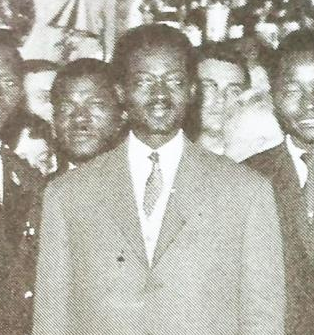
Abel Nguéndé Goumba (French pronunciation: [abɛl gumba]; 18 September 1926 – 11 May 2009) was a Central African politician. During the late 1950s, he headed the government in the period prior to independence from France, and following independence he was an unsuccessful candidate for President of the Central African Republic four times (1981, 1993, 1999, and 2005). Goumba, who was President of the Patriotic Front for Progress (FPP) political party, served under President François Bozizé as Prime Minister from March 2003 to December 2003 and then as Vice President of the Central African Republic from December 2003 to March 2005. Subsequently, he was appointed to the official post of Ombudsman.
He was born in 1926 in Grimari, Ouaka Prefecture in the Oubangi-Chari French colony, which is now the Central African Republic. He was a qualified medical doctor and member of the medical faculty in Bangui.
While the country was still a French colony, Goumba was Vice-President of the Government Council from May 1957 to July 1958, President of the Government Council from July to December 1958, and was briefly Prime Minister in an acting capacity in April 1959, following the death of Barthélemy Boganda in a plane crash. However, Goumba was seen as too nationalistic and anti-French, which led France to promote their loyal ally David Dacko instead. Dacko won the ensuing power struggle in 1959 and dismissed Goumba as Minister of Finance; he went on to become the independent country's first president.
In 1960, Goumba and Pierre-Faustin Maleombho went on to found a small opposition party, the Mouvement d'évolution démocratique de l'Afrique centrale (MEDAC). When MEDAC won substantial support in by-elections, Dacko declared the party illegal and arrested its leadership. Goumba, along with two close associates, was sentenced to life imprisonment in February 1962 by the Supreme Court, which still consisted entirely of French magistrates. Goumba managed to go in exile in France, where he completed his medical studies. He worked for the World Health Organization in Rwanda and then Benin during the 1970s; while in Rwanda, he met his wife, Anne-Marie, who was then a professor at the Butare Faculty of Medicine. Maleombho, the co-founder of the MEDAC, was executed by the Bokassa regime in 1976.
At the time of the 1979 French coup which deposed military dictator Bokassa, Goumba was still in exile. However, he had the backing of a new, émigré opposition party behind him, the Front patriotique oubanguien, which he had founded in 1972. When handpicking a successor to Bokassa, France immediately discarded Goumba due to his perceived Marxist ideas and his revolutionary past. Instead, the French installed Dacko again. When voices in the CAR were raised for the return of Goumba, the French right-wing press launched a campaign against him, painting him as an agent of the Soviet Union. Goumba and the Front patriotique reacted by denouncing French interference in Central African politics and demanding the departure of French troops.
After his 1981 return to the Central African Republic, Goumba was again occasionally arrested for political activity. He feuded with all of Central African Republic's presidents until 2003 and was declared by them to be a national traitor.[citation needed] In the 1981 election, his Front patriotique won a mere 1,44% of the vote. The Kolingba regime, which came into power a few months later by overthrowing Dacko in the 1981 coup, kept Goumba and other political opponents under close surveillance and excluded them from formal politics.
Goumba swiftly returned to politics with the comeback of electoral democracy in the early '90s. The Front patriotique was relaunched as the Patriotic Front for Progress (FPP) in 1991.
In the 1993 presidential election Goumba achieved his best result, coming in second place but being defeated by Ange-Félix Patassé in a run-off, in which Goumba took 46,51% of the vote. Reminiscing about this era, American ambassador Robert Gribbin described Goumba as "more of a '60s style revolutionary than anyone else" in the political landscape at the time. He also had a reputation for honesty and integrity, and stressed the importance of governing without corruption.[citation needed]
Hub AI
Abel Goumba AI simulator
(@Abel Goumba_simulator)
Abel Goumba
Abel Nguéndé Goumba (French pronunciation: [abɛl gumba]; 18 September 1926 – 11 May 2009) was a Central African politician. During the late 1950s, he headed the government in the period prior to independence from France, and following independence he was an unsuccessful candidate for President of the Central African Republic four times (1981, 1993, 1999, and 2005). Goumba, who was President of the Patriotic Front for Progress (FPP) political party, served under President François Bozizé as Prime Minister from March 2003 to December 2003 and then as Vice President of the Central African Republic from December 2003 to March 2005. Subsequently, he was appointed to the official post of Ombudsman.
He was born in 1926 in Grimari, Ouaka Prefecture in the Oubangi-Chari French colony, which is now the Central African Republic. He was a qualified medical doctor and member of the medical faculty in Bangui.
While the country was still a French colony, Goumba was Vice-President of the Government Council from May 1957 to July 1958, President of the Government Council from July to December 1958, and was briefly Prime Minister in an acting capacity in April 1959, following the death of Barthélemy Boganda in a plane crash. However, Goumba was seen as too nationalistic and anti-French, which led France to promote their loyal ally David Dacko instead. Dacko won the ensuing power struggle in 1959 and dismissed Goumba as Minister of Finance; he went on to become the independent country's first president.
In 1960, Goumba and Pierre-Faustin Maleombho went on to found a small opposition party, the Mouvement d'évolution démocratique de l'Afrique centrale (MEDAC). When MEDAC won substantial support in by-elections, Dacko declared the party illegal and arrested its leadership. Goumba, along with two close associates, was sentenced to life imprisonment in February 1962 by the Supreme Court, which still consisted entirely of French magistrates. Goumba managed to go in exile in France, where he completed his medical studies. He worked for the World Health Organization in Rwanda and then Benin during the 1970s; while in Rwanda, he met his wife, Anne-Marie, who was then a professor at the Butare Faculty of Medicine. Maleombho, the co-founder of the MEDAC, was executed by the Bokassa regime in 1976.
At the time of the 1979 French coup which deposed military dictator Bokassa, Goumba was still in exile. However, he had the backing of a new, émigré opposition party behind him, the Front patriotique oubanguien, which he had founded in 1972. When handpicking a successor to Bokassa, France immediately discarded Goumba due to his perceived Marxist ideas and his revolutionary past. Instead, the French installed Dacko again. When voices in the CAR were raised for the return of Goumba, the French right-wing press launched a campaign against him, painting him as an agent of the Soviet Union. Goumba and the Front patriotique reacted by denouncing French interference in Central African politics and demanding the departure of French troops.
After his 1981 return to the Central African Republic, Goumba was again occasionally arrested for political activity. He feuded with all of Central African Republic's presidents until 2003 and was declared by them to be a national traitor.[citation needed] In the 1981 election, his Front patriotique won a mere 1,44% of the vote. The Kolingba regime, which came into power a few months later by overthrowing Dacko in the 1981 coup, kept Goumba and other political opponents under close surveillance and excluded them from formal politics.
Goumba swiftly returned to politics with the comeback of electoral democracy in the early '90s. The Front patriotique was relaunched as the Patriotic Front for Progress (FPP) in 1991.
In the 1993 presidential election Goumba achieved his best result, coming in second place but being defeated by Ange-Félix Patassé in a run-off, in which Goumba took 46,51% of the vote. Reminiscing about this era, American ambassador Robert Gribbin described Goumba as "more of a '60s style revolutionary than anyone else" in the political landscape at the time. He also had a reputation for honesty and integrity, and stressed the importance of governing without corruption.[citation needed]
Recent media