



Community hub
Recent from talks
Knowledge base stats:
Talk channels stats:
Members stats:
Abyei
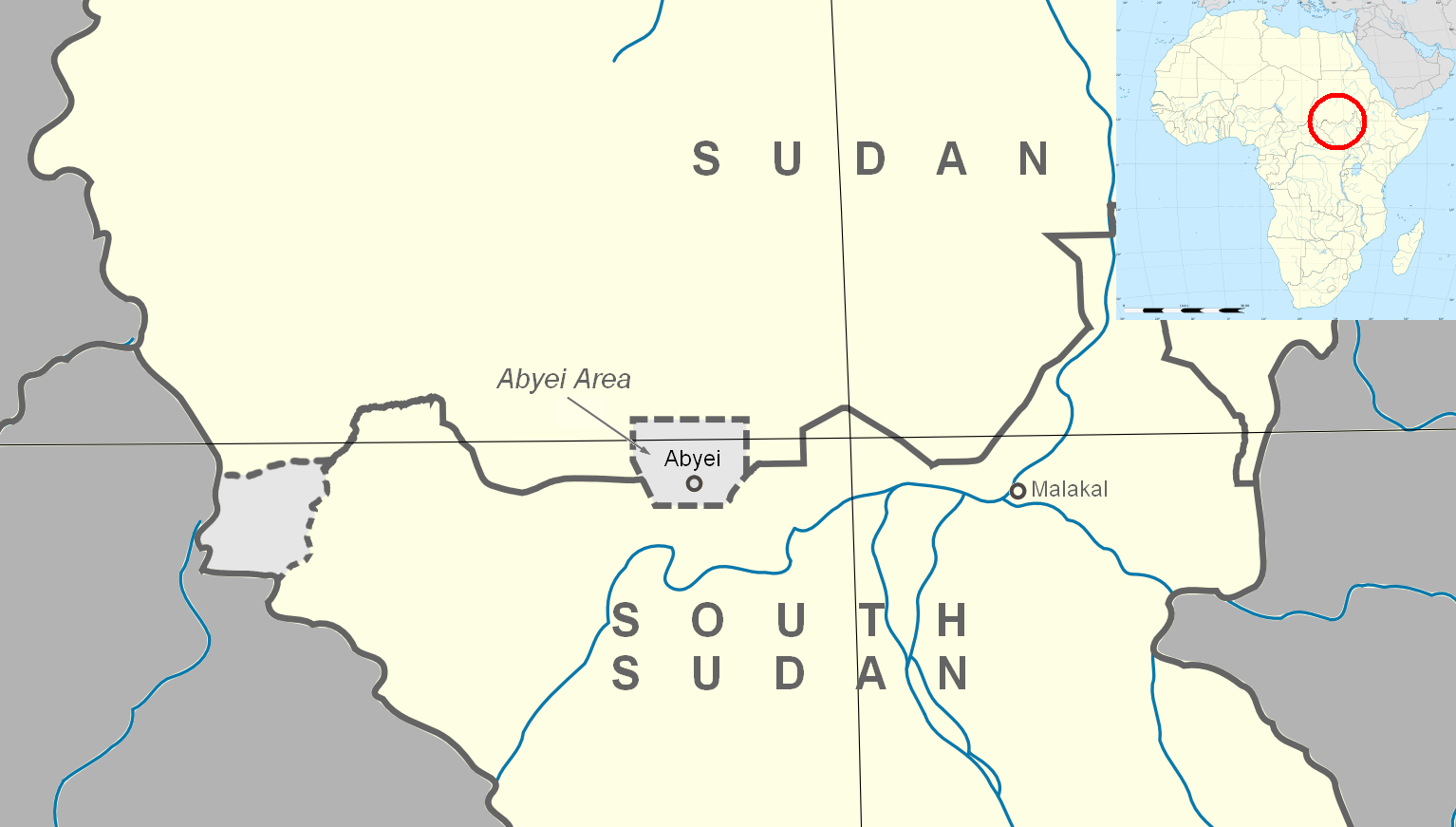
The Abyei Special Administrative Area (Arabic: منطقة أبيي) is an area of 10,546 km2 or 4,072 sq mi on the border between South Sudan and Sudan that has been accorded "special administrative status" by the 2004 Protocol on the Resolution of the Abyei Conflict (Abyei Protocol) in the Comprehensive Peace Agreement (CPA) that ended the Second Sudanese Civil War. The capital of the Abyei Area is Abyei Town. Under the terms of the Abyei Protocol, the Abyei Area is considered, on an interim basis, to be simultaneously part of both the Republic of South Sudan and Republic of Sudan, effectively a condominium.
As part of the 2011 independence process, a separate referendum was to be held in Abyei on whether they wanted to join Sudan or South Sudan; however an official referendum was never held.
In contrast to the borders of the former district, the Abyei Protocol defined the Abyei Area as "the area of the nine Ngok Dinka chiefdoms transferred to Kordofan in 1905". In 2005, a multinational border commission established this to be those portions of Kordofan south of 10°22′30″ N. However, following continued disputes that erupted into violence and threatened the CPA, an international arbitration process redrew Abyei's boundaries in 2009 to make it significantly smaller, extending no further north than 10°10′00" N. This revised border has now been endorsed by all parties to the dispute.[citation needed]
The Sudan Tribune claims that the Dajo people were located in the region of Abyei prior to the seventeenth century, before being displaced by new migrants. From at least the eighteenth century Abyei was inhabited by the agro-pastoralist Ngok Dinka, a sub-group of the Dinka of Southern Sudan. The Messiria, a nomadic Arab people, who spend most of the year around their base at Muglad in northern South Kurdufan, would graze their cattle south to the Bahr river basin in Abyei during the dry season. Abyei's permanent residents were thus the southern Dinka, but half the year the Dinka were outnumbered by the Muslim, northern Misseriya. At the establishment of the Anglo-Egyptian Condominium, the Messiria were predominantly located in the province of Kordofan (considered "northern"), while the Ngok Dinka were located in Bahr el Ghazal (considered "southern"). In 1905, after continued raids by the Messiria into Ngok Dinka territory, the British redistricted the nine Ngok Dinka chiefdoms into Kordofan. The reason was threefold: to protect the Ngok Dinka from raids by the Messiria and thus pacify the area; to demonstrate that a new sovereign power was in control; and to bring the two feuding tribes under common administration. When the British left in 1956, they left the status of Abyei unclear.
The two peoples began to take separate paths with the onset of the First Sudanese Civil War (1956–1972), in particular the 1965 massacre of 72 Ngok Dinka in the Misseriya town of Babanusa. The Ngok Dinka were thus drawn to the Anyanya, while the Messiria were favored by the Khartoum-based government and became firmly associated with the north. The 1972 Addis Ababa Agreement that ended the war included a clause that provided for a referendum allowing Abyei to choose to remain in the north or join the autonomous South. This referendum was never held and continued attacks against Ngok Dinka led to the creation of Ngok Dinka unit in the small Anyanya II rebellion, which began in Upper Nile in 1975. The discovery of oil in the area, among other north–south border regions, led President Gaafar Nimeiry to try the first of many initiatives to redistrict oil rich areas into northern administration.
The Ngok Dinka unit of Anyanya II formed one of the foundations of the rebel movement at the beginning of the Second Civil War in 1983. Many Ngok Dinka joined the rebels upon the outbreak of hostilities. Partially as a result of their early entry into the war, many Ngok Dinka rose to leadership positions in the Sudan People’s Liberation Army (SPLA), becoming closely associated with John Garang. In contrast, the Messiria joined the hostilities on the side of the government in the mid-1980s. They formed frontline units as well as Murahleen, mounted raiders that attacked southern villages to loot valuables and slaves. By the end of the war the intense fighting had displaced most Ngok Dinka out of Abyei, which the Misseriya state as justification for ownership of the area.
The status of Abyei was one of the most contentious issues in the negotiation of the Comprehensive Peace Agreement. The first protocol signed, the 2002 Machakos Protocol, defined Southern Sudan as the area as of independence in 1956. It thus excluded the SPLA strongholds in Abyei, the Nuba Mountains and Blue Nile, known collectively during the talks as the Three Areas. The SPLA negotiators then spent several years attempting to give these regions the right to a referendum in which they could decide if they want to be under the administrative control of the north or south. This would potentially mean that these regions would become part of a nation of South Sudan after the 2011 independence referendum. The government blocked these attempts, stating that the Machakos Protocol had already delineated the border for the Three Areas in favor of the north.
The deadlock was finally broken by pressure from the United States. U.S. presidential envoy John Danforth circulated a draft agreement, which the U.S. convinced the government to sign despite its inclusion of a referendum. The Protocol on the resolution of the Abyei conflict put Abyei into a special administrative status government directly by the presidency. The precise borders of the area were to be determined by an Abyei Borders Commission (ABC), followed by a referendum commission to identify Messiria that are resident in Abyei and could thus vote in local elections in 2009; all the Ngok Dinka were to be considered resident, it being their traditional homeland.
Hub AI
Abyei AI simulator
(@Abyei_simulator)
Abyei
The Abyei Special Administrative Area (Arabic: منطقة أبيي) is an area of 10,546 km2 or 4,072 sq mi on the border between South Sudan and Sudan that has been accorded "special administrative status" by the 2004 Protocol on the Resolution of the Abyei Conflict (Abyei Protocol) in the Comprehensive Peace Agreement (CPA) that ended the Second Sudanese Civil War. The capital of the Abyei Area is Abyei Town. Under the terms of the Abyei Protocol, the Abyei Area is considered, on an interim basis, to be simultaneously part of both the Republic of South Sudan and Republic of Sudan, effectively a condominium.
As part of the 2011 independence process, a separate referendum was to be held in Abyei on whether they wanted to join Sudan or South Sudan; however an official referendum was never held.
In contrast to the borders of the former district, the Abyei Protocol defined the Abyei Area as "the area of the nine Ngok Dinka chiefdoms transferred to Kordofan in 1905". In 2005, a multinational border commission established this to be those portions of Kordofan south of 10°22′30″ N. However, following continued disputes that erupted into violence and threatened the CPA, an international arbitration process redrew Abyei's boundaries in 2009 to make it significantly smaller, extending no further north than 10°10′00" N. This revised border has now been endorsed by all parties to the dispute.[citation needed]
The Sudan Tribune claims that the Dajo people were located in the region of Abyei prior to the seventeenth century, before being displaced by new migrants. From at least the eighteenth century Abyei was inhabited by the agro-pastoralist Ngok Dinka, a sub-group of the Dinka of Southern Sudan. The Messiria, a nomadic Arab people, who spend most of the year around their base at Muglad in northern South Kurdufan, would graze their cattle south to the Bahr river basin in Abyei during the dry season. Abyei's permanent residents were thus the southern Dinka, but half the year the Dinka were outnumbered by the Muslim, northern Misseriya. At the establishment of the Anglo-Egyptian Condominium, the Messiria were predominantly located in the province of Kordofan (considered "northern"), while the Ngok Dinka were located in Bahr el Ghazal (considered "southern"). In 1905, after continued raids by the Messiria into Ngok Dinka territory, the British redistricted the nine Ngok Dinka chiefdoms into Kordofan. The reason was threefold: to protect the Ngok Dinka from raids by the Messiria and thus pacify the area; to demonstrate that a new sovereign power was in control; and to bring the two feuding tribes under common administration. When the British left in 1956, they left the status of Abyei unclear.
The two peoples began to take separate paths with the onset of the First Sudanese Civil War (1956–1972), in particular the 1965 massacre of 72 Ngok Dinka in the Misseriya town of Babanusa. The Ngok Dinka were thus drawn to the Anyanya, while the Messiria were favored by the Khartoum-based government and became firmly associated with the north. The 1972 Addis Ababa Agreement that ended the war included a clause that provided for a referendum allowing Abyei to choose to remain in the north or join the autonomous South. This referendum was never held and continued attacks against Ngok Dinka led to the creation of Ngok Dinka unit in the small Anyanya II rebellion, which began in Upper Nile in 1975. The discovery of oil in the area, among other north–south border regions, led President Gaafar Nimeiry to try the first of many initiatives to redistrict oil rich areas into northern administration.
The Ngok Dinka unit of Anyanya II formed one of the foundations of the rebel movement at the beginning of the Second Civil War in 1983. Many Ngok Dinka joined the rebels upon the outbreak of hostilities. Partially as a result of their early entry into the war, many Ngok Dinka rose to leadership positions in the Sudan People’s Liberation Army (SPLA), becoming closely associated with John Garang. In contrast, the Messiria joined the hostilities on the side of the government in the mid-1980s. They formed frontline units as well as Murahleen, mounted raiders that attacked southern villages to loot valuables and slaves. By the end of the war the intense fighting had displaced most Ngok Dinka out of Abyei, which the Misseriya state as justification for ownership of the area.
The status of Abyei was one of the most contentious issues in the negotiation of the Comprehensive Peace Agreement. The first protocol signed, the 2002 Machakos Protocol, defined Southern Sudan as the area as of independence in 1956. It thus excluded the SPLA strongholds in Abyei, the Nuba Mountains and Blue Nile, known collectively during the talks as the Three Areas. The SPLA negotiators then spent several years attempting to give these regions the right to a referendum in which they could decide if they want to be under the administrative control of the north or south. This would potentially mean that these regions would become part of a nation of South Sudan after the 2011 independence referendum. The government blocked these attempts, stating that the Machakos Protocol had already delineated the border for the Three Areas in favor of the north.
The deadlock was finally broken by pressure from the United States. U.S. presidential envoy John Danforth circulated a draft agreement, which the U.S. convinced the government to sign despite its inclusion of a referendum. The Protocol on the resolution of the Abyei conflict put Abyei into a special administrative status government directly by the presidency. The precise borders of the area were to be determined by an Abyei Borders Commission (ABC), followed by a referendum commission to identify Messiria that are resident in Abyei and could thus vote in local elections in 2009; all the Ngok Dinka were to be considered resident, it being their traditional homeland.