Hubbry Logo
Dinka peopleDinka peopleMain
Open search
Dinka people
Community hub
Dinka people
logo
8 pages, 0 posts
0 subscribers
Be the first to start a discussion here.
Dinka people
Dinka people
from Wikipedia

The Dinka people (Dinka: Jiɛ̈ɛ̈ŋ) are a Nilotic ethnic group native to South Sudan. The Dinka mostly live along the Nile, from Mangalla-Bor[1] to Renk, in the region of Bahr el Ghazal, Upper Nile (two out of three provinces that were formerly part of southern Sudan), and the Abyei area of the Ngok Dinka in South Sudan.

Key Information

They number around 4.5 million, according to the 2008 Sudan census, constituting about 40% of the population[2] of that country and the largest ethnic group in South Sudan. The Dinka refer to themselves as Muonyjang (singular) and jieng (plural).

Origins

[edit]

The Dinka originated from the Gezira in what became Sudan. In ancient times, this region was once occupied by the Kingdom of Kush.[3] In medieval times, the area was ruled by the kingdom of Alodia,[4] a Christian, multi-ethnic empire in Nubia.[5] Living in its southern periphery and interacting with the Nubians, the Dinka absorbed a sizable amount of Nubian vocabulary.[4] From the 13th century, with the disintegration of Alodia, the Dinka began to migrate out of Gezira, fleeing slave raids, military conflict, and droughts.[6]

Conflict over pastures and cattle raids have occurred between Dinka and Nuer as they battled for grazing land.[7]

Dinka migration from Gezira & Alodia

Approximate extension of Alodia based on accounts of Ibn Hawqal

The Dinka presence in Alwa suggests a significant historical connection between the Dinka and the Kingdom of Alwa. Cultural practices, such as beer-drinking rituals during sowing and harvesting sorghum, reflect similarities to Nubian traditions noted by Ibn Selim el-Assouani, indicating a continuity of influence from Alwa.[8] Historical accounts, including manuscripts from the 18th century, reference the Dinka's ancestral ties to the Alwan Nubians, with early modern Sudanese manuscript writers noting that they are derived from the "Anag",[4] a term used by Spaulding to describe eastern sudanic speaking peoples who were a part of the kingdom of Alodia. Linguistic studies support the idea that the Dinka resided in the Gezira, which was under Alwa's influence before their migration southward, likely due to political upheaval and increased slavery following Alwa's decline in the 13th century. Shared Nilotic traditions, such as human sacrifice and ceremonial regicide, further indicate a cultural heritage influenced by Nubian practices. Additionally, 13th-century accounts by Ibn Sa'id al-Andalusi describe the Damadim, who were engaged in conflict with the Alodians, highlighting interactions between Nilotic groups and Nubian territories. Archaeological evidence, including the tradition of king-killing, links the Dinka to later groups who lived in Alodia's successor state Fazughli where the custom persisted into the 19th century.[8]

The Damadim, a group of Africans mentioned by various medieval Arab writers during the 13th century, may have been ancestors of the Dinka and other Western Nilotic groups like the Luo peoples.[4] They were reported to live southwest of Alodia, possibly in the Southern Gezira or around the Bahr al-Ghazal and Sobat regions of South Sudan. Stephanie Beswick suggests that the Dinka's ancestors could have been based along the White Nile in the Gezira plains.[4] The Damadim were known for their raids and conquests, notably their sacking of the Christian Kingdom of Alodia's capital, Soba, around 1220 A.D.[9] During this period, they were referred to as the "Tatars of the Sudan" due to their simultaneous raids with the Mongol invasions of Persia.[9] Archaeological evidence from Soba indicates significant destruction, including the looting of burial sites and the destruction of two major churches, possibly tied to the Damadim conquest.[5] Despite the limited sources, the Damadim's movements and activities provide a potential link to the later (western) Nilotic migrations into South Sudan that would occur post-1000 A.D. and are linked with the introduction of humped cattle.[4][10]

The Dinka migrations southward during the 15th to 18th centuries played a crucial role in shaping their territorial dominance in what is now South Sudan. Following the collapse of the Alodian Kingdom and the establishment of the Funj Sultanate in 1504 by Sultan Amara Dunqas, the Dinka, alongside other Nilotic groups like the Shilluk, moved further south, clashing with the Funj and other local populations. Oral traditions and archaeological evidence suggest that the Dinka displaced and absorbed various groups in their path, including the remnants of the Funj people, who were themselves possibly linked to the Nubian traditions of medieval Alodia.[4] These conflicts between the Dinka and the Funj are well-documented in Dinka oral histories, with stories of fierce battles where the Dinka eventually forced the Funj northward, allowing them to establish their sultanate as Sennār, which the Dinka would also raid in the following centuries.[4][11] Over time the Dinka and Funj developed more complex relations, with Dinka warriors serving as mercenaries in the Funj provinces, and Dinka merchants engaging in the regional slave trade. Despite these evolving relations, the Dinka continued to expand into western and southern territories, solidifying their presence and dominance in much of modern South Sudan.

Dinka-män med spjut, halsband och armband
Dinka men with spears, necklaces and bracelets

The Dinka's religions, beliefs, and lifestyle have led to conflict with the Arab Islamic government in Khartoum. The Sudan People's Liberation Army, led by Dinka John Garang, took arms against the government in 1983. During the subsequent 21-year civil war, many thousands of Dinka, along with non-Dinka southerners, were massacred by government forces. Since the independence of South Sudan, the Dinka, led by Salva Kiir Mayardit, engaged in a civil war with the Nuer and other groups, who accuse them of monopolising power.[12]

Christianity

[edit]

In 1983, due to Sudan's second civil war, many educated Dinka were forced to flee the cities to rural areas. Some were Christians who had been converted by the Church Missionary Society.[13] Among them were ordained clergymen who began preaching in the villages. Songs and praise were used to teach the mostly illiterate Dinka about the faith.[14] Most Dinka converted to Christianity and are learning to adapt traditional religious practices to Christian teachings.[15] The conversion took place in rural villages and among Dinka refugees country. The Lost Boys of Sudan were converted in significant numbers in the refugee camps of Ethiopia.[16]

Dinka massacre

[edit]

Between 2013 and 2014, forces led by the breakaway Riek Machar faction deliberately killed an estimated 2,000 civilians from Hol, Nyarweng, Twic east and Bor[17][1][18] and wounded several thousand more over two months. Much of their wealth was destroyed, which led to mass starvation deaths. It is estimated that 100,000 people left the area following the attack.[19][20]

Physique

[edit]

Dinka are noted for their height, and, along with the Tutsi of Rwanda, they are the tallest group in Africa.[21] Roberts and Bainbridge reported an average height of 182.6 cm (5 ft 11.9 in) in a sample of 52 Dinka Agaar and 181.3 cm (5 ft 11.4 in) in 227 Dinka Ruweng measured in 1953–1954.[22] However, the stature of Dinka males later declined, possibly as a consequence of undernutrition and conflicts. An anthropometric survey of Dinka men, war refugees in Ethiopia, published in 1995, found a mean height of 176.4 cm (5 ft 9.4 in).[23]

Agriculture and pastoral strategies

[edit]
An example of rainy season temporary settlements—note the stilts upon which the huts are built to protect against periodic flooding of the region
Cattle of the Dinka people, Juba, South Sudan

Southern Sudan is "a large basin gently sloping northward",[24] through which flow the Bahr el Jebel River, the White Nile, the Bahr el Ghazal (Nam) River and its tributaries, and the Sobat, all merging into a vast barrier swamp.

Vast oil areas are present to the south and east on the flood plain, a basin in southern Sudan into which the rivers of Congo, Uganda, Kenya, and Ethiopia drain from an ironstone plateau that belts the regions of Bahr El Ghazal and Upper Nile.

The terrain can be divided into four land classes:

  • Highlands: higher than the surrounding plains by a few centimetres; there host permanent settlements. Vegetation consists of open thorn woodland and/or open mixed woodland with grasses.
  • Intermediate Lands: slightly below the highlands, commonly subject to flooding from rainfall in the Ethiopian and East/Central African highlands. Vegetation is mostly open perennial grassland with some acacia woodland and other sparsely distributed trees.
  • Toic: land seasonally inundated by rivers and inland water courses, retaining enough moisture throughout the dry season to support cattle grazing.
  • Sudd: permanent swampland below the level of the toic; covers a substantial part of the floodplain; provides good fishing but not grazing; historically a physical barrier to outsiders.

The ecology of the large basin is unique; until recently, wild animals and birds flourished, rarely hunted by the agro-pastoralists.[24]

The climate determines the Dinka's migration patterns, responding to the periodic flooding and dryness of their surroundings. They begin moving around May–June, at the onset of the rainy season, migrating to their settlements of mud and thatch housing situated above flood level, where they plant their crops of millet and other grains. These rainy season settlements feature other permanent structures such as cattle byres (luak) and granaries. During the dry season (beginning about December–January), everyone except the aged, ill, and nursing mothers migrates to semi-permanent dwellings in the toic for cattle grazing. The cultivation of sorghum, millet, and other crops begins in the highlands in the early rainy season, and the harvest begins when the rains are heavy in June–August. Cattle are driven to the toic in September and November when the rainfall drops off and graze on crop remnants.[25]

A cattle camp in Rumbek

While the Dinka are often seen as only pastoralists, they are actually agro-pastoralists. Agriculture plays a very big part in their livelihood, with Sorghum being their most important crop grown. The Dinka also grow okra, sesame, pumpkin, cow peas, maize, cassava, ground nuts, different types of beans, water melons, tobacco and millet. In Dinka society, both genders engage in cultivation, and on big farms the women brew beer and everyone is involved. Before the Sudanese civil wars each household cultivated an average of two acres of sorghum around their homestead along with other crops. An estimated 87% of total calories and 76% of protein by weight are provided by crop production compared with 13% of calories and 24% of protein derived from livestock produce. Today, 83% of all available labor is estimated to be employed in agricultural activities compared with only 17% in livestock husbandry. In recent times, some poor or cattleless Dinka have farmed the land of their non-Dinka neighbors. According to the Balanda Bviri politician Bandindi Pascal Uru: "The Dinka are good cultivators; they cultivate slowly but surely for hours. When the Dinka leave the business of cattle they take the hoe very seriously."[26]

Dinka beaded collar, Sudan Ethnographic Museum, 2022

The connection of agriculture and economics to Dinka marriage is important. Grain as well as cattle have been and continue to be used in both bartering and bridewealth payments. Wealth is acquired when a man and his family produce a small surplus of crops which they convert into a more stable and valuable resource, cattle. In turn, this enables a man to acquire more wives, more children, and thus more economic and political power. In Dinka society cattle acquired by the wealth yielded from agriculture are considered a more stable form of "property." If a Dinka couple divorce the cows given as bridewealth may be returned to the former husband. However, those Dinka male members of a clan who possess animals bought with grain, rather than acquired by way of marriage payments, are more honored and given more respect because their wealth is perceived as being more stable. Thus: "this cattle is not returnable and does not have external links and cannot be taken back easily, for example, by divorce. It therefore represents ‘pure property’ derived from labor and this kind of man has much more stable wealth and is more honored. However, no one has all cattle that are free of ties." Because of the link between agriculture, wealth, and marriage the Dinka grow a wide variety of crops.[27]

Caudatum sorghum

[edit]

During their migrations, the Dinka introduced a new variety of sorghum into southern Sudan. Caudatum sorghum is drought resistant and produces well with very little care. This variety of Sorghum was not grown by tribes in the region and during the 1300s to 1600s great droughts were occurring all over east and southern Africa which caused many former tribes of south Sudan like the Luo to migrate southwards (this drought is recorded in Luo oral history as the "Nyarubanga" famine). The tribes that did not migrate had only the option (if their crops completely died) to be in service of their incoming wealthier Agro-pastoral neighbours like the Dinka.[28]

Hump backed cattle

[edit]

The adoption of Sanga and Zebu hump backed cattle was invaluable to the expansion of the Dinka throughout South Sudan. Hump backed cattle were considerably stronger than the previous humpless breeds in southern Sudan and are capable of withstanding long-distance transhumance patterns.[clarification needed] Even more importantly, they were less affected by drought. The tribes of south Sudan did not possess these cattle, which gave the Dinka a large advantage when they introduced them in their southern migration. There was a long series of droughts that plagued Southern Sudan during this time period intensified the reliance on cattle for the people of the region, since livestock are indispensable in bad years when crop failure occurs. The introduction of this new breed by the Dinka was a significant causative factor in the spread of modern patterns of Nilotic pastoralism in Southern Sudan. Eventually these cattle replaced all of the previous humpless breeds. The domestication of caudatum sorghum along with the more durable breeds of cattle introduced into this region of Southern Sudan an economic system of the greatest efficiency in Sudan and East Africa, giving the Dinka a military and political advantage over all other tribes in the region. These integrated systems were able to support population increases in the Bahr el-Ghazal and later expansions towards the west.[29]

Cultural and religious beliefs

[edit]
Dinka headrest at the National Museum of Anthropology, Madrid

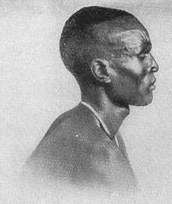
Dinka religious beliefs and practices also reflect their lifestyle. The Dinka religion, like most other Nilotic faiths, is polytheistic, but has one creator, Nhialic, who leads the Dinka pantheon of gods and spirits. He is generally distant from humans and does not directly interact with them.[30] The sacrificing of oxen by the "masters of the fishing spear" is central to Dinka religious practice. Young men become adults through an initiation ritual that includes marking the forehead with a sharp object. During this ceremony, they acquire a second cow-color name. The Dinka believe they derive religious power from nature and the world around them rather than from scripture.[31]

Men and women eat separately. When milk supply is low, children get priority. Children are fed milk from 9–12 months. After about one year, children start eating solid food (porridge). After children turn three, they eat two meals a day. Adults also eat two meals a day.[32]

In Dinka territory there exist a number of mounds, described by the Dinka as “pyramids,” which have religious significance to those who tend them. These mounds were built in the form of a cone and the material used was cattle ashes, cow dung, cotton soil, clay, and debris. In all cases the history of the origin of each mound is connected to a prominent Dinka priest who ordered its construction by the people as a monument to his name.[33]

Pyramid of Alel

[edit]

A pyramid of stones known as Alel exists in the territory of Western Luaic Dinka in the town of Makuac. This pyramid entombs the body of a prominent Eastern Twic Dinka priest named Kuol Alel who led his people across from the banks of the eastern Nile and in the process of migrating west died in this region. Every year there is a celebration held ar Aled in honor of this prominent leader. The pyramid is located north of the Paliang region in the Bahr el-Ghazal, and local Dinka estimate that it pre-dates the Egyptian colonial period (1821) and hence is at least over 200 years old.[34]

Pyramid of Yik Ayuong

[edit]

In Padang territory in northern Dinka territory east of the Nile among the Dunghol Dinka and north of the city of Malakal, the pyramid of a priest, Ayuong Dit, is in the village of Rukcuk. The mound was built over the body of this priest who, with his wife and eight bulls, was locked up in their cattle byre by his express orders. District Commissioner Ibrahim Bedri who served during the British colonial period said that the pyramid "was seventy-five paces in circumference and twenty-six paces along the slope. During the harvest season it was cleared of grass, more earth was added to it, and the surface smoothed by women who made stripes along the pyramid with large quantities of durra (flour) in preparation for the annual ceremony yairunka baiet, which took place at the pyramid. During the celebrations the people gathered together for communal offerings to the spirit of Ayuong Dit and eight bulls were sacrificed, which was believed to make the women fertile. The mound is known as Yik Ayuong.[35]

Pyramid of Luak Deng

[edit]

The pyramid of Luak Deng is said to be the "Mecca" of the Dinka and Nuer people and contains the shrine of their deity (and possibly real historical figure) Deng Dit (Deng the Great). It comprises a palisade standing on higher ground near a picturesque pool of water surrounded by ardeiba and suba trees. This pyramid is connected in mythology with a chain of lesser shrines in the former Nyarruweng Dinka region in what has now become the territory of the Gaweir Nuer. Around the shrine and within a few miles of it reside a small section of Rut Dinka who have settled back and live there by agreement with the Nuer to tend the shrine. Luak Deng has become a shrine of great significance for both the Dinka and Nuer people.[36]

Pyramid of Pwom Ayuel (or Aiwel)

[edit]

The pyramid of Pwom Ayuel is said to be the burial place of Ayuel, the culture hero of the Dinka. It is found in what has now become Nuer territory on the southern part of an island formed by the Bahr el-Zeraf and Bahr el-Jebel Rivers (Zeraf Island). Some Dinka myths suggest that Ayuel was killed by external forces beyond his control. Aliab Dinka Parmena Awerial Aluong recounts a different oral history that suggests that the mound was built on the orders of Ayuel Longar himself. According to historical accounts there were many years of toil in the early days during which Ayuel, who had reached the Nile and Sobat Rivers, ordered his people to construct a large monument. Some people died in the building of this structure, their bodies adding to the rising edifice. Some Dinka say this mound was built after Ayued's death. Today the mound remains a center of great sanctity, but is no longer attended with communal gatherings and ritual operations."[37]

[edit]

Dinka refugees were portrayed in works such as Lost Boys of Sudan by Megan Mylan and Jon Shenk and God Grew Tired Of Us, Joan Hechts' book The Journey of the Lost Boys and the fictionalized autobiography of a Dinka refugee, Dave Eggers' What Is the What: The Autobiography of Valentino Achak Deng. Other books on and by the Lost Boys include The Lost Boys of Sudan by Mark Bixler, God Grew Tired of Us by John Bul Dau, They Poured Fire On Us From The Sky by Alephonsion Deng, Benson Deng, and Benjamin Ajak and A Long Walk to Water by Linda Sue Park. In 2004 the first volume of the graphic novel Echoes of the Lost Boys of Sudan was released in Dallas, Texas.[38]

Notable people

[edit]

Dinka tribal groups

[edit]

This list of Dinka tribal grouping by region. Note that these divisions are further divided into several subdivisions; for example, Dinka Rek is subdivided into Aguok, Kuac, and many other things, but they speak the same language; only the pronunciation is slightly different.

The number of Dinka sub-divisions is contested, as the border between groups, sub-divisions, and sections is blurred and often difficult to determine. The Atuot people can be divided into Apaak and Reel, Bor, Twic, Nyarweng and Hol[40][18] and Panaruu into Awet and Kuel and Jieng into Ador and Lou.[41][42][43]

The Dinka people have no centralised political authority. Instead their clans are independent but interlinked. Some traditionally provide ritual chiefs, known as the "masters of the fishing spear" or beny bith,[44] who provide leadership and are at least in part hereditary.

See also

[edit]

References

[edit]

Further reading

[edit]
[edit]
Revisions and contributorsEdit on WikipediaRead on Wikipedia
from Grokipedia
The Dinka (Jieng) are a Nilotic ethnic group native to , constituting the largest population segment at approximately 35.8 percent of the country's inhabitants and renowned for their semi-nomadic centered on extensive herds that underpin economic, social, and ritual life. Predominantly residing in the floodplains and savannas of Bahr el Ghazal, Upper Nile, and Jonglei states along the basin, they maintain a patrilineal clan-based society with age-grade systems governing male initiation, warfare, and herding duties, while women manage homestead agriculture of millet and during rainy seasons. Anthropological measurements indicate exceptional average statures among Dinka males, with subgroup means reaching 181.3 cm in surveyed high school cohorts, though refugee and conflict-impacted samples show lower figures around 176 cm due to nutritional deficits and hardship. Traditional cosmology venerates Nhialic as the supreme sky deity alongside earth spirits and ancestors, with sacrifices integral to appeasing divinities, resolving disputes via bloodwealth, and negotiating marriages where bridewealth in livestock affirms alliances. The Dinka's martial traditions and demographic weight propelled their prominence in the Sudan People's Liberation Army during the Second Sudanese Civil War (1983–2005), where leaders like advanced the cause of southern autonomy culminating in 's 2011 independence, yet post-secession power struggles under Dinka president Salva Kiir ignited a 2013 civil war featuring targeted ethnic violence against rival Nuer groups and accusations of Dinka hegemony exacerbating intertribal fissures.

History

Origins and Early Migration

The Dinka people belong to the Western Nilotic linguistic subgroup, whose proto-ancestors likely originated in central near the confluence of the Blue and White , with evidence from oral traditions and indicating divergence from other Nilotic branches around the early medieval period. Genetic studies support continuity of Nilotic populations with ancient East African ancestry dating back approximately 4,500 years, showing minimal admixture from Eurasian or Bantu groups, which underscores their relative isolation during southward expansions along the . Archaeological data contradict earlier assumptions of ancient settlement, pointing instead to Dinka arrival in the southern Sudanese floodplains no earlier than the 14th–15th centuries CE, following gradual migrations driven by ecological pressures and competition in northern homelands. These migrations involved progressive southward movements from a central Sudanese base, potentially incorporating routes through the Gezira region, as reconstructed from shared Nilotic oral genealogies that reference ancestral figures like Deng and emphasize kinship ties to neighboring groups such as the Nuer and Shilluk. Linguistic evidence reinforces this, with Dinka dialects exhibiting close affinities to other , suggesting a common proto-Western Nilotic that splintered during these displacements, distinct from earlier Eastern Nilotic branches that had already moved eastward. Upon reaching the swampy savannas of present-day , including the Bahr el and Upper basins, the Dinka adapted their pastoralist economy to the seasonal floodplains known as toic, utilizing elevated camps during inundations—a practice archaeologically attested by the absence of pre-14th-century Nilotic in these zones.

Pre-Colonial Organization

The pre-colonial Dinka society operated as a decentralized, acephalous lacking centralized kings or chiefs, with political rooted in structures where authority emerged from kinship segments balancing through opposition and alliance. relied on consensus among elders in village assemblies, where disputes were resolved through emphasizing restitution, often in the form of compensation rather than punitive measures. Certain clans held hereditary ritual leaders known as beny bith (masters of the fishing spear), who wielded spiritual authority to sanctify peace agreements and avert conflicts by invoking ancestral powers and taboos against violence. These figures did not command coercive power but influenced behavior through and efficacy, fostering social cohesion in the absence of formal state institutions. Cattle served as the primary measure of , status, and social currency, integral to forging alliances via bridewealth payments that typically ranged from 20 to 40 animals per , binding families across lineages and mitigating feuds through reciprocal obligations. This system reinforced patrilineal descent and territorial claims, as herds symbolized vitality and were herded collectively in age-set cattle camps that complemented village-based . Dinka pastoralism followed seasonal patterns adapted to the region's ecology, with communities migrating cattle to toich pastures during the (May to November) for abundant grazing and , then retreating to higher ground in the to access residual sources. This mobility enhanced resilience to periodic droughts by enabling access to dispersed resources, preventing , and allowing recovery of pastures through natural deferment.

Colonial Encounters and Resistance

The Anglo-Egyptian Condominium established gradual control over Dinka territories in southern after reconquering the region from Mahdist forces between 1898 and 1905, with pacification campaigns targeting resistant Nilotic groups like the Dinka through military expeditions and fortified posts. British administrators initially focused on suppressing and inter-tribal conflicts while introducing minimal governance structures. In the 1920s, the British enacted the Southern Policy, designating southern —including Dinka areas—as closed districts under ordinances like the 1920 Closed District Ordinance to bar northern merchants, settlers, and officials, thereby limiting Islamic influence and preserving "African" customs and languages. This isolationist approach, intended to foster separate development, restricted , migration, and administrative integration, resulting in chronic underinvestment in , , and compared to the north. Under indirect rule via Native Administration, British officials upheld Dinka in local courts but imposed appointed executive chiefs (rukuna) for tax collection and labor enforcement, which eroded the influence of decentralized spiritual authorities (bany bith) who traditionally mediated disputes and rituals without coercive power. The , levied per homestead from around 1910, and labor for road-building and cotton schemes disrupted pastoral mobility and sparked distrust of colonial demands as akin to Turco-Egyptian-era exploitation. These impositions triggered localized Dinka resistance, including the 1919-1920 Aliab uprising, where on October 30, 1919, about 3,000 spearmen assaulted the Mingkaman police post near Bor to protest taxes and forced labor, killing several officers before British troops quelled the revolt with machine guns and arrests. Similar skirmishes persisted into the , often framed by Dinka as defenses of against alien , though fragmented tribal structures limited coordinated rebellion.

North-South Conflicts and Independence Struggle

The /Army (SPLM/A) was established on May 16, 1983, following a mutiny by southern Sudanese soldiers in Bor, Bahr el Ghazal, against the Khartoum government's imposition of law and marginalization of southern regions. Under the leadership of , a Dinka from Bor, the SPLM/A initially drew its core recruits predominantly from Dinka communities in Upper Nile and Bahr el Ghazal provinces, leveraging their proximity to early battlegrounds in these areas where government forces targeted southern garrisons. Dinka fighters formed the bulk of SPLA forces in the war's opening years, contributing to operations that captured key southern towns and disrupted northern supply lines, though this ethnic predominance later fueled internal divisions. A pivotal ethnic flashpoint occurred in November 1991 during the SPLA-Nasir split, when Nuer factions led by attacked Dinka civilians in Bor and surrounding areas, resulting in the deaths of thousands—estimates range from 2,000 to 5,000 direct killings, with broader displacement affecting tens of thousands. The massacre targeted Dinka communities perceived as aligned with Garang's mainstream SPLA, exacerbating Nuer-Dinka tensions and weakening southern unity against , as Nuer forces briefly allied with government militias before rejoining the insurgency. This event underscored the human costs borne disproportionately by Dinka populations, including widespread displacement to and intensified raids that killed or enslaved civilians. The (CPA), signed on January 9, 2005, between the and the SPLM/A, ended the Second after 22 years, granting southern semi-autonomy and stipulating a 2011 on . In the January 9-15, 2011, , Dinka-majority states such as , Lakes, and Warrap recorded near-unanimous support for , with over 98% of southern votes overall favoring secession from a turnout exceeding 97% of registered voters. This outcome, certified by international observers, led to South Sudan's on July 9, 2011, fulfilling the SPLM/A's vision of southern self-rule amid heavy Dinka contributions to the guerrilla campaign.

Civil War and Famine Impacts

The , which began on December 15, 2013, with initial clashes in between Dinka-aligned government forces under President Salva Kiir and Nuer-aligned opposition forces under , quickly devolved into widespread ethnic targeting of civilians. Dinka populations in regions like faced retaliatory attacks by Nuer militias, including assaults in Bor where opposition forces killed hundreds of Dinka civilians in revenge for government killings of Nuer in . These incidents contributed to an overall death toll estimated at 400,000 by 2018, with ethnic massacres accounting for a substantial portion of Dinka casualties amid cycles of reprisal violence. The 1998 famine in Bahr el Ghazal Province, occurring amid the Second (1983–2005), inflicted catastrophic losses on Dinka communities through a combination of , inter-factional raids by Sudanese government militias and rival Sudan People's Liberation Army elements, and blockades that halted food aid deliveries. Primarily affecting Dinka-dominated areas, the crisis destroyed herds central to their economy and led to mass , with humanitarian assessments documenting acute rates exceeding 50% in affected populations. Both wars triggered large-scale displacement among the Dinka, exacerbating long-term health burdens such as growth stunting from prolonged . During the earlier conflict, over 20,000 children—many Dinka alongside Nuer—became known as the "Lost Boys," orphaned and forced to trek hundreds of miles to camps in or , enduring high mortality en route from starvation, disease, and attacks. The 2013–2020 war displaced an additional 4 million South Sudanese overall, with Dinka fleeing ethnic purges in opposition territories, resulting in overcrowded camps and persistent vulnerabilities to recurrence due to disrupted and losses.

Post-Independence Developments

Following South Sudan's independence on July 9, 2011, President Salva Kiir, a Dinka from the /Army (SPLM/A), led efforts to establish sovereignty, including control over oil fields previously shared with and the formation of national institutions. However, ethnic tensions exacerbated by power struggles erupted into in December 2013, when Kiir accused Vice President of an attempted coup, leading to widespread violence between Dinka-aligned forces and Nuer-dominated opposition. The conflict displaced millions and highlighted governance failures under Dinka-heavy SPLM leadership, despite military dominance that secured and key territories. The 2018 Revitalized Agreement on the Resolution of the Conflict in (R-ARCSS), signed on September 12 between Kiir and Machar, aimed to end hostilities through power-sharing, security reforms, and transitional governance, forming a unity in February 2020 with Kiir as president and Machar as first vice president. This accord stabilized large-scale fighting temporarily, enabling some returns and economic recovery initiatives, but implementation lagged on critical provisions like unification and constitutional reforms, fostering ongoing fragility as evidenced by clashes in 2025 between and opposition forces. Dinka dominance in the Sudan People's Liberation Army (SPLA) persisted, providing Kiir leverage but fueling perceptions of ethnic favoritism that undermined national cohesion. Oil, comprising over 90% of , has been central to yet marred by mismanagement, with billions diverted through opaque deals, overstaffing in the state oil company, and unaccounted "special projects" since 2011. This led to peaking at 35% in recent years, currency devaluation, and mounting debt, including arrears to oil buyers like , despite production restarts post-2011 shutdowns. among Juba-based elites, often tied to SPLM networks, has been systemic, with a UN documenting $2.2 billion misallocated from oil-for-infrastructure schemes between 2021 and 2024 alone, prioritizing patronage over public services. South Sudan remains heavily dependent on international aid, which funds over 80% of humanitarian needs amid food insecurity affecting millions, as domestic revenues fail to support basic governance due to elite capture. Rural Dinka communities, comprising much of the ethnic group's population, have maintained traditional pastoralist livelihoods and cattle-based economies despite urban decay, resisting full integration into corrupt state structures while facing inter-communal violence over resources. Kiir's administration has achieved nominal sovereignty but struggled with stability, as weak institutions and elite predation perpetuate cycles of conflict and underdevelopment.

Geography and Demographics

Territorial Distribution

The Dinka primarily occupy core pastoral zones in the northern Bahr el Ghazal region and areas south and west of the in , extending into states such as Jonglei, Lakes, and . Their heartlands align with the and landscapes along the and its tributaries, including the ironstone plateaus of Bahr el Ghazal and the toch floodplains that facilitate seasonal grazing. These territories form the central dar (homeland) for major Dinka subgroups, such as the Rek and Malual in , and the Bor and Twic in Jonglei, where structures govern land use. Dinka territorial patterns are characterized by semi-nomadic , with communities migrating seasonally between permanent settlements on higher ground and temporary camps in the toich grasslands during the for access to and . This movement follows the hydrological cycles of the basin, where seasonal flooding of the swamps and adjacent lowlands dictates the rhythm of pastoral mobility, distinguishing core zones of intensive cattle herding from peripheral extensions into Upper Nile and Warrap states. Since South Sudan's independence in 2011, traditional Dinka territories have faced encroachment from expanding urban centers like and Bor, as well as the proliferation of internally displaced persons camps amid ongoing conflicts, which disrupt access to grazing lands and intensify competition over resources in Jonglei and Lakes states. These pressures have led to fragmented pastoral routes, with some peripheral settlements shifting toward more sedentary patterns due to insecurity and land grabs associated with post-independence instability.

Population Estimates and Diaspora

The Dinka form South Sudan's largest ethnic group, comprising an estimated 35-40% of the national population, or approximately 4.2 to 4.8 million individuals, based on extrapolations from the 2008 data amid the country's total population of about 12.3 million as of 2025. These estimates account for growth since the 2008 , which tallied roughly 4.5 million Dinka, but are subject to undercounting biases due to nomadism, insecurity, and the absence of a comprehensive national since , leading to reliance on projections rather than direct enumeration. High fertility rates contribute to population growth, with South Sudan's total fertility rate standing at about 5.1 children per woman as of recent estimates, though specific Dinka figures are unavailable and offset by elevated mortality from ongoing conflicts, , and . This dynamic sustains demographic pressures despite net losses from violence and displacement. The Dinka , swelled by displacements from the Second Sudanese Civil War (1983-2005) and subsequent South Sudanese conflicts, numbers in the tens of thousands across key host countries including the , , , and , where resettlement programs have facilitated migration. In , for instance, South Sudanese communities—predominantly Dinka and Nuer—total over 13,000 in Victoria alone as of 2021, supporting homeland ties through cultural associations that preserve traditions like cattle symbolism and oral histories. Diaspora members contribute significantly via remittances, with alone sending an estimated US$34 million annually to by recent records, bolstering household economies amid local instability. These networks also aid conflict resolution and development projects, though integration challenges persist in host societies.

Language

Linguistic Features

The belongs to the Western Nilotic branch of the Nilo-Saharan family. It exhibits a verb-subject-object (VSO) basic , characteristic of many , though and other pragmatic factors can yield verb-second (V2) surface structures in certain contexts. Phonologically, Dinka is a tonal language where pitch distinctions are lexically contrastive, with dialects typically featuring three to four tonemes—such as high, low, rising, and falling in the Luanyjang variety—that serve to differentiate words and grammatical morphemes. Vowel length, quality, and also play suprasegmental roles in morphology and meaning. Lexically, the language demonstrates domain-specific elaboration in pastoral terminology, including over 100 distinct words for the colors and markings of oxen, derived from attributive roots that form nouns. This richness underscores semantic precision in describing attributes central to Dinka society. Dialectal variation across major groups like Rek, Agaar, and Bor reduces , particularly between northern and southern varieties, often necessitating lingua francas like for inter-dialectal communication. Such fragmentation has historically reinforced subclan linguistic identities over pan-Dinka unity.

Dialects and Naming Conventions

The , a Western Nilotic tongue, features several dialect clusters reflecting geographic distribution and subtle linguistic divergences. Principal dialects include Rek (southwestern), spoken by the largest subgroup and forming the basis for literary and standardized Dinka; or Agaar (southcentral), noted for distinct tonal contours and vowel realizations; Bor (southeastern), incorporating subdialects like Nyarweng and Hol with lexical variations tied to local ecology; and or Paandang (northeastern), characterized by phonological shifts in consonants and lexicon influenced by neighboring groups. These dialects maintain high but exhibit differences in inventory—such as Rek's fuller versus Bor's reduced forms—and vocabulary, particularly terms for and environment, without a formally designated standard dialect as of 2023. Dinka onomastics emphasize patrilineal descent, clan affiliation, and cattle symbolism, with names serving to encode social position and heritage. Birth names for children often derive from temporal or circumstantial events, such as Deng (male) or Nyadeng (female) for those born amid rainfall, or Tong (male)/Atong (female) denoting birth during conflict, reinforcing communal memory and resilience. Adulthood transitions, especially for males, involve adopting secondary "ox-names" (bɛl names) based on the physical attributes—colors, horn shapes, or markings—of the bullock gifted by paternal relatives, linking personal identity to livestock wealth and inheritance rights within exogamous clans. This practice underscores cattle's role in patrilineal continuity, where names propagate sectional ties (e.g., appending lineage descriptors like Agar for clan origins) and affirm status in age-set systems, with females retaining birth names augmented by marital or maternal indicators.

Physical Characteristics

Anthropometric Traits

The Dinka and Nuer tribes of South Sudan are among the tallest ethnic groups in the world, with the Dinka often regarded as the tallest in South Sudan and Africa. Adult Dinka males average approximately 176-182 cm in height across various anthropometric surveys conducted from the mid-20th century to the early 2000s, with older studies from the 1950s-1960s reporting averages around 182 cm; available data indicate Dinka are generally taller than Nuer. A 1996 study of Dinka men in an , representing displaced individuals from , measured a mean height of 176.4 cm (standard deviation 9 cm), with Nuer men at 175.7 cm, positioning them among the tallest populations globally despite potential undernutrition effects. This stature correlates with their pastoralist lifestyle, featuring a diet high in and dairy products from , which supply ample protein and calcium to support skeletal elongation during growth phases. Dinka body builds are predominantly ectomorphic—characterized by leanness, long limbs, and low —facilitating efficient in the hot, arid ecosystems they inhabit. Such morphology increases the surface area-to-volume ratio, aiding convective and radiative heat loss as predicted by ecogeographic rules governing to tropical climates. Average heights appear to have declined in recent cohorts, with evidence of growth stunting linked to war-induced insecurity and , as documented in assessments of Dinka children under five in conflict-affected areas like Tonj South County. Chronic disruptions from Sudan's since the have reduced access to nutrient-dense products, impairing linear growth potential compared to pre-conflict generations.

Genetic and Health Considerations

Genetic studies of the Dinka, a Nilotic ethnic group, reveal a predominance of Y-chromosome haplogroups A-M13 (approximately 62%) and B-M60 (23%), shared with neighboring Nilotic populations such as the Nuer and Shilluk, reflecting deep-rooted ancestry in predating significant Bantu expansions. These markers, associated with ancient forager-hunter lineages, underscore migrations along the Valley rather than recent admixtures from North African E1b1b lineages, which appear at lower frequencies in Nilotic samples. Autosomal analyses further confirm continuity with Northeast African populations, with local adaptations shaped by environments rather than deterministic genetic isolation. Lactase persistence among the Dinka is limited, with hydrogen breath and tolerance tests indicating high rates of (up to 80-90% in Nilotic pastoralists), despite heavy reliance on cattle-derived for and rituals. This suggests cultural persistence in consumption—fermenting it into less digestible forms like sour —over widespread genetic selection for alleles, as seen in higher frequencies among northern Sudanese pastoralists but not southern Nilotes. Environmental pressures from seasonal cattle camping exacerbate initial intolerance symptoms, yet long-term exposure may confer partial physiological adaptation without altering frequencies. Epidemiological data highlight Dinka vulnerabilities to infectious diseases endemic to Sudan's swampy grasslands, including (national incidence ~280 cases per 1,000 population annually) and (estimated 140 cases per 100,000), compounded by nomadic lifestyles delaying access to interventions. Pastoral mobility increases exposure to vectors and overcrowded camps, fostering transmission, though no unique Dinka-specific genetic resistances are documented beyond general African heterozygote advantages like sickle-cell trait in some Nilotes. Conflict-driven displacement has elevated mental health burdens, with studies of Dinka refugees reporting probable PTSD rates of 36-48% linked to traumas such as village raids and forced marches during 1983-2005. cohorts in resettlement show lower aggregated prevalence (around 14%), attributable to post-flight buffering factors like community cohesion, yet causal ties to cumulative exposures—averaging 10-15 traumatic events per individual—persist, independent of genetic predispositions. These rates exceed general baselines, emphasizing environmental from protracted over innate resilience.

Economy and Livelihoods

Cattle-Based Pastoralism

Cattle constitute the primary economic asset for the Dinka, functioning as a store of wealth, medium of exchange in bridewealth payments, and source of subsistence products including milk and blood. Herds vary in size by household wealth, with pastoralists maintaining groups sufficient to support family nutrition and social obligations, though exact averages fluctuate due to raids, disease, and environmental factors. Dinka selectively breed long-horned Sanga cattle, a humped variety derived from ancient African longhorns crossed with zebu introductions, valued for their resilience to drought, disease resistance, and productivity in milk yield. Historically, cattle raiding served as a high-risk mechanism for herd expansion, targeting neighboring groups like the Nuer and Murle to acquire animals and bolster economic standing. Successful raids contributed to genetic selection pressures, favoring survival of robust stock capable of enduring harsh routes and predation, thereby enhancing overall herd hardiness over generations. Raids involved organized age-set warriors, with violence escalating in frequency; for instance, in , such conflicts have persisted for centuries, often amplifying during dry seasons when grazing competition intensifies. Climate variability, including prolonged droughts and erratic rainfall in the Sudd region, exacerbates pressures on pastoral resources, prompting debates over overgrazing's role in . Empirical observations in Jonglei indicate vegetation loss and linked to concentrated herd movements during scarcity, though causal attribution remains contested amid confounding factors like conflict-driven displacement. These dynamics underscore cattle's dual role as adaptive economic strategy and vulnerability amplifier in fluctuating environmental conditions.

Crop Cultivation and Resource Management

The Dinka supplement their pastoral economy with crop cultivation focused on drought-tolerant grains suited to the semi-arid floodplains of South Sudan. Sorghum, especially the caudatum variety known for its resilience to dry conditions, forms the primary staple, alongside millet grown in the toich—seasonally flooded swampy lowlands—during the dry months when water levels recede sufficiently for hoe-based planting. These crops are intercropped with legumes like groundnuts for soil fertility and yield modest harvests under rain-fed systems, typically averaging 0.5 to 1 metric ton per hectare due to variable rainfall, poor soil, and limited mechanization. Flood-retreat agriculture predominates on the Nile's alluvial plains, where Dinka farmers exploit receding waters for natural deposition and residual moisture, sowing and millet on raised plots protected by low embankments against unpredictable inundation. This adaptive strategy integrates with wetland fishing during peak floods, capturing fish like and to buffer grain shortfalls and enhance nutritional diversity amid erratic hydroclimatic patterns. Resource management emphasizes surplus barter and trade with neighboring groups, exchanging cattle hides, sesame, and groundnuts for tools, salt, and grains, though historical involvement in regional ivory procurement from riverine elephants exposed communities to exploitative Arab merchant networks and poaching risks. Such exchanges remain vulnerable to price swings, conflict disruptions, and external demand shifts, often undermining long-term food security in the absence of formalized markets or storage infrastructure.

Social Organization

Kinship Systems and Clans

The Dinka organize kinship primarily through patrilineal descent, tracing affiliation to male ancestors within clans termed wut, which serve as core units of identity, responsibility, and territorial claims. These clans emphasize , prohibiting marriages within the same wut to prevent and foster broader alliances across subgroups, a practice that maintains in a historically reliant on mobility. While noble or chiefly wut exhibit strong cohesion and shared myths of origin, commoner lineages often function as looser networks of families without equivalent agnatic . Dinka social structure incorporates segmentary lineage principles, wherein lineages divide (fission) over generations due to population growth and resource pressures, yet fuse opportunistically for defense against external threats, enabling scalable mobilization without centralized authority. Anthropologists debate the extent of this model in Dinka society—some, like , argue it lacks the balanced opposition seen in neighboring Nuer, attributing Dinka expansion more to predatory raiding than ritualized segmentation—yet empirical accounts confirm lineage-based balancing in conflicts, where proximate segments oppose each other internally but unite against distant ones. This dynamic supports causal adaptation to ecology, where fluid alliances mitigate risks from and environmental variability. Complementing clans, age-set systems cohort males by initiation rites around , forming warrior groups for collective protection and raiding, while elder sets advise on disputes and rituals, enforcing norms across lineages. Bridewealth, paid in numbering typically 30 or more—varying by and bride's status—seals marriages as inter-clan pacts, transferring rights over children and labor while redistributing wealth to affirm alliances. Payments occur incrementally, tying families through ongoing exchanges that reinforce fission-fusion flexibility.

Leadership and Dispute Resolution

Dinka society features decentralized leadership without centralized political authority, relying instead on systems where decisions emerge from consensus among elders and heads within territorial sections. Hereditary chiefs, known as beny (plural bany), hold advisory roles rather than coercive power, facilitating coordination in mobility, , and social regulation. Spiritual leaders, termed beny nhial or spear masters (beny bith in some dialects), interpret omens, conduct divinations, and invoke ancestral spirits to guide communal actions, particularly during droughts or epidemics. These figures, selected for ritual expertise rather than lineage alone, advise on moral and existential matters, emphasizing harmony with Nhialic (the sky creator) through sacrifices and blessings, which indirectly influences secular deliberations by framing disputes as spiritual imbalances. Dispute resolution centers on the beny bith, often translated as "master of the ground" or akin to a mediator chief, who specializes in arbitrating blood feuds (tir), , and thefts—prevalent conflicts tied to pastoral competition. The process begins with the offender's seeking to avert vengeance cycles; the beny bith convenes parties, administers oaths on spears or sacred objects, demands (e.g., ox sacrifices to avert curses), and imposes fines of 30–50 per , calibrated by distance and intent. Success hinges on voluntary compliance and communal pressure, with efficacy demonstrated by historical reductions in feuds through enforced truces, as parties fear spiritual sanctions or more than physical reprisal. Following South Sudan's independence in 2011, customary mechanisms adapted to statutory frameworks via chiefs' courts under the Local Government Act (2009, extended), handling 80–90% of civil disputes like those among Dinka. Yet, state courts often lack legitimacy due to perceived and remoteness, prompting reversion to traditional for intra-clan matters, where elders enforce outcomes through social sanctions rather than incarceration. This hybridity preserves customary efficacy, resolving feuds faster and with higher adherence rates than formal trials, though tensions arise over serious crimes like murder, where statutory overrides apply inconsistently.

Cultural Practices

Daily Life and Rituals

The daily routines of the Dinka are centered on activities, with the day beginning at dawn for herding to grazing areas and water sources, primarily managed by men and adolescent boys who guard against predators and . Women and girls are responsible for milking the cows twice daily, processing the into products like , and preparing staple foods such as from or cultivated during the . These gender-specific tasks reflect the division of labor in semi-nomadic camps, where families relocate seasonally to follow pastures, with men handling mobility and women maintaining household provisions. Initiation rites for Dinka boys, typically occurring between ages 12 and 16, involve on the , where a specialist cuts six parallel horizontal lines using a or tip, allowing scars to form as a mark of maturity and endurance. The procedure, performed without , requires boys to remain silent during the pain, followed by isolation and care to prevent , signifying transition to manhood and eligibility for duties. Though declining due to modernization and concerns, the practice persists in rural areas among groups like the Dinka Bor. Courtship among young Dinka men often incorporates songs composed in praise of their personal , performed at cattle camps to showcase wealth and attract women, as serve as bridewealth in . These vocal exchanges highlight rivalries and negotiations over , integral to forming alliances through . rites for Dinka involve the of , with the number and scale varying by the deceased's status; for prominent men, multiple are slaughtered over ceremonies that can extend for months, accompanied by communal gatherings and at the grave site. The body is buried quickly, but rites focus on speared in specific orientations, distributing meat to kin and emphasizing social bonds through shared consumption.

Arts, Music, and Oral Heritage

Dinka oral traditions rely heavily on and narratives as mnemonic tools to encode and transmit historical migrations, raids, and heroic exploits across generations without reliance on written scripts. These performative recitations, often led by skilled bards, reinforce communal identity and historical continuity amid mobility and intertribal conflicts. Music among the Dinka centers on vocal traditions, with songs accompanying rituals, labor, and social events; instruments such as and punctuate these performances to heighten rhythmic intensity. War songs and burial hymns, for instance, invoke ancestral spirits and valor, preserving emotional and ethical lessons through melodic structures adapted to Dinka tonal language. Wrestling festivals serve as key venues for performative arts, where young men compete in ritualized bouts preceded and followed by energetic dances and choral praises that celebrate physical prowess and lineage achievements. These events, common among Dinka and neighboring groups like the Mundari, foster social cohesion while embedding narratives of endurance and triumph in bodily movement and collective chant. constitutes a prominent visual art form, involving deliberate incisions that raise patterns symbolizing maturity, affiliation, and pain tolerance. Adolescent males typically receive six parallel forehead lines during around age 12-16, a practice denoting readiness for adult responsibilities like herding and defense, with patterns sometimes extending to torso markings for warriors' accolades.

Religion and Worldview

Indigenous Spiritual Beliefs

The traditional spiritual beliefs of the Dinka emphasize Nhialic as the supreme divine power, equated with the sky and understood as an overarching, impersonal force responsible for creation, rain, and the maintenance of cosmic order, rather than an anthropomorphic deity directly intervening in human events. This monotheistic orientation positions Nhialic above all other spiritual entities, with no plurality or trinitarian structure implied, though the force is experienced through rituals and natural phenomena rather than personal relationship. Access to Nhialic occurs indirectly via jok, a diverse class of mediating spirits encompassing totemic figures, free-floating powers, and ancestral ghosts that bridge the divine and human realms, facilitating prayers, sacrifices, and appeals for blessings like fertility or mild weather. Ancestor veneration integrates into this framework, as deceased kin may manifest as jok demanding recognition through offerings or rites to avert misfortune, reflecting a causal link between familial lineage and spiritual efficacy without elevating ancestors to equivalence with Nhialic. Divinatory practices, integral to discerning Nhialic's intentions amid uncertainties like migration or conflict, include hepatomancy via examination of sacrificed livers for omens and as prophetic communications from spirits. These methods underscore a prioritizing empirical signs from the natural and world over abstract doctrine. Ecological taboos embody spiritual , prohibiting harm to pythons—viewed as potent manifestations of jok—with traditions of offering , , or shelter to such snakes entering homesteads to honor their intermediary role and ensure harmony with the environment. Similar restraints apply to certain sacred trees, symbolizing enduring life forces tied to clan origins and Nhialic's order, reinforcing sustainable pastoral practices through sanction.

Influence of Christianity

Missionary efforts targeting the Dinka commenced in the early , primarily through the Anglican Church Missionary Society (CMS) and Catholic orders, though initial penetration was limited among this pastoralist group. Significant expansion occurred during the second (1983–2005), with mass conversions surging in the 1990s as Dinka refugees in camps encountered and repatriated youth established churches as evangelists. These adoptions were often pragmatic, integrating Christian elements into existing cultural frameworks of meaning, such as equating biblical Cushites with Dinka identity, rather than wholesale rejection of traditions. Current adherence varies by subgroup, with estimates indicating that a majority of Dinka now identify as Christian, predominantly Anglican; for instance, southeastern Dinka report 75% Christian identification, though evangelical commitment is lower at around 18%. This shift reflects wartime disruptions that eroded traditional authority while providing Christianity as a unifying identity against northern Islamist pressures, yet many retain syncretic practices blending monotheistic worship with ancestral veneration. Bible translations into Dinka dialects—beginning with the Gospel of Mark in Dinka Bor and Ciec in 1917, followed by fuller versions in Rek, , and others—have supported evangelization and initiatives tied to mission schools. These efforts promote scriptural access in a traditionally dominated by oral transmission, fostering hymnody and preaching but occasionally straining reliance on verbal memory and cattle-mediated rituals. Tensions arise from Christianity's emphasis on Christ's atoning rendering traditional offerings obsolete, diminishing their spiritual symbolism and sparking resistance from elders who view such rituals as essential for communal and divine . Missionaries historically insisted on abandoning practices like s and , leading to ongoing debates over , such as incorporating bull rituals into peace ceremonies or church contexts, which traditionalists defend as culturally vital while converts see as incompatible with theology.

Mythology and Deities

Aiwel Longar, also known as Ayuel or Aiwel, figures prominently in Dinka oral traditions as a and ancestral founder of the spearmaster priesthood. Born to a mother and a , Aiwel returned to his mother's village during a severe bearing a multicolored named Longar, symbolizing his command over resources vital to survival. He led the people to new lands with abundant water and grass, averting mass death among s and thousands of , and bestowed magical spears upon select men to form the priesthood, enabling protection of herds from lions and treatment of diseases. These narratives underscore 's causal centrality in Dinka social structure, framing Aiwel as an originator of practices ensuring herd viability amid environmental pressures, though accounts remain non-falsifiable oral constructs varying by subgroup. In some traditions, Aiwel's legacy ties to monumental sites like the , reputed as his burial and a focal point for ancestral among Dinka sections. Similarly, the serves as a to the Luak Deng—possibly a divinized —and holds significance akin to a center for Dinka and related Nuer, embodying and lineage continuity through its form evoking natural earthworks. These structures, integrated into myths of divine descent, reinforce elements linking to progenitor spirits and reproductive prosperity, with regional Dinka variants attributing differing etiological roles to such figures without uniform doctrinal enforcement. Empirical analysis reveals their function in legitimizing clan hierarchies and resource rituals, rather than verifiable interventions.

Interethnic Dynamics and Conflicts

Historical Rivalries with Neighboring Groups

The Dinka people's historical rivalries with neighboring groups, notably the Nuer to the northeast and the Murle to the east, primarily revolved around cyclical cattle raids precipitated by competition for lands and water in the resource-scarce floodplains of the Upper . These conflicts intensified during the (typically to May), when receding floods concentrated pastoralists on limited pastures, leading to incursions across territorial boundaries that had been fluid but contested for generations prior to colonial intervention around 1900. Anthropological records from the late 19th and early 20th centuries document Nuer groups conducting persistent raids on Dinka herds to seize and claim rights, often resulting in the displacement of Dinka sections, though the Dinka's greater numerical strength—estimated at roughly twice the Nuer population in affected regions by the —enabled them to mount effective countermeasures in many instances. Murle raids similarly targeted Dinka cattle camps, with ethnographic accounts from the and noting recurring attacks that captured hundreds of animals and occasionally women, driven by the Murle's smaller herd sizes and need to bolster stocks amid overlapping seasonal migrations. While these raids were opportunistic and governed by codes limiting lethality—such as prohibitions on killing non-combatants—escalations occurred when reprisals led to fortified defenses or counter-raids, sometimes culminating in the destruction of settlements through fire to deny future use. Intermarriages between Dinka and Nuer, documented in oral histories and colonial ethnographies, periodically forged alliances that tempered outright warfare, as ties through bridewealth cattle exchanges created mutual obligations, yet feuds over unresolved thefts frequently reignited hostilities. Underlying these rivalries were ecological imperatives rather than primordial ethnic antagonism, as both Dinka and neighboring groups practiced transhumant in an environment where annual rainfall variability (averaging 800-1000 mm but prone to droughts) and the Sudd's seasonal inundation dictated herd movements, fostering zero-sum without fixed animosities. Colonial pacification efforts from the onward, including the demarcation of "Nuer settlements" to segregate groups, inadvertently disrupted these adaptive patterns but confirmed the primacy of resource access over innate hatred, with raid frequencies correlating directly to shortages rather than ideological divides.

Ethnic Tensions in Modern South Sudan

The erupted on December 15, 2013, following a political dispute between President Salva Kiir, a Dinka, and former , a Nuer, which rapidly escalated into ethnic violence between Dinka-aligned Sudan People's Liberation Army (SPLA) forces and Nuer-dominated opposition militias. Initial clashes in saw SPLA soldiers target Nuer civilians, resulting in hundreds to thousands of deaths, including an estimated 200-400 killed at Gudele alone. In retaliation, Nuer opposition forces, bolstered by the militia, overran Dinka-majority areas in , particularly Bor town. Between December 19, 2013, and January 18, 2014, these forces conducted targeted killings of Dinka civilians, including the elderly, disabled, and hospital patients, with reports of hundreds slain, mass graves containing 525 bodies, and local officials estimating up to 2,000 deaths across Bor town and county amid widespread looting and arson. SPLA counteroffensives, supported by Ugandan troops, recaptured Bor on December 25, 2013, and again on January 18, 2014, in response to the opposition's advances, which posed an existential threat to the 's control amid widespread defections and rebel gains. While these operations restored in key areas, they drew accusations of overreach, including ethnic-based reprisals against Nuer civilians in recaptured zones like and , where forces killed non-combatants and harassed displaced persons. Such responses, however, occurred within the context of coordinated opposition assaults aimed at toppling the , with Nuer militias explicitly framing attacks as vengeance against perceived Dinka dominance. Beyond wartime dynamics, ethnic tensions between Dinka and Nuer pastoralists have intensified due to climate-induced resource scarcity, including prolonged droughts and flooding that shrink grazing lands and water sources, prompting fiercer competition over routes in Jonglei and Unity states. Efforts to mitigate clashes through campaigns targeting armed youth in pastoral communities have largely failed, as incomplete collections of , lack of follow-up provisions, and perceptions of ethnic bias in implementation have fueled re-arming and escalation of raids. These failures perpetuate a cycle where traditional disputes evolve into larger interethnic skirmishes, undermining post-2018 peace accords.

Political Dominance and Criticisms

In the post-independence era, the administration of President Salva Kiir, a Dinka, has been characterized by significant Dinka overrepresentation in key political and military positions, prompting accusations of ethnic favoritism. Dinka personnel dominate the Sudan People's Liberation Army (SPLA), with non-Dinka groups, particularly Nuer, alleging systematic marginalization in promotions and resource allocation, a dynamic critics have termed "Dinkocracy." This perception is fueled by the concentration of power in Juba-based networks tied to the ruling (SPLM), where Dinka sections hold disproportionate influence despite the Dinka comprising approximately 35-40% of the population. The SPLM's foundational leadership, predominantly Dinka under figures like , played a pivotal role in resisting northern Sudan's imposition of law in , which catalyzed the second and galvanized southern resistance against and centralization. This effort culminated in the 2005 Comprehensive Peace Agreement and South Sudan's 2011 independence, with SPLM advocating for to devolve power from Khartoum's unitary model, a structure that addressed longstanding grievances over resource control and cultural imposition. Such achievements underscore merit-based claims for Dinka influence, rooted in their strategic command of the liberation struggle rather than mere . Criticisms of overlook the Dinka's outsized historical sacrifices, including over two million deaths and displacements from atrocities concentrated in Dinka heartlands, which provided the bulk of SPLA fighters and sustained the against northern forces. Empirical data on composition reflects this legacy, with Dinka recruitment patterns aligning with frontline contributions during the wars, countering narratives that attribute dominance solely to tribal without accounting for causal factors like geographic exposure to conflict. South Sudan's high corruption indices, ranking among the world's worst, stem primarily from fragile post-independence institutions lacking mechanisms, rather than alone, as networks span elites across groups amid oil revenue mismanagement and weak . Claims linking exclusively to Dinka dominance ignore broader and fail to engage evidence of institutional voids inherited from wartime command economies, where northern genocidal policies had already eroded capacities.

Notable Individuals

Political and Military Leaders

John Garang de Mabior (1945–2005), a Dinka from the Bor subgroup, founded the /Army (SPLM/A) on May 16, 1983, in , launching the Second against Khartoum's Islamization policies. His vision of a "New Sudan"—a unified, secular nation guaranteeing socio-economic and political rights for marginalized peripheral regions, including non-Arab groups—prioritized national reform over immediate secession, influencing the 2005 (CPA) that ended the war and established a power-sharing framework. Garang's military command integrated diverse southern factions, though internal splits like the 1991 Nasir faction led by tested unity; his death in a July 30, 2005, helicopter crash shifted SPLM strategy toward southern . Salva Kiir Mayardit (born 1951), a Dinka from Bahr el Ghazal, rose through SPLA ranks as Garang's deputy, commanding western sector forces during the civil war and helping broker the CPA amid factional threats. Succeeding Garang as SPLM chairman and first in 2005, Kiir enforced the agreement's provisions, including demilitarization and revenue-sharing from oil fields, culminating in South Sudan's independence on July 9, 2011, after a January 2011 referendum where over 99% of southern voters endorsed secession. As South Sudan's inaugural president, he managed post-independence state-building, including army unification under the Sudan People's Liberation Army, though ethnic tensions erupted into civil war in December 2013 following his dismissal of Vice President . Abel Alier (born 1937), a Dinka and early southern , served as Sudan's from 1971 to 1972 and again from 1978 to 1979, advocating for southern interests during the (1955–1972). As a key southern negotiator, he helped secure the Addis Ababa Agreement signed on February 27, 1972, which granted regional , a southern high executive council, and integration of Anya Nya rebels into national forces, temporarily halting conflict by addressing grievances over centralization and . Alier chaired the Southern Region's High Executive Council post-agreement, though implementation flaws—such as unfulfilled and northern interference—contributed to its 1983 collapse under President Nimeiri's policies.

Cultural and Intellectual Figures

Francis Mading Deng, born in 1938 near to the Ngok Dinka subgroup, is a leading Dinka intellectual and prolific author who has documented the cultural heritage of his people through anthropological and legal scholarship. His seminal work The Dinka of the Sudan (1972) details Dinka , cattle-based , and spiritual beliefs, drawing on firsthand observations to preserve oral traditions in written form. Deng has published over 40 books integrating Dinka perspectives on identity, conflict, and , emphasizing and communal values amid modernization pressures. In the diaspora, Dinka scholars like Lewis Anei Madut-Kuendit contribute to heritage preservation by compiling historical narratives, such as his 1979-initiated project on Dinka origins and ancient migrations, countering fragmented oral accounts with structured texts. Similarly, Kuyok Abol Kuyok, a South Sudanese academic, authored The Notable Firsts (2018), chronicling pioneering achievements among Dinka and related groups to foster educational pride and counter narratives of underdevelopment. Dinka women in NGOs advocate for girls' to challenge practices like early , which traditionally limit female roles to domesticity and herding. Akuja de Garang, a South Sudanese leader in the Girls' Education South Sudan program since 2014, oversees initiatives providing cash transfers and school grants to over 300 staff, targeting barriers like and cultural norms in Dinka-majority areas. These efforts emphasize empirical data on enrollment gains, with programs reporting increased attendance amid South Sudan's low female rates below 20%.

Subgroups and Variations

Major Dinka Sections

The Dinka are organized into approximately 25 to 30 major sections, known as wut, each functioning with significant in social, economic, and affairs despite overarching cultural unity. These sections form the primary units of Dinka society, tracing descent through patrilineal lineages and maintaining independent leadership structures rather than centralized authority. The Rek section represents the largest and most populous division, comprising multiple subsections spread across central regions and serving as a reference point for Dinka dialect and customs. Other prominent sections include the (also spelled Agaar), associated with northern areas, and clusters like in the northeast and Bor in the east, which together delineate the main dialectal groupings. These divisions exhibit minor variations, such as subtle differences in dialects—categorized into clusters like Rek, , , and Bor—while sharing a common Nilotic linguistic base. Sections also differ in preferences for cattle markings and horn shapes, with each favoring specific patterns that hold symbolic value in identity and exchange, though the cattle themselves derive from shared longhorned Nilotic strains. Inter-section relations rely on flexible alliances facilitated by influential leaders, often termed "big men" in anthropological accounts, who broker marriages, cattle exchanges, and conflict resolutions across lineages without formal hierarchies. This segmentary structure allows sections to act independently in disputes or migrations while cooperating through kinship ties and temporary coalitions.

Regional Differences

The Dinka in northern regions, such as those along the Upper Nile and near the Sudanese border, adapt to drier environmental conditions by emphasizing agricultural cultivation on relatively fertile soils, growing staple crops like sorghum and millet to complement their primary pastoralist economy centered on cattle herding. This reliance on dry-season farming arises from the scarcity of permanent water sources, necessitating transhumant movements for grazing while exploiting arable land for food security. In contrast, southern Dinka groups in the expansive Sudd wetlands integrate fishing into their livelihoods, utilizing seasonal floods to harvest fish from rivers and swamps, which provides a vital protein supplement during periods when pastoral mobility is restricted by inundated terrain. Religious influences among the Dinka vary by proximity to external cultural zones, with northern communities experiencing greater exposure to through historical trade, raids, and migrations from Arab-dominated northern , resulting in limited or conversions in border areas despite resistance to full Islamization. Southern Dinka, particularly in mission-accessible regions like Bahr el Ghazal and the Lakes area, have encountered intensified Christian proselytization since the late , with Catholic and Protestant missions establishing stations that facilitated widespread conversions, especially post-independence and during civil conflicts. These differences stem from geographic isolation in the south, where traditional animist beliefs intertwined more readily with Christian narratives of divine power, versus northern pressures from Islamic . Cultural practices like , used to mark manhood and affiliation through forehead incisions, exhibit subtle regional variations in pattern density and initiation intensity, potentially reflecting adaptations to local environmental and conflict demands, though documentation remains ethnographic rather than systematically quantified. In drier northern zones with higher interethnic raiding, rites may emphasize endurance symbols, while southern groups prioritize mobility-unhindered markings.

References

Add your contribution
Related Hubs
User Avatar
No comments yet.