
Recent from talks
Aceh War
Knowledge base stats:
Talk channels stats:
Members stats:
Aceh War
The Aceh War (Indonesian: Perang Aceh), also known as the Dutch War or the Infidel War (1873–1904), was an armed military conflict between the Sultanate of Aceh and the Kingdom of the Netherlands which was triggered by discussions between representatives of Aceh and the United States in Singapore during early 1873. The war was part of a series of conflicts in the late 19th century that consolidated Dutch rule over modern-day Indonesia.
The campaign drew controversy in the Netherlands as photographs and accounts of the death toll were reported. Isolated bloody insurgencies continued as late as 1914 and less violent forms of Acehnese resistance continued to persist until World War II and the Japanese occupation.
For much of the 19th century, Aceh's independence had been guaranteed by the Anglo-Dutch Treaty of 1824. During the 1820s, Aceh became a regional political and commercial power, supplying half of the world's pepper, which increased the revenues and influence of local feudal rajas. Growing European and American demand for pepper led to a series of diplomatic skirmishes between the British, French and Americans. During the reign of Sultan Alauddin Ibrahim Mansur Syah (1838–1870), the Aceh Sultanate brought the regional rajas under its control and extended its domain over the east coast. However, this southward trend clashed with the northwards expansion of Dutch colonialism in Sumatra.
Following the 1869 opening of the Suez Canal and changing shipping routes, the British and Dutch signed the 1871 Anglo-Dutch Treaty of Sumatra which ended British territorial claims to Sumatra, allowing the Dutch a free hand within their sphere of influence in Maritime Southeast Asia while handing them the responsibility to check piracy. In return, Britain gained control of the Dutch Gold Coast in Africa and equal commercial rights in Siak. Dutch territorial ambitions in Aceh were fuelled by a desire to exploit its natural resources, especially black pepper and oil, and to eliminate an independent native state player. The Dutch also sought to ward off rival colonial powers that had ambitions in Southeast Asia, particularly the British and the French.
The Dutch tried several strategies over the course of the war; single rapid attacks in 1873 failed, which then led them to pursue a naval blockade, reconciliation efforts, concentration within a line of forts, and finally passive containment. This all had scant success. The operations costs were 15 to 20 million guilders a year, which nearly bankrupted the colonial government.
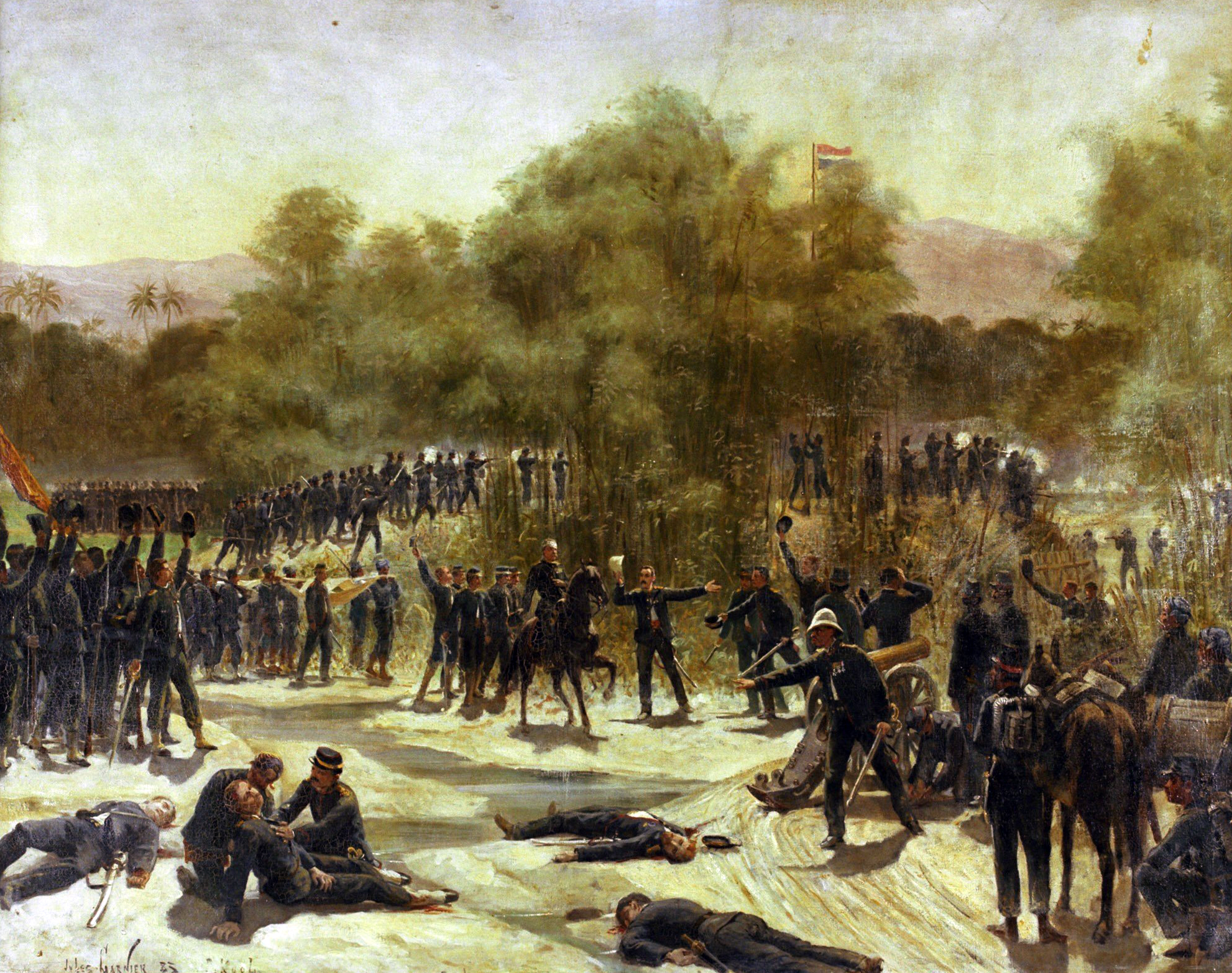
In 1873, negotiations took place in Singapore between representatives of the Aceh Sultanate and the local American Consul over a potential bilateral treaty. The Dutch saw this as a violation of a prior agreement with the British in 1871 and used this as an opportunity to annex Aceh militarily. An expedition under Major General Johan Harmen Rudolf Köhler was sent out on 26 March 1873, which bombarded the capital Banda Aceh and was able to occupy most of the coastal areas by April. It was the intention of the Dutch to attack and take the Sultan's palace, which would also lead to the occupation of the entire country. The Sultan requested and possibly received military aid from Italy and the United Kingdom in Singapore. In any case the Aceh army was rapidly modernised and enlarged with figures ranging from 10,000 to 100,000. Underestimating the military abilities of the Acehnese, the Dutch made some tactical errors and sustained losses including the deaths of Köhler and 80 troops. These defeats undermined Dutch morale and prestige.
After deciding to retreat, the Dutch imposed a naval blockade of Aceh. In an attempt to preserve Aceh's independence, Sultan Mahmud appealed to the other Western powers and the Ottoman Empire for direct help but to little avail. While the American Consul was sympathetic, the American government remained neutral. Due to its weak position in the international political stage, the Ottoman Empire was impotent and the British refused to intervene due to their relations with the Dutch. Only the French agreed to respond to Mahmud's appeal.
In November 1873, a second expedition consisting of 8,500 troops, 4,300 servants and coolies, and another reserve of 1,500 troops was added by General Jan van Swieten to be dispatched to Aceh. The invasion coincided with a cholera outbreak which killed thousands on both sides, the Dutch losing 150 every month while besieged in Banda Aceh. By January 1874, deteriorating conditions forced Sultan Mahmud Syah and his followers to abandon Banda Aceh and retreat to the interior. Meanwhile, Dutch forces occupied the capital and captured the symbolically important dalam (sultan's palace), leading the Dutch to believe that they had won. The Dutch occupiers then abolished the Acehnese Sultanate and declared Aceh to be annexed to the Dutch East Indies proper.
Hub AI
Aceh War AI simulator
(@Aceh War_simulator)
Aceh War
The Aceh War (Indonesian: Perang Aceh), also known as the Dutch War or the Infidel War (1873–1904), was an armed military conflict between the Sultanate of Aceh and the Kingdom of the Netherlands which was triggered by discussions between representatives of Aceh and the United States in Singapore during early 1873. The war was part of a series of conflicts in the late 19th century that consolidated Dutch rule over modern-day Indonesia.
The campaign drew controversy in the Netherlands as photographs and accounts of the death toll were reported. Isolated bloody insurgencies continued as late as 1914 and less violent forms of Acehnese resistance continued to persist until World War II and the Japanese occupation.
For much of the 19th century, Aceh's independence had been guaranteed by the Anglo-Dutch Treaty of 1824. During the 1820s, Aceh became a regional political and commercial power, supplying half of the world's pepper, which increased the revenues and influence of local feudal rajas. Growing European and American demand for pepper led to a series of diplomatic skirmishes between the British, French and Americans. During the reign of Sultan Alauddin Ibrahim Mansur Syah (1838–1870), the Aceh Sultanate brought the regional rajas under its control and extended its domain over the east coast. However, this southward trend clashed with the northwards expansion of Dutch colonialism in Sumatra.
Following the 1869 opening of the Suez Canal and changing shipping routes, the British and Dutch signed the 1871 Anglo-Dutch Treaty of Sumatra which ended British territorial claims to Sumatra, allowing the Dutch a free hand within their sphere of influence in Maritime Southeast Asia while handing them the responsibility to check piracy. In return, Britain gained control of the Dutch Gold Coast in Africa and equal commercial rights in Siak. Dutch territorial ambitions in Aceh were fuelled by a desire to exploit its natural resources, especially black pepper and oil, and to eliminate an independent native state player. The Dutch also sought to ward off rival colonial powers that had ambitions in Southeast Asia, particularly the British and the French.
The Dutch tried several strategies over the course of the war; single rapid attacks in 1873 failed, which then led them to pursue a naval blockade, reconciliation efforts, concentration within a line of forts, and finally passive containment. This all had scant success. The operations costs were 15 to 20 million guilders a year, which nearly bankrupted the colonial government.
In 1873, negotiations took place in Singapore between representatives of the Aceh Sultanate and the local American Consul over a potential bilateral treaty. The Dutch saw this as a violation of a prior agreement with the British in 1871 and used this as an opportunity to annex Aceh militarily. An expedition under Major General Johan Harmen Rudolf Köhler was sent out on 26 March 1873, which bombarded the capital Banda Aceh and was able to occupy most of the coastal areas by April. It was the intention of the Dutch to attack and take the Sultan's palace, which would also lead to the occupation of the entire country. The Sultan requested and possibly received military aid from Italy and the United Kingdom in Singapore. In any case the Aceh army was rapidly modernised and enlarged with figures ranging from 10,000 to 100,000. Underestimating the military abilities of the Acehnese, the Dutch made some tactical errors and sustained losses including the deaths of Köhler and 80 troops. These defeats undermined Dutch morale and prestige.
After deciding to retreat, the Dutch imposed a naval blockade of Aceh. In an attempt to preserve Aceh's independence, Sultan Mahmud appealed to the other Western powers and the Ottoman Empire for direct help but to little avail. While the American Consul was sympathetic, the American government remained neutral. Due to its weak position in the international political stage, the Ottoman Empire was impotent and the British refused to intervene due to their relations with the Dutch. Only the French agreed to respond to Mahmud's appeal.
In November 1873, a second expedition consisting of 8,500 troops, 4,300 servants and coolies, and another reserve of 1,500 troops was added by General Jan van Swieten to be dispatched to Aceh. The invasion coincided with a cholera outbreak which killed thousands on both sides, the Dutch losing 150 every month while besieged in Banda Aceh. By January 1874, deteriorating conditions forced Sultan Mahmud Syah and his followers to abandon Banda Aceh and retreat to the interior. Meanwhile, Dutch forces occupied the capital and captured the symbolically important dalam (sultan's palace), leading the Dutch to believe that they had won. The Dutch occupiers then abolished the Acehnese Sultanate and declared Aceh to be annexed to the Dutch East Indies proper.
Recent media