
Recent from talks
Advance-fee scam
Knowledge base stats:
Talk channels stats:
Members stats:
Advance-fee scam
An advance-fee scam is a form of fraud and is a common scam. The scam works by promising the victim a large sum of money in return for a small upfront payment, which the fraudster claims will be used to obtain the large sum. If a victim makes the payment, the fraudster either invents a series of further fees for the victim to pay or simply disappears.
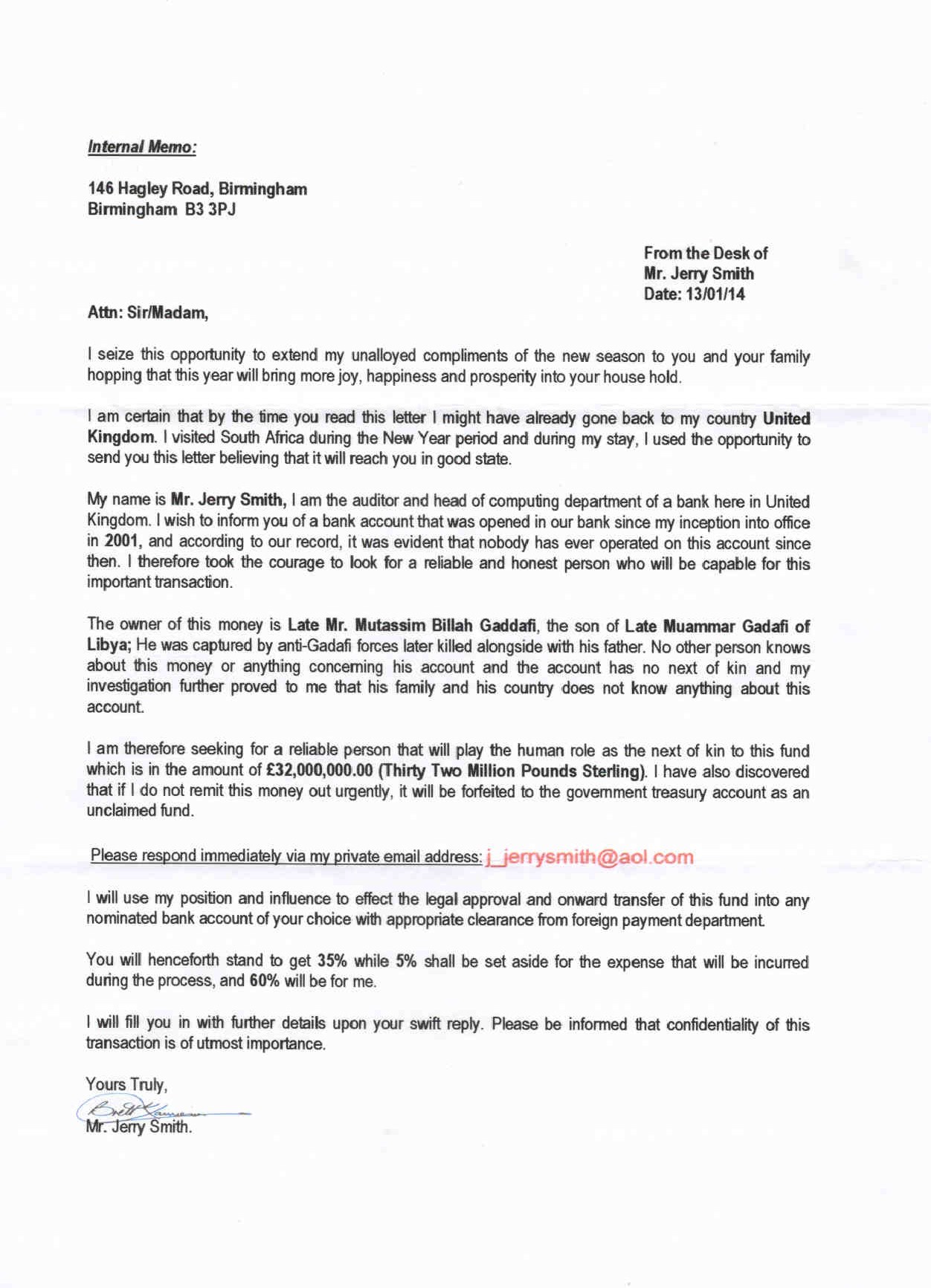
The Federal Bureau of Investigation (FBI) states that "An advance fee scheme occurs when the victim pays money to someone in anticipation of receiving something of greater value – such as a loan, contract, investment, or gift – and then receives little or nothing in return." There are many variations of this type of scam, including the Nigerian prince scam, also known as a 419 scam. It is popularly known as "yahoo yahoo" in Nigeria. The number "419" refers to the section of the Nigerian Criminal Code dealing with fraud. The scam has been used with fax and traditional mail and is now prevalent in online communications such as emails. Other variations include the Spanish Prisoner scam and the black money scam.
Although Nigeria is most often the nation referred to in these scams, they mainly originate in other nations. Other nations known to have a high incidence of advance-fee fraud include Ivory Coast, Togo, South Africa, the Netherlands, Spain, and Jamaica.
The modern scam is similar to the Spanish Prisoner scam that dates back to the late 18th century. In that con, businessmen were contacted by an individual allegedly trying to smuggle someone who is connected to a wealthy family out of a prison in Spain. The scammer promised to share money with the victim in exchange for a small amount of money to bribe prison guards.
One variant of the scam may date back to the 18th or 19th century, as a very similar letter, entitled "The Letter from Jerusalem". This is illustrated in the memoirs of Eugène François Vidocq, a former French criminal and private investigator. Another variant of the scam, dating back to ca. 1830, appears very similar to emails today: "Sir, you will doubtlessly be astonished to be receiving a letter from a person unknown to you, who is about to ask a favour from you..." and goes on to talk of a casket containing 16,000 francs in gold and the diamonds of a late marchioness.
The modern-day transnational scam can be traced back to Germany in 1922 and became popular during the 1980s. There are many variants of the template letter. One of these, sent via postal mail, was addressed to a woman's husband to inquire about his health. It then asked what to do with profits from a $24.6 million investment and ended with a telephone number.
Other official-looking letters were sent from a writer who said he was a director of the state-owned Nigerian National Petroleum Corporation. He said he wanted to transfer $20 million to the recipient's bank account—money that was budgeted but was never spent. In exchange for transferring the funds out of Nigeria, the recipient would keep 30% of the total. To get the process started, the scammer asked for a few sheets of the company's letterhead, bank account numbers, and other personal information. Yet other variants have involved mention of a Nigerian prince or other member of a royal family seeking to transfer large sums of money out of the country—thus, these scams are sometimes called "Nigerian Prince emails".
The spread of e-mail and email harvesting software significantly lowered the cost of sending scam letters by using the Internet in lieu of international post. Although Nigeria is most often the nation referred to in these scams, they may originate in other nations as well. For example, in 2007, the head of the Economic and Financial Crimes Commission stated that scam emails more frequently originated in African countries or in Eastern Europe. Within the European Union, there is a high incidence of advance-fee fraud in the Netherlands and Spain.
Hub AI
Advance-fee scam AI simulator
(@Advance-fee scam_simulator)
Advance-fee scam
An advance-fee scam is a form of fraud and is a common scam. The scam works by promising the victim a large sum of money in return for a small upfront payment, which the fraudster claims will be used to obtain the large sum. If a victim makes the payment, the fraudster either invents a series of further fees for the victim to pay or simply disappears.
The Federal Bureau of Investigation (FBI) states that "An advance fee scheme occurs when the victim pays money to someone in anticipation of receiving something of greater value – such as a loan, contract, investment, or gift – and then receives little or nothing in return." There are many variations of this type of scam, including the Nigerian prince scam, also known as a 419 scam. It is popularly known as "yahoo yahoo" in Nigeria. The number "419" refers to the section of the Nigerian Criminal Code dealing with fraud. The scam has been used with fax and traditional mail and is now prevalent in online communications such as emails. Other variations include the Spanish Prisoner scam and the black money scam.
Although Nigeria is most often the nation referred to in these scams, they mainly originate in other nations. Other nations known to have a high incidence of advance-fee fraud include Ivory Coast, Togo, South Africa, the Netherlands, Spain, and Jamaica.
The modern scam is similar to the Spanish Prisoner scam that dates back to the late 18th century. In that con, businessmen were contacted by an individual allegedly trying to smuggle someone who is connected to a wealthy family out of a prison in Spain. The scammer promised to share money with the victim in exchange for a small amount of money to bribe prison guards.
One variant of the scam may date back to the 18th or 19th century, as a very similar letter, entitled "The Letter from Jerusalem". This is illustrated in the memoirs of Eugène François Vidocq, a former French criminal and private investigator. Another variant of the scam, dating back to ca. 1830, appears very similar to emails today: "Sir, you will doubtlessly be astonished to be receiving a letter from a person unknown to you, who is about to ask a favour from you..." and goes on to talk of a casket containing 16,000 francs in gold and the diamonds of a late marchioness.
The modern-day transnational scam can be traced back to Germany in 1922 and became popular during the 1980s. There are many variants of the template letter. One of these, sent via postal mail, was addressed to a woman's husband to inquire about his health. It then asked what to do with profits from a $24.6 million investment and ended with a telephone number.
Other official-looking letters were sent from a writer who said he was a director of the state-owned Nigerian National Petroleum Corporation. He said he wanted to transfer $20 million to the recipient's bank account—money that was budgeted but was never spent. In exchange for transferring the funds out of Nigeria, the recipient would keep 30% of the total. To get the process started, the scammer asked for a few sheets of the company's letterhead, bank account numbers, and other personal information. Yet other variants have involved mention of a Nigerian prince or other member of a royal family seeking to transfer large sums of money out of the country—thus, these scams are sometimes called "Nigerian Prince emails".
The spread of e-mail and email harvesting software significantly lowered the cost of sending scam letters by using the Internet in lieu of international post. Although Nigeria is most often the nation referred to in these scams, they may originate in other nations as well. For example, in 2007, the head of the Economic and Financial Crimes Commission stated that scam emails more frequently originated in African countries or in Eastern Europe. Within the European Union, there is a high incidence of advance-fee fraud in the Netherlands and Spain.
Recent media