



Community hub
Recent from talks
Knowledge base stats:
Talk channels stats:
Members stats:
Air pollution measurement
Air pollution measurement is the process of collecting and measuring the components of air pollution, notably gases and particulates. The earliest devices used to measure pollution include rain gauges (in studies of acid rain), Ringelmann charts for measuring smoke, and simple soot and dust collectors known as deposit gauges.
Modern air pollution measurement techniques characterize ambient air quality using data from three main sources: direct measurements of on site sources, computer models, and remote sensing platforms such as satellites. Air pollution measurement can be carried out using many different devices and techniques. These range from simple absorbent test tubes known as diffusion tubes through to highly sophisticated chemical and physical sensors that give near real-time pollution measurements, which are used to generate air quality indexes.
Air pollution is caused by many factors. In urban environments, pollution may include many components, notably solid and liquid particulates (such as soot from engines and fly ash escaping from incinerators), and numerous different gases (most commonly sulfur dioxide, nitrogen oxides, and carbon monoxide, all related to fuel combustion). These different forms of pollution have different effects on people's health, on the natural world (water, soil, crops, trees, and other vegetation), and on the built environment. Measuring air pollution is the first step in identifying its causes and then reducing or regulating them to keep the quality of the air inside legal limits (mandated by regulators such as the Environmental Protection Agency in the United States) or advisory guidelines suggested by bodies such as the World Health Organization (WHO). According to the WHO, over 6000 cities in 117 countries now routinely monitor the quality of their air.
Air pollution is (broadly) measured in two different ways, passively or actively.
Passive devices are relatively simple and low-cost. They work by soaking up or otherwise passively collecting a sample of the ambient air, which then has to be analyzed in a laboratory. One of the most common forms of passive measurement is the diffusion tube, which looks similar to a laboratory test tube and is fastened to something like a lamp post to absorb one or more specific pollutant gases of interest. After a period of time, the tube is taken down and sent to a laboratory for analysis. Deposit gauges, one of the oldest forms of pollution measurement, are another type of passive device. They are large funnels that collect soot or other particulates and drain them into sampling bottles, which, again have to be analyzed in a laboratory.
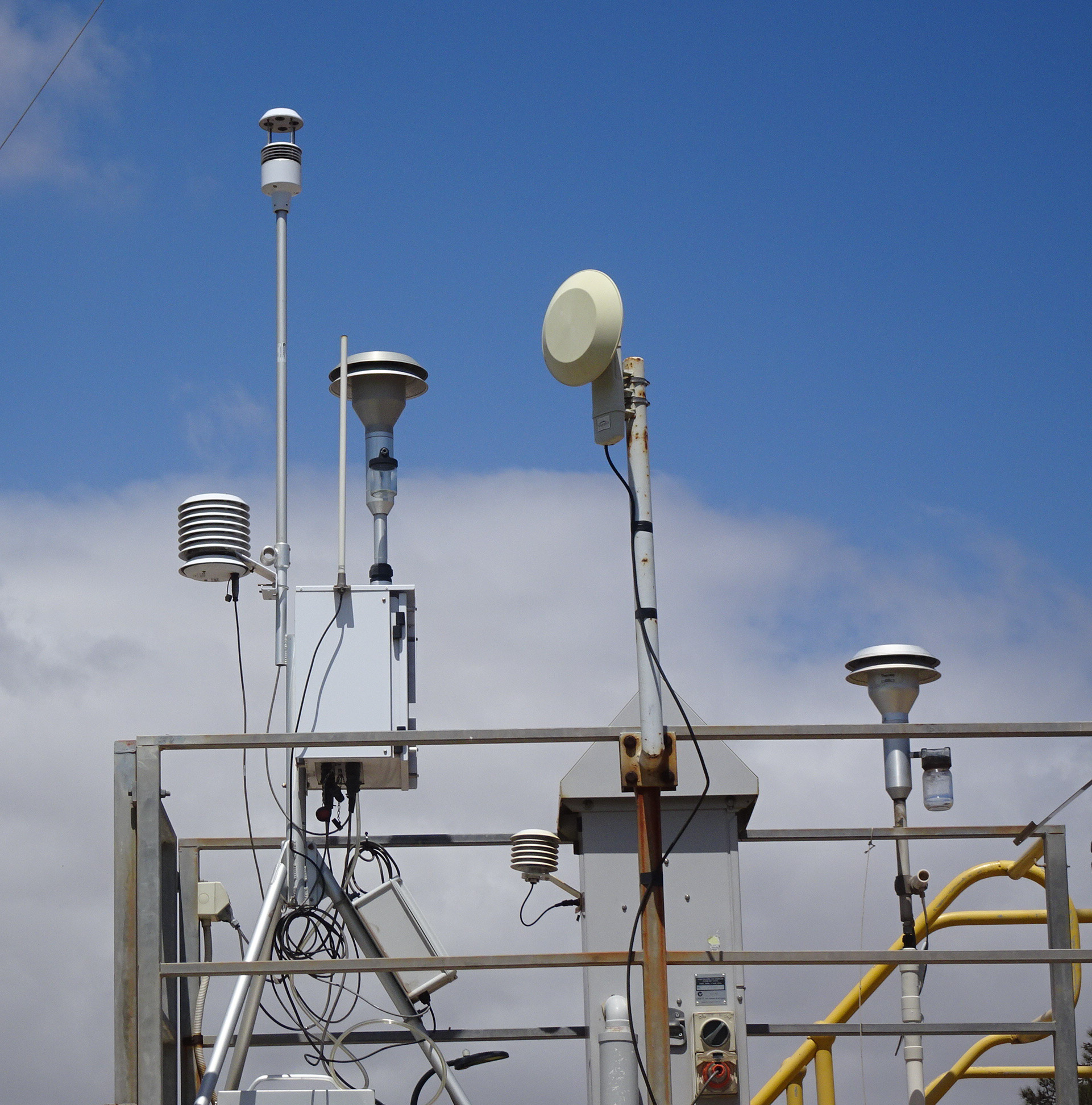
Active measurement devices are automated or semi-automated and tend to be more complex and sophisticated than passive devices, though they are not always more sensitive or reliable. They use fans to suck in the air, filter it, and either analyze it automatically there and then or collect and store it for later analysis in a laboratory. Active sensors use either physical or chemical methods. Physical methods measure an air sample without changing it, for example, by seeing how much of a certain wavelength of light it absorbs. Chemical methods change the sample in some way, through a chemical reaction, and measure that. Most automated air-quality sensors are examples of active measurement.
Air quality sensors range from small handheld devices to large-scale static monitoring stations in urban areas, and remote monitoring devices used on aeroplanes and space satellites.
At one end of the scale, there are small, inexpensive portable (and sometimes wearable), Internet-connected air pollution sensors, such as the Air Quality Egg and PurpleAir. These constantly sample particulates and gases and produce moderately accurate, almost real-time measurements that can be analyzed by smartphone apps. Their data can also be used in a crowdsourced way, either alone or with other pollution data, to build up maps of pollution over wide areas. They can be used for both indoor and outdoor environments and the majority focus on measuring five common forms of air pollution: ozone, particulate matter, carbon monoxide, sulfur dioxide, and nitrogen dioxide. Some measure less common pollutants such as radon gas and formaldehyde.
Hub AI
Air pollution measurement AI simulator
(@Air pollution measurement_simulator)
Air pollution measurement
Air pollution measurement is the process of collecting and measuring the components of air pollution, notably gases and particulates. The earliest devices used to measure pollution include rain gauges (in studies of acid rain), Ringelmann charts for measuring smoke, and simple soot and dust collectors known as deposit gauges.
Modern air pollution measurement techniques characterize ambient air quality using data from three main sources: direct measurements of on site sources, computer models, and remote sensing platforms such as satellites. Air pollution measurement can be carried out using many different devices and techniques. These range from simple absorbent test tubes known as diffusion tubes through to highly sophisticated chemical and physical sensors that give near real-time pollution measurements, which are used to generate air quality indexes.
Air pollution is caused by many factors. In urban environments, pollution may include many components, notably solid and liquid particulates (such as soot from engines and fly ash escaping from incinerators), and numerous different gases (most commonly sulfur dioxide, nitrogen oxides, and carbon monoxide, all related to fuel combustion). These different forms of pollution have different effects on people's health, on the natural world (water, soil, crops, trees, and other vegetation), and on the built environment. Measuring air pollution is the first step in identifying its causes and then reducing or regulating them to keep the quality of the air inside legal limits (mandated by regulators such as the Environmental Protection Agency in the United States) or advisory guidelines suggested by bodies such as the World Health Organization (WHO). According to the WHO, over 6000 cities in 117 countries now routinely monitor the quality of their air.
Air pollution is (broadly) measured in two different ways, passively or actively.
Passive devices are relatively simple and low-cost. They work by soaking up or otherwise passively collecting a sample of the ambient air, which then has to be analyzed in a laboratory. One of the most common forms of passive measurement is the diffusion tube, which looks similar to a laboratory test tube and is fastened to something like a lamp post to absorb one or more specific pollutant gases of interest. After a period of time, the tube is taken down and sent to a laboratory for analysis. Deposit gauges, one of the oldest forms of pollution measurement, are another type of passive device. They are large funnels that collect soot or other particulates and drain them into sampling bottles, which, again have to be analyzed in a laboratory.
Active measurement devices are automated or semi-automated and tend to be more complex and sophisticated than passive devices, though they are not always more sensitive or reliable. They use fans to suck in the air, filter it, and either analyze it automatically there and then or collect and store it for later analysis in a laboratory. Active sensors use either physical or chemical methods. Physical methods measure an air sample without changing it, for example, by seeing how much of a certain wavelength of light it absorbs. Chemical methods change the sample in some way, through a chemical reaction, and measure that. Most automated air-quality sensors are examples of active measurement.
Air quality sensors range from small handheld devices to large-scale static monitoring stations in urban areas, and remote monitoring devices used on aeroplanes and space satellites.
At one end of the scale, there are small, inexpensive portable (and sometimes wearable), Internet-connected air pollution sensors, such as the Air Quality Egg and PurpleAir. These constantly sample particulates and gases and produce moderately accurate, almost real-time measurements that can be analyzed by smartphone apps. Their data can also be used in a crowdsourced way, either alone or with other pollution data, to build up maps of pollution over wide areas. They can be used for both indoor and outdoor environments and the majority focus on measuring five common forms of air pollution: ozone, particulate matter, carbon monoxide, sulfur dioxide, and nitrogen dioxide. Some measure less common pollutants such as radon gas and formaldehyde.