Hubbry Logo
SmokeSmokeMain
Open search
Smoke
Community hub
Smoke
logo
8 pages, 0 posts
0 subscribers
Be the first to start a discussion here.
Contribute something
Smoke
Smoke
from Wikipedia

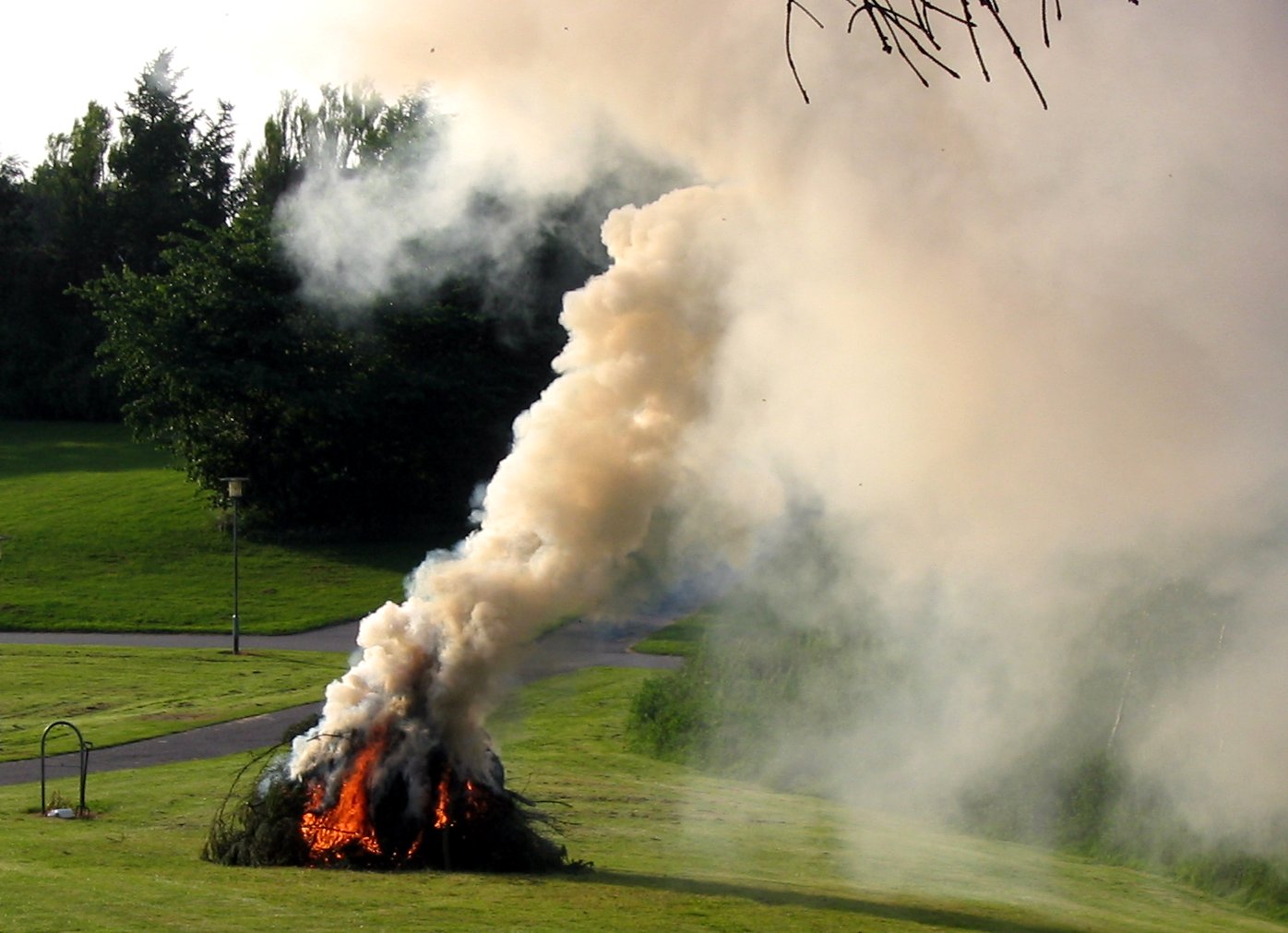
Smoke from a fire

Smoke is an aerosol (a suspension[1] of airborne particulates and gases[2]) emitted when a material undergoes combustion or pyrolysis, together with the quantity of air that is entrained or otherwise mixed into the mass. It is commonly an unwanted by-product of fires (including stoves, candles, internal combustion engines, oil lamps, and fireplaces), but may also be used for pest control (fumigation), communication (smoke signals), defensive and offensive capabilities in the military (smoke screen), cooking, or smoking (tobacco, cannabis, etc.). It is used in rituals where incense, sage, or resin is burned to produce a smell for spiritual or magical purposes. It can also be a flavoring agent and preservative.

Smoke inhalation is the primary cause of death in victims of indoor fires. The smoke kills by a combination of thermal damage, poisoning and pulmonary irritation caused by carbon monoxide, hydrogen cyanide and other combustion products.

Smoke is an aerosol (or mist) of solid particles and liquid droplets that are close to the ideal range of sizes for Mie scattering of visible light.[3]

Chemical composition

[edit]
Chemical composition distribution of volatile organic compounds released in smoke from a variety of solid fuels[4]

The composition of smoke depends on the nature of the burning fuel and the conditions of combustion. Fires with high availability of oxygen burn at a high temperature and with a small amount of smoke produced; the particles are mostly composed of ash, or with large temperature differences, of condensed aerosol of water. High temperature also leads to production of nitrogen oxides.[5] Sulfur content yields sulfur dioxide, or in case of incomplete combustion, hydrogen sulfide.[6] Carbon and hydrogen are almost completely oxidized to carbon dioxide and water.[7] Fires burning with lack of oxygen produce a significantly wider palette of compounds, many of them toxic.[7] Partial oxidation of carbon produces carbon monoxide, while nitrogen-containing materials can yield hydrogen cyanide, ammonia, and nitrogen oxides.[8] Hydrogen gas can be produced instead of water.[8] Contents of halogens such as chlorine (e.g. in polyvinyl chloride or brominated flame retardants) may lead to the production of hydrogen chloride, phosgene, dioxin, and chloromethane, bromomethane and other halocarbons.[8][9] Hydrogen fluoride can be formed from fluorocarbons, whether fluoropolymers subjected to fire or halocarbon fire suppression agents. Phosphorus and antimony oxides and their reaction products can be formed from some fire retardant additives, increasing smoke toxicity and corrosivity.[9] Pyrolysis of polychlorinated biphenyls (PCB), e.g. from burning older transformer oil, and to lower degree also of other chlorine-containing materials, can produce 2,3,7,8-tetrachlorodibenzodioxin, a potent carcinogen, and other polychlorinated dibenzodioxins.[9] Pyrolysis of fluoropolymers, e.g. teflon, in presence of oxygen yields carbonyl fluoride (which hydrolyzes readily to HF and CO2); other compounds may be formed as well, e.g. carbon tetrafluoride, hexafluoropropylene, and highly toxic perfluoroisobutene (PFIB).[10]

Emission of soot in the fumes of a large diesel truck, without particle filters

Pyrolysis of burning material, especially incomplete combustion or smoldering without adequate oxygen supply, also results in production of a large amount of hydrocarbons, both aliphatic (methane, ethane, ethylene, acetylene) and aromatic (benzene and its derivates, polycyclic aromatic hydrocarbons; e.g. benzo[a]pyrene, studied as a carcinogen, or retene), terpenes.[11] It also results in the emission of a range of smaller oxygenated volatile organic compounds (methanol, acetic acid, hydroxy acetone, methyl acetate and ethyl formate) which are formed as combustion by products as well as less volatile oxygenated organic species such as phenolics, furans and furanones.[4] Heterocyclic compounds may be also present.[12] Heavier hydrocarbons may condense as tar; smoke with significant tar content is yellow to brown.[13] Combustion of solid fuels can result in the emission of many hundreds to thousands of lower volatility organic compounds in the aerosol phase.[14] Presence of such smoke, soot, and/or brown oily deposits during a fire indicates a possible hazardous situation, as the atmosphere may be saturated with combustible pyrolysis products with concentration above the upper flammability limit, and sudden inrush of air can cause flashover or backdraft.[15]

Presence of sulfur can lead to formation of gases like hydrogen sulfide, carbonyl sulfide, sulfur dioxide, carbon disulfide, and thiols; especially thiols tend to get adsorbed on surfaces and produce a lingering odor even long after the fire. Partial oxidation of the released hydrocarbons yields in a wide palette of other compounds: aldehydes (e.g. formaldehyde, acrolein, and furfural), ketones, alcohols (often aromatic, e.g. phenol, guaiacol, syringol, catechol, and cresols), carboxylic acids (formic acid, acetic acid, etc.).[citation needed]

The visible particulate matter in such smokes is most commonly composed of carbon (soot). Other particulates may be composed of drops of condensed tar, or solid particles of ash. The presence of metals in the fuel yields particles of metal oxides. Particles of inorganic salts may also be formed, e.g. ammonium sulfate, ammonium nitrate, or sodium chloride. Inorganic salts present on the surface of the soot particles may make them hydrophilic. Many organic compounds, typically the aromatic hydrocarbons, may be also adsorbed on the surface of the solid particles. Metal oxides can be present when metal-containing fuels are burned, e.g. solid rocket fuels containing aluminium. Depleted uranium projectiles after impacting the target ignite, producing particles of uranium oxides. Magnetic particles, spherules of magnetite-like ferrous ferric oxide, are present in coal smoke; their increase in deposits after 1860 marks the beginning of the Industrial Revolution.[16] (Magnetic iron oxide nanoparticles can be also produced in the smoke from meteorites burning in the atmosphere.)[17] Magnetic remanence, recorded in the iron oxide particles, indicates the strength of Earth's magnetic field when they were cooled beyond their Curie temperature; this can be used to distinguish magnetic particles of terrestrial and meteoric origin.[18] Fly ash is composed mainly of silica and calcium oxide. Cenospheres are present in smoke from liquid hydrocarbon fuels. Minute metal particles produced by abrasion can be present in engine smokes. Amorphous silica particles are present in smokes from burning silicones; small proportion of silicon nitride particles can be formed in fires with insufficient oxygen. The silica particles have about 10 nm size, clumped to 70–100 nm aggregates and further agglomerated to chains.[10] Radioactive particles may be present due to traces of uranium, thorium, or other radionuclides in the fuel; hot particles can be present in case of fires during nuclear accidents (e.g. Chernobyl disaster) or nuclear war.

Smoke particulates, like other aerosols, are categorized into three modes based on particle size:

  • nuclei mode, with geometric mean radius between 2.5 and 20 nm, likely forming by condensation of carbon moieties.
  • accumulation mode, ranging between 75 and 250 nm and formed by coagulation of nuclei mode particles
  • coarse mode, with particles in micrometer range

Most of the smoke material is primarily in coarse particles. Those undergo rapid dry precipitation, and the smoke damage in more distant areas outside of the room where the fire occurs is therefore primarily mediated by the smaller particles.[19]

Aerosol of particles beyond visible size is an early indicator of materials in a preignition stage of a fire.[10]

Burning of hydrogen-rich fuel produces water vapor; this results in smoke containing droplets of water. In absence of other color sources (nitrogen oxides, particulates...), such smoke is white and cloud-like.

Smoke emissions may contain characteristic trace elements. Vanadium is present in emissions from oil fired power plants and refineries; oil plants also emit some nickel. Coal combustion produces emissions containing aluminium, arsenic, chromium, cobalt, copper, iron, mercury, selenium, and uranium.

Traces of vanadium in high-temperature combustion products form droplets of molten vanadates. These attack the passivation layers on metals and cause high temperature corrosion, which is a concern especially for internal combustion engines. Molten sulfate and lead particulates also have such effect.

Some components of smoke are characteristic of the combustion source. Guaiacol and its derivatives are products of pyrolysis of lignin and are characteristic of wood smoke; other markers are syringol and derivates, and other methoxy phenols. Retene, a product of pyrolysis of conifer trees, is an indicator of forest fires. Levoglucosan is a pyrolysis product of cellulose. Hardwood vs softwood smokes differ in the ratio of guaiacols/syringols. Markers for vehicle exhaust include polycyclic aromatic hydrocarbons, hopanes, steranes, and specific nitroarenes (e.g. 1-nitropyrene). The ratio of hopanes and steranes to elemental carbon can be used to distinguish between emissions of gasoline and diesel engines.[20]

Many compounds can be associated with particulates; whether by being adsorbed on their surfaces, or by being dissolved in liquid droplets. Hydrogen chloride is well absorbed in the soot particles.[19]

Inert particulate matter can be disturbed and entrained into the smoke. Of particular concern are particles of asbestos.

Deposited hot particles of radioactive fallout and bioaccumulated radioisotopes can be reintroduced into the atmosphere by wildfires and forest fires; this is a concern in e.g. the Zone of alienation containing contaminants from the Chernobyl disaster.

Polymers are a significant source of smoke. Aromatic side groups, e.g. in polystyrene, enhance generation of smoke. Aromatic groups integrated in the polymer backbone produce less smoke, likely due to significant charring. Aliphatic polymers tend to generate the least smoke, and are non-self-extinguishing. However presence of additives can significantly increase smoke formation. Phosphorus-based and halogen-based flame retardants decrease production of smoke. Higher degree of cross-linking between the polymer chains has such effect too.[21]

Visible and invisible particles of combustion

[edit]
Smoke from a wildfire
Smoke rising up from the smoldering remains of a recently extingished mountain fire in South Africa

The naked eye detects particle sizes greater than 7 μm (micrometres).[22] Visible particles emitted from a fire are referred to as smoke. Invisible particles are generally referred to as gas or fumes. This is best illustrated when toasting bread in a toaster. As the bread heats up, the products of combustion increase in size. The fumes initially produced are invisible but become visible if the toast is burnt.

An ionization chamber type smoke detector is technically a product of combustion detector, not a smoke detector. Ionization chamber type smoke detectors detect particles of combustion that are invisible to the naked eye. This explains why they may frequently false alarm from the fumes emitted from the red-hot heating elements of a toaster, before the presence of visible smoke, yet they may fail to activate in the early, low-heat smoldering stage of a fire.

Smoke from a typical house fire contains hundreds of different chemicals and fumes. As a result, the damage caused by the smoke can often exceed that caused by the actual heat of the fire. In addition to the physical damage caused by the smoke of a fire – which manifests itself in the form of stains – is the often even harder to eliminate problem of a smoky odor. Just as there are contractors that specialize in rebuilding/repairing homes that have been damaged by fire and smoke, fabric restoration companies specialize in restoring fabrics that have been damaged in a fire.

Dangers

[edit]

Smoke from oxygen-deprived fires contains a significant concentration of compounds that are flammable. A cloud of smoke, in contact with atmospheric oxygen, therefore has the potential of being ignited – either by another open flame in the area, or by its own temperature. This leads to effects like backdraft and flashover. Smoke inhalation is also a danger of smoke that can cause serious injury and death.[23]

Processing fish while being exposed to smoke

Many compounds of smoke from fires are highly toxic and/or irritating. The most dangerous is carbon monoxide leading to carbon monoxide poisoning, sometimes with the additive effects of hydrogen cyanide and phosgene. Smoke inhalation can therefore quickly lead to incapacitation and loss of consciousness. Sulfur oxides, hydrogen chloride and hydrogen fluoride in contact with moisture form sulfuric, hydrochloric and hydrofluoric acid, which are corrosive to both lungs and materials.

World Trade Center on fire after terrorists flew planes into the buildings on September 11, 2001

Cigarette smoke is a major modifiable risk factor for lung disease, heart disease, and many cancers. Smoke can also be a component of ambient air pollution due to the burning of coal in power plants, forest fires or other sources, although the concentration of pollutants in ambient air is typically much less than that in cigarette smoke. One day of exposure to PM2.5 at a concentration of 880 μg/m3, such as occurs in Beijing, China, is the equivalent of smoking one or two cigarettes in terms of particulate inhalation by weight.[24][25] The analysis is complicated, however, by the fact that the organic compounds present in various ambient particulates may have a higher carcinogenicity than the compounds in cigarette smoke particulates.[26] Secondhand tobacco smoke is the combination of both sidestream and mainstream smoke emissions from a burning tobacco product. These emissions contain more than 50 carcinogenic chemicals. According to the United States Surgeon General's 2006 report on the subject, exposures to secondhand tobacco smoke can activate platelets causing increased clotting and increased risk of thrombus and potentially damage the lining of blood vessels, decrease coronary flow velocity reserves, and reduce heart rate variability, potentially increasing the risk of a heart attack. The chances of these effects occurring increase with increased exposure and time of exposure.[27] The American Cancer Society lists "heart disease, lung infections, increased asthma attacks, middle ear infections, and low birth weight" as ramifications of smoker's emission.[28]

Reduced visibility due to wildfire smoke in Sheremetyevo Airport, Moscow, 7 August 2010
Red smoke carried by a parachutist of the UK Lightning Bolts Army Parachute Display Team

Smoke can obscure visibility, impeding occupant exiting from fire areas. In fact, the poor visibility due to the smoke that was in the Worcester Cold Storage Warehouse fire in Worcester, Massachusetts was the reason why the trapped rescue firefighters could not evacuate the building in time. Because of the striking similarity that each floor shared, the dense smoke caused the firefighters to become disoriented.[29]

Corrosion

[edit]

Smoke can contain a wide variety of chemicals, many of them aggressive in nature. Examples are hydrochloric acid and hydrobromic acid, produced from halogen-containing plastics and fire retardants, hydrofluoric acid released by pyrolysis of fluorocarbon fire suppression agents, sulfuric acid from burning of sulfur-containing materials, nitric acid from high-temperature fires where nitrous oxide gets formed, phosphoric acid and antimony compounds from P and Sb based fire retardants, and many others. Such corrosion is not significant for structural materials, but delicate structures, especially microelectronics, are strongly affected. Corrosion of circuit board traces, penetration of aggressive chemicals through the casings of parts, and other effects can cause an immediate or gradual deterioration of parameters or even premature (and often delayed, as the corrosion can progress over long time) failure of equipment subjected to smoke. Many smoke components are also electrically conductive; deposition of a conductive layer on the circuits can cause crosstalks and other deteriorations of the operating parameters or even cause short circuits and total failures. Electrical contacts can be affected by corrosion of surfaces, and by deposition of soot and other conductive particles or nonconductive layers on or across the contacts. Deposited particles may adversely affect the performance of optoelectronics by absorbing or scattering the light beams.[citation needed]

Corrosivity of smoke produced by materials is characterized by the corrosion index (CI), defined as material loss rate (angstrom/minute) per amount of material gasified products (grams) per volume of air (m3). It is measured by exposing strips of metal to flow of combustion products in a test tunnel. Polymers containing halogen and hydrogen (polyvinyl chloride, polyolefins with halogenated additives, etc.) have the highest CI as the corrosive acids are formed directly with water produced by the combustion, polymers containing halogen only (e.g. polytetrafluoroethylene) have lower CI as the formation of acid is limited to reactions with airborne humidity, and halogen-free materials (polyolefins, wood) have the lowest CI.[19] However, some halogen-free materials can also release significant amount of corrosive products.[30]

Smoke damage to electronic equipment can be significantly more extensive than the fire itself. Cable fires are of special concern; low smoke zero halogen materials are preferable for cable insulation.[31]

When smoke comes into contact with the surface of any substance or structure, the chemicals contained in it are transferred to it. The corrosive properties of the chemicals cause the substance or structure to decompose at a rapid rate. Certain materials or structures absorb these chemicals, which is why clothing, unsealed surfaces, potable water, piping, wood, etc., are replaced in most cases of structural fires.[citation needed]

Health effects of wood smoke

[edit]
Volatility distribution of volatile organic compound emissions in wood smoke[32]

Wood smoke is a major source of air pollution,[33][34][35][36] especially particulate pollution,[34] pollution by polycyclic aromatic hydrocarbons (PAHs)[37] and volatile organic compounds (VOCs)[34][better source needed] such as formaldehyde.[38]

In the United Kingdom domestic combustion, especially for industrial uses, is the largest single source of PM2.5 annually.[39][40] In some towns and cities in New South Wales, wood smoke may be responsible for 60% of fine particle air pollution in the winter.[41] A year-long sampling campaign in Athens, Greece found a third (31%) of PAH urban air pollution to be caused by wood-burning, roughly as much as that of diesel and oil (33%) and gasoline (29%). It also found that wood-burning is responsible for nearly half (43%) of annual PAH lung cancer-risk compared to the other sources and that wintertime PAH levels were 7 times higher than in other seasons, presumably due to an increased use of fireplaces and heaters. The largest exposure events are periods during the winter with reduced atmospheric dispersion to dilute the accumulated pollution, in particular due to the low wind speeds.[37] Research conducted about biomass burning in 2015, estimated that 38% of European total particulate pollution emissions are composed of domestic wood burning.[42]

Wood smoke (for example from wildfires or wood ovens) can cause lung damage,[43][44] artery damage and DNA damage[45] leading to cancer,[46][47] other respiratory and lung disease and cardiovascular disease.[41][48] Air pollution, particulate matter and wood smoke may also cause brain damage because of particulates breaching the cardiovascular system and into the brain,[49][50][51][52] which can increase the risk of developmental disorders,[53][54][55][56] neurodegenerative disorders[57][58] mental disorders,[59][60][61] and suicidal behavior,[59][61] although studies on the link between depression and some air pollutants are not consistent.[62] At least one study has identified "the abundant presence in the human brain of magnetite nanoparticles that match precisely the high-temperature magnetite nanospheres, formed by combustion and/or friction-derived heating, which are prolific in urban, airborne particulate matter (PM)."[63] Air pollution has also been linked to a range of other psychosocial problems.[60]

Measurement

[edit]

As early as the 15th century Leonardo da Vinci commented at length on the difficulty of assessing smoke, and distinguished between black smoke (carbonized particles) and white 'smoke' which is not a smoke at all but merely a suspension of harmless water particulates.[64]

Smoke from heating appliances is commonly measured in one of the following ways:

In-line capture. A smoke sample is simply sucked through a filter which is weighed before and after the test and the mass of smoke found. This is the simplest and probably the most accurate method, but can only be used where the smoke concentration is slight, as the filter can quickly become blocked.[65]

The ASTM smoke pump is a simple and widely used method of in-line capture where a measured volume of smoke is pulled through a filter paper and the dark spot so formed is compared with a standard.

Filter/dilution tunnel. A smoke sample is drawn through a tube where it is diluted with air, the resulting smoke/air mixture is then pulled through a filter and weighed. This is the internationally recognized method of measuring smoke from combustion.[66]

Electrostatic precipitation. The smoke is passed through an array of metal tubes which contain suspended wires. A (huge) electrical potential is applied across the tubes and wires so that the smoke particles become charged and are attracted to the sides of the tubes. This method can over-read by capturing harmless condensates, or under-read due to the insulating effect of the smoke. However, it is the necessary method for assessing volumes of smoke too great to be forced through a filter, i.e., from bituminous coal.

Ringelmann scale. A measure of smoke color. Invented by Professor Maximilian Ringelmann in Paris in 1888, it is essentially a card with squares of black, white and shades of gray which is held up and the comparative grayness of the smoke judged. Highly dependent on light conditions and the skill of the observer it allocates a grayness number from 0 (white) to 5 (black) which has only a passing relationship to the actual quantity of smoke. Nonetheless, the simplicity of the Ringelmann scale means that it has been adopted as a standard in many countries.

Optical scattering. A light beam is passed through the smoke. A light detector is situated at an angle to the light source, typically at 90°, so that it receives only light reflected from passing particles. A measurement is made of the light received which will be higher as the concentration of smoke particles becomes higher.

Optical obscuration. A light beam is passed through the smoke and a detector opposite measures the light. The more smoke particles are present between the two, the less light will be measured.

Combined optical methods. There are various proprietary optical smoke measurement devices such as the 'nephelometer' or the 'aethalometer' which use several different optical methods, including more than one wavelength of light, inside a single instrument and apply an algorithm to give a good estimate of smoke. It has been claimed that these devices can differentiate types of smoke and so their probable source can be inferred, though this is disputed.[67]

Inference from carbon monoxide. Smoke is incompletely burned fuel, carbon monoxide is incompletely burned carbon, therefore it has long been assumed that measurement of CO in flue gas (a cheap, simple and very accurate procedure) will provide a good indication of the levels of smoke. Indeed, several jurisdictions use CO measurement as the basis of smoke control. However it is far from clear how accurate the correspondence is.

Medicinal smoking

[edit]

Throughout recorded history, humans have used the smoke of medicinal plants to cure illness. A sculpture from Persepolis shows Darius the Great (522–486 BC), the king of Persia, with two censers in front of him for burning Peganum harmala and/or sandalwood Santalum album, which was believed to protect the king from evil and disease. More than 300 plant species in 5 continents are used in smoke form for different diseases. As a method of drug administration, smoking is important as it is a simple, inexpensive, but very effective method of extracting particles containing active agents. More importantly, generating smoke reduces the particle size to a microscopic scale thereby increasing the absorption of its active chemical principles.[68]

See also

[edit]

References

[edit]

Sources

[edit]
[edit]
Revisions and contributorsEdit on WikipediaRead on Wikipedia
from Grokipedia

Smoke is a visible consisting of solid particles, liquid droplets, and gases produced by the incomplete or of organic materials, where insufficient oxygen prevents full oxidation of the . This mixture arises from rapid oxidation reactions generating heat and , entraining air that dilutes the combustion products into a colloidal suspension capable of , thus conferring . The varies by source but typically includes (elemental carbon), , volatile organic compounds, polycyclic aromatic hydrocarbons, and particulate matter under 2.5 micrometers in diameter, with over 7,000 identifiable compounds in tobacco smoke analogs extending to broader combustion scenarios. Primary sources encompass wildfires, structural fires, burning, , and tobacco consumption, each contributing distinct particulate loads and toxics that impair , accelerate atmospheric reactions, and pose acute hazards. Empirically, smoke exposure correlates with elevated risks of respiratory irritation, cardiovascular events, and premature mortality, as fine particulates penetrate deep into lungs and bloodstream, inducing inflammation and , with wildfire-derived smoke demonstrating disproportionate impacts relative to non-fire aerosols.

Definition and Physical Properties

Core characteristics

Smoke constitutes a colloidal comprising solid particulates, such as and , and droplets, including tars and oils, dispersed within a gaseous medium primarily consisting of entrained air and byproducts. This dispersion results from incomplete or of materials, rendering smoke visible through the , where particulates scatter visible light wavelengths. Particle sizes in smoke typically peak in the submicron range, often around 0.15 micrometers for certain types like lamp wick smoke, with distributions spanning tens to hundreds of nanometers, influencing optical , sedimentation rates, and risks. Mass concentrations vary by source but can reach levels sufficient to obscure vision and trigger detection systems, with number concentrations determining plume opacity. Morphologically, smoke particles often form chain-like aggregates of carbonaceous cores or exhibit spherical droplets nucleated around solid centers, exhibiting dynamic behaviors such as , , and oxidation during aging, which alter effective and hygroscopicity. Thermally, fresh smoke plumes display from elevated temperatures reducing gas relative to ambient air, promoting convective rise, though cooling leads to stratification.

Formation mechanisms

Smoke primarily forms through the of organic materials under conditions of limited oxygen availability, known as , which precedes or accompanies processes. During , heat causes the breakdown of complex polymers such as , , and in fuels like , releasing volatile organic compounds (VOCs), tars, and gases that cool and condense into fine aerosol particles upon exiting the reaction zone. This mechanism predominates in smoldering fires or oxygen-deficient environments, where temperatures typically range from 200–500°C, producing white or gray smoke composed of pyrolysis products without significant char oxidation. In flaming combustion, smoke generation involves incomplete oxidation in fuel-rich zones within the flame, where hydrocarbon fuels partially react with oxygen to form soot precursors like polycyclic aromatic hydrocarbons (PAHs) via stepwise ring-growth mechanisms. These precursors nucleate into primary soot particles (10–50 nm diameter) through surface growth and coagulation, aggregating into larger chains visible as black smoke, especially at temperatures above 800°C in oxygen-starved regions. Studies of polymer and wood combustion confirm that aromatic compound formation during flaming supports this pathway, with soot yields increasing under high fuel equivalence ratios (φ > 1.5), where φ denotes the fuel-to-oxidizer ratio relative to stoichiometric conditions. Nonflaming (pyrolytic) and flaming pathways often interplay in real fires; for instance, initial pyrolysis volatilizes fuel, feeding soot-forming reactions in adjacent oxidative zones, while electrical charging and ion-cluster processes may influence particle coagulation in high-temperature plumes. In biomass fires, proxy compounds like eugenol (from lignin) demonstrate that radical recombination during pyrolysis yields phenolic and furanic intermediates, which polymerize into tar aerosols contributing up to 70–90% of smoke mass in early fire stages. Overall, smoke aerosol formation reflects disequilibrium chemistry, with particle size distributions peaking at 0.1–1 μm due to rapid nucleation and limited coagulation time in buoyant plumes.

Chemical Composition

Particulate components

Particulate components of smoke consist of solid and liquid aerosols formed during incomplete combustion, primarily comprising fine particles less than 2.5 micrometers in diameter (PM2.5), which dominate the mass fraction in most smoke types. These particles include elemental carbon ( or ), organic carbon compounds, and trace inorganic elements, with carbonaceous material accounting for 70-90% of PM2.5 mass in wildfire-derived smoke. particles, characterized by their refractory graphitic structure, arise from high-temperature of carbon-rich fuels and serve as cores onto which volatile organic compounds condense. Organic particulates in smoke encompass polycyclic aromatic hydrocarbons (PAHs), oxygenated organics like quinones, and biomass-specific markers such as levoglucosan from decomposition, contributing to the particles' oxidative potential and toxicity. Inorganic components, including salts, trace metals (e.g., iron, ), and crustal elements like and calcium, originate from fuel impurities or entrainment, comprising a smaller fraction but influencing particle hygroscopicity and reactivity. Particle morphology varies from spherical aggregates to irregular fragments, with size distributions peaking in the submicron range, enabling deep penetration. The exact composition depends on combustion conditions, fuel type, and environmental factors; for instance, smoldering fires yield higher organic fractions compared to flaming , which favors production. In tobacco smoke, particulates bind over 7,000 chemicals, including and , highlighting source-specific variability. Analytical techniques like electron microscopy and confirm these components, underscoring smoke's heterogeneity and the need for source-apportioned studies to assess impacts accurately.

Gaseous and volatile elements

The gaseous components of smoke arise predominantly from the and of organic fuels during , with (CO₂) forming under oxygen-rich conditions and (CO) under oxygen-limited ones. Nitrogen oxides (NOₓ), including (NO) and (NO₂), result from high-temperature reactions between atmospheric nitrogen and oxygen, while (SO₂) emerges when sulfur-containing fuels like or certain are burned. , a major non-pollutant gas, contributes to smoke's and effects. Volatile organic compounds (VOCs) in smoke encompass a diverse array of low-molecular-weight hydrocarbons and oxygenated species released via and incomplete combustion, such as , , , and . These compounds vary by fuel; for instance, wood smoke features elevated aldehydes like and , while emissions include reactive isoprenoids and furans. Semi-volatile polycyclic aromatic hydrocarbons (PAHs), such as , partition between gas and particle phases depending on temperature and composition. Hydrogen cyanide (HCN) and other toxic gases like may appear in smoke from nitrogen-rich materials, exacerbating inhalation hazards. Emission factors for these gases differ significantly; for example, laboratory burns of yield CO emission factors of 50-150 g/kg dry , influenced by phase (flaming vs. smoldering). Overall, the gaseous and volatile fraction constitutes 70-95% of smoke mass by volume in many scenarios, underscoring its role in atmospheric reactivity and health impacts.

Sources of Smoke

Natural origins

Wildfires, ignited by natural processes such as lightning strikes, represent the primary source of smoke from biomass combustion in terrestrial ecosystems. Lightning provides the electrical discharge necessary to ignite dry vegetation, with global strikes occurring approximately 3 billion times annually, many in fire-prone regions during dry seasons. In the United States, lightning-initiated wildfires comprise about 15% of total fire incidents but account for roughly 60% of the acreage burned, due to their tendency to occur in remote, vast wildland areas. These fires release particulate matter, carbon monoxide, nitrogen oxides, and volatile organic compounds through incomplete oxidation of organic fuels like wood and leaves. Volcanic eruptions contribute to natural smoke production by igniting nearby vegetation via lava flows, hot pyroclasts, or frictional heat, leading to secondary burning. Primary volcanic emissions include plumes and gases such as (SO₂, up to 7% of total), (CO₂, about 12%), and (H₂O, 78%), which can react in the atmosphere to form aerosols and akin to smoke. In regions like , volcanic (vog) arises from SO₂ oxidizing into droplets, creating visible particulate suspensions. Such emissions from events like the 1980 eruption released millions of tons of and gases, influencing regional air quality through dispersed particulates. Other minor natural mechanisms, including in peatlands or organic-rich soils under specific microbial or oxidative conditions, occasionally generate smoke, though these are less documented and contribute negligibly to global atmospheric loading compared to lightning-ignited wildfires. Overall, natural smoke from these sources introduces significant aerosols into the atmosphere, affecting and air quality on local to hemispheric scales.

Human-induced production

Human-induced smoke production primarily results from incomplete in activities such as burning, , and waste . These processes release particulate matter, including and organic aerosols, that form visible smoke plumes. Globally, anthropogenic sources dominate fine particulate matter (PM2.5) emissions, with contributing over 70% in many regions. Transportation via diesel-powered vehicles and ships is a key contributor, producing dense black smoke from high-temperature incomplete combustion of hydrocarbons. Diesel exhaust contains up to 90% of its particulate emissions as , exacerbating urban air quality issues; for example, pre-2010 heavy-duty engines emitted significant visible smoke under acceleration. accounts for approximately 25% of anthropogenic emissions worldwide. Residential and commercial burning for heating and cooking generates substantial , particularly in developing countries using solid fuels like and . This activity releases complex mixtures of particulates and volatile organics, contributing to over 3 million premature deaths annually from household air pollution exposure. In , can constitute the primary source of ambient PM during winter, with emissions negatively impacting respiratory . Agricultural practices, including slash-and-burn clearing and burning, produce episodic smoke plumes that affect regional air quality. Humans initiate about 90% of global burning events, often for , releasing precursors to secondary aerosols. In , post-monsoon in generates visible across borders, with PM emissions rivaling those from fossil fuels in peak seasons. Industrial processes like metal and uncontrolled waste burning also emit smoke, though regulatory controls have reduced visible emissions in developed nations. power plants, especially coal-fired, contribute via stack emissions containing fly ash and unburnt carbon, historically forming acid smoke mixtures before technologies. Overall, these sources underscore inefficiency as the causal mechanism, with mitigation relying on cleaner fuels and emission controls.

Measurement and Detection

Analytical techniques

Analytical techniques for smoke encompass optical, gravimetric, spectroscopic, and chromatographic methods to quantify particulate matter (PM), opacity, and chemical constituents such as gases and volatile organic compounds (VOCs). Opacity, a proxy for PM concentration, is measured via transmissometry, where a beam's through the smoke plume indicates the degree of blockage, often expressed as a ; this is standardized in EPA Method 9 for visual observations by trained personnel or automated via smoke opacity meters that correlate blackening with reflectance for evaluation. Continuous parametric monitoring systems (PM-CPMS) integrate opacity data with site-specific limits for real-time stack emissions assessment, as permitted by U.S. EPA regulations for stationary sources. For direct PM quantification, gravimetric methods collect particles on filters followed by measurement, while light-scattering nephelometers detect PM via laser-induced intensity, calibrated against known concentrations; these are complemented by beta-ray monitors that gauge by absorption through deposited particles. Single-particle enables size-resolved composition analysis of industrial smoke particulates, identifying elemental and molecular signatures through and ionization. In testing, particle analyzers quantify emissions alongside gas-phase , providing integrated profiles of smoke from controlled burns. Chemical analysis of gaseous components employs infrared (FTIR) spectroscopy for simultaneous detection of CO, CO2, and hydrocarbons via molecular absorption bands, often in real-time setups for combustion smoke; quantum cascade laser spectroscopy offers higher sensitivity for trace gases in complex matrices. For particulate-bound organics and VOCs, gas chromatography-mass spectrometry (GC-MS) separates and identifies compounds after solvent extraction or thermal desorption, as in methods validating or aromatic amines in mainstream smoke with limits of detection below 1 ng per . Comprehensive two-dimensional GC (GC×GC) coupled with time-of-flight MS enhances resolution of semi-volatiles in or smoke, enabling non-targeted profiling of hundreds of analytes. These techniques, validated in peer-reviewed protocols, prioritize empirical separation and quantification over indirect proxies, though matrix interferences in heterogeneous smoke necessitate orthogonal method confirmation for accuracy.

Monitoring standards and technologies

Ground-based monitoring of smoke primarily relies on particulate matter (PM) measurements, with PM2.5 serving as the key indicator for fine smoke particles from sources like wildfires and . The U.S. Environmental Protection Agency (EPA) designates Federal Reference Methods (FRM) and Federal Equivalent Methods (FEM) for PM2.5, including gravimetric filter sampling where air is drawn through a filter for 24 hours, weighed before and after to quantify mass concentration in μg/m³. Continuous FEMs, such as the Tapered Element Oscillating Microbalance (TEOM) and Beta Attenuation Mass (BAM), provide real-time data by oscillating a filter-tapered element or attenuating beta particles through accumulated mass, respectively, with EPA approval requiring correlation to FRM within specified accuracy limits like ±10 μg/m³ for concentrations up to 150 μg/m³. For wildfire smoke events, the EPA's Air Quality Index (AQI) integrates PM2.5 data, categorizing levels from "Good" (0-50, PM2.5 ≤12 μg/m³) to "Hazardous" (>300, PM2.5 >500 μg/m³ over 24 hours), enabling advisories based on empirical correlations between PM2.5 exposure and respiratory risks. Low-cost sensors, such as those in PurpleAir networks using particle counters, supplement regulatory monitors during smoke plumes, though they require adjustment factors (e.g., 0.5-0.7 multiplier for smoke overestimation) to align with EPA FEMs, as validated in field studies showing correlations of r² >0.9 post-correction. California's Air Resources Board (CARB) mandates PM2.5 monitoring at over 250 sites, using these methods to track smoke from events like the 2018 Camp Fire, where peaks exceeded 500 μg/m³. Remote sensing technologies extend monitoring to large-scale smoke dispersion. Satellite-based systems like NASA's MODIS and NOAA's VIIRS detect smoke plumes via aerosol optical depth (AOD) at 550 nm , mapping coverage with resolutions down to 375 m and daily revisits, as used in the 2020 Australian bushfires to estimate smoke over 10,000 km. Ground-based (Light Detection and Ranging) measures vertical smoke profiles by backscattering at 532 nm, quantifying coefficients up to 1 km altitude with 30 m resolution, applied in EPA's Wildfire Smoke Air Monitoring Response Technology (WSMART) for plume height and PM estimates. (SAR) from satellites like penetrates smoke clouds to detect fire scars, with backscatter changes of 5-10 dB indicating burn severity, independent of daylight or weather. International standards for smoke in fire testing, such as ISO 5659-2, measure smoke production from materials via optical in a cone calorimeter, reporting specific optical extinction up to 1200 s/m, but these apply to lab-based material flammability rather than ambient air quality. Integration of multi-sensor networks, including drones with PM sensors for targeted sampling, enhances resolution during dynamic events, with EPA performance targets for low-cost devices specifying ±10 μg/m³ accuracy at 35 μg/m³ PM2.5. These technologies collectively enable causal attribution of smoke impacts, prioritizing empirical validation over modeled estimates.

Historical and Cultural Roles

Signaling and early communication

Smoke signals represented a primitive yet effective form of visual telecommunication employed by various ancient societies to transmit urgent messages over distances exceeding direct , typically limited to line-of-sight under clear atmospheric conditions. By igniting fires and modulating smoke output—often through the addition of damp or the use of blankets to create puffs, spirals, or columns—senders could encode simple binary or numeric information, such as the presence of threats or the need for assembly. This method's efficacy stemmed from smoke's high against the sky, allowing propagation across tens of kilometers, though dependent on and daylight hours. In ancient , military forces utilized smoke signals from as early as approximately 900 BCE to alert neighboring outposts of enemy incursions, integrating them into defensive networks that later evolved along structures like the Great Wall. Guards would produce dense smoke plumes during the day, contrasting with nighttime fire beacons, to relay sequential warnings; historical texts indicate up to five such towers could chain signals across vast terrains, enabling rapid mobilization against invasions numbering in the thousands. This system underscored smoke's role in coordinated warfare, where timely detection of approaching forces—often or —could determine outcomes in pre-unified dynastic conflicts. Indigenous peoples of , including Plains tribes such as the Lakota and Dakota, adapted smoke signaling for intertribal communication by the early centuries CE, possibly as far back as 500–600 CE in some regions. Signals conveyed peril, such as enemy sightings, via patterned puffs (e.g., one for peace, multiple for attack) or shapes like V-forms to denote direction; cultural knowledge of local conventions allowed receivers to interpret intent, facilitating hunts, raids, or gatherings without verbal exchange. Ethnographic accounts from the , corroborated by oral traditions, describe senders selecting hilltops for optimal dispersal, with green boughs enhancing smoke density for clarity up to 30 kilometers. Similar practices emerged independently in other civilizations, including Greek forces around 200 BCE for relaying naval or land alerts, and for coordinating over arid landscapes. These applications highlight smoke's universality as a low-technology solution, supplanted eventually by semaphores and electrical telegraphs due to limitations in message complexity and reliability amid fog or rain.

Ritualistic and ceremonial applications

In ancient Mesoamerican cultures, such as among the Maya, tobacco leaves were smoked in rituals from the first century BCE, with the resulting smoke regarded as sustenance for deities and a protective agent that transcended physical realms to interact with cosmic entities. Among of , smudging ceremonies entail burning sacred herbs like sage, sweetgrass, or cedar in a while directing the smoke with feathers or prayers to purify individuals, objects, or spaces, often preceding rites of passage, healing sessions, or communal gatherings to dispel perceived negative influences. Tobacco smoke, produced via pipe ceremonies among Woodland tribes, facilitated spiritual invocation, offerings to ancestors or spirits, treaty sealings, and resolution of disputes, as documented in ethnographic records from the onward. In East Asian traditions, incense combustion—evidenced in Chinese practices predating the by over 2,000 years—accompanied Buddhist and Taoist rituals during the (618–907 CE), where aromatic smoke from imported resins symbolized the elevation of prayers and enhanced meditative focus amid expanding religious institutions. Sacrificial smoke in Vedic , derived from burnt oblations, served to sanctify environments and participants, with textual references in the (c. 1500–1200 BCE) describing it as a purifying medium that carried essences heavenward, though empirical analysis attributes its effects to volatile compounds rather than supernatural properties. In , use emerged as a liturgical staple by the sixth century CE, with deacons censing altars and congregations to evoke biblical imagery of ascending prayers, adapting pre-Christian temple practices while integrating them into Eucharistic rites across Eastern and Western churches.

Traditional preservation methods

Traditional smoke preservation methods primarily involved exposing meats, , and other perishable foods to wood smoke, which dehydrated the products through and deposited that exhibited properties, thereby inhibiting spoilage organisms and extending usability without modern . This technique, often combined with salting or to draw out moisture and enhance flavor penetration, was essential in pre-industrial societies for storing surplus food during seasons of abundance. Archaeological analyses suggest that early humans employed smoke for meat preservation as far back as 1.8 million to 800,000 years ago, inferred from fire-use sites featuring large bones with minimal weathering or scavenging marks, indicating deliberate drying and to prevent rapid decay rather than immediate consumption after cooking. Researchers from argue that fire control in this period focused on preservation of high-calorie meat, as direct cooking evidence is sparse before 400,000 years ago, with smoke's role in creating durable stores aligning with nomadic needs. Two principal traditional approaches persisted into historical eras: hot smoking and cold smoking. Hot smoking, conducted at temperatures between 52°C and 82°C (125°F to 180°F), simultaneously cooked the food while infusing smoke flavors and preservatives, yielding products like smoked hams or sausages suitable for shorter-term storage of weeks to months. Cold smoking, maintained below 32°C (90°F) to avoid cooking, relied on prolonged exposure—often days—for curing, producing shelf-stable items such as or that could last months when kept dry and cool, as the low heat preserved raw texture while smoke's bactericidal aldehydes and acids suppressed pathogens like . In practice, traditional setups used simple structures like smokehouses or pits with controlled airflow from hardwoods such as or , selected for their slow burn and high phenol yield, avoiding softwoods that imparted bitter resins. Indigenous groups worldwide adapted these methods; for instance, Native American tribes smoked salmon over alder wood fires to create transportable staples, while European peasants brined before cold-smoking in chimneys, enabling survival through winters without spoilage rates exceeding 10-20% under optimal conditions. These techniques not only preserved nutrients but also concentrated flavors, though efficacy depended on , , and , with improper application risking accumulation from incomplete .

Practical and Industrial Applications

Food smoking and preservation

Smoking food involves exposing , , or other perishables to smoke generated from burning or smoldering , primarily to inhibit microbial growth and extend . This method dates back thousands of years, likely discovered serendipitously when early humans hung food over fires for cooking, observing that smoke prolonged edibility during seasons without . Prior to modern preservation techniques, was essential for storing protein-rich foods like meats and over extended periods. The preservation efficacy stems from multiple synergistic effects: thermal denaturation of proteins and enzymes that destroys microorganisms, dehydration via evaporative moisture loss which deprives of , and deposition of chemical compounds from the smoke. Key antimicrobials include (such as and ), carbonyls, and organic acids, which disrupt bacterial cell membranes and inhibit pathogens like Listeria monocytogenes and . and other volatile organics in wood smoke further contribute by cross-linking proteins on the surface, forming a barrier. Two primary techniques distinguish based on : cold smoking, conducted at 20–30°C (68–86°F) to penetrate smoke without cooking the product, emphasizing preservation and flavor infusion; and hot smoking, at 52–120°C (126–248°F) or higher, which partially cooks the while enhancing action through greater heat. Cold smoking often requires pre-salting or to prevent spoilage, as the low heat alone may not suffice against all microbes. Hardwoods like , , and are preferred for generating clean, aromatic smoke rich in preservative , avoiding resinous softwoods that impart bitterness and potential toxins. Common applications include , , sausages, and cheeses, where smoking extends from days to weeks or months under proper conditions. Modern variants incorporate extracts, condensing these bioactive compounds for consistent preservation in processed foods.

Industrial processes and manufacturing

Smoke is generated as a byproduct in numerous industrial processes reliant on combustion or thermal operations, where incomplete fuel burning or material volatilization releases aerosols, particulates, and gases. In power generation and heavy manufacturing, fossil fuel combustion in boilers and furnaces produces smoke containing particulate matter (PM10 and PM2.5), which forms from soot and ash condensation. These emissions arise from factories burning coal, oil, or gas, with PM directly vented in smoke plumes before filtration. Chemical industries, including refineries and fertilizer plants, contribute through similar combustion, yielding smoke with carbon monoxide (CO), sulfur dioxide (SO2), nitrogen oxides (NOx), and dust from processes like incineration or pyrolysis. Steel manufacturing exemplifies high-volume smoke production, particularly in coke ovens and blast furnaces where coal is carbonized and reduced at temperatures exceeding 1,500°C, releasing dense black smoke laden with polycyclic aromatic hydrocarbons (PAHs) and . Explosions or operational releases, such as the August 2025 incident at U.S. 's Clairton Works, have produced visible plumes extending miles, highlighting inherent risks in these pyrometallurgical steps. Secondary processes like , cutting, and generate localized fumes treatable via extraction, but foundry sand handling adds silica-laden smoke exposure for workers. Cement production involves rotary kilns heating and clay to 1,450°C, emitting with alkaline dust, SO2, , and CO from and . U.S. Agency data indicate plants as major sources of these criteria pollutants, with pre-2010 kilns often lacking modern scrubbers, leading to persistent emissions despite regulatory enforcement. In precision manufacturing, such as , high-speed (e.g., milling, grinding) with oil-based coolants at elevated temperatures vaporizes lubricants into fine aerosols, posing risks without localized ventilation. Rubber and iron product fabrication similarly releases PAHs in from . Overall, these processes underscore 's role as an unavoidable emission in energy-intensive sectors, mitigated by electrostatic precipitators and baghouses but not eliminated, with global industrial sources accounting for substantial fractions of ambient PM burdens.

Medicinal and therapeutic uses

Historical uses of smoke in medicine date back to indigenous practices and early European adoption, particularly through , which was introduced to after and initially hailed as a for ailments including headaches, colds, respiratory infections, and as a . European physicians in the promoted tobacco smoke for delivering therapeutic agents directly to the lungs, recommending it for conditions like , , and , with smoke enemas employed to resuscitate victims or alleviate . By the , tobacco smoke was applied in diverse forms—inhaled, chewed, or as poultices—for treating coughs, tumors, and wounds, though these applications lacked controlled empirical validation and often relied on anecdotal reports. In traditional systems such as , dhumapana involves controlled inhalation of herbal smoke to clear impurities from the , heart, and sensory organs, purportedly mitigating imbalances and promoting lightness in the head, though clinical evidence remains limited to historical texts and small-scale observations. Similarly, therapies using aromatic herbs or herbo-mineral preparations disperse smoke for atmospheric disinfection and treatment of microbial infections, with practices documented in for dispersing fumes to address infections or . In , smoke from burning () has been studied for antiviral effects; a 2020 analysis found moxa reduced incidence to 0% in exposed groups and outperformed disinfection in bacterial elimination, attributing benefits to volatile compounds like cineole. Ethnopharmacological reviews highlight smoke from over 100 species used globally for therapeutic , enabling rapid absorption of bioactive compounds for relief, sedation, or action, as seen in African and Native American traditions where indigenous plants were burned for respiratory and spiritual healing. Experimental validation in 2008 confirmed efficacy of certain smoke inhalations against respiratory pathogens, suggesting potential from phenolic volatiles, but emphasized risks from products like and . Modern evidence, however, underscores that while isolated plant actives may confer benefits, smoke delivery introduces carcinogens and irritants, rendering it inferior to purified extracts or ; no regulatory approvals exist for smoke-based therapies due to dose-dependent toxicity outweighing unproven gains.

Health Effects

Acute exposure outcomes

Acute exposure to smoke, primarily through during fires or high-concentration events, triggers immediate irritant responses in the and mucous membranes due to particulate matter, gases such as (CO) and (HCN), and thermal injury. Common initial symptoms include coughing, , wheezing, , and hoarseness, often resulting from chemical inflammation of the airways. Ocular effects manifest as burning, watering, redness, stinging, or blurred vision in the eyes. Eye irritation from wildfire smoke typically resolves within a few days after exposure ends, often with relief from artificial tears, cold compresses, and staying in clean air; symptoms generally improve quickly once smoke exposure stops. If irritation persists longer than a few days, worsens, or includes blurry vision, consultation with an ophthalmologist is recommended. while systemic signs like headache, dizziness, nausea, and confusion arise from CO-induced carboxyhemoglobinemia, which impairs oxygen delivery and can lead to acute . In wildfire or structural fire scenarios, acute respiratory outcomes escalate with exposure intensity; low-level community exposure may provoke asthma exacerbations or bronchitis-like symptoms, whereas direct inhalation near flames causes upper airway edema and bronchospasm within minutes to hours. Severe cases progress to acute lung injury or acute respiratory distress syndrome (ARDS), characterized by alveolar damage, pulmonary edema, and ventilation-perfusion mismatches, with in-hospital mortality rates reaching 26% among affected patients. Thermal components exacerbate upper airway burns, leading to airway obstruction, while acrolein and other aldehydes induce rapid mucus hypersecretion and ciliary dysfunction in the lower airways. Vulnerable populations, including those with preexisting chronic obstructive pulmonary disease (COPD) or asthma, experience amplified effects, such as increased emergency visits for wheezing and chest tightness during smoke events. Cardiovascular strain occurs via particulate-induced and CO-mediated myocardial ischemia, potentially triggering arrhythmias or reduced in susceptible individuals during acute episodes. Outcomes depend on smoke composition—e.g., wood smoke emphasizes particulates (PM2.5), heightening , while plastic adds toxicity—but universally, evacuation to and supportive care like mitigate progression to . Empirical data from incidents confirm that symptoms resolve in mild exposures within hours, but delayed can necessitate in 10-20% of hospitalized cases.

Chronic and long-term risks

Long-term exposure to smoke from sources such as combustion and wildfires is strongly linked to the development of (COPD), characterized by persistent airflow limitation and respiratory symptoms. Epidemiological studies indicate that smoke, prevalent in indoor cooking in developing regions, elevates COPD risk independently of use, with odds ratios up to 2.5 in exposed non-smoking women. This association stems from chronic airway inflammation and remodeling induced by particulate matter (PM2.5) and volatile organic compounds in the smoke, leading to emphysema-like changes and . Cardiovascular diseases represent another major category of chronic risks, with meta-analyses showing that sustained PM2.5 exposure from smoke increases ischemic heart disease mortality by 23% per 10 μg/m³ increment. Wildfire smoke PM2.5, in particular, correlates with elevated rates of myocardial infarction, stroke, and overall cardiovascular mortality, as evidenced by cohort studies tracking exposures over years. Mechanisms involve systemic inflammation, endothelial dysfunction, and accelerated atherosclerosis, with effects persisting beyond acute episodes. Lung cancer incidence rises with prolonged due to carcinogenic polycyclic aromatic hydrocarbons and adsorbed onto fine particles. Long-term PM2.5 exposure from ambient sources including is associated with a 10-20% higher mortality risk per 10 μg/m³ increase, per dose-response models from large-scale cohorts. and smoke contribute similarly, with epidemiological data from exposed populations showing dose-dependent tumor promotion via and formation. All-cause mortality escalates with chronic smoke exposure, particularly from wildfire-derived PM2.5, which a 2024 study linked to a 7-10% increase in death rates for every 1 μg/m³ annual average elevation, affecting respiratory, cardiovascular, and endocrine systems. Elderly individuals face amplified COPD mortality risks, with smoke PM2.5 accounting for significant attributable fractions in vulnerable cohorts. These outcomes underscore the cumulative burden of fine particulate translocation from lungs to systemic circulation, fostering multi-organ over decades.

Dose-response data and vulnerabilities

The dose-response relationship for smoke exposure, primarily driven by fine particulate matter (PM2.5) and gases like , exhibits a monotonic increase in risks with higher concentrations and longer durations, often without a clear safe threshold. Empirical data from cohort studies indicate that chronic PM2.5 exposure from sources including and correlates linearly with all-cause mortality, with hazard ratios rising approximately 1.06-1.08 per 10 μg/m³ increment in annual average concentration, based on analyses of over 100 million person-years in the U.S. For acute effects, episodes exceeding 35 μg/m³ PM2.5 over 24 hours have been associated with 10-20% increases in respiratory hospitalizations, escalating to 30-50% at levels above 100 μg/m³, as observed in during 2015-2020 events. Tobacco shows a steeper dose-response for , with relative risks doubling for every 10 pack-years of exposure, though ambient risks are modulated by lower inhalation volumes. Vulnerable populations demonstrate amplified responses due to physiological factors, preexisting conditions, and socioeconomic barriers to . Children under 19 and adults over 60 face heightened risks, with smoke exposure linked to 1.5-2 times greater odds of respiratory exacerbations compared to middle-aged groups, attributed to immature or declining function. Individuals with or (COPD) exhibit dose-adjusted risk ratios up to 3-fold higher for acute attacks at PM2.5 levels above 20 μg/m³, as evidenced by from smoke-impacted regions. Low-income communities and those in areas with baseline high non-smoke PM2.5 show disproportionate chronic mortality burdens, with long-term PM2.5 contributing to excess deaths at rates 20-50% above affluent counterparts, partly due to inadequate indoor air . Genetic factors, such as variants in detoxifying enzymes, may further elevate susceptibility in certain ethnic groups, though remain preliminary. No established concentration threshold exists below which population-level effects are absent, with risks persisting at WHO-recommended limits of 5 μg/m³ annual PM2.5, underscoring the need for exposure minimization across all levels. Dose-response models for cardiovascular outcomes, including from , confirm effects at low doses, with ischemic heart disease risks increasing 20-30% per 10 μg/m³ chronic increment. Empirical thresholds for immediate evacuation or masking in scenarios are often set at (AQI) 150+ (PM2.5 ~55 μg/m³), where vulnerable groups experience measurable declines in lung function within hours.

Material and Environmental Impacts

Corrosion and physical degradation

Smoke contains acidic gases such as (HCl), (HBr), and (HF), particularly from of halogenated materials like (PVC), which accelerate of metals and other substrates in the presence of moisture. These acids form corrosive electrolytes on surfaces, leading to electrochemical reactions that dissolve metal oxides and promote pitting or uniform , with severity increasing in humid environments post-exposure. Even smoke lacking significant acid gases can induce through particulate deposition, which traps moisture and facilitates galvanic action between dissimilar metals or conductive paths. Copper experiences particularly severe corrosion from nitrogen-containing smoke components, as these dissolve greater amounts of the metal compared to other fuels, while steel coupons universally show corrosion rates influenced by smoke density and composition. In electronics, smoke-induced corrosion manifests as dendritic metal migration between conductors on circuit boards, increasing leakage currents and risking short circuits, with damage functions developed for smoke-sensitive facilities like semiconductor plants quantifying corrosion depth over time. Plastics and glass suffer etching and degradation from acidic residues, where soot's hygroscopic nature exacerbates hydrolysis and surface pitting. Physical degradation arises from soot particulates acting as abrasives that erode surfaces upon contact or mechanical agitation, causing micro-scratches and loss of material integrity in machinery components. Prolonged exposure leads to , discoloration, and embrittlement of polymers and coatings, as embedded hydrocarbons catalyze oxidative breakdown, while untreated on metals promotes ongoing that weakens structural elements without immediate thermal damage. In building materials, smoke deposition clogs systems and abrades finishes, contributing to accelerated wear and reduced service life if not remediated promptly.

Atmospheric dispersion and effects

Smoke from sources disperses in the atmosphere through buoyant plume rise, where hot gases ascend rapidly before entraining ambient air and spreading laterally via and . Vertical dispersion depends on , with finer aerosols like PM2.5 remaining aloft longer than coarser particles that settle faster under . Models such as simulate this transport by integrating meteorological data to predict plume trajectories, often validated against satellite observations of smoke paths. Long-range transport enables smoke to affect distant regions; for instance, during the July 2021 Canadian wildfires, plumes reached New York State, elevating PM2.5 levels by factors of 10-20 above background. The Atmospheric Dispersion Index quantifies dilution potential, with values below 10 indicating poor venting and ground-level trapping, as seen in stable boundary layers that exacerbate local pollution. Empirical measurements from lidar and aircraft confirm plume heights exceeding 5 km in intense fires, facilitating intercontinental spread. Atmospheric effects include reduced visibility from light scattering by aerosols, forming regional that impairs and ; AirNow maps track such plumes via PM2.5 proxies. Chemically, smoke releases primary pollutants like , nitrogen oxides, and volatile organic compounds, which react to form secondary , though aerosol scavenging can suppress production in high-smoke scenarios. Radiatively, components absorb solar radiation, contributing to tropospheric warming, while scattering induces cooling; net effects vary by composition, with Australian bushfire smoke showing higher absorption than U.S. counterparts. Wildfire smoke also influences microphysics and ; elevated loads can invigorate , raising precipitation tops above the freezing level and enhancing release in some cases, as observed across multiple global fire-impacted regions. In the , injected particles erode via heterogeneous reactions, with 2019-2020 Australian fires depleting up to 5% locally. These dynamics underscore smoke's role in altering regional , with persistent high-altitude tar balls amplifying .

Ecological dynamics and natural cycles

In fire-adapted ecosystems such as boreal forests, Mediterranean shrublands, and savannas, smoke arises naturally from periodic , forming a key component of ecological disturbance regimes that maintain and facilitate turnover. These fires, occurring on cycles ranging from years in grasslands to centuries in some forests, release smoke containing particulate matter, volatile organic compounds, and trace gases that disperse regionally, influencing post-fire recovery dynamics. For instance, in western North American forests, fire-mediated smoke contributes to by oxidizing , preventing excessive fuel accumulation that could otherwise lead to catastrophic events outside natural variability. A critical natural cycle involves smoke's role in triggering regeneration through chemical cues. Smoke from contains bioactive compounds like karrikins and cyanohydrins, which break in numerous species adapted to fire-prone habitats, enhancing rates by up to 100% in dormant populations such as those in . This mechanism ensures rapid colonization of burned areas, synchronizing seedling emergence with nutrient-rich post-fire conditions and reduced competition from established vegetation. Studies across ecosystems, including shortgrass prairies and fire-endemic grasslands, confirm that aerosolized smoke alone can accelerate and increase percentages, independent of heat effects, thereby linking events to vegetative renewal cycles. Smoke also participates in biogeochemical cycles by facilitating atmospheric transport and deposition of nutrients. Biomass burning aerosols, including oxides and , deposit bioavailable elements like and onto soils and water bodies, potentially elevating primary in nutrient-limited systems; for example, wildfire-derived in PM2.5 can be assimilated by , altering allocation patterns and supporting regrowth. In aquatic ecosystems, such as lakes affected by downwind smoke plumes, deposited particulates influence microbial communities and nutrient dynamics, though excessive loading may disrupt balance. Globally, natural biomass burning contributes approximately 0.7 Tg of NO2-N annually, integrating into the and sustaining ecosystem fertility in pyrogenic landscapes. Broader ecological dynamics encompass smoke's modulation of light regimes and , which indirectly shape community structures. By attenuating solar radiation and profiles, smoke plumes temporarily reduce in surviving , prompting physiological adjustments that favor shade-tolerant or fire-resilient during recovery phases. Long-range of smoke particulates further connects distant ecosystems, depositing substrates that influence condensation, cloud formation, and even algal blooms in remote waters via iron mobilization, thus embedding local fire events within hemispheric-scale cycles. These interactions underscore smoke's dual role in short-term stress and long-term resilience, calibrated by evolutionary adaptations in affected biota.

References

Add your contribution
Related Hubs
Contribute something
User Avatar
No comments yet.