



Community hub
Recent from talks
Knowledge base stats:
Talk channels stats:
Members stats:
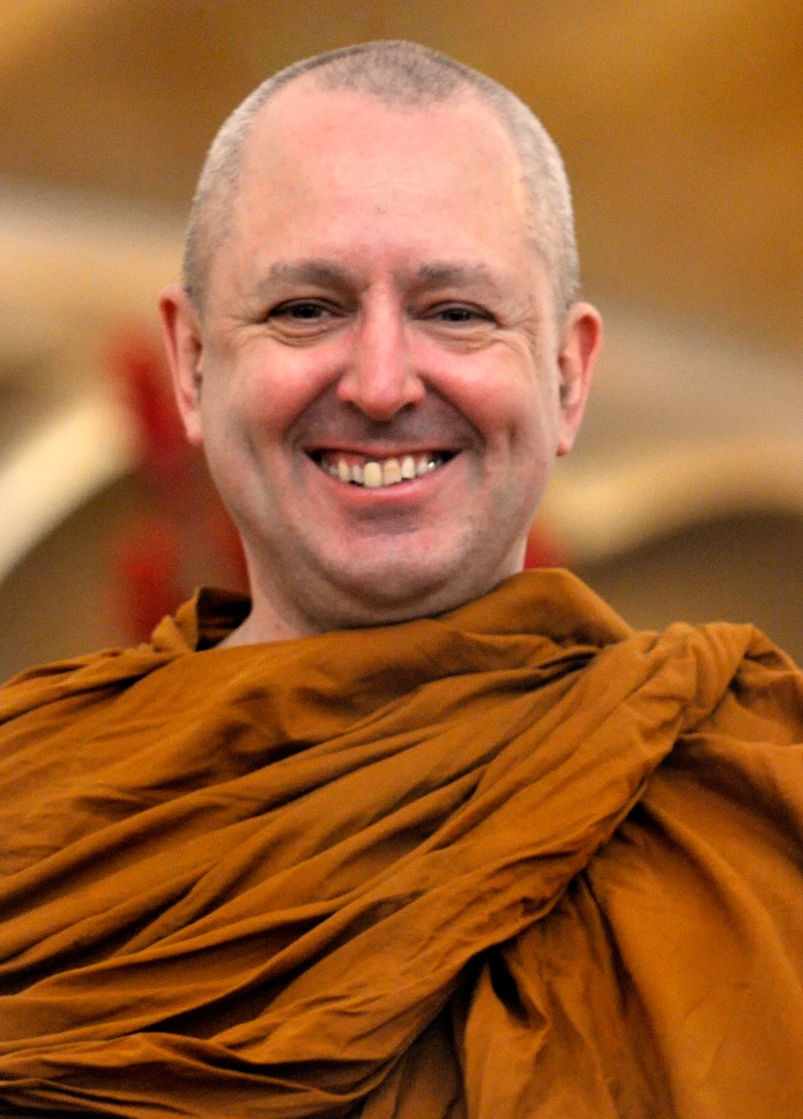
Ajahn Brahm
Phra Visuddhisamvarathera AM (Thai: พระวิสุทธิสังวรเถร; RTGS: phra wisutthi sangwon thera), known as Ajahn Brahmavaṃso, or simply Ajahn Brahm (born Peter Betts on 7 August 1951), is a British-born Buddhist monk. Ordained in 1974, he trained in the Thai Forest Tradition of Theravada Buddhism under his teacher Ajahn Chah. Currently, Ajahn Brahm is the abbot of Bodhinyana Monastery in Serpentine, Western Australia, as well as an adviser or patron of various Buddhist organizations in Australia, Singapore, and the UK.
Peter Betts was born in London. He came from a working-class background and went to Latymer Upper School.[citation needed] He won a scholarship to study theoretical physics at Emmanuel College, University of Cambridge in the late 1960s. After graduation, he taught mathematics at a high school in Devon for one year before travelling to Thailand to become a monk and train with Ajahn Chah. Brahm was ordained in Bangkok at the age of twenty-three by Somdet Kiaw, the abbot of Wat Saket. He subsequently spent nine years studying and training in the forest meditation tradition under Ajahn Chah.
After practicing for nine years as a monk, Ajahn Brahm was sent to Perth by Ajahn Chah in 1983 to assist Ajahn Jagaro in teaching duties. Initially, they both lived in an old house on Magnolia Street, in the suburb of North Perth, but in late 1983, they purchased 97 acres (393,000 m²) of rural and forested land in the hills of Serpentine, south of Perth. The land was to become Bodhinyana Monastery (named after their teacher, Ajahn Chah Bodhinyana). Bodhinyana was to become the first dedicated Buddhist monastery of the Thai Theravada lineage in the Southern Hemisphere and is today the largest community of Buddhist monks in Australia.[citation needed] Initially, there were no buildings on the land and as there were only a few Buddhists in Perth at this time, and little funding, the monks themselves began building to save money. Ajahn Brahm learnt plumbing and bricklaying and built many of the current buildings himself.
In 1994, Ajahn Jagaro took a sabbatical leave from Western Australia and disrobed a year later. Left in charge, Ajahn Brahm took on the role and was soon being invited to provide his teachings in other parts of Australia and Southeast Asia. He has been a speaker at the International Buddhist Summit in Phnom Penh in 2002 and at three Global Conferences on Buddhism.[citation needed] He also dedicates time and attention to the sick and dying, those in prison or ill with cancer, people wanting to learn to meditate, and also to his Sangha of monks at Bodhinyana.[citation needed] Ajahn Brahm has also been influential in establishing Dhammasara Nuns' Monastery at Gidgegannup in the hills northeast of Perth to be a wholly independent monastery, which is jointly administered by Ayya Nirodha and Venerable Hasapañña.[citation needed]
On 22 October 2009, Ajahn Brahm, along with Bhante Sujato, facilitated an ordination ceremony for bhikkhunis, where four female Buddhists, Venerable Ajahn Vayama, and Venerables Nirodha, Seri, and Hasapañña, were ordained into the Western Theravada Bhikkhuni Sangha, with Venerable Tathālokā Bhikkhunī serving as Bhikkhunī Preceptor. The ordination ceremony took place at Ajahn Brahm's Bodhinyana Monastery at Serpentine, Australia. Although bhikkhuni ordinations had taken place in California and Sri Lanka, this was the first in the Thai Forest Tradition and proved highly controversial in Thailand. There is no consensus in the wider tradition that bhikkhuni ordinations could be valid, having last been performed in Thailand over 1,000 years ago, though the matter has been under active discussion for some time. Ajahn Brahm claims that there is no valid historical basis for denying ordination to bhikkunis.[citation needed]
I thought too when I was a young monk in Thailand that the problem was a legal problem, that the bhikkhuni order couldn't be revived. But having investigated and studied, I've found out that many of the obstacles we thought were there aren't there at all. Someone like Bhikkhu Bodhi [a respected Theravada scholar–monk] has researched the Pali Vinaya and his paper is one of the most eloquent I've seen—fair, balanced, comes out on the side of "It's possible, why don't we do this?"
For his actions of 22 October 2009, on 1 November 2009, at a meeting of senior members of the Thai forest monastic Sangha in the Ajahn Chah lineage, held at Wat Pah Pong, Ubon Ratchathani, Brahm was removed from the Ajahn Chah Forest Sangha lineage and is no longer associated with the main monastery in Thailand, Wat Pah Pong, nor with any of the other Western Forest Sangha branch monasteries of the Ajahn Chah tradition.
In October 2015, Ajahn Brahm asked Venerable Candā of Dhammasara Nun's Monastery, Perth, to take steps towards establishing a monastery in the UK. In response to this, Anukampa Bhikkhuni Project was born. Anukampa Bhikkhuni Project aims to promote the teachings and practices of early Buddhism by establishing a Bhikkhuni presence in the UK. Its long-term aspiration is to develop a monastery with a harmonious and meditative atmosphere, for women who wish to train towards full ordination.
Hub AI
Ajahn Brahm AI simulator
(@Ajahn Brahm_simulator)
Ajahn Brahm
Phra Visuddhisamvarathera AM (Thai: พระวิสุทธิสังวรเถร; RTGS: phra wisutthi sangwon thera), known as Ajahn Brahmavaṃso, or simply Ajahn Brahm (born Peter Betts on 7 August 1951), is a British-born Buddhist monk. Ordained in 1974, he trained in the Thai Forest Tradition of Theravada Buddhism under his teacher Ajahn Chah. Currently, Ajahn Brahm is the abbot of Bodhinyana Monastery in Serpentine, Western Australia, as well as an adviser or patron of various Buddhist organizations in Australia, Singapore, and the UK.
Peter Betts was born in London. He came from a working-class background and went to Latymer Upper School.[citation needed] He won a scholarship to study theoretical physics at Emmanuel College, University of Cambridge in the late 1960s. After graduation, he taught mathematics at a high school in Devon for one year before travelling to Thailand to become a monk and train with Ajahn Chah. Brahm was ordained in Bangkok at the age of twenty-three by Somdet Kiaw, the abbot of Wat Saket. He subsequently spent nine years studying and training in the forest meditation tradition under Ajahn Chah.
After practicing for nine years as a monk, Ajahn Brahm was sent to Perth by Ajahn Chah in 1983 to assist Ajahn Jagaro in teaching duties. Initially, they both lived in an old house on Magnolia Street, in the suburb of North Perth, but in late 1983, they purchased 97 acres (393,000 m²) of rural and forested land in the hills of Serpentine, south of Perth. The land was to become Bodhinyana Monastery (named after their teacher, Ajahn Chah Bodhinyana). Bodhinyana was to become the first dedicated Buddhist monastery of the Thai Theravada lineage in the Southern Hemisphere and is today the largest community of Buddhist monks in Australia.[citation needed] Initially, there were no buildings on the land and as there were only a few Buddhists in Perth at this time, and little funding, the monks themselves began building to save money. Ajahn Brahm learnt plumbing and bricklaying and built many of the current buildings himself.
In 1994, Ajahn Jagaro took a sabbatical leave from Western Australia and disrobed a year later. Left in charge, Ajahn Brahm took on the role and was soon being invited to provide his teachings in other parts of Australia and Southeast Asia. He has been a speaker at the International Buddhist Summit in Phnom Penh in 2002 and at three Global Conferences on Buddhism.[citation needed] He also dedicates time and attention to the sick and dying, those in prison or ill with cancer, people wanting to learn to meditate, and also to his Sangha of monks at Bodhinyana.[citation needed] Ajahn Brahm has also been influential in establishing Dhammasara Nuns' Monastery at Gidgegannup in the hills northeast of Perth to be a wholly independent monastery, which is jointly administered by Ayya Nirodha and Venerable Hasapañña.[citation needed]
On 22 October 2009, Ajahn Brahm, along with Bhante Sujato, facilitated an ordination ceremony for bhikkhunis, where four female Buddhists, Venerable Ajahn Vayama, and Venerables Nirodha, Seri, and Hasapañña, were ordained into the Western Theravada Bhikkhuni Sangha, with Venerable Tathālokā Bhikkhunī serving as Bhikkhunī Preceptor. The ordination ceremony took place at Ajahn Brahm's Bodhinyana Monastery at Serpentine, Australia. Although bhikkhuni ordinations had taken place in California and Sri Lanka, this was the first in the Thai Forest Tradition and proved highly controversial in Thailand. There is no consensus in the wider tradition that bhikkhuni ordinations could be valid, having last been performed in Thailand over 1,000 years ago, though the matter has been under active discussion for some time. Ajahn Brahm claims that there is no valid historical basis for denying ordination to bhikkunis.[citation needed]
I thought too when I was a young monk in Thailand that the problem was a legal problem, that the bhikkhuni order couldn't be revived. But having investigated and studied, I've found out that many of the obstacles we thought were there aren't there at all. Someone like Bhikkhu Bodhi [a respected Theravada scholar–monk] has researched the Pali Vinaya and his paper is one of the most eloquent I've seen—fair, balanced, comes out on the side of "It's possible, why don't we do this?"
For his actions of 22 October 2009, on 1 November 2009, at a meeting of senior members of the Thai forest monastic Sangha in the Ajahn Chah lineage, held at Wat Pah Pong, Ubon Ratchathani, Brahm was removed from the Ajahn Chah Forest Sangha lineage and is no longer associated with the main monastery in Thailand, Wat Pah Pong, nor with any of the other Western Forest Sangha branch monasteries of the Ajahn Chah tradition.
In October 2015, Ajahn Brahm asked Venerable Candā of Dhammasara Nun's Monastery, Perth, to take steps towards establishing a monastery in the UK. In response to this, Anukampa Bhikkhuni Project was born. Anukampa Bhikkhuni Project aims to promote the teachings and practices of early Buddhism by establishing a Bhikkhuni presence in the UK. Its long-term aspiration is to develop a monastery with a harmonious and meditative atmosphere, for women who wish to train towards full ordination.