Hubbry Logo
Al BastakiyaAl BastakiyaMain
Open search
Al Bastakiya
Community hub
Al Bastakiya
logo
8 pages, 0 posts
0 subscribers
Be the first to start a discussion here.
Al Bastakiya
Al Bastakiya
from Wikipedia

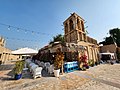
Al Fahidi Historical Neighbourhood (Arabic: حي الفهيدي التاريخي; also known as Al Bastakiya) is a historic district in Dubai, United Arab Emirates.

Key Information

History

[edit]

The construction of Al Bastakiya dates back to the 1890s. In its prime, the locality was capable of 60 housing units, most of which were separated by narrow, winding lanes. The town of Al Bastakiya was primarily built by the affluent Persian Merchants drawn to Dubai by the rich trade opportunities and incentives offered by the Emirati government. The district was named after the southern Iranian town of Bastak.[1]

In the 1980s half of Al Bastakiya was destroyed to make way for the development of a new office complex. The remaining houses were mostly used as warehouses or accommodation for foreign laborers. In 1989, the Dubai Municipality directed that the remaining parts of Al Bastakiya were to be demolished. Rayner Otter, a British architect, came to the area and made extensive renovation in the house where he was staying. Rayner started a campaign to preserve the area and wrote a letter to Prince Charles, who was scheduled to visit Dubai that year. On his arrival, Prince Charles asked to visit Al Bastakiya and explored the whole area with Rayner Otter. During his visit the Prince suggested that Al Bastakiya should be preserved and the demolition was canceled.[1]

In 2005, a project was initiated by the Dubai Municipality to restore the localities of old buildings and lanes. The name was later changed from Al Bastakiya to Al Fahidi Historical Neighbourhood.[1]

Places in Al Bastakiya

[edit]

Al Bastakiya consist of several places which include:

Chaka Art Community / Ana Liz Cordero Abstract Artist

Chaka Art Community & Café by Ana Liz Cordero

[edit]

Chaka Art Community[2] is a multidisciplinary art and crafts exhibition space and café launched to the public in 2022 by the Ecuadorian abstract artist Ana Liz Cordero[3] in House 40 of Al Bastakiya, with the aim of raising awareness of environmental preservation through art.

Sheikh Muhammad Center for Cultural Understanding

[edit]

It is a non-profit organization.[4] The purpose of creating this organization was to establish a relationship of culture between the people of Dubai.

Coffee Museum

[edit]

The Museum consist of two floors. On ground floor different roasting and brewing style are demonstrated live. On the second floor there are history books area relates to coffee.[5]

[edit]

References

[edit]
[edit]
Revisions and contributorsEdit on WikipediaRead on Wikipedia
from Grokipedia
Al Bastakiya, also known as the Al Fahidi Historical Neighbourhood, is a preserved historic district in , , situated along the in the area. Established in the late by affluent Persian merchants from Bastak in southern Iran, it served as a residential quarter for traders drawn to Dubai's burgeoning pearl trade and commercial incentives offered by local rulers. The district exemplifies traditional Gulf architecture from the pre-oil era, featuring over 50 courtyard houses constructed with materials such as coral stone, plaster, wood, and palm fronds, along with distinctive wind towers (barjeels) that provided natural ventilation in the harsh . These structures reflect the social and cultural influences of Persian settlers, including narrow winding alleys designed for and airflow, contrasting sharply with Dubai's modern skyscrapers. In the mid-20th century, as modernized rapidly following oil discovery in , Al Bastakiya faced threats of for urban development, but initial renovations began in the under oversight. A comprehensive restoration project launched in 2005 transformed it into a site, renaming it Al Fahidi Historical Neighbourhood after the nearby 18th-century Al Fahidi Fort, while preserving its authentic layout and converting many buildings into museums, art galleries, and cafes. Today, Al Bastakiya stands as a vital emblem of Dubai's multicultural past and rapid transformation, hosting key institutions like the Sheikh Mohammed bin Rashid Al Maktoum Centre for Cultural Understanding for educational tours on Emirati traditions, the Dubai Creek House museum detailing the Al Maktoum family's history, and the Coins Museum showcasing regional monetary artifacts. It also serves as a venue for annual events such as the Sikka Art and Design Festival, promoting contemporary Emirati creativity amid its historic setting, and attracts visitors seeking insight into the city's roots before its emergence as a global metropolis.

Overview

Location and Geography

Al Fahidi Historical Neighbourhood, formerly known as Al Bastakiya, is situated in the district of , , along the northern bank of , a vital that historically facilitated and . This positioning places it adjacent to the waterfront development, blending preserved heritage with contemporary leisure spaces along the creek's edge. The neighbourhood's strategic location near the creek underscores its origins as a settlement for Persian traders in the late , who were drawn by the area's role in regional exchange networks. The district spans approximately 0.04 square kilometers, extending about 300 meters along the creek and 200 meters inland, encompassing a compact urban layout of narrow, winding alleys paved with stone that guide visitors through its historic core. It features over 50 restored traditional houses arranged in an organic grid pattern, with 56 residential units specifically conserved to preserve the area's architectural integrity amid Dubai's rapid modernization. Bounded by Al Fahidi Street to the south and to the east, and extending northward adjacent to the Ruler's court, the neighbourhood maintains defined preservation controls to protect its spatial character. Its proximity to modern landmarks accentuates the contrast between Dubai's traditional roots and contemporary skyline: the lies roughly 6 kilometers to the west, while the stands about 8 kilometers southwest, offering visitors a tangible sense of the city's evolution. Environmentally, serves as both a historical trade artery—once bustling with dhows carrying goods from across the —and a modern access point, where traditional abra boats provide scenic crossings and entry for tourists exploring the area.

Name and Etymology

Al Bastakiya derives its name from Bastak, a coastal town in the southern Iranian province of Hormozgan, which served as the homeland for the Persian merchants who settled in the area and named it accordingly around 1890. The district was commonly referred to as Bastakia Quarter or Al Bastakiya until the mid-2000s, when it was officially redesignated as Al Fahidi Historical Neighbourhood in honor of Sheikh , an ancestor of Dubai's ruling family and former resident of the adjacent Al Fahidi Fort. The name change was part of a restoration project to preserve the area's heritage. Despite the official title, "Al Bastakiya" continues to be widely used in popular discourse, tourism materials, and everyday references.

History

Origins and Early Development

Al Bastakiya was established in the late by affluent Persian merchants originating from the town of Bastak in , who sought refuge from the oppressive taxation and political instability imposed by the . These migrants, numbering in the hundreds, were drawn to by the emirate's burgeoning status as a hub, where foreign merchants could operate without duties or vessel licensing fees. In 1894, Sheikh , the ruler of Dubai, enacted policies exempting over 3,000 traders from tariffs, including a previously levied 5% , which catalyzed the influx of Persian into the region. This strategic relocation transformed a marshy area on the southern bank of into the core of a new trading settlement. By the early 1900s, Al Bastakiya had evolved into a vibrant residential and commercial district, accommodating approximately 50 to 60 houses that housed families and their operations. The neighborhood's growth was fueled by its proximity to the creek, which served as a vital for dhows transporting goods from across the Gulf and beyond. Key economic activities centered on pearl diving, textile weaving, and spice trading, with leveraging Dubai's tax incentives to establish warehouses, shops, and family residences that supported these industries. This rapid expansion positioned Al Bastakiya as one of Dubai's earliest planned neighborhoods, integrating seamlessly into the emirate's emerging urban landscape. The district reached its zenith in the 1930s, just prior to the global pearl trade's collapse and the later discovery of that would reshape Dubai's . At this peak, Al Bastakiya functioned as a multicultural enclave, where Iranian and Emirati influences intertwined through daily and social interactions, fostering the of early mosques and souks that became communal anchors. These elements not only sustained the area's socio-economic vitality but also exemplified the tolerant, trade-oriented ethos that defined pre- Dubai.

Decline and Modern Preservation

Following the discovery of oil in in , the ensuing economic boom spurred rapid modernization, prompting many residents of Al Bastakiya to relocate to emerging suburbs such as and newer developments equipped with modern amenities. This exodus left the district in a state of neglect, with traditional structures deteriorating due to lack of maintenance and urban pressures, culminating in near-abandonment by the . At that time, the area faced imminent demolition threats as part of broader modernization initiatives aimed at clearing space for contemporary infrastructure. Initial preservation efforts began in the 1980s under Dubai Municipality oversight, including restorations starting from 1985. In 1989, a planned demolition was averted following a visit by Prince Charles (then Prince of Wales), who advocated for the area's cultural value during his tour of Dubai, leading to its protection. Preservation efforts gained further momentum in the mid-1990s under directives emphasizing cultural heritage protection, including initiatives led by Sheikh Mohammed bin Rashid Al Maktoum to safeguard historic sites. In 1995, the Aga Khan Trust for Culture launched a phased conservation program that preserved 56 residential units of traditional wind-tower courthouses, averting further demolition and incorporating adaptive reuse for cultural purposes. Subsequently, Dubai Municipality executed a comprehensive restoration project from 1998 to 2005, rebuilding over 30 structures using authentic materials like gypsum, coral stone, and plaster to revive the district's architectural integrity. Key milestones in the district's revival include its official renaming to Al Fahidi Historical Neighbourhood in 2012, reflecting a shift toward broader heritage recognition. Since 2016, management has been overseen by the Dubai Culture and Arts Authority, which coordinates ongoing conservation and cultural programming. The site forms part of the Khor Dubai nomination on 's Tentative List for Heritage status, with aspirations for full inscription to underscore its global cultural value. Contemporary preservation addresses challenges such as maintaining historical authenticity amid rising demands, ensuring that commercial adaptations do not compromise the district's character. These efforts prioritize sustainable interventions to balance economic vitality with the preservation of Al Bastakiya's role as a living testament to Dubai's pre-oil era.

Architecture

Traditional Design Elements

The architecture of Al Bastakiya prominently features barjeels, or wind towers, which rise up to 6 meters above the roofs and serve as the primary mechanism for natural ventilation in the region's extreme heat. Constructed from local materials such as , stone, and palm fronds, these towers capture prevailing sea breezes and direct them downward into the house interiors, creating a cooling that can lower indoor temperatures by 5–7°C without relying on mechanical systems. This system is particularly adapted to the humid conditions near and the consistent , ensuring habitable environments in pre-air-conditioned structures. Houses in Al Bastakiya are organized around inward-facing surrounded by high walls, a layout that prioritizes family privacy while facilitating cross-ventilation through the central open space. Typically spanning one to two stories with flat roofs utilized for outdoor sleeping during warmer months, these courtyard homes include dedicated areas like for receiving guests, separated to align with traditional social norms. Narrow, winding alleys known as sikkas interconnect the buildings, providing shaded pathways that mitigate direct sunlight and historically supported defensive strategies by limiting visibility and access. The overall configuration reflects adaptations to the local , where creek humidity and winds inform the compact, enclosed form. Decorative and functional details further enhance the design's practicality and cultural resonance, including wooden doors with intricate carvings and screens made from materials like latticework. These screens allow diffused light and airflow into interiors while preserving seclusion from external views, complementing the high walls and orientation. Facades, often rendered in coral stone or plaster, incorporate subtle arabesque motifs influenced by Persian settlers, adding aesthetic depth without compromising the structures' thermal efficiency. Such elements underscore the architecture's integration of form, function, and environmental response in a pre-modern trading community.

Restoration and Adaptive Reuse

Restoration efforts in Al Bastakiya began in the late to safeguard its traditional wind tower houses from urban development pressures. The initiated a phased conservation program in 1995, focusing on structural reinforcement and preservation of original architectural features, which culminated in 2000 with the successful safeguarding of 56 residential units. This project emphasized , transforming the buildings into functional spaces such as art galleries, cafes, specialized museums, a traditional market, and a community while maintaining the district's historical integrity. Building on this foundation, the launched a major restoration initiative in 2005, targeting the area's aging buildings and to prevent and enhance . Techniques employed included structural consolidation of walls and , alongside the meticulous preservation of typological elements like doors, staircases, windows, and timber poles, all using compatible traditional local materials to ensure authenticity. The project incorporated subtle modern reinforcements hidden within the structures to support longevity without visible alterations. Adaptive reuse has been central to the district's revival, with numerous merchant houses repurposed into cultural venues, including expansions of existing museums and the establishment of art galleries that highlight Emirati heritage. For instance, conversions preserved exterior facades while integrating internal modifications for contemporary use, such as improved lighting and climate control systems. These efforts extended into the , with ongoing upgrades by local authorities to modernize plumbing and electrical infrastructure discreetly, ensuring habitability without compromising aesthetic or historical value. Accessibility enhancements, such as gently sloped ramps at entry points, were added during these phases to broaden public access while respecting the low-rise layout. As a result, the district now includes over 50 preserved structures, fostering a vibrant mixed-use environment that includes private residences, casual cafes, and event spaces for cultural activities, thereby sustaining the neighborhood's role in Dubai's heritage landscape. This comprehensive approach has not only preserved the physical structures but also revitalized Al Bastakiya as a living testament to adaptive heritage conservation.

Cultural Significance

Role in Dubai's Heritage

Al Bastakiya, also known as the Al Fahidi Historical Neighbourhood, serves as a preserved snapshot of pre-oil era Dubai, illustrating the city's transition from a pearling-based economy to modern development. Established in the late by affluent Persian merchants who funded construction through trade in textiles and pearls, the district exemplifies the maritime commerce that defined before the discovery of in the . Amid 's rapid skyscraper expansion, it remains one of the few intact examples of 19th-century Gulf , with over 50 restored courtyard houses featuring traditional wind towers for natural ventilation. The district symbolizes Dubai's multicultural heritage, blending Persian and Emirati influences in its design and , while highlighting the resilience of communities that thrived without modern amenities like . Its narrow alleys and high-walled compounds reflect pre-20th-century practices, using local materials such as , coral stone, and palm fronds to combat the harsh . This cultural narrative educates visitors on Dubai's roots as a trading hub along the Creek, fostering an appreciation for the adaptability of its early inhabitants. Institutionally, Al Bastakiya was designated a preservation area in the late through a collaborative effort by and the , culminating in the restoration of 56 residential units between 1995 and 2000. This initiative has positioned it as a cornerstone of Dubai's cultural industries, contributing to the city's Creative City of Design designation in 2018 by hosting events that blend heritage with . On a social level, the neighbourhood strengthens community identity by serving as a venue for heritage walks that explore Emirati traditions and architectural legacies, promoting intergenerational knowledge-sharing among residents and visitors. These activities underscore the district's role in preserving Dubai's intangible cultural values, such as and communal harmony, within a globalized urban context.

Contemporary Events and Tourism

Al Bastakiya, now officially known as the Al Fahidi Historical Neighbourhood, serves as a vibrant hub for contemporary cultural events that blend Dubai's heritage with modern creativity. The district has historically hosted the Sikka Art and Design Festival since 2011, but the 2025 edition took place from January 31 to February 9 in the nearby Historic District, featuring over 250 participants displaying , design installations, live music performances, film screenings, and interactive workshops. Additionally, Al Fahidi participates in extensions of Design Week, where events highlight Emirati traditions through design exhibitions and discussions, as seen in the 2025 program that opened on November 13 with creative installations across the area. Heritage celebrations, such as those during 's annual Heritage Week, further animate the district with folk performances, workshops, and cultural displays that emphasize Emirati customs, positioning Al Fahidi as a key venue for these November gatherings. In 2025, Dubai Culture launched a comprehensive program of activations for Al Fahidi, including panel discussions, interactive workshops, and community talks running through . Tourism in Al Fahidi emphasizes immersive experiences that connect visitors with Dubai's pre-oil era roots. Guided walking tours navigate the labyrinthine streets, showcasing wind-tower houses and art galleries, while abra boat rides across offer scenic access from nearby souks, providing a traditional perspective on the neighborhood's role in the city's trading history. These cultural immersion activities, often led by licensed guides, attract a steady flow of international tourists as part of Dubai's broader heritage circuit, contributing to the emirate's record 18.72 million overnight visitors in 2024. The district's appeal lies in its authentic, low-key vibe, contrasting Dubai's modern landmarks and fostering deeper engagement with Emirati heritage. Economically, Al Fahidi supports local livelihoods through and , generating opportunities in , guiding, and artisanal crafts that sustain small businesses within and around the neighborhood. Its integration with adjacent souks and creek-side attractions enhances the overall ecosystem along , bolstering revenue for heritage-focused ventures post-2020 recovery. By drawing visitors year-round, the area contributes to Dubai's sector, which accounted for AED 257.3 billion in economic value and supported 898,600 jobs across the UAE in 2024. Post-pandemic, Dubai's Sustainable Tourism program has extended low-impact guidelines to heritage areas like Al Fahidi, promoting eco-friendly practices such as reduced plastic use and community-led conservation to balance visitor growth with preservation. These efforts align with broader UAE strategies for responsible , ensuring the district's enduring role in cultural education.

Notable Places

Museums and Historical Sites

Al Fahidi Fort, constructed in 1787, stands as the oldest surviving structure in and serves as the primary historical site within Al Bastakiya, housing the since its reopening in 1971. The fort's exhibits feature archaeological artifacts dating back to 3000 BC, including pre-Islamic tools that illustrate early settlement life in the region. Additional displays highlight the pearling industry through authentic weights, scales, and , underscoring its economic dominance before oil discovery, while dioramas depict traditional desert lifestyles with tents, camel caravans, and daily customs. The Coffee , a private institution opened in 2015 and nestled in the Al Fahidi Historical Neighbourhood, preserves an extensive collection of antique coffee artifacts that trace the beverage's journey through . Located in a restored traditional house, the two-story space showcases items such as silver and brass urns, grinders, roasters, and brewing pots originating from and other key regions, illustrating 's spread from its Ethiopian roots via Yemeni ports to modern roasting practices across the . Visitors can engage with interactive elements that demonstrate regional brewing methods, emphasizing coffee's role in social rituals like gahwa preparation. Established in 2004, the Coins Museum occupies a restored traditional house from the early 20th century in the Al Fahidi district, presenting a collection of over 470 rare coins that document monetary history in the UAE and broader region. The exhibits span from ancient Arab-Sasanian dirhams of the Rashidun and Umayyad Caliphates to Ottoman-era pieces from Turkey and the Levant, culminating in modern UAE dirhams introduced post-1971 federation. Housed in eight rooms around a central courtyard, the displays include magnified views of Islamic dinars and dirhams from the Abbasid period. The Dubai Creek House, built in 1966 as the residence of Sheikh Rashid bin Saeed Al Maktoum, now serves as a in the Al Fahidi Historical Neighbourhood, offering insights into the Al Maktoum family's history and Dubai's ruling dynasty. Restored to reflect mid-20th-century Emirati life, it features period furnishings, photographs, and documents chronicling key events in Dubai's development from a trading port to a modern city. Visitors can explore rooms depicting traditional gatherings and the sheikh's personal artifacts, emphasizing the leadership that shaped the emirate's transformation.

Art Galleries and Cultural Centers

Al Bastakiya, now known as the Al Fahidi Historical Neighbourhood, serves as a vibrant hub for and cultural exchange in , with several galleries and centers housed in restored traditional buildings that blend heritage with modern creativity. These spaces promote Emirati and regional artists while fostering intercultural dialogue, attracting visitors interested in the evolution of Middle Eastern art forms. The Gallery, established in a cluster of wind-tower houses, specializes in contemporary artworks by Arab artists, often exploring themes of identity, , and modernity. It doubles as an art hotel, allowing guests to immerse themselves in the district's atmosphere while supporting emerging talents through exhibitions and residencies. Dubai's oldest fine-art gallery, the Gallery, founded in 1989, occupies a traditional barjeel house in the neighborhood and showcases paintings, sculptures, ceramics, and by international and regional artists. Its mission emphasizes promoting high-quality works that bridge global and local perspectives, with permanent installations highlighting Middle Eastern influences. The Sheikh Mohammed bin Rashid Al Maktoum Centre for Cultural Understanding (SMCCU), located in a restored wind-tower structure, focuses on educational programs that demystify Emirati customs, , and local history through guided tours, interactive sessions, and cultural meals featuring traditional dishes. As a nonprofit initiative, it aims to bridge cultural gaps for expatriates and tourists, enhancing appreciation of Dubai's heritage within the neighborhood's artistic context.

References

Add your contribution
Related Hubs
User Avatar
No comments yet.