
Recent from talks
Alan Jones (racing driver)
Knowledge base stats:
Talk channels stats:
Members stats:
Alan Jones (racing driver)
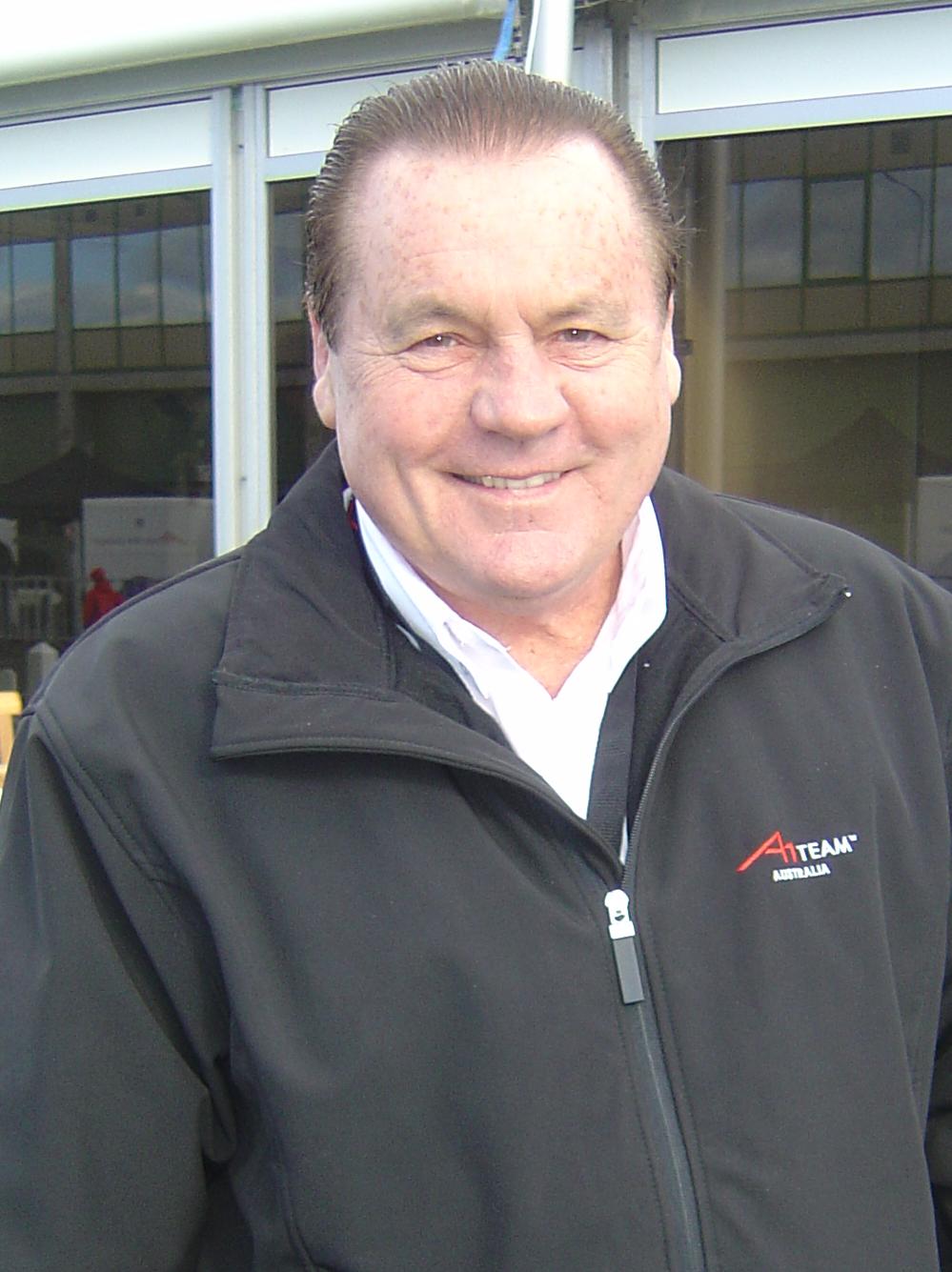
Alan Stanley Jones (born 2 November 1946) is an Australian former racing driver and broadcaster, who competed in Formula One between 1975 and 1986. Jones won the Formula One World Drivers' Championship in 1980 with Williams, and won 12 Grands Prix across 10 seasons.
He was the first driver to win a Formula One World Championship with the Williams team, becoming the 1980 World Drivers' Champion and the second Australian to do so following triple World Champion Sir Jack Brabham. He competed in a total of 117 Grands Prix, winning 12 and achieving 24 podium finishes. Jones also won the 1978 Can-Am championship driving a Lola.
Jones is also the last Australian driver to win the Australian Grand Prix, winning the 1980 event at Calder Park Raceway, having lapped the field consisting mostly of Formula 5000 cars while he was driving his Formula One Championship winning Williams FW07B.
Alan Stanley Jones was born on 2 November 1946 in Melbourne, Victoria. Jones attended Xavier College and is the son of Stan Jones, an Australian racing driver and winner of the 1959 Australian Grand Prix, and wanted to follow in his footsteps. Jones initially worked in his father's Holden dealership while racing a Mini and a Cooper. The younger Jones left for Europe in 1967, to make a name for himself, but found that he could not afford even a Formula Ford drive. He therefore returned home but was back in the UK in 1970 and set about building his career in company with compatriot Brian McGuire. The two men bought and sold second-hand cars and Jones was eventually able to afford a Formula Three, Lotus 41 which he intended to adapt to Formula Two specification and take back to Australia to sell, in order to finance a season of Formula Three. However, the machine was written off in a testing accident at Brands Hatch in which Jones suffered a broken leg.
In late 1970, Jones signed with a firm for whom McGuire was working, designed to promote drivers' interests and was selected to compete in a series of races in Brazil. However, in his first two races the engine failed and in the third the gearbox broke, which meant the opportunity ended.
For 1971, Jones campaigned a Brabham BT 28 converted to BT35 specification, in Formula Three and had a moderately successful season which led to a series of tests for March at Silverstone. However, despite the success of the test, Jones was not offered a drive by March and for 1972, drove a GRD in Formula Three. Jones did enough that season to be kept on by GRD for the next year with a new sponsor and only lost the 1973 championship due to a misfiring engine in the last round at Brands Hatch. In 1974, Jones began the season in Formula Atlantic but felt it was a very amateurish effort, but a chance meeting with Harry Stiller led to a drive in the latter's March 74. At the end of the season, Jones made his F5000 debut for Stiller in the final round of the European Championship at Brands Hatch in a Chevron B24/28 owned by John MacDonald. It was planned to enter Formula 5000 for 1975. However, Stiller's initial plans fell through but after some delay, during which Jones was effectively unemployed, Stiller arranged to purchase a Formula One Hesketh 308 and signed Jones to drive the car.
His first race was the 1975 Spanish Grand Prix at the fast Montjuïc circuit in the purchased Hesketh although the weekend turned out to be one of the most tragic in Formula One history when Rolf Stommelen's crash caused the death of five spectators. After four races in Formula One the team ceased racing after Stiller moved abroad. However, Jones was named as a replacement for the injured Stommelen in Graham Hill's team. His best finish with Hill, in four races for the team, was fifth at the Nürburgring.
He earned his first full-time Formula One drive in 1976, in John Surtees' team. Jones' car was known for its infamous Durex sponsorship which led the BBC refusing to cover Formula One races during the season. He managed several good finishes in the TS19, a fourth in Japan in the final race of the season being the best of them. Jones refused to drive for Surtees in 1977, preferring to sit out a season than continue with the team.
Hub AI
Alan Jones (racing driver) AI simulator
(@Alan Jones (racing driver)_simulator)
Alan Jones (racing driver)
Alan Stanley Jones (born 2 November 1946) is an Australian former racing driver and broadcaster, who competed in Formula One between 1975 and 1986. Jones won the Formula One World Drivers' Championship in 1980 with Williams, and won 12 Grands Prix across 10 seasons.
He was the first driver to win a Formula One World Championship with the Williams team, becoming the 1980 World Drivers' Champion and the second Australian to do so following triple World Champion Sir Jack Brabham. He competed in a total of 117 Grands Prix, winning 12 and achieving 24 podium finishes. Jones also won the 1978 Can-Am championship driving a Lola.
Jones is also the last Australian driver to win the Australian Grand Prix, winning the 1980 event at Calder Park Raceway, having lapped the field consisting mostly of Formula 5000 cars while he was driving his Formula One Championship winning Williams FW07B.
Alan Stanley Jones was born on 2 November 1946 in Melbourne, Victoria. Jones attended Xavier College and is the son of Stan Jones, an Australian racing driver and winner of the 1959 Australian Grand Prix, and wanted to follow in his footsteps. Jones initially worked in his father's Holden dealership while racing a Mini and a Cooper. The younger Jones left for Europe in 1967, to make a name for himself, but found that he could not afford even a Formula Ford drive. He therefore returned home but was back in the UK in 1970 and set about building his career in company with compatriot Brian McGuire. The two men bought and sold second-hand cars and Jones was eventually able to afford a Formula Three, Lotus 41 which he intended to adapt to Formula Two specification and take back to Australia to sell, in order to finance a season of Formula Three. However, the machine was written off in a testing accident at Brands Hatch in which Jones suffered a broken leg.
In late 1970, Jones signed with a firm for whom McGuire was working, designed to promote drivers' interests and was selected to compete in a series of races in Brazil. However, in his first two races the engine failed and in the third the gearbox broke, which meant the opportunity ended.
For 1971, Jones campaigned a Brabham BT 28 converted to BT35 specification, in Formula Three and had a moderately successful season which led to a series of tests for March at Silverstone. However, despite the success of the test, Jones was not offered a drive by March and for 1972, drove a GRD in Formula Three. Jones did enough that season to be kept on by GRD for the next year with a new sponsor and only lost the 1973 championship due to a misfiring engine in the last round at Brands Hatch. In 1974, Jones began the season in Formula Atlantic but felt it was a very amateurish effort, but a chance meeting with Harry Stiller led to a drive in the latter's March 74. At the end of the season, Jones made his F5000 debut for Stiller in the final round of the European Championship at Brands Hatch in a Chevron B24/28 owned by John MacDonald. It was planned to enter Formula 5000 for 1975. However, Stiller's initial plans fell through but after some delay, during which Jones was effectively unemployed, Stiller arranged to purchase a Formula One Hesketh 308 and signed Jones to drive the car.
His first race was the 1975 Spanish Grand Prix at the fast Montjuïc circuit in the purchased Hesketh although the weekend turned out to be one of the most tragic in Formula One history when Rolf Stommelen's crash caused the death of five spectators. After four races in Formula One the team ceased racing after Stiller moved abroad. However, Jones was named as a replacement for the injured Stommelen in Graham Hill's team. His best finish with Hill, in four races for the team, was fifth at the Nürburgring.
He earned his first full-time Formula One drive in 1976, in John Surtees' team. Jones' car was known for its infamous Durex sponsorship which led the BBC refusing to cover Formula One races during the season. He managed several good finishes in the TS19, a fourth in Japan in the final race of the season being the best of them. Jones refused to drive for Surtees in 1977, preferring to sit out a season than continue with the team.
Recent media