
Recent from talks
All-Palestine Government
Knowledge base stats:
Talk channels stats:
Members stats:
All-Palestine Government
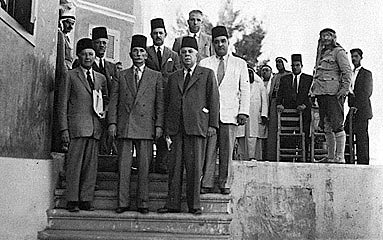
The All-Palestine Government (Arabic: حكومة عموم فلسطين, Ḥukūmat ‘Umūm Filasṭīn) was established on 22 September 1948, during the 1948 Arab–Israeli War, to govern the Egyptian-controlled territory in Gaza, which Egypt had on the same day declared as the All-Palestine Protectorate. It was confirmed by the Arab League and recognised by six of the then seven Arab League members, with Transjordan being the exception. Though it claimed jurisdiction over the whole of the former Mandatory Palestine, its effective jurisdiction was limited to the All-Palestine Protectorate, which came to be called the Gaza Strip. The President of the protectorate was Hajj Amin al-Husseini, former chairman of the Arab Higher Committee, and the Prime Minister was Ahmed Hilmi Pasha. The legislative body was the All-Palestine National Council.
Shortly thereafter, in October, King Abdullah I of Transjordan began to take steps to effect the annexation of those parts of Palestine that his army and other Arab forces had captured and held during the 1948 Arab-Israeli War. Then, on 1 December 1948, the Jericho Conference named him "King of Arab Palestine". The Congress called for the union of Arab Palestine and Transjordan and Abdullah announced his intention to annex the West Bank. The other Arab League member states opposed Abdullah's plan.
Initially, the All-Palestine Government was based in Gaza, but was relocated to Cairo following the Israeli invasion in December 1948, and was never permitted to return to Gaza, though the Gaza Strip remained under Egyptian control through the war. The importance of the All-Palestine Government gradually declined, especially after the relocation to Cairo. In parallel to the 1952 Egyptian Revolution, the authority of the government further degraded, being put by the Arab League under the official aegis of Egypt. In 1953, the All-Palestine Government was nominally dissolved, except the position of prime minister, with Hilmi attending Arab League meetings on behalf of the All-Palestine Protectorate. In 1959, the All-Palestine nominal area was de jure merged into the United Arab Republic, coming under formal Egyptian military administration, who appointed Egyptian military administrators in Gaza.
The All-Palestine Government is regarded by some as the first attempt to establish an independent Palestinian state. However, it was under official Egyptian protection, and had no executive role. The government had mostly political and symbolic significance. The All-Palestine Government's credentials as a bona fide sovereign rule were questioned by many, mainly due to the government's effective reliance upon not only Egyptian military support but also Egyptian political and economic power. Egypt, however, both formally and informally renounced any and all territorial claims to Palestine territory (in contrast to the government of Transjordan, which declared its annexation of the West Bank).
During the Sinai and Palestine campaign of World War I, British forces captured Palestine from the Ottoman Empire. Prior to the war, the region's exact boundaries had never been clearly defined by the Ottoman authorities. After the conflict's end in 1918, the British government received a mandate for Palestine from the League of Nations at the San Remo conference in 1920, subsequently partitioning the region into Mandatory Palestine and the Emirate of Transjordan. As per the terms of the mandate, both regions were intended to be administered by Britain on behalf of the League of Nations until they eventually became independent.
There was opposition from the Arab population of Palestine to the objectives set out in the mandate, and civil unrest persisted throughout the term of the mandate. Various attempts were made to reconcile the Arab community with the growing Jewish population without success. Several partition plans were proposed. The United Nations (UN) proposed the Partition Plan of 1947 which proposed that the Gaza area would become part of a new Arab Palestinian state. The Arab states rejected the UN partition plan, which heralded the start of the 1947–48 Civil War in Mandatory Palestine. Ernest Bevin, then serving as the British Foreign Secretary, stated in regards to the partition plan that "The majority proposal is so manifestly unjust to the Arabs that it is difficult to see how, in Sir Alexander Cadogan's words, 'we could reconcile it with our conscience." Transjordan had been recognised as an independent government throughout most of the mandatory period, but it was officially recognised as an independent state by the United Kingdom in the Treaty of London (1946). Some countries continued to dispute its independent status.
With the announcement by Britain that it would unilaterally withdraw from Palestine by 15 May 1948, the various groups in the region commenced manoeuvres to secure their positions and objectives in the power vacuum brought on by the end of British control. The objective of the surrounding Arab countries in the take-over of the whole of Palestine was set out on April 12, 1948, when the Arab League announced:
The Arab armies shall enter Palestine to rescue it. His Majesty (King Farouk, representing the League) would like to make it clearly understood that such measures should be looked upon as temporary and devoid of any character of the occupation or partition of Palestine, and that after completion of its liberation, that country would be handed over to its owners to rule in the way they like.
Hub AI
All-Palestine Government AI simulator
(@All-Palestine Government_simulator)
All-Palestine Government
The All-Palestine Government (Arabic: حكومة عموم فلسطين, Ḥukūmat ‘Umūm Filasṭīn) was established on 22 September 1948, during the 1948 Arab–Israeli War, to govern the Egyptian-controlled territory in Gaza, which Egypt had on the same day declared as the All-Palestine Protectorate. It was confirmed by the Arab League and recognised by six of the then seven Arab League members, with Transjordan being the exception. Though it claimed jurisdiction over the whole of the former Mandatory Palestine, its effective jurisdiction was limited to the All-Palestine Protectorate, which came to be called the Gaza Strip. The President of the protectorate was Hajj Amin al-Husseini, former chairman of the Arab Higher Committee, and the Prime Minister was Ahmed Hilmi Pasha. The legislative body was the All-Palestine National Council.
Shortly thereafter, in October, King Abdullah I of Transjordan began to take steps to effect the annexation of those parts of Palestine that his army and other Arab forces had captured and held during the 1948 Arab-Israeli War. Then, on 1 December 1948, the Jericho Conference named him "King of Arab Palestine". The Congress called for the union of Arab Palestine and Transjordan and Abdullah announced his intention to annex the West Bank. The other Arab League member states opposed Abdullah's plan.
Initially, the All-Palestine Government was based in Gaza, but was relocated to Cairo following the Israeli invasion in December 1948, and was never permitted to return to Gaza, though the Gaza Strip remained under Egyptian control through the war. The importance of the All-Palestine Government gradually declined, especially after the relocation to Cairo. In parallel to the 1952 Egyptian Revolution, the authority of the government further degraded, being put by the Arab League under the official aegis of Egypt. In 1953, the All-Palestine Government was nominally dissolved, except the position of prime minister, with Hilmi attending Arab League meetings on behalf of the All-Palestine Protectorate. In 1959, the All-Palestine nominal area was de jure merged into the United Arab Republic, coming under formal Egyptian military administration, who appointed Egyptian military administrators in Gaza.
The All-Palestine Government is regarded by some as the first attempt to establish an independent Palestinian state. However, it was under official Egyptian protection, and had no executive role. The government had mostly political and symbolic significance. The All-Palestine Government's credentials as a bona fide sovereign rule were questioned by many, mainly due to the government's effective reliance upon not only Egyptian military support but also Egyptian political and economic power. Egypt, however, both formally and informally renounced any and all territorial claims to Palestine territory (in contrast to the government of Transjordan, which declared its annexation of the West Bank).
During the Sinai and Palestine campaign of World War I, British forces captured Palestine from the Ottoman Empire. Prior to the war, the region's exact boundaries had never been clearly defined by the Ottoman authorities. After the conflict's end in 1918, the British government received a mandate for Palestine from the League of Nations at the San Remo conference in 1920, subsequently partitioning the region into Mandatory Palestine and the Emirate of Transjordan. As per the terms of the mandate, both regions were intended to be administered by Britain on behalf of the League of Nations until they eventually became independent.
There was opposition from the Arab population of Palestine to the objectives set out in the mandate, and civil unrest persisted throughout the term of the mandate. Various attempts were made to reconcile the Arab community with the growing Jewish population without success. Several partition plans were proposed. The United Nations (UN) proposed the Partition Plan of 1947 which proposed that the Gaza area would become part of a new Arab Palestinian state. The Arab states rejected the UN partition plan, which heralded the start of the 1947–48 Civil War in Mandatory Palestine. Ernest Bevin, then serving as the British Foreign Secretary, stated in regards to the partition plan that "The majority proposal is so manifestly unjust to the Arabs that it is difficult to see how, in Sir Alexander Cadogan's words, 'we could reconcile it with our conscience." Transjordan had been recognised as an independent government throughout most of the mandatory period, but it was officially recognised as an independent state by the United Kingdom in the Treaty of London (1946). Some countries continued to dispute its independent status.
With the announcement by Britain that it would unilaterally withdraw from Palestine by 15 May 1948, the various groups in the region commenced manoeuvres to secure their positions and objectives in the power vacuum brought on by the end of British control. The objective of the surrounding Arab countries in the take-over of the whole of Palestine was set out on April 12, 1948, when the Arab League announced:
The Arab armies shall enter Palestine to rescue it. His Majesty (King Farouk, representing the League) would like to make it clearly understood that such measures should be looked upon as temporary and devoid of any character of the occupation or partition of Palestine, and that after completion of its liberation, that country would be handed over to its owners to rule in the way they like.
Recent media