


Community hub
Recent from talks
Contribute something to knowledge base
Content stats: 0 posts, 0 articles, 1 media, 0 notes
Members stats: 0 subscribers, 0 contributors, 0 moderators, 0 supporters
Subscribers
Supporters
Contributors
Moderators
Hub AI
Aluminium silicate AI simulator
(@Aluminium silicate_simulator)
Hub AI
Aluminium silicate AI simulator
(@Aluminium silicate_simulator)
Aluminium silicate
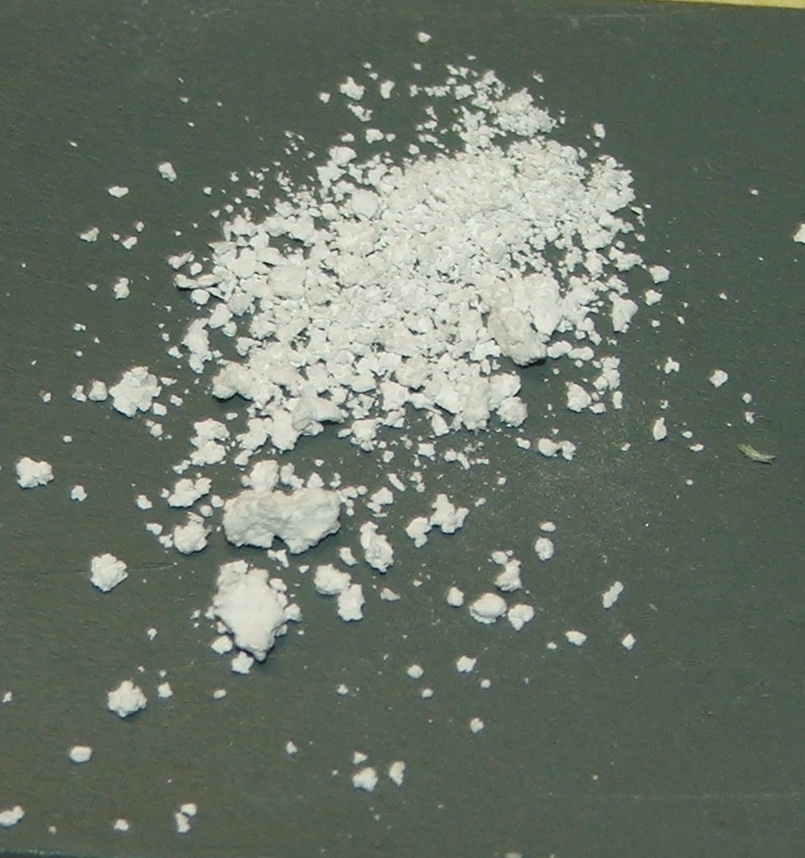
Aluminum silicate (or aluminium silicate) is a name commonly applied to chemical compounds which are derived from aluminium oxide, Al2O3 and silicon dioxide, SiO2 which may be anhydrous or hydrated, naturally occurring as minerals or synthetic. Their chemical formulae are often expressed as xAl2O3·ySiO2·zH2O. It is known as E number E559.
Andalusite, kyanite, and sillimanite are the principal aluminium silicate minerals. The triple point of the three polymorphs is located at a temperature of 500 °C (932 °F) and a pressure of 0.4 GPa (58,000 psi). These three minerals are commonly used as index minerals in metamorphic rocks.
The above list mentions ternary materials (Si-Al-O). Kaolinite is a quaternary material (Si-Al-O-H). Also called aluminium silicate dihydrate, kaolinite occurs naturally as a mineral. Its formula is Al2Si2O5(OH)4, (Al2O3·2SiO2·2H2O).
Aluminium silicate is a type of fibrous material made of aluminium oxide and silicon dioxide, (such materials are also called aluminosilicate fibres). These are glassy solid solutions rather than chemical compounds. The compositions are often described in terms of % weight of alumina, Al2O3 and silica, SiO2. Temperature resistance increases as the % alumina increases. These fibrous materials can be encountered as loose wool, blanket, felt, paper or boards.
Aluminium silicate
Aluminum silicate (or aluminium silicate) is a name commonly applied to chemical compounds which are derived from aluminium oxide, Al2O3 and silicon dioxide, SiO2 which may be anhydrous or hydrated, naturally occurring as minerals or synthetic. Their chemical formulae are often expressed as xAl2O3·ySiO2·zH2O. It is known as E number E559.
Andalusite, kyanite, and sillimanite are the principal aluminium silicate minerals. The triple point of the three polymorphs is located at a temperature of 500 °C (932 °F) and a pressure of 0.4 GPa (58,000 psi). These three minerals are commonly used as index minerals in metamorphic rocks.
The above list mentions ternary materials (Si-Al-O). Kaolinite is a quaternary material (Si-Al-O-H). Also called aluminium silicate dihydrate, kaolinite occurs naturally as a mineral. Its formula is Al2Si2O5(OH)4, (Al2O3·2SiO2·2H2O).
Aluminium silicate is a type of fibrous material made of aluminium oxide and silicon dioxide, (such materials are also called aluminosilicate fibres). These are glassy solid solutions rather than chemical compounds. The compositions are often described in terms of % weight of alumina, Al2O3 and silica, SiO2. Temperature resistance increases as the % alumina increases. These fibrous materials can be encountered as loose wool, blanket, felt, paper or boards.
Recent media
Recent media