Hubbry Logo
Alvan AdamsAlvan AdamsMain
Open search
Alvan Adams
Community hub
Alvan Adams
logo
8 pages, 0 posts
0 subscribers
Be the first to start a discussion here.
Alvan Adams
Alvan Adams
from Wikipedia

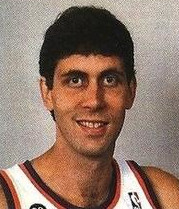
Alvan Leigh Adams (born July 19, 1954) is an American former professional basketball player. He spent his entire 13-year career with the Phoenix Suns of the National Basketball Association (NBA). Adams was named as the NBA Rookie of the Year in 1975 and selected as an NBA All-Star in 1976. He retired in 1988 and holds Suns records for games played (988), minutes played (27,203), rebounds (6,937) and steals (1,289). Raised in Oklahoma City, Adams was nicknamed the "Oklahoma Kid".[1]

Key Information

Early life

[edit]

Adams was born in Lawrence, Kansas, and raised in Oklahoma City, Oklahoma.[1] His mother, Ilse, was from Austria and met his father, Richard Paul, when they were students at the University of Kansas.[2] Adams was named after the biblical figure Alvan.[3] His father worked as a petroleum geologist.[2][3]

Adams attended Putnam City High School in Oklahoma City where he led the basketball team to a 67–11 record as a three-year starter.[3] The team was undefeated during his senior year and won a state championship.[1] He was named as the Oklahoma High School Player of the Year and a Parade All-American in 1972.[1]

College career

[edit]

During 26 games of the 1973–74 season Adams tied an Oklahoma school record with 21 double-doubles for a season by a Sooner (Garfield Heard, 1969–70 also had 21 in 27 games). That record stood until it was broken by Blake Griffin on February 14, 2009.[4][5]

Adams is one of only three players in the history of the University of Oklahoma men's basketball program to score at least 40 points and get 20 rebounds in a game along with Wayman Tisdale (61 points, 22 rebounds against Texas–San Antonio in 1983) and Blake Griffin (40 points, 23 rebounds against Texas Tech on February 14, 2009).[6][7] After his junior season, Adams declared for hardship status in the National Basketball Association (NBA) and made himself eligible for the 1975 NBA draft.[3]

Adams is one of only four Sooners to have his college jersey (#33) retired by the OU program (Wayman Tisdale (#23), Mookie Blaylock (#10) and Stacey King (#33) are the other three).[8][9]

Professional career

[edit]

Adams was selected by the Phoenix Suns with the fourth pick of the 1975 NBA draft. Adams was a rookie on a Suns team whose season included an improbable playoff run that took them all the way to the 1976 NBA Finals. In the same year, he was selected to play in the All-Star Game and won the NBA Rookie of the Year Award as well as being named to the All-NBA Rookie Team.

On February 22, 1977, Adams recorded a triple-double with 47 points, 18 rebounds and 12 assists against the Buffalo Braves. He is one of five players in NBA history (along with Elgin Baylor, Wilt Chamberlain, Russell Westbrook and Vince Carter) to have as many as 46 points and 16 rebounds in a triple-double performance.[10][11] Furthermore, Adams is one of two players to have recorded multiple games of at least 30 points, 15 rebounds, 5 assists, and 3 blocks in the NBA during their rookie season, along with Victor Wembanyama.[12]

Adams's jersey number (33) was retired by the Suns, but on the signing of free agent Grant Hill, Adams granted him permission to wear his familiar No. 33 with the Suns.[13]

Adams is the franchise leader in games played (988), minutes played (27,203), rebounds (6,937), and steals (1,289);[1] second in field goals made and attempted; third in assists; and fourth in blocks.

In 2000, Adams served as the vice president for facility management for the Footprint Center in Phoenix, Arizona.[1]

NBA career statistics

[edit]
Legend
  GP Games played   GS  Games started  MPG  Minutes per game
 FG%  Field goal percentage  3P%  3-point field goal percentage  FT%  Free throw percentage
 RPG  Rebounds per game  APG  Assists per game  SPG  Steals per game
 BPG  Blocks per game  PPG  Points per game  Bold  Career high

Regular season

[edit]
Year Team GP GS MPG FG% 3P% FT% RPG APG SPG BPG PPG
1975–76 Phoenix 80 33.2 .469 .735 9.1 5.6 1.5 1.5 19.0
1976–77 Phoenix 72 31.6 .474 .754 9.1 4.5 1.3 1.2 18.0
1977–78 Phoenix 70 27.3 .485 .730 8.1 3.2 1.2 .9 15.5
1978–79 Phoenix 77 30.7 .530 .799 9.2 4.7 1.4 .8 17.8
1979–80 Phoenix 75 28.9 .531 .000 .797 8.1 4.3 1.4 .7 14.9
1980–81 Phoenix 75 27.4 .526 .000 .768 7.3 4.6 1.4 .9 14.9
1981–82 Phoenix 79 75 30.3 .494 .000 .781 7.4 4.5 1.4 1.0 15.1
1982–83 Phoenix 80 75 30.6 .486 .333 .829 6.9 4.7 1.4 .9 14.2
1983–84 Phoenix 70 13 20.7 .462 .000 .825 4.6 3.1 1.0 .4 9.6
1984–85 Phoenix 82 69 26.0 .520 .000 .883 6.1 3.8 1.4 .6 14.7
1985–86 Phoenix 78 45 25.7 .502 .000 .783 6.1 4.2 1.3 .6 10.8
1986–87 Phoenix 68 40 24.9 .503 .000 .788 5.0 3.3 .9 .5 11.1
1987–88 Phoenix 82 25 20.1 .496 .500 .844 4.5 2.2 1.0 .5 7.5
Career 988 342 27.5 .498 .133 .788 7.0 4.1 1.3 .8 14.1
All-Star 1 0 11.0 .500 3.0 4.0

Playoffs

[edit]
Year Team GP GS MPG FG% 3P% FT% RPG APG SPG BPG PPG
1976 Phoenix 19 35.2 .452 .817 10.1 5.2 1.4 1.1 17.9
1978 Phoenix 2 35.5 .455 1.000 8.0 2.0 1.0 .5 16.0
1979 Phoenix 12 31.0 .475. .710 7.5 4.4 .9 1.0 12.8
1980 Phoenix 8 31.4 .566 .895 9.6 5.8 .9 1.3 16.1
1981 Phoenix 7 31.1 .450 .714 5.9 3.7 .6 .1 10.6
1982 Phoenix 7 33.3 .522 .786 7.9 3.7 2.0 .7 16.9
1983 Phoenix 3 28.0 .469 .714 6.0 4.7 .6 1.7 11.7
1984 Phoenix 17 18.4 .421 .679 5.1 2.5 1.0 .6 8.4
1985 Phoenix 3 3 26.3 .500 .833 5.7 3.7 2.3 0.3 17.0
Career 78 29.3 .473 .766 7.5 4.1 1.1 .9 13.8

Personal life

[edit]

Adams is married and has two children.[14]

See also

[edit]

References

[edit]
[edit]
Revisions and contributorsEdit on WikipediaRead on Wikipedia
from Grokipedia
Alvan Adams (born July 19, 1954) is an American former professional basketball player who spent his entire 13-season NBA career as a center and power forward for the from 1975 to 1988. Drafted fourth overall in the 1975 out of the , he earned NBA Rookie of the Year honors in his debut season, averaging 16.3 points, 10.7 rebounds, and 4.2 assists per game while leading the Suns to the Western Conference Finals. Over his career, Adams amassed 13,910 points, 6,937 rebounds, 4,012 assists, and 1,289 steals in 988 games, establishing franchise records for games played, minutes (27,203), rebounds, and steals at the time of his retirement; he remains a member of the Suns' and was named to their "Suns of the Century First Team" as center in 1999. In 2025, the Suns honored his 50 years with the organization. Born in , and raised in , Adams excelled early, graduating as from Putnam City High School in 1972 while leading the team to an undefeated state championship and earning All-American honors as Oklahoma's top high school player. At the , he set school records including a 26.5 points per game average and 13.3 rebounds per game in his junior year, totaling 1,707 points and 938 rebounds over three seasons; he was Big Eight Player of the Year (1975) and three-time Big Eight Tournament MVP, maintained a 3.8 GPA in studies, and represented the U.S. at the 1973 World University Games. In the NBA, Adams formed a dynamic frontcourt partnership with , helping the Suns reach the and earning a single selection that year; his versatile playstyle, including 12 triple-doubles, contributed to nine playoff appearances, though the team never won a championship. Upon retiring in 1988, the Suns honored him by retiring his No. 33 jersey, and he was inducted into the Oklahoma Sports Hall of Fame in 1995. Post-career, Adams completed his in 1998, served as vice president of the American West Arena in Phoenix starting in 2000, and supported scouting programs and charities; he is married with two children.

Early Years

Childhood and Family Background

Alvan Leigh Adams was born on July 19, 1954, in Lawrence, Kansas. His family relocated to the Oklahoma City area shortly thereafter, where he spent his formative years in Warr Acres, a suburb of the capital city. Adams' parents were Paul Adams, a geologist, and Ilse Adams, who was born and raised in Austria; the couple met in Germany during World War II. Ilse passed away in 1972 during Alvan's senior year of high school. Raised in a professional household, Adams was described as a popular and industrious student from an early age. His childhood unfolded amid the socioeconomic recovery of mid-20th century Oklahoma, a period marked by post-Depression and post-war economic challenges transitioning into growth fueled by the discovery of oil and reserves in the and . By 1960, the state's had climbed to 85 percent of the national average, reflecting improving wage scales and nonfarm job opportunities that stabilized family life in urban areas like . This environment of gradual prosperity and community focus on and youth activities laid the groundwork for Adams' development. Adams' early play in local settings naturally progressed into organized high school basketball.

High School Basketball Career

Alvan Adams attended Putnam City High School in Warr Acres, , where he developed into a standout player. As a three-year letterman and starter, he showcased his skills on the court, contributing significantly to the team's success during his tenure. In his senior year of 1972, Adams provided key leadership as a 6-foot-9 forward, guiding the Putnam City Pirates to an undefeated 26-0 record and the Class 4A state championship—the only boys' team in the state's largest classification to achieve perfection that season. He graduated as of his class and his performance earned him individual recognition as the Oklahoma High School Player of the Year and a All-American in 1972. During this period, Adams' playing style began to highlight his versatility, blending the physicality of a forward with the mobility and passing ability often associated with centers, traits that would carry forward into higher levels of competition.

College Career

University of Oklahoma Tenure

Alvan Adams enrolled at the in 1972, following a standout high school career at Putnam City High School that drew recruitment from several programs, and played as a for the team from 1972 to 1975. As a in the 1972–73 season, Adams quickly established himself as a dominant force in the , averaging 22.1 points and 13.2 rebounds per game over 21 contests while leading the conference in scoring; he also recorded a career-high 28 rebounds in a single game against Indiana State on November 27, 1972. During his sophomore year in 1973–74, Adams maintained his double-double production, averaging 21.2 points and 12.1 rebounds across 26 games and tying a school record with 21 s in a season—a mark originally set by Garfield Heard in 1969–70. He continued to lead the Big Eight in scoring that year, showcasing his versatility and rebounding prowess despite the team's overall challenges. In his junior season of 1974–75, Adams elevated his performance further, posting averages of 26.6 points and 13.3 rebounds per game in 26 appearances, which included leading the conference in rebounding and ranking ninth nationally in total points with 691. One notable performance came on January 5, 1974, when Adams went 11-for-11 from the field in a 91–66 victory over San Diego State, setting a Sooners single-game record for field goal accuracy at the time. Following this dominant junior campaign, Adams declared for the 1975 as a hardship case after his junior year, forgoing his senior season to pursue a professional career.

College Achievements and Statistics

During his three seasons at the University of Oklahoma from 1972 to 1975, Alvan Adams earned numerous accolades that highlighted his dominance in college basketball. He was a three-time All-Big Eight Conference selection, earning second-team honors as a freshman in 1972-73 and first-team honors in both 1973-74 and 1974-75. As a junior in 1974-75, Adams was named Big Eight Player of the Year and Big Eight Tournament MVP, while also securing All-American honors that year (second-team Converse, third-team NABC) following fourth-team All-American recognition (NABC/Converse) in 1973-74. He was a three-time Big Eight Tournament MVP (1973–1975). Additionally, he was a two-time Academic All-American in 1973-74 and 1974-75, maintained a 3.8 GPA in pre-medical studies, and the only unanimous selection on the Big Eight Conference 1970s All-Decade Team. As a freshman, he represented the United States at the 1973 World University Games, winning gold. Adams' statistical output underscored his impact, as he concluded his college career as the Sooners' all-time leader in both total points and rebounds—a distinction he held upon departing Norman. Over 73 games, he amassed 1,707 points (23.4 per game) and 938 rebounds (12.8 per game), rankings that currently place him eighth in program scoring and third in rebounding. His per-season averages included 22.1 points and 13.2 rebounds as a , 21.2 points and 12.1 rebounds as a sophomore, and a senior-year peak of 26.6 points and 13.3 rebounds, leading the Big Eight in scoring during 1973-74 and in both scoring and rebounding in 1974-75. Assists were not comprehensively tracked in the era, but Adams' playmaking as a contributed to team success without specific totals recorded in available records. Adams' contributions extended to team records and program elevation; he set the single-game rebounding mark with 28 boards and the career rebounding average at 12.8, while his scoring prowess helped transform the into a national contender, culminating in a fourth-overall selection in 1975. In recognition of these feats, the retired his No. 33 jersey in 1998, making him only the second athlete in school history across all sports to receive the honor.

Professional NBA Career

Draft and Rookie Season

Alvan Adams was selected by the as the fourth overall pick in the first round of the , following a standout college career at the where he tied a school record with 21 double-doubles in just 26 games during the 1973-74 season. This selection came after the Suns traded their center the previous year, leaving a void in the frontcourt that positioned Adams for an immediate impact. In his rookie season of 1975-76, Adams quickly adapted to the NBA's physicality and pace, starting at for all 80 games he played and averaging 19.0 points, 9.1 rebounds, 5.6 assists, 1.5 steals, and 1.4 blocks per game. His versatility as a 6'9" shone through in his defensive contributions, where he disrupted opponents with shot-blocking and rebounding prowess, while his passing ability from the post added a modern dimension to the Suns' offense. Despite facing the pressures of high expectations as a top draft pick in a league dominated by established big men, Adams demonstrated resilience, blending seamlessly with veterans like and to help stabilize the team's interior play. The Suns were in a rebuilding phase during the 1975-76 season, coming off a playoff miss and aiming to integrate young talent with experienced players amid roster changes, which culminated in a 42-40 record and a run to the . Adams' immediate starting role addressed the team's need for frontcourt production, and his all-around performance earned him the NBA Rookie of the Year award in 1976, as well as a selection to the All-Rookie First Team and his first appearance.

Phoenix Suns Career Highlights

Alvan Adams played his entire 13-season NBA career with the Phoenix Suns, emerging as a cornerstone of the franchise during the 1970s and 1980s. One of his earliest and most defining achievements came during the 1975-76 season, when the Suns, dubbed the "Sunderella Suns" for their improbable Cinderella run as an underdog team, advanced to the NBA Finals for the first time in franchise history. As a rookie, Adams was instrumental in this playoff surge, averaging 17.9 points, 10.2 rebounds, and 5.3 assists across 19 postseason games, including a heightened performance of 23.0 points and 10.2 rebounds per game in the Finals series against the Boston Celtics. His contributions helped push the series to a dramatic Game 7, though the Suns ultimately fell short, solidifying his reputation as a versatile big man capable of impacting both ends of the court in high-stakes matchups. The following season, Adams showcased his offensive prowess with a career-high triple-double on , 1977, against the , recording 47 points, 18 rebounds, and 12 assists in a 114-115 loss. This performance highlighted his all-around skill set, blending scoring efficiency, rebounding tenacity, and playmaking vision—rarities for a of his era. Adams earned his lone NBA selection in 1976, a nod to his rookie-year impact, and maintained consistent double-digit production throughout his Suns tenure, averaging double figures in points for 11 of his 13 seasons while often contributing solid rebounding numbers as a reliable frontcourt presence alongside teammates like and Walter Davis. Over his Suns career, Adams set franchise longevity benchmarks that reflected his durability and loyalty, retiring in 1988 as the all-time leader in games played (988), total minutes (27,203), and rebounds (6,937). These records, which stood for decades, emphasized his role in stabilizing the team through multiple rebuilds and playoff pushes, contributing to Phoenix's evolution as a competitive Western Conference force.

Retirement from Playing

Alvan Adams announced his retirement from the NBA on April 30, 1988, concluding a 13-season career entirely with the Phoenix Suns. At age 33, Adams cited a desire to pursue personal interests outside basketball, including opportunities in architecture and real estate, as a key factor in his decision. His exit marked the end of an era, as he was the last remaining player from the Suns' 1975-76 NBA Finals team. In his final 1987-88 season, Adams experienced a reduced role amid the Suns' rebuilding efforts, starting only 25 of 82 games and serving primarily as a bench contributor. He averaged 7.5 points, 4.5 rebounds, and 2.2 assists per game in 20.1 minutes, a notable decline from his career averages of 14.1 points, 7.0 rebounds, and 4.1 assists across 988 games. This shift reflected the team's transition to younger talent, including the addition of players like Mark West and , while Adams provided veteran leadership during a 28-54 campaign. Adams reflected on his unwavering loyalty to the Suns organization, having spent his entire professional with the franchise since being drafted fourth overall in 1975. Suns general manager praised Adams' dedication, noting his great and announcing the retirement of his No. 33 jersey, which was honored in November 1988. Adams expressed appreciation for the stability and expressed no regrets about staying with one team throughout his tenure. Looking ahead, Adams indicated plans to remain involved with the Suns in a non-playing capacity, laying the groundwork for his eventual transition into front-office roles. This move aligned with his long-term commitment to the organization, where he would contribute off the court in the years following his playing days.

Career Statistics and Records

Regular Season Performance

Alvan Adams played all 13 seasons of his NBA career with the , appearing in 988 regular-season games and establishing himself as a versatile known for balanced contributions across multiple facets of the game. His career per-game averages were 14.1 points, 7.0 rebounds, and 4.1 assists, reflecting consistent productivity in an era characterized by physical, inside-oriented play. These figures underscored his ability to facilitate offense while anchoring the frontcourt, with a career of 50.3% that highlighted efficient scoring around the rim. Advanced analytics further illustrate Adams' impact and efficiency. He recorded a career Player Efficiency Rating (PER) of 17.9, surpassing the league average of 15.0 and indicating above-average overall performance relative to contemporaries. Additionally, Adams amassed 73.5 over his career, a metric that quantifies his contributions to team victories through scoring, rebounding, and defensive plays, tying his versatile role to tangible on-court value. Adams' production peaked in the mid-1970s, where he emerged as a scoring and rebounding force. His rookie 1975-76 season featured 19.0 points, 9.1 rebounds, and 5.6 assists per game, marking a strong debut that earned him an nod. The 1976-77 campaign followed closely with 18.0 points, 9.1 rebounds, and 4.5 assists, while 1978-79 saw him average 17.8 points and a career-high 9.2 rebounds alongside 4.7 assists. By 1980-81, he contributed 14.9 points, 7.3 rebounds, and 4.6 assists, maintaining a PER of 20.3 and 7.7 in that season alone. A gradual decline set in during the mid-1980s, influenced by injuries and evolving team dynamics. In 1983-84, his averages fell to 9.6 points, 4.6 rebounds, and 3.1 assists, a sharp drop from prior years. This trend continued, with 10.8 points and 6.1 rebounds in 1985-86, and bottoming out at 7.5 points, 4.5 rebounds, and 2.2 assists in his final 1987-88 season. Despite the reduced output, his earlier peaks demonstrated sustained excellence, with PER values often exceeding 20 in high-production years like 1975-76 (21.7) and 1978-79 (20.4).
SeasonPointsReboundsAssistsPERWin Shares
1975-7619.09.15.621.77.2
1978-7917.89.24.720.47.6
1980-8114.97.34.620.37.7
1983-849.64.63.116.63.3
1987-887.54.52.213.12.2
In the context of his era, Adams' scoring efficiency stood out for a big man. His career 14.1 points per game approximated the 1980s positional averages of approximately 9.8 for power forwards and 9.6 for centers, while his rebounding and assist numbers added to a well-rounded profile amid league-wide team scoring around 109 points per game. In the 1970s, with slightly higher offensive tempos, his peak outputs exceeded typical big-man benchmarks, contributing to the Suns' competitive balance.

Playoff Performance

Over his 13-year NBA career, Alvan Adams appeared in 78 playoff games, averaging 13.8 points, 7.5 rebounds, and 4.1 assists per game while providing consistent frontcourt production for the during their postseason runs. His reliability in high-pressure situations often mirrored his regular-season versatility, helping stabilize the Suns' lineup against taller opponents in the Western Conference. Adams' most notable playoff performance came as a in the against the , where he averaged 23.0 points and 10.2 rebounds across six games, serving as the Suns' primary scoring and rebounding threat in the paint. In Game 3 of the series, he recorded a playoff-high 33 points and 14 rebounds, powering Phoenix to a 105-98 victory that evened the series at 2-2 despite the eventual 4-2 loss. This series highlighted his ability to elevate his game in the Finals spotlight, contributing significantly to the Suns' improbable run to the championship round after defeating the in the Western Conference Finals. Adams participated in multiple Western Conference Finals appearances with the Suns in 1976, 1979, and 1984, where his steady rebounding and playmaking aided team efforts against elite competition like the and . In the 1979 Western Conference Finals versus Seattle, however, a sprained left ankle suffered in Game 1 limited his effectiveness, forcing him to play through pain and reducing his typical impact as Phoenix fell 4-3. Injuries continued to affect his later playoff showings, including a knee issue during the 1983-84 season that hampered his mobility and contributed to diminished production in the 1984 Western Conference Finals loss to the Lakers.

Awards and Team Records

Alvan Adams was named the NBA of the Year for the 1975-76 season, recognizing his impactful debut with averages of 19.0 points, 9.1 rebounds, and 5.6 assists per game. He also earned a spot on the All-NBA First Team that year, highlighting his defensive prowess and versatility as a center-forward. Furthermore, Adams was selected as the Western Conference's representative for the 1976 , where he contributed 6 points and 5 rebounds in a limited role. Throughout his 13-season career exclusively with the , Adams established himself as a cornerstone of franchise longevity and durability. As of November 2025, he remains the Suns' all-time leader in games played (988) and total minutes played (27,203), records that underscore his consistent availability across 13 seasons. These records remain intact as of November 2025, with no subsequent player surpassing them. Adams also holds the franchise marks for total rebounds (6,937) and total steals (1,289), achievements that reflect his rebounding tenacity and defensive instincts during an era with fewer possessions per game. None of these records have been surpassed by subsequent Suns players, including long-tenured stars like or , though active contributors continue to accumulate stats in ongoing seasons. Adams became eligible for induction into the Naismith Memorial Basketball Hall of Fame with the Class of 1994, five years after his retirement, based on his NBA service. Despite his franchise records and role in the Suns' appearance, he has not been enshrined, though occasional discussions among basketball analysts highlight his underappreciated all-around game and loyalty to one team as merits for reconsideration.

Post-Retirement Contributions

Executive Roles with

Following his retirement from playing in 1988, Alvan Adams transitioned into front-office positions with the organization. In 2000, he was appointed vice president for facility management at America West Arena, the Suns' home venue, which later became known as Center and eventually Footprint Center. In this role, Adams oversaw key aspects of operations, including , event coordination, and support for Suns games and other activities. His responsibilities extended to community relations efforts tied to the venue, such as facilitating public access and local partnerships, while ensuring smooth facility management for the team's daily needs. Over the subsequent decades, Adams' position evolved to emphasize , where he led the organization's initiatives to reduce environmental impact at Footprint Center, including energy-efficient upgrades and waste reduction programs. By 2023, he was formally recognized as vice president of for his contributions to these efforts, such as promoting eco-friendly practices during Suns events. Adams played a consultative role in major arena improvements, including discussions around the 2019-2020 renovations that enhanced fan amenities and operational efficiency at a total cost of $230 million, with the Suns contributing $80 million and the City of Phoenix $150 million. His involvement helped align facility updates with long-term team goals for and . By 2025, Adams marked 50 years of association with the Suns, encompassing 13 years as a player and 37 years in executive capacities, underscoring his enduring commitment to the franchise's operational and communal success.

Legacy and Recent Recognition

Alvan Adams' enduring legacy with the Phoenix Suns is epitomized by his status as a one-team player, having spent his entire 13-year NBA career exclusively with the franchise from 1975 to 1988, a rarity that has come to symbolize loyalty and dedication in professional basketball. This unwavering commitment has shaped Suns culture, fostering an organizational ethos of stability and long-term investment in personnel, as evidenced by his seamless transition into executive roles that extended his influence over five decades. Adams' example has inspired subsequent generations of players and staff to prioritize franchise allegiance amid the NBA's frequent player movement. In March 2025, the organization honored Adams with a special tribute celebrating 50 years of service, marking the milestone since his draft in 1975. The event, held on March 19, featured on-court recognition during a home game, video montages of his career highlights, and statements from Suns leadership emphasizing his pivotal role in the team's history, including leading the Suns to their first appearance in 1976. Owner remarked, "Alvan's journey in Phoenix began in 1975 and continues to inspire us all with his excellence and dedication," underscoring the tribute's focus on his holistic contributions to the franchise's identity. Adams has received notable recognition in his home state of , reflecting his roots and early achievements. He was inducted into the Oklahoma Sports Hall of Fame in 1995. In 2019, he was enshrined in the Putnam City Schools Hall of Fame, with school officials describing the induction as a "no-brainer" due to his local impact as an native and trailblazing athlete. Adams' playing style as a 6-foot-9 —agile, skilled in high-post passing, and versatile in scoring and rebounding—prefigured the of modern NBA big men who prioritize mobility, playmaking, and perimeter involvement over traditional post dominance. His records, including franchise leads in (988), rebounds (6,937), and steals (1,289) as of 2025, highlight the demands of 1970s-1980s era , where undersized forwards like Adams thrived through endurance and all-around efficiency in a physically intense league.

Personal Life

Family and Residences

Alvan Adams has been married to Sara Elizabeth Dennstedt since August 9, 1975. The couple has two children: a son named Justin and a daughter named . has occasionally appeared in public announcements, such as her engagement to Matthew Bryan , with their wedding on January 16, 2010. Following his selection as the fourth overall pick in the 1975 by the , Adams relocated to the Phoenix area with his family, establishing long-term roots there. The family resided in , for many years. Adams maintains ties to his roots, where he was reared in the area, occasionally returning to the state and crediting its values for shaping his family life. Adams' family provided steady support during key career transitions, including his relocation to Phoenix at the outset of his professional tenure and his retirement in 1988, a period marked by personal challenges such as the death of his father shortly thereafter.

Interests and Community Involvement

Alvan Adams earned the nickname "Double A" from his initials, a moniker used throughout his playing career and beyond by fans, media, and teammates. He was also known as "," a reference to his roots in the state where he attended high school and starred at the . Adams' personal interests include and , fields he pursued alongside his basketball career and into retirement. A former , he has maintained a lifelong commitment to community service, volunteering for the Boy Scouts of America and supporting Phoenix's efforts. In his community involvement, Adams has actively participated in philanthropy in Phoenix, including regular donations to St. Vincent de Paul, a nonprofit providing to the needy, alongside his wife Sara. In 2015, he joined fellow former Suns players to serve lunch at the organization's facility, sharing his personal story of overcoming challenges to inspire attendees. Additionally, Adams co-ran youth camps in Phoenix, using them to mentor young players while preparing for his own seasons. Since retiring from playing in 1988, Adams has remained engaged in Phoenix through volunteering and family-oriented activities, including joint charitable efforts with Sara, such as their ongoing support for local causes. As of 2025, he continues to reside in the area, focusing on personal and community contributions without reported health issues.

References

Add your contribution
Related Hubs
User Avatar
No comments yet.