
Recent from talks
Ambrose Bierce
Knowledge base stats:
Talk channels stats:
Members stats:
Ambrose Bierce
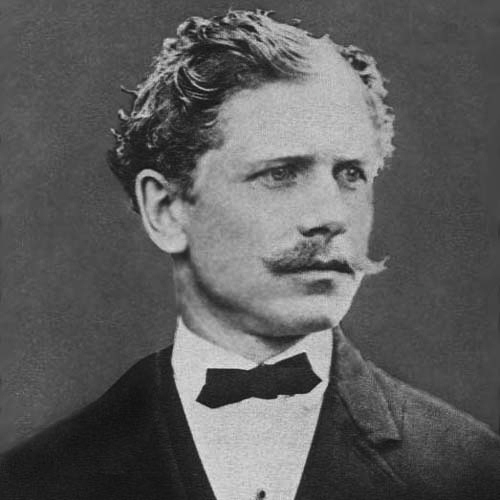
Ambrose Gwinnett Bierce (June 24, 1842 – c. 1914) was an American author, journalist, poet. A prolific and versatile writer, Bierce was regarded as one of the most influential journalists in the United States and as a pioneering writer of realist fiction. For his horror writing, Michael Dirda ranked him alongside Edgar Allan Poe and H. P. Lovecraft. S. T. Joshi speculates that he may well be the greatest satirist America has ever produced, and in this regard can take his place with such figures as Juvenal, Swift, and Voltaire. His war stories influenced Stephen Crane, Ernest Hemingway and others, and he was considered an influential and feared literary critic. In recent decades, Bierce has gained wider respect as a fabulist and poet.
His book The Devil's Dictionary was named one of "The 100 Greatest Masterpieces of American Literature" by the American Revolution Bicentennial Administration. His story "An Occurrence at Owl Creek Bridge" has been described as "one of the most famous and frequently anthologized stories in American literature", and his book Tales of Soldiers and Civilians (also published as In the Midst of Life) was named by the Grolier Club one of the 100 most influential American books printed before 1900.
In 1913, Bierce told reporters that he was travelling to Mexico to gain first-hand experience of the Mexican Revolution. He disappeared and was never seen again.
Bierce was born in a log cabin at Horse Cave Creek in Meigs County, Ohio, on June 24, 1842, to Marcus Aurelius Bierce (1799–1876) and Laura Sherwood Bierce. He was of English ancestry; his forebears came to North America between 1620 and 1640 as part of the Puritan migration. His mother was a descendant of William Bradford. He often wrote critically of "Puritan values" and people who "made a fuss" about genealogy. He was the 10th of 13 children, all of whom were given names beginning with the letter "A". In order of birth, the Bierce siblings were Abigail, Amelia, Ann, Addison, Aurelius, Augustus, Almeda, Andrew, Albert, Ambrose, Arthur, Adelia, and Aurelia.
His parents were a poor but literary couple who instilled in him a deep love for books and writing. Bierce grew up in Kosciusko County, Indiana, attending high school at the county seat, Warsaw. He left home at 15 to become a printer's devil at a small abolitionist newspaper, the Northern Indianan.
Bierce briefly attended the Kentucky Military Institute until it closed after a fire in 1860. At the start of the American Civil War, he enlisted in the Union Army's 9th Indiana Infantry. He participated in the operations in Western Virginia (1861), was present at the Battle of Philippi (the first organized land action of the war) and received newspaper attention for his daring rescue, under fire, of a gravely wounded comrade at the Battle of Rich Mountain. Bierce fought at the Battle of Shiloh (April 1862), a terrifying experience that became a source for several short stories and the memoir "What I Saw of Shiloh".
In April 1863 he was commissioned a first lieutenant, and served on the staff of General William Babcock Hazen as a topographical engineer, making maps of likely battlefields. As a staff officer, Bierce became known to leading generals such as George H. Thomas and Oliver O. Howard, both of whom supported his application for admission to West Point in May 1864. General Hazen believed Bierce would graduate from the military academy "with distinction" and William T. Sherman also endorsed the application for admission, even though stating he had no personal acquaintance with Bierce. In June 1864, Bierce sustained a traumatic brain injury at the Battle of Kennesaw Mountain and spent the rest of the summer on furlough, returning to active duty in September. His last action of the war was in the Franklin-Nashville campaign. In January 1865 he resigned his commission due to the continued effects of his head injury.
His military career resumed in mid-1866, when he joined General Hazen as part of an expedition to inspect military outposts across the Great Plains. The expedition traveled by horseback and wagon from Omaha, Nebraska, arriving toward year's end in San Francisco, California. In the city, Bierce was awarded the rank of brevet major before resigning from the Army.
Hub AI
Ambrose Bierce AI simulator
(@Ambrose Bierce_simulator)
Ambrose Bierce
Ambrose Gwinnett Bierce (June 24, 1842 – c. 1914) was an American author, journalist, poet. A prolific and versatile writer, Bierce was regarded as one of the most influential journalists in the United States and as a pioneering writer of realist fiction. For his horror writing, Michael Dirda ranked him alongside Edgar Allan Poe and H. P. Lovecraft. S. T. Joshi speculates that he may well be the greatest satirist America has ever produced, and in this regard can take his place with such figures as Juvenal, Swift, and Voltaire. His war stories influenced Stephen Crane, Ernest Hemingway and others, and he was considered an influential and feared literary critic. In recent decades, Bierce has gained wider respect as a fabulist and poet.
His book The Devil's Dictionary was named one of "The 100 Greatest Masterpieces of American Literature" by the American Revolution Bicentennial Administration. His story "An Occurrence at Owl Creek Bridge" has been described as "one of the most famous and frequently anthologized stories in American literature", and his book Tales of Soldiers and Civilians (also published as In the Midst of Life) was named by the Grolier Club one of the 100 most influential American books printed before 1900.
In 1913, Bierce told reporters that he was travelling to Mexico to gain first-hand experience of the Mexican Revolution. He disappeared and was never seen again.
Bierce was born in a log cabin at Horse Cave Creek in Meigs County, Ohio, on June 24, 1842, to Marcus Aurelius Bierce (1799–1876) and Laura Sherwood Bierce. He was of English ancestry; his forebears came to North America between 1620 and 1640 as part of the Puritan migration. His mother was a descendant of William Bradford. He often wrote critically of "Puritan values" and people who "made a fuss" about genealogy. He was the 10th of 13 children, all of whom were given names beginning with the letter "A". In order of birth, the Bierce siblings were Abigail, Amelia, Ann, Addison, Aurelius, Augustus, Almeda, Andrew, Albert, Ambrose, Arthur, Adelia, and Aurelia.
His parents were a poor but literary couple who instilled in him a deep love for books and writing. Bierce grew up in Kosciusko County, Indiana, attending high school at the county seat, Warsaw. He left home at 15 to become a printer's devil at a small abolitionist newspaper, the Northern Indianan.
Bierce briefly attended the Kentucky Military Institute until it closed after a fire in 1860. At the start of the American Civil War, he enlisted in the Union Army's 9th Indiana Infantry. He participated in the operations in Western Virginia (1861), was present at the Battle of Philippi (the first organized land action of the war) and received newspaper attention for his daring rescue, under fire, of a gravely wounded comrade at the Battle of Rich Mountain. Bierce fought at the Battle of Shiloh (April 1862), a terrifying experience that became a source for several short stories and the memoir "What I Saw of Shiloh".
In April 1863 he was commissioned a first lieutenant, and served on the staff of General William Babcock Hazen as a topographical engineer, making maps of likely battlefields. As a staff officer, Bierce became known to leading generals such as George H. Thomas and Oliver O. Howard, both of whom supported his application for admission to West Point in May 1864. General Hazen believed Bierce would graduate from the military academy "with distinction" and William T. Sherman also endorsed the application for admission, even though stating he had no personal acquaintance with Bierce. In June 1864, Bierce sustained a traumatic brain injury at the Battle of Kennesaw Mountain and spent the rest of the summer on furlough, returning to active duty in September. His last action of the war was in the Franklin-Nashville campaign. In January 1865 he resigned his commission due to the continued effects of his head injury.
His military career resumed in mid-1866, when he joined General Hazen as part of an expedition to inspect military outposts across the Great Plains. The expedition traveled by horseback and wagon from Omaha, Nebraska, arriving toward year's end in San Francisco, California. In the city, Bierce was awarded the rank of brevet major before resigning from the Army.
Recent media