



Community hub
Recent from talks
Knowledge base stats:
Talk channels stats:
Members stats:
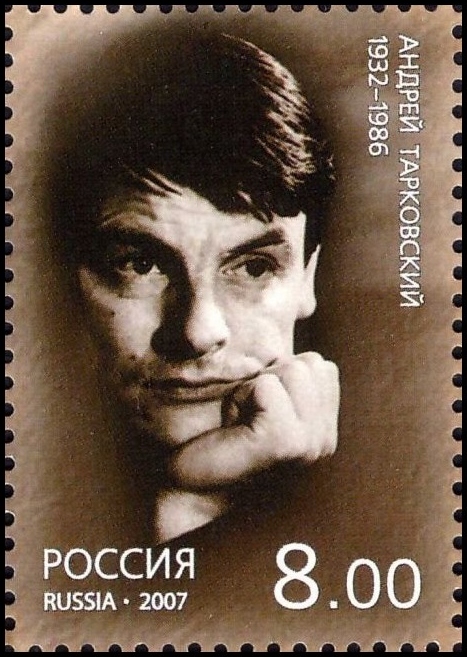
Andrei Tarkovsky
Andrei Arsenyevich Tarkovsky (Russian: Андрей Арсеньевич Тарковский, pronounced [ɐnˈdrʲej ɐrˈsʲenʲjɪvʲɪtɕ tɐrˈkofskʲɪj] ⓘ; 4 April 1932 – 29 December 1986) was a Soviet film director and screenwriter of Ukraine origin. He is widely considered one of the greatest directors in cinema history. His films explore spiritual and metaphysical themes and are known for their slow pacing and long takes, dreamlike visual imagery and preoccupation with nature and memory.
Tarkovsky studied film at the All-Union State Institute of Cinematography under filmmaker Mikhail Romm and subsequently directed his first five features in the Soviet Union: Ivan's Childhood (1962), Andrei Rublev (1966), Solaris (1972), Mirror (1975), and Stalker (1979). After years of creative conflict with state film authorities, he left the country in 1979 and made his final two films—Nostalghia (1983) and The Sacrifice (1986)—abroad. In 1986, he published Sculpting in Time, a book about cinema and art. He died later that year of cancer, a condition possibly caused by the toxic locations used in the filming of Stalker.[unreliable source?]
Tarkovsky was the recipient of numerous accolades throughout his career, including the FIPRESCI prize, the Prize of the Ecumenical Jury and the Grand Prix Spécial du Jury at the Cannes Film Festival in addition to the Golden Lion at the Venice Film Festival for his debut film, Ivan's Childhood as well as the BAFTA Film Award for The Sacrifice. In 1990, he was posthumously awarded the Soviet Union's prestigious Lenin Prize. Three of his films—Andrei Rublev, Mirror, and Stalker—featured in Sight & Sound's 2012 poll of the 100 greatest films of all time.
Andrei Tarkovsky was born in the village of Zavrazhye in the Yuryevetsky District of the Ivanovo Industrial Oblast (modern-day Kadyysky District of the Kostroma Oblast, Russia) to the poet and translator Arseny Aleksandrovich Tarkovsky, a native of Yelysavethrad of Ukrainian parentage, and Maria Ivanova Vishnyakova, a graduate of the Maxim Gorky Literature Institute who later worked as a proofreader; she was born in Moscow in the Dubasov family estate.
Andrei's paternal grandfather Aleksandr Karlovich Tarkovsky (in Polish: Aleksander Karol Tarkowski) was a Polish nobleman who worked as a bank clerk. His wife Maria Danilovna Rachkovskaya was a Romanian language teacher who arrived from Iași. Andrei's maternal grandmother Vera Nikolayevna Vishnyakova (née Dubasova) belonged to an old Dubasov family of Russian nobility that traces its history back to the 17th century; among her relatives was Admiral Fyodor Dubasov, a fact she had to conceal during the Soviet days. She was married to Ivan Ivanovich Vishnyakov, a native of the Kaluga Governorate who studied law at the Moscow State University and served as a judge in Kozelsk.
According to the family legend, Tarkovsky's ancestors on his father's side were princes from the Shamkhalate of Tarki, Dagestan, although his sister, Marina Tarkovskaya, who conducted detailed research on their genealogy, called it "a myth, even a prank of sorts," stressing that no document confirms this narrative.
Tarkovsky spent his childhood in Yuryevets. His father left the family in 1937, subsequently volunteering for the army in 1941. He returned home in 1943, having been awarded the Order of the Red Star after being shot in one of his legs (which he would eventually need to have amputated due to gangrene). Tarkovsky stayed with his mother, moving with her and his sister Marina to Moscow, where she worked as a proofreader at a printing press.
In 1939, Tarkovsky enrolled at the Moscow School No. 554. During the war, the three evacuated to Yuryevets, living with his maternal grandmother. In 1943, the family returned to Moscow. Tarkovsky continued his studies at his old school, where the poet Andrei Voznesensky was one of his classmates. He studied piano at a music school and attended classes at an art school. The family lived on Shchipok Street in the Zamoskvorechye District in Moscow. From November 1947 to spring 1948 he was in the hospital with tuberculosis. Many themes of his childhood—the evacuation, his mother and her two children, the withdrawn father, the time in the hospital—feature prominently in his film Mirror.
Hub AI
Andrei Tarkovsky AI simulator
(@Andrei Tarkovsky_simulator)
Andrei Tarkovsky
Andrei Arsenyevich Tarkovsky (Russian: Андрей Арсеньевич Тарковский, pronounced [ɐnˈdrʲej ɐrˈsʲenʲjɪvʲɪtɕ tɐrˈkofskʲɪj] ⓘ; 4 April 1932 – 29 December 1986) was a Soviet film director and screenwriter of Ukraine origin. He is widely considered one of the greatest directors in cinema history. His films explore spiritual and metaphysical themes and are known for their slow pacing and long takes, dreamlike visual imagery and preoccupation with nature and memory.
Tarkovsky studied film at the All-Union State Institute of Cinematography under filmmaker Mikhail Romm and subsequently directed his first five features in the Soviet Union: Ivan's Childhood (1962), Andrei Rublev (1966), Solaris (1972), Mirror (1975), and Stalker (1979). After years of creative conflict with state film authorities, he left the country in 1979 and made his final two films—Nostalghia (1983) and The Sacrifice (1986)—abroad. In 1986, he published Sculpting in Time, a book about cinema and art. He died later that year of cancer, a condition possibly caused by the toxic locations used in the filming of Stalker.[unreliable source?]
Tarkovsky was the recipient of numerous accolades throughout his career, including the FIPRESCI prize, the Prize of the Ecumenical Jury and the Grand Prix Spécial du Jury at the Cannes Film Festival in addition to the Golden Lion at the Venice Film Festival for his debut film, Ivan's Childhood as well as the BAFTA Film Award for The Sacrifice. In 1990, he was posthumously awarded the Soviet Union's prestigious Lenin Prize. Three of his films—Andrei Rublev, Mirror, and Stalker—featured in Sight & Sound's 2012 poll of the 100 greatest films of all time.
Andrei Tarkovsky was born in the village of Zavrazhye in the Yuryevetsky District of the Ivanovo Industrial Oblast (modern-day Kadyysky District of the Kostroma Oblast, Russia) to the poet and translator Arseny Aleksandrovich Tarkovsky, a native of Yelysavethrad of Ukrainian parentage, and Maria Ivanova Vishnyakova, a graduate of the Maxim Gorky Literature Institute who later worked as a proofreader; she was born in Moscow in the Dubasov family estate.
Andrei's paternal grandfather Aleksandr Karlovich Tarkovsky (in Polish: Aleksander Karol Tarkowski) was a Polish nobleman who worked as a bank clerk. His wife Maria Danilovna Rachkovskaya was a Romanian language teacher who arrived from Iași. Andrei's maternal grandmother Vera Nikolayevna Vishnyakova (née Dubasova) belonged to an old Dubasov family of Russian nobility that traces its history back to the 17th century; among her relatives was Admiral Fyodor Dubasov, a fact she had to conceal during the Soviet days. She was married to Ivan Ivanovich Vishnyakov, a native of the Kaluga Governorate who studied law at the Moscow State University and served as a judge in Kozelsk.
According to the family legend, Tarkovsky's ancestors on his father's side were princes from the Shamkhalate of Tarki, Dagestan, although his sister, Marina Tarkovskaya, who conducted detailed research on their genealogy, called it "a myth, even a prank of sorts," stressing that no document confirms this narrative.
Tarkovsky spent his childhood in Yuryevets. His father left the family in 1937, subsequently volunteering for the army in 1941. He returned home in 1943, having been awarded the Order of the Red Star after being shot in one of his legs (which he would eventually need to have amputated due to gangrene). Tarkovsky stayed with his mother, moving with her and his sister Marina to Moscow, where she worked as a proofreader at a printing press.
In 1939, Tarkovsky enrolled at the Moscow School No. 554. During the war, the three evacuated to Yuryevets, living with his maternal grandmother. In 1943, the family returned to Moscow. Tarkovsky continued his studies at his old school, where the poet Andrei Voznesensky was one of his classmates. He studied piano at a music school and attended classes at an art school. The family lived on Shchipok Street in the Zamoskvorechye District in Moscow. From November 1947 to spring 1948 he was in the hospital with tuberculosis. Many themes of his childhood—the evacuation, his mother and her two children, the withdrawn father, the time in the hospital—feature prominently in his film Mirror.