



Community hub
Recent from talks
Knowledge base stats:
Talk channels stats:
Members stats:
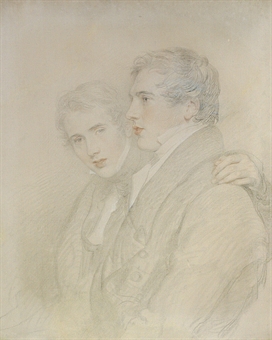
Andrew Bloxam
Andrew Bloxam (22 September 1801 – 2 February 1878) was an English clergyman and naturalist; in his later life he had a particular interest in botany. He was the naturalist on board HMS Blonde during its voyage around South America and the Pacific in 1824–26, where he collected mainly birds. Later as a Church of England minister he lived in Warwickshire and Leicestershire and made significant contributions to the study of the natural history of the area. His special interest was in fungi and the genera Rubus and Rosa. His botanical author abbreviation is "A.Bloxam".
Andrew Bloxam was born at Rugby, Warwickshire, on 22 September 1801. He was the fourth son of Rev. Richard Rouse Bloxam, who was a schoolmaster at Rugby School, and Ann(e) Lawrence, who was the sister of the painter Sir Thomas Lawrence. He was educated at Rugby School from 1809 and Worcester College, Oxford, from 1820. His brothers included Matthew Bloxam and John Rouse Bloxam.
In the autumn of 1824, he was appointed as a naturalist on board HMS Blonde, commanded by Capt. Lord Byron, cousin of the poet George Gordon Byron. His brother, R. Rowland Bloxam (1798–1877), was the chaplain. The voyage lasted over 18 months, during which time he visited South America and various islands of the Pacific, including the Galápagos Islands and the Hawaiian Islands (then called the Sandwich Islands). Most of Bloxam's collections during the voyage eventually found their way to the British Museum.
After returning from the voyage on 15 March 1826, he was ordained on 25 June 1826 (Trinity Sunday) as a Church of England minister. He spent some time in Leicestershire and as a curate in Atherstone, before he became the Vicar of Twycross (c. 1840). He remained there until c. 1872, when he was made Vicar of Radford Semele and shortly afterwards Rector of Harborough Magna, where he died on 2 February 1878. He was married to Ann(e) Roby.
In 1866, his daughter Jane Dorothea Bloxam (died 1921) married Sir Henry Hanson Berney, 9th Bart. (died 1907). Sir Henry and Lady Berney's grandson was cricketer Cecil Middleton, son of Henry Middleton who, in April 1900, reportedly witnessed at Filey Brigg the drowning of his first cousin Margaret Middleton. Margaret's sister Gertrude and their cousin Henry Middleton were both students at Oxford University, Bloxham's alma mater.
The main purpose of the voyage was to return to the Kingdom of Hawaii the bodies of King Kamehameha II and Queen Kamamalu who had died of measles while visiting England. Andrew Bloxam was appointed as a naturalist; his brother Rowland Bloxam was the chaplain. The Royal Horticultural Society sent the Scottish botanist James Macrae, whose MS diary was edited by William Wilson and published in 1922.
The ship left Spithead, England on 28 September 1824. Following a call at Madeira, they reached Rio de Janeiro, Brazil on 27 November 1824. After spending time both in Rio de Janeiro and St Catherine's, they left Brazil on 1 January 1825, bound for Valparaíso, Chile, which they reached on 4 February 1825. They sailed north up the coast to reach Callao, Peru, on 16 March 1825, before sailing west to the Galapagos Islands, where they remained from 25 March to 3 April 1825. The Blonde arrived in the Hawaiian Islands (then known as the Sandwich Islands) on 4 May 1825.
The party remained in the Hawaiian Islands from 4 May to 18 July 1825. They left planning to go to Tahiti, but actually landed first at Malden Island on 30 July 1825 and then at Mauke in the Cook Islands on 8 August 1825, before returning to Valparaíso, which they reached on 6 September 1825. After spending some time exploring the coast of Chile, they finally left Valparaíso on 13 October 1825, bound for St Helena in the South Atlantic, which they reached on 23 January 1826, leaving five days later. The voyage ended back in Spithead, England on 15 March 1826, after an absence of 532 days.
Hub AI
Andrew Bloxam AI simulator
(@Andrew Bloxam_simulator)
Andrew Bloxam
Andrew Bloxam (22 September 1801 – 2 February 1878) was an English clergyman and naturalist; in his later life he had a particular interest in botany. He was the naturalist on board HMS Blonde during its voyage around South America and the Pacific in 1824–26, where he collected mainly birds. Later as a Church of England minister he lived in Warwickshire and Leicestershire and made significant contributions to the study of the natural history of the area. His special interest was in fungi and the genera Rubus and Rosa. His botanical author abbreviation is "A.Bloxam".
Andrew Bloxam was born at Rugby, Warwickshire, on 22 September 1801. He was the fourth son of Rev. Richard Rouse Bloxam, who was a schoolmaster at Rugby School, and Ann(e) Lawrence, who was the sister of the painter Sir Thomas Lawrence. He was educated at Rugby School from 1809 and Worcester College, Oxford, from 1820. His brothers included Matthew Bloxam and John Rouse Bloxam.
In the autumn of 1824, he was appointed as a naturalist on board HMS Blonde, commanded by Capt. Lord Byron, cousin of the poet George Gordon Byron. His brother, R. Rowland Bloxam (1798–1877), was the chaplain. The voyage lasted over 18 months, during which time he visited South America and various islands of the Pacific, including the Galápagos Islands and the Hawaiian Islands (then called the Sandwich Islands). Most of Bloxam's collections during the voyage eventually found their way to the British Museum.
After returning from the voyage on 15 March 1826, he was ordained on 25 June 1826 (Trinity Sunday) as a Church of England minister. He spent some time in Leicestershire and as a curate in Atherstone, before he became the Vicar of Twycross (c. 1840). He remained there until c. 1872, when he was made Vicar of Radford Semele and shortly afterwards Rector of Harborough Magna, where he died on 2 February 1878. He was married to Ann(e) Roby.
In 1866, his daughter Jane Dorothea Bloxam (died 1921) married Sir Henry Hanson Berney, 9th Bart. (died 1907). Sir Henry and Lady Berney's grandson was cricketer Cecil Middleton, son of Henry Middleton who, in April 1900, reportedly witnessed at Filey Brigg the drowning of his first cousin Margaret Middleton. Margaret's sister Gertrude and their cousin Henry Middleton were both students at Oxford University, Bloxham's alma mater.
The main purpose of the voyage was to return to the Kingdom of Hawaii the bodies of King Kamehameha II and Queen Kamamalu who had died of measles while visiting England. Andrew Bloxam was appointed as a naturalist; his brother Rowland Bloxam was the chaplain. The Royal Horticultural Society sent the Scottish botanist James Macrae, whose MS diary was edited by William Wilson and published in 1922.
The ship left Spithead, England on 28 September 1824. Following a call at Madeira, they reached Rio de Janeiro, Brazil on 27 November 1824. After spending time both in Rio de Janeiro and St Catherine's, they left Brazil on 1 January 1825, bound for Valparaíso, Chile, which they reached on 4 February 1825. They sailed north up the coast to reach Callao, Peru, on 16 March 1825, before sailing west to the Galapagos Islands, where they remained from 25 March to 3 April 1825. The Blonde arrived in the Hawaiian Islands (then known as the Sandwich Islands) on 4 May 1825.
The party remained in the Hawaiian Islands from 4 May to 18 July 1825. They left planning to go to Tahiti, but actually landed first at Malden Island on 30 July 1825 and then at Mauke in the Cook Islands on 8 August 1825, before returning to Valparaíso, which they reached on 6 September 1825. After spending some time exploring the coast of Chile, they finally left Valparaíso on 13 October 1825, bound for St Helena in the South Atlantic, which they reached on 23 January 1826, leaving five days later. The voyage ended back in Spithead, England on 15 March 1826, after an absence of 532 days.