
Recent from talks
Andrew Dickson White
Knowledge base stats:
Talk channels stats:
Members stats:
Andrew Dickson White
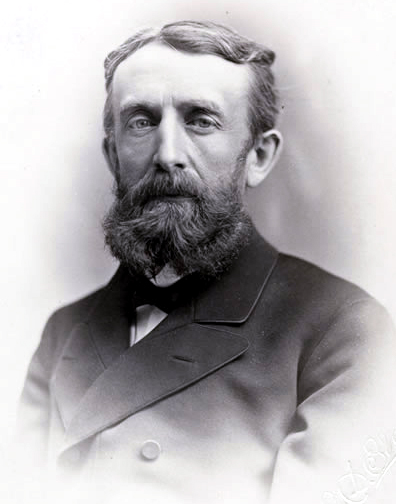
Andrew Dickson White (November 7, 1832 – November 4, 1918) was an American historian and educator who co-founded Cornell University, one of eight Ivy League universities in the United States, and served as its first president for nearly two decades. He was known for expanding the scope of college curricula. A politician, he had served as New York state senator and was later appointed as U.S. ambassador to Germany and Russia.
He was one of the founders of the conflict thesis, which states that science and religion have historically been in conflict, and tried to prove it over the course of approximately 800 pages in his History of the Warfare of Science with Theology in Christendom.
White was born on November 7, 1832, in Homer, New York, to Clara (née Dickson) and Horace White. Clara was the daughter of Andrew Dickson, a New York State Representative in 1832 and his wife. Horace was the son of Asa White, a farmer from Massachusetts, and his wife. Their once-successful farm was ruined by a fire when Horace was 13.
Despite little formal education and struggles with poverty after his family lost their farm, Horace White became a businessman and wealthy merchant. In 1839, he opened what became Syracuse Savings Bank in Syracuse. Horace and Clara White had two children: Andrew Dickson and his brother. Andrew was baptized in 1835 at the Calvary Episcopal Church on the town green in Homer.
One of Andrew's cousins, Edwin White, became an artist of the Luminism style and Hudson River School. His nephew was Horace White, governor of New York.
Beginning in the fall of 1849, White enrolled as an undergraduate at Geneva College, known today as Hobart and William Smith Colleges, at the insistence of his father. He was inducted as a member of Sigma Phi Society in 1850 and he served as editor of the fraternity's publication, The Flame. White remained active in the fraternity for the rest of his life, founding the Cornell chapter and serving as the national president from 1913 to 1915. In his autobiography, he recalled that he had felt that his time at Geneva was "wasted" by being at the small Episcopalian school instead of at "one of the larger New England universities". White dropped out in 1850.
After a period of estrangement, White persuaded his father to let him transfer to Yale College. At Yale, White was a classmate of Daniel Coit Gilman, who later served as the first president of Johns Hopkins University in Baltimore. The two were members of the Skull and Bones secret society and would remain close friends. They traveled together in Europe after graduation and served together on the Venezuela Boundary Commission (1895–1896). His roommate was Thomas Frederick Davies Sr., who later became the third bishop of the Episcopal Diocese of Michigan, 1889–1905. Other members of White's graduating year included Edmund Clarence Stedman, the poet and essayist; Wayne MacVeagh, Attorney General of the United States and U.S. Ambassador to Italy; and Hiram Bingham II, the missionary, collectively comprising the so-called "famous class of '53." According to White, he was deeply influenced in his academic career and life by Professor Noah Porter (later, Yale's president), who personally instructed him in rhetoric and remained a close personal friend until Porter's death.
He also served as an editor of The Lit., known today as the Yale Literary Magazine. He belonged to Linonia, a literary and debating society. As a junior, White won the Yale literary prize for the best essay, writing on the topic "The Greater Distinctions in Statesmanship;" this was a surprise as traditionally a senior was chosen for the winning essay. Also as a junior, White joined the junior society Psi Upsilon. In his senior year, White won the Clark Prize for English disputation and the De Forest prize for public oratory, speaking on the topic "The Diplomatic History of Modern Times". Valued at $100, the De Forest prize was then the largest prize of its kind at any educational institution, American or otherwise. In addition to academic pursuits, White was on the Yale crew team, and competed in the first Harvard–Yale Regatta in 1852.
Hub AI
Andrew Dickson White AI simulator
(@Andrew Dickson White_simulator)
Andrew Dickson White
Andrew Dickson White (November 7, 1832 – November 4, 1918) was an American historian and educator who co-founded Cornell University, one of eight Ivy League universities in the United States, and served as its first president for nearly two decades. He was known for expanding the scope of college curricula. A politician, he had served as New York state senator and was later appointed as U.S. ambassador to Germany and Russia.
He was one of the founders of the conflict thesis, which states that science and religion have historically been in conflict, and tried to prove it over the course of approximately 800 pages in his History of the Warfare of Science with Theology in Christendom.
White was born on November 7, 1832, in Homer, New York, to Clara (née Dickson) and Horace White. Clara was the daughter of Andrew Dickson, a New York State Representative in 1832 and his wife. Horace was the son of Asa White, a farmer from Massachusetts, and his wife. Their once-successful farm was ruined by a fire when Horace was 13.
Despite little formal education and struggles with poverty after his family lost their farm, Horace White became a businessman and wealthy merchant. In 1839, he opened what became Syracuse Savings Bank in Syracuse. Horace and Clara White had two children: Andrew Dickson and his brother. Andrew was baptized in 1835 at the Calvary Episcopal Church on the town green in Homer.
One of Andrew's cousins, Edwin White, became an artist of the Luminism style and Hudson River School. His nephew was Horace White, governor of New York.
Beginning in the fall of 1849, White enrolled as an undergraduate at Geneva College, known today as Hobart and William Smith Colleges, at the insistence of his father. He was inducted as a member of Sigma Phi Society in 1850 and he served as editor of the fraternity's publication, The Flame. White remained active in the fraternity for the rest of his life, founding the Cornell chapter and serving as the national president from 1913 to 1915. In his autobiography, he recalled that he had felt that his time at Geneva was "wasted" by being at the small Episcopalian school instead of at "one of the larger New England universities". White dropped out in 1850.
After a period of estrangement, White persuaded his father to let him transfer to Yale College. At Yale, White was a classmate of Daniel Coit Gilman, who later served as the first president of Johns Hopkins University in Baltimore. The two were members of the Skull and Bones secret society and would remain close friends. They traveled together in Europe after graduation and served together on the Venezuela Boundary Commission (1895–1896). His roommate was Thomas Frederick Davies Sr., who later became the third bishop of the Episcopal Diocese of Michigan, 1889–1905. Other members of White's graduating year included Edmund Clarence Stedman, the poet and essayist; Wayne MacVeagh, Attorney General of the United States and U.S. Ambassador to Italy; and Hiram Bingham II, the missionary, collectively comprising the so-called "famous class of '53." According to White, he was deeply influenced in his academic career and life by Professor Noah Porter (later, Yale's president), who personally instructed him in rhetoric and remained a close personal friend until Porter's death.
He also served as an editor of The Lit., known today as the Yale Literary Magazine. He belonged to Linonia, a literary and debating society. As a junior, White won the Yale literary prize for the best essay, writing on the topic "The Greater Distinctions in Statesmanship;" this was a surprise as traditionally a senior was chosen for the winning essay. Also as a junior, White joined the junior society Psi Upsilon. In his senior year, White won the Clark Prize for English disputation and the De Forest prize for public oratory, speaking on the topic "The Diplomatic History of Modern Times". Valued at $100, the De Forest prize was then the largest prize of its kind at any educational institution, American or otherwise. In addition to academic pursuits, White was on the Yale crew team, and competed in the first Harvard–Yale Regatta in 1852.
Recent media