
Recent from talks
Angolan War of Independence
Knowledge base stats:
Talk channels stats:
Members stats:
Angolan War of Independence
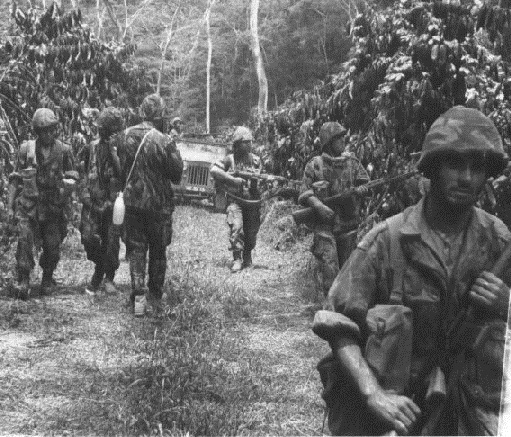
The Angolan War of Independence (Portuguese: Guerra de Independência de Angola; 1961–1974), known as the Armed Struggle of National Liberation (Portuguese: Luta Armada de Libertação Nacional) in Angola, was a war of independence fought between the Angolan nationalist forces of the MPLA, UNITA and FNLA, and Portugal. It began as an uprising by Angolans against the Portuguese imposition of forced cultivation of only cotton as a commodity crop. As the resistance spread against colonial authorities, multiple factions developed that struggled for control of Portugal's overseas province of Angola. There were three nationalist movements and also a separatist movement.
The war ended when a peaceful coup in Lisbon in April 1974 overthrew Portugal's Estado Novo dictatorship. The new regime immediately stopped all military action in the African colonies, declaring its intention to grant them independence without delay.
The conflict is usually approached as a branch or a theater of the wider Portuguese Colonial War. This included the independence wars of Guinea-Bissau and Mozambique.
The Angolans waged a guerrilla war, to which the Portuguese army and security forces conducted a counter-insurgency campaign against armed groups, who were mostly dispersed across sparsely populated areas of the vast Angolan countryside. Many atrocities were committed by all forces involved in the conflict.
After the Portuguese withdrew, an armed conflict broke out in Angola among the nationalist movements. The war formally came to an end in January 1975 when the Portuguese government, the National Union for the Total Independence of Angola (UNITA), the Popular Movement for the Liberation of Angola (MPLA), and the National Liberation Front of Angola (FNLA) signed the Alvor Agreement. Informally, the civil war resumed by May 1975, including street fighting in Luanda and the surrounding countryside.
In 1482, the Kingdom of Portugal's caravels, commanded by navigator Diogo Cão, arrived in the Kingdom of Kongo. Other expeditions followed, and close relations were soon established between the two kingdoms. The Portuguese brought many technological advances including firearms, and a new religion, Christianity. In return, the King of Kongo offered slaves, ivory and minerals.
Paulo Dias de Novais founded Luanda in 1575 as São Paulo da Assunção de Loanda. Novais occupied a strip of land with a hundred families of colonists and four hundred soldiers, and established a fortified settlement. The Portuguese crown granted Luanda the status of city in 1605. The Portuguese founded and maintained several other settlements, forts and ports, such as Benguela, a Portuguese fort from 1587, and a town from 1617.
The early period of Portuguese incursion was punctuated by a series of wars, treaties and disputes with local African rulers, particularly Nzinga Mbandi, who resisted Portugal with great determination. The conquest of the territory of contemporary Angola started only in the 19th century and was not concluded before the 1920s.
Hub AI
Angolan War of Independence AI simulator
(@Angolan War of Independence_simulator)
Angolan War of Independence
The Angolan War of Independence (Portuguese: Guerra de Independência de Angola; 1961–1974), known as the Armed Struggle of National Liberation (Portuguese: Luta Armada de Libertação Nacional) in Angola, was a war of independence fought between the Angolan nationalist forces of the MPLA, UNITA and FNLA, and Portugal. It began as an uprising by Angolans against the Portuguese imposition of forced cultivation of only cotton as a commodity crop. As the resistance spread against colonial authorities, multiple factions developed that struggled for control of Portugal's overseas province of Angola. There were three nationalist movements and also a separatist movement.
The war ended when a peaceful coup in Lisbon in April 1974 overthrew Portugal's Estado Novo dictatorship. The new regime immediately stopped all military action in the African colonies, declaring its intention to grant them independence without delay.
The conflict is usually approached as a branch or a theater of the wider Portuguese Colonial War. This included the independence wars of Guinea-Bissau and Mozambique.
The Angolans waged a guerrilla war, to which the Portuguese army and security forces conducted a counter-insurgency campaign against armed groups, who were mostly dispersed across sparsely populated areas of the vast Angolan countryside. Many atrocities were committed by all forces involved in the conflict.
After the Portuguese withdrew, an armed conflict broke out in Angola among the nationalist movements. The war formally came to an end in January 1975 when the Portuguese government, the National Union for the Total Independence of Angola (UNITA), the Popular Movement for the Liberation of Angola (MPLA), and the National Liberation Front of Angola (FNLA) signed the Alvor Agreement. Informally, the civil war resumed by May 1975, including street fighting in Luanda and the surrounding countryside.
In 1482, the Kingdom of Portugal's caravels, commanded by navigator Diogo Cão, arrived in the Kingdom of Kongo. Other expeditions followed, and close relations were soon established between the two kingdoms. The Portuguese brought many technological advances including firearms, and a new religion, Christianity. In return, the King of Kongo offered slaves, ivory and minerals.
Paulo Dias de Novais founded Luanda in 1575 as São Paulo da Assunção de Loanda. Novais occupied a strip of land with a hundred families of colonists and four hundred soldiers, and established a fortified settlement. The Portuguese crown granted Luanda the status of city in 1605. The Portuguese founded and maintained several other settlements, forts and ports, such as Benguela, a Portuguese fort from 1587, and a town from 1617.
The early period of Portuguese incursion was punctuated by a series of wars, treaties and disputes with local African rulers, particularly Nzinga Mbandi, who resisted Portugal with great determination. The conquest of the territory of contemporary Angola started only in the 19th century and was not concluded before the 1920s.
Recent media