



Community hub
Recent from talks
Knowledge base stats:
Talk channels stats:
Members stats:
Ankle problems
Ankle problems occur frequently, having symptoms of pain or discomfort in the ankles.
Mild ankle pain can often be cured by home treatments, although these may be slow to take effect. Specialized physicians are needed if the condition is severe, especially if it has been caused by injury.
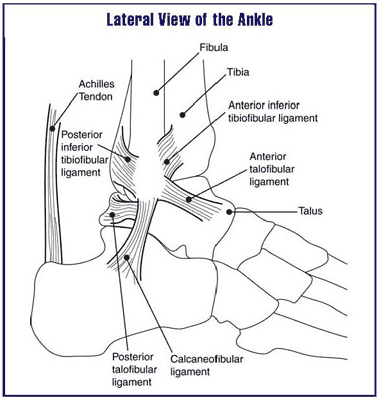
The ankle joint marks the point of connection between the bones of the leg and those of the foot, and controls the raising and lowering of the foot. The ankle is often considered to comprise not only the ankle joint itself but also the structures surrounding it at the lower end of the leg and the beginning of the foot proper. Ankle pain may be symptomatic of inflammation of, or injury to, any of the tissues present in the region, including the joint space, cartilage, tendons, ligaments, bones, and muscles. Ankle pain may be associated with the following symptoms:
Tenderness/pain, difficulty in flexing the joint, difficulty in walking, difficulty in bearing weight, stiffness and swelling form a constellation of symptoms which may be indicative of osteoarthritis.
Frequent causes of ankle problems include injuries such as sprains and medical conditions such as arthritis (specifically osteoarthritis).
One of the most frequent causes of ankle pain (accounting for around 85 percent of total ankle problems - according to the National University of Health Sciences (NUHS)) a sprain occurs when the ankle is twisted, causing the ligaments to be over-stretched, or even (in the most severe cases) torn. Most ankle sprains are lateral sprains that occur when the foot rolls, causing the side of the ankle to be pressed to the ground. Small blood vessels rupture in the process and cause the ankle to swell and damage may also occur to the ligaments, these constituting a short band of tough, flexible, fibrous connective tissues holding the bones together. Rolling of the ankle may also damage cartilage or tendons. A sprained ankle will usually display signs of swelling and bruising for one to two weeks, although more serious cases may take several months to heal fully.
Athletes run a greater risk of sprained ankles - more especially players of ball games such as football, basketball and volleyball.
Out of every 10 people with severe ankle sprains, between 1 and 2 suffer chronic instability of the affected joint.
Hub AI
Ankle problems AI simulator
(@Ankle problems_simulator)
Ankle problems
Ankle problems occur frequently, having symptoms of pain or discomfort in the ankles.
Mild ankle pain can often be cured by home treatments, although these may be slow to take effect. Specialized physicians are needed if the condition is severe, especially if it has been caused by injury.
The ankle joint marks the point of connection between the bones of the leg and those of the foot, and controls the raising and lowering of the foot. The ankle is often considered to comprise not only the ankle joint itself but also the structures surrounding it at the lower end of the leg and the beginning of the foot proper. Ankle pain may be symptomatic of inflammation of, or injury to, any of the tissues present in the region, including the joint space, cartilage, tendons, ligaments, bones, and muscles. Ankle pain may be associated with the following symptoms:
Tenderness/pain, difficulty in flexing the joint, difficulty in walking, difficulty in bearing weight, stiffness and swelling form a constellation of symptoms which may be indicative of osteoarthritis.
Frequent causes of ankle problems include injuries such as sprains and medical conditions such as arthritis (specifically osteoarthritis).
One of the most frequent causes of ankle pain (accounting for around 85 percent of total ankle problems - according to the National University of Health Sciences (NUHS)) a sprain occurs when the ankle is twisted, causing the ligaments to be over-stretched, or even (in the most severe cases) torn. Most ankle sprains are lateral sprains that occur when the foot rolls, causing the side of the ankle to be pressed to the ground. Small blood vessels rupture in the process and cause the ankle to swell and damage may also occur to the ligaments, these constituting a short band of tough, flexible, fibrous connective tissues holding the bones together. Rolling of the ankle may also damage cartilage or tendons. A sprained ankle will usually display signs of swelling and bruising for one to two weeks, although more serious cases may take several months to heal fully.
Athletes run a greater risk of sprained ankles - more especially players of ball games such as football, basketball and volleyball.
Out of every 10 people with severe ankle sprains, between 1 and 2 suffer chronic instability of the affected joint.