



Community hub
Recent from talks
Knowledge base stats:
Talk channels stats:
Members stats:
Antalo Limestone
The Antalo Limestone, also known as the Antalo Sequence, is a geological formation in Ethiopia. It is between 300 and 800 metres thick and comprises fossiliferous limestones and marls that were deposited in a reef. Marine microfossils have shown an age between 165 and 150 million years.
The Antalo Supersequence includes two main stratigraphic units: the Antalo Sequence and the Agula Group. The Antalo Sequence, or Antalo Limestone has been named after the town of Hintalo in Tigray, Ethiopia. The name of the formation was coined by geologist William Thomas Blanford, who accompanied the British Expedition to Abyssinia in 1868. At that time, Hintalo was a major town on the route of the invading British army. So far the nomenclature has not been proposed for recognition to the International Commission on Stratigraphy.
The sedimentary succession is found in Ethiopia, in the Mekelle Outlier, in the Blue Nile gorge, in the Harrar Plateau and around Dire Dawa.
The Antalo Limestone overlies the Adigrat Sandstone, and is covered by the Agula Group or Agula Shale and the Mugher Mudstone.
The Antalo Limestone comprises sediment that was deposited in a shallow tropical sea in the upper Jurassic. As the region had undergone a marine transgression, it was below the sea level. At that time, what would become Ethiopia was positioned just south of the equator.
The limestones and marls of the Antalo Sequence also hold shale and calcareous sandstone layers. The Antalo Limestone comprises four members: (1) a basal member with grainstone and wackestone lithologies, with marly interlayers and in the upper part stromatoporoid coral-like level; (2) sandy limestone deposited in estuaries and lagoons; (3) micritic (very fine grained) limestone with intercalations of wackestone and coquina beds deposited in relatively deep water; and (4) a succession of marls and limestone, with cherty limestone at the base.
The Antalo Limestone sediments were deposited at the time of dinosaurs and primitive birds. Well away from coasts, coral reefs formed the edge of the continental shelf. At shallow depth, the sea bottom was made of large mudflats, with sand bars and spits near river mouths. This sea bed hosted many invertebrate animals: echinoderms, crustaceans, bivalves and gastropods were common. There was also fish. As it was not a nutrient-rich ecosystem, larger predators were rare, maybe some marine reptiles like crocodiles. A striking scavenger in this fauna was a cephalopod mollusc, a giant nautilus with a characteristic spiral shell.
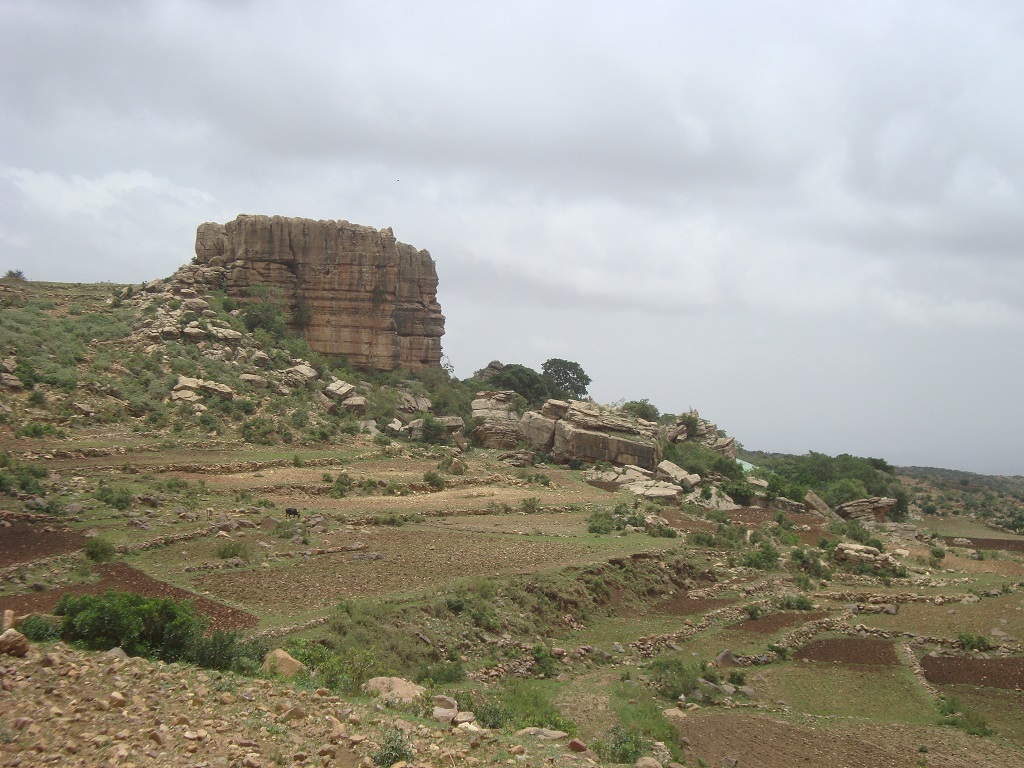
The layering is sub-horizontal, the same as that of the underlying sedimentary formations. This gives rise to a structural sub-horizontal relief, with alternating cliffs and flats. Dissolution processes in limestone lead to the occurrence of caves. Most described caves in Mesozoic limestone in Ethiopia are located in the Harrar region (Sof Omar cave) and in the Dogu'a Tembien district of Tigray.
Hub AI
Antalo Limestone AI simulator
(@Antalo Limestone_simulator)
Antalo Limestone
The Antalo Limestone, also known as the Antalo Sequence, is a geological formation in Ethiopia. It is between 300 and 800 metres thick and comprises fossiliferous limestones and marls that were deposited in a reef. Marine microfossils have shown an age between 165 and 150 million years.
The Antalo Supersequence includes two main stratigraphic units: the Antalo Sequence and the Agula Group. The Antalo Sequence, or Antalo Limestone has been named after the town of Hintalo in Tigray, Ethiopia. The name of the formation was coined by geologist William Thomas Blanford, who accompanied the British Expedition to Abyssinia in 1868. At that time, Hintalo was a major town on the route of the invading British army. So far the nomenclature has not been proposed for recognition to the International Commission on Stratigraphy.
The sedimentary succession is found in Ethiopia, in the Mekelle Outlier, in the Blue Nile gorge, in the Harrar Plateau and around Dire Dawa.
The Antalo Limestone overlies the Adigrat Sandstone, and is covered by the Agula Group or Agula Shale and the Mugher Mudstone.
The Antalo Limestone comprises sediment that was deposited in a shallow tropical sea in the upper Jurassic. As the region had undergone a marine transgression, it was below the sea level. At that time, what would become Ethiopia was positioned just south of the equator.
The limestones and marls of the Antalo Sequence also hold shale and calcareous sandstone layers. The Antalo Limestone comprises four members: (1) a basal member with grainstone and wackestone lithologies, with marly interlayers and in the upper part stromatoporoid coral-like level; (2) sandy limestone deposited in estuaries and lagoons; (3) micritic (very fine grained) limestone with intercalations of wackestone and coquina beds deposited in relatively deep water; and (4) a succession of marls and limestone, with cherty limestone at the base.
The Antalo Limestone sediments were deposited at the time of dinosaurs and primitive birds. Well away from coasts, coral reefs formed the edge of the continental shelf. At shallow depth, the sea bottom was made of large mudflats, with sand bars and spits near river mouths. This sea bed hosted many invertebrate animals: echinoderms, crustaceans, bivalves and gastropods were common. There was also fish. As it was not a nutrient-rich ecosystem, larger predators were rare, maybe some marine reptiles like crocodiles. A striking scavenger in this fauna was a cephalopod mollusc, a giant nautilus with a characteristic spiral shell.
The layering is sub-horizontal, the same as that of the underlying sedimentary formations. This gives rise to a structural sub-horizontal relief, with alternating cliffs and flats. Dissolution processes in limestone lead to the occurrence of caves. Most described caves in Mesozoic limestone in Ethiopia are located in the Harrar region (Sof Omar cave) and in the Dogu'a Tembien district of Tigray.