



Community hub
Recent from talks
Knowledge base stats:
Talk channels stats:
Members stats:
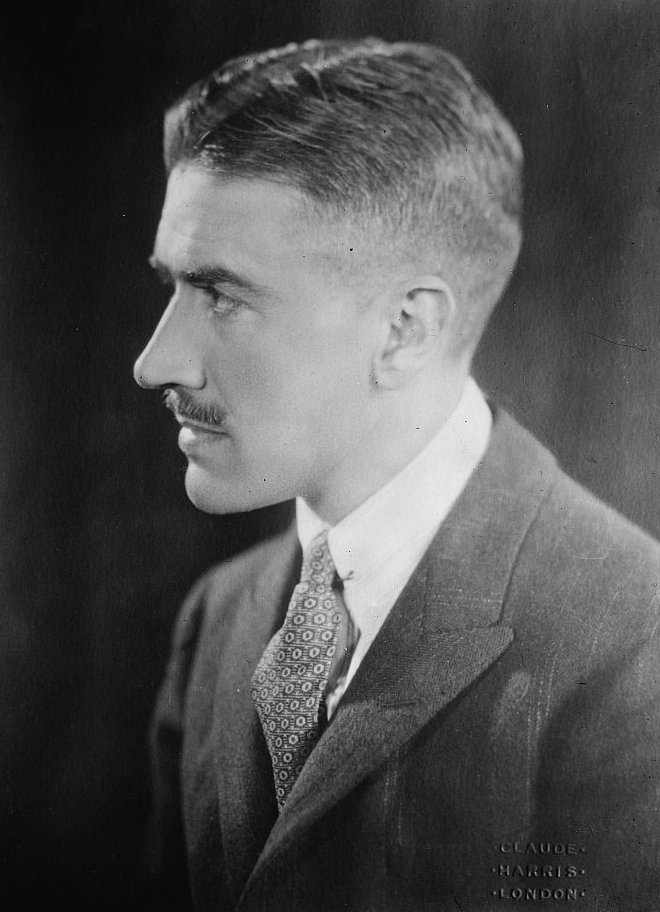
Anthony Ludovici
Anthony Mario Ludovici MBE (8 January 1882 – 3 April 1971) was a British philosopher, sociologist, social critic and polyglot. He is known as a proponent of aristocracy and anti-egalitarianism, and in the early 20th century was a leading British conservative author. He wrote on subjects including art, metaphysics, politics, economics, religion, the differences between the sexes and races, health, and eugenics.
Ludovici began his career as an artist, painting and illustrating books. He was private secretary to sculptor Auguste Rodin for several months in 1906. He later wrote over 30 books, and translated many others.
Ludovici was born in London, England on 8 January 1882 to Albert Ludovici, and Marie Cals. Ludovici's father and grandfather (Albert Ludovici, Sr.) were both artists. He was of Basque, French, German and Italian ancestry. He was educated privately, in England and abroad but chiefly by his mother. As a young student he became friends with Harry Guy Radcliffe Drew, whom he met at the Paris Exhibition of 1900. Years later he befriended Drew's young daughters Dorothy (later a student of F. M. Alexander) and Joyce (better known as architect Jane Drew). He married Elsie Finnimore Buckley on 20 March 1920, and they first lived at 35 Central Hill, Upper Norwood in South London. He spent several years in Germany where he studied Nietzsche's writings in the original German. He was fluent in several languages.
During the year 1906, Ludovici was private secretary to the sculptor Auguste Rodin, and as such had a close association with him. He later wrote of his personal experiences of Rodin's personality and art, as well as his own opinions, in articles first appearing in the Cornhill Magazine from 1923, and in 1926 published in a book Personal Reminiscences of Auguste Rodin. In the summer of 1908 he first met and befriended Dr. Oscar Levy, editor of The Complete Works of Friedrich Nietzsche, the first translation of Nietzsche's works in English. Ludovici contributed several volumes. Levy introduced him to his future wife Elsie F. Buckley. He began lecturing on art, politics, religion, and the philosophy of Friedrich Nietzsche, about whom he wrote Who is to be Master of the World?: An Introduction to the Philosophy of Friedrich Nietzsche (1909) and Nietzsche: His Life and Works (1910). Nietzsche scholar William Mackintire Salter called Nietzsche: His Life and Works "the well-nigh perfect short manual" on Nietzsche. His pioneering work on Nietzsche's aesthetic, Nietzsche and Art (1911), was one of the first attempts of its kind in Europe. It was based on a course of lectures Ludovici had delivered at University College, London, in late 1910. According to Steven Aschheim, Nietzsche and Art was "a unique attempt to write a Nietzschean history of art in terms of rising aristocratic and decadent-democratic epochs". This was the year of the first Parliament Act 1911, cutting back the power of the House of Lords. It also marks a watershed or change in Ludovici's writing, to a more overt political line, which would only sharpen over the next 25 years.
During World War I he joined the New Army as a translator, and then served as an artillery officer at Armentières and the Somme, where he described himself as "a miserable and vermin-ridden trench-rat", and then in the Intelligence Staff at the War Office, where after two years of service he rose to head of his department (MI6 A):
“I was told to report to the OC MI6 at the War Office, where my languages could be put to some use and where I contrived to make myself sufficiently useful to be retained. And after two years’ work in intelligence, in 1919, as General Staff Officer, third grade, with the rank of Captain, I rose to be the head of my department (MI6 A).”
He was awarded the Order of the British Empire, which he immediately returned because he felt that it was too easily attainable and held by too many people. He attained the rank of Captain during World War I., He was subsequently called 'Captain' as a nickname.[citation needed]
Ludovici came across the Alexander Technique in 1925 and said he had lessons in 'deportment' over a period of four years with F.M. Alexander.
Hub AI
Anthony Ludovici AI simulator
(@Anthony Ludovici_simulator)
Anthony Ludovici
Anthony Mario Ludovici MBE (8 January 1882 – 3 April 1971) was a British philosopher, sociologist, social critic and polyglot. He is known as a proponent of aristocracy and anti-egalitarianism, and in the early 20th century was a leading British conservative author. He wrote on subjects including art, metaphysics, politics, economics, religion, the differences between the sexes and races, health, and eugenics.
Ludovici began his career as an artist, painting and illustrating books. He was private secretary to sculptor Auguste Rodin for several months in 1906. He later wrote over 30 books, and translated many others.
Ludovici was born in London, England on 8 January 1882 to Albert Ludovici, and Marie Cals. Ludovici's father and grandfather (Albert Ludovici, Sr.) were both artists. He was of Basque, French, German and Italian ancestry. He was educated privately, in England and abroad but chiefly by his mother. As a young student he became friends with Harry Guy Radcliffe Drew, whom he met at the Paris Exhibition of 1900. Years later he befriended Drew's young daughters Dorothy (later a student of F. M. Alexander) and Joyce (better known as architect Jane Drew). He married Elsie Finnimore Buckley on 20 March 1920, and they first lived at 35 Central Hill, Upper Norwood in South London. He spent several years in Germany where he studied Nietzsche's writings in the original German. He was fluent in several languages.
During the year 1906, Ludovici was private secretary to the sculptor Auguste Rodin, and as such had a close association with him. He later wrote of his personal experiences of Rodin's personality and art, as well as his own opinions, in articles first appearing in the Cornhill Magazine from 1923, and in 1926 published in a book Personal Reminiscences of Auguste Rodin. In the summer of 1908 he first met and befriended Dr. Oscar Levy, editor of The Complete Works of Friedrich Nietzsche, the first translation of Nietzsche's works in English. Ludovici contributed several volumes. Levy introduced him to his future wife Elsie F. Buckley. He began lecturing on art, politics, religion, and the philosophy of Friedrich Nietzsche, about whom he wrote Who is to be Master of the World?: An Introduction to the Philosophy of Friedrich Nietzsche (1909) and Nietzsche: His Life and Works (1910). Nietzsche scholar William Mackintire Salter called Nietzsche: His Life and Works "the well-nigh perfect short manual" on Nietzsche. His pioneering work on Nietzsche's aesthetic, Nietzsche and Art (1911), was one of the first attempts of its kind in Europe. It was based on a course of lectures Ludovici had delivered at University College, London, in late 1910. According to Steven Aschheim, Nietzsche and Art was "a unique attempt to write a Nietzschean history of art in terms of rising aristocratic and decadent-democratic epochs". This was the year of the first Parliament Act 1911, cutting back the power of the House of Lords. It also marks a watershed or change in Ludovici's writing, to a more overt political line, which would only sharpen over the next 25 years.
During World War I he joined the New Army as a translator, and then served as an artillery officer at Armentières and the Somme, where he described himself as "a miserable and vermin-ridden trench-rat", and then in the Intelligence Staff at the War Office, where after two years of service he rose to head of his department (MI6 A):
“I was told to report to the OC MI6 at the War Office, where my languages could be put to some use and where I contrived to make myself sufficiently useful to be retained. And after two years’ work in intelligence, in 1919, as General Staff Officer, third grade, with the rank of Captain, I rose to be the head of my department (MI6 A).”
He was awarded the Order of the British Empire, which he immediately returned because he felt that it was too easily attainable and held by too many people. He attained the rank of Captain during World War I., He was subsequently called 'Captain' as a nickname.[citation needed]
Ludovici came across the Alexander Technique in 1925 and said he had lessons in 'deportment' over a period of four years with F.M. Alexander.