
Recent from talks
Antibiotic sensitivity testing
Knowledge base stats:
Talk channels stats:
Members stats:
Antibiotic sensitivity testing
Antibiotic sensitivity testing or antibiotic susceptibility testing is the measurement of the susceptibility of bacteria to antibiotics. It is used because bacteria may have resistance to some antibiotics. Sensitivity testing results can allow a clinician to change the choice of antibiotics from empiric therapy, which is when an antibiotic is selected based on clinical suspicion about the site of an infection and common causative bacteria, to directed therapy, in which the choice of antibiotic is based on knowledge of the organism and its sensitivities.
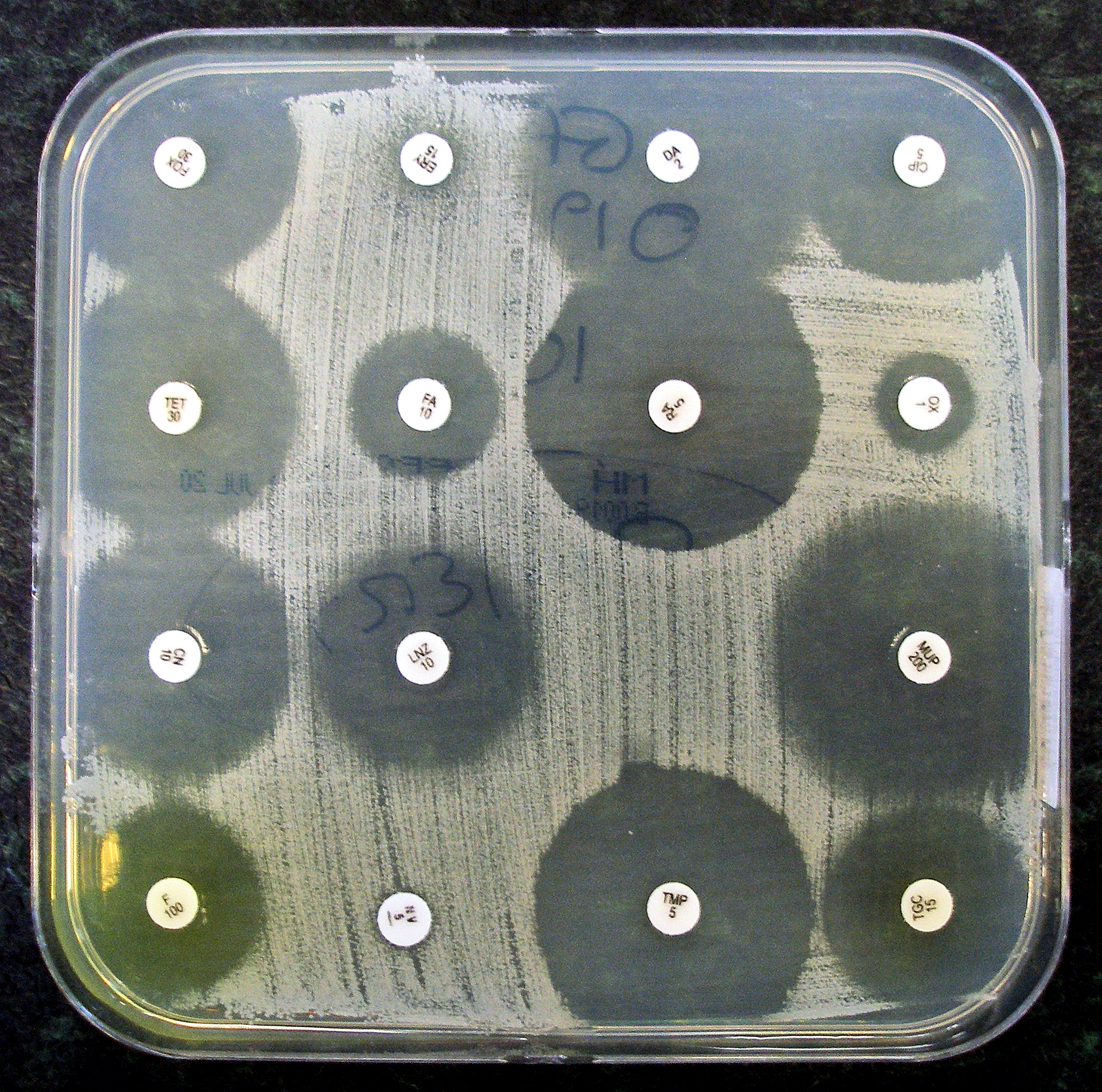
Sensitivity testing usually occurs in a medical laboratory, and uses culture methods that expose bacteria to antibiotics, or genetic methods that test to see if bacteria have genes that confer resistance. Culture methods often involve measuring the diameter of areas without bacterial growth, called zones of inhibition, around paper discs containing antibiotics on agar culture dishes that have been evenly inoculated with bacteria. The minimum inhibitory concentration, which is the lowest concentration of the antibiotic that stops the growth of bacteria, can be estimated from the size of the zone of inhibition.
Antibiotic susceptibility testing has been needed since the discovery of the beta-lactam antibiotic penicillin. Initial methods were phenotypic, and involved culture or dilution. The Etest, an antibiotic impregnated strip, has been available since the 1980s, and genetic methods such as polymerase chain reaction (PCR) testing have been available since the early 2000s. Research is ongoing into improving current methods by making them faster or more accurate, as well as developing new methods for testing, such as microfluidics.
In clinical medicine, antibiotics are most frequently prescribed on the basis of a person's symptoms and medical guidelines. This method of antibiotic selection is called empiric therapy, and it is based on knowledge about what bacteria cause an infection, and to what antibiotics bacteria may be sensitive or resistant. For example, a simple urinary tract infection might be treated with trimethoprim/sulfamethoxazole. This is because Escherichia coli is the most likely causative bacterium, and may be sensitive to that combination antibiotic. However, bacteria can be resistant to several classes of antibiotics. This resistance might be because a type of bacteria has intrinsic resistance to some antibiotics, because of resistance following past exposure to antibiotics, or because resistance may be transmitted from other sources such as plasmids. Antibiotic sensitivity testing provides information about which antibiotics are more likely to be successful and should therefore be used to treat the infection.
Antibiotic sensitivity testing is also conducted at a population level in some countries as a form of screening. This is to assess the background rates of resistance to antibiotics (for example with methicillin-resistant Staphylococcus aureus), and may influence guidelines and public health measures.
Once a bacterium has been identified following microbiological culture, antibiotics are selected for susceptibility testing. Susceptibility testing methods are based on exposing bacteria to antibiotics and observing the effect on the growth of the bacteria (phenotypic testing), or identifying specific genetic markers (genetic testing). Methods used may be qualitative, meaning that a result indicates resistance is or is not present; or quantitative, using a minimum inhibitory concentration (MIC) to describe the concentration of antibiotic to which a bacterium is sensitive.
There are many factors that can affect the results of antibiotic sensitivity testing, including failure of the instrument, temperature, moisture, and potency of the antimicrobial agent. Quality control (QC) testing helps to ensure the accuracy of test results. Organizations such as the American Type Culture Collection and National Collection of Type Cultures provide strains of bacteria with known resistance phenotypes that can be used for quality control.
Testing based on exposing bacteria to antibiotics uses agar plates or dilution in agar or broth. The selection of antibiotics will depend on the organism grown, and the antibiotics that are available locally. To ensure that the results are accurate, the concentration of bacteria that is added to the agar or broth (the inoculum) must be standardized. This is accomplished by comparing the turbidity of bacteria suspended in saline or broth to McFarland standards—solutions whose turbidity is equivalent to that of a suspension containing a given concentration of bacteria. Once an appropriate concentration (most commonly an 0.5 McFarland standard) has been reached, which can be determined by visual inspection or by photometry, the inoculum is added to the growth medium.
Hub AI
Antibiotic sensitivity testing AI simulator
(@Antibiotic sensitivity testing_simulator)
Antibiotic sensitivity testing
Antibiotic sensitivity testing or antibiotic susceptibility testing is the measurement of the susceptibility of bacteria to antibiotics. It is used because bacteria may have resistance to some antibiotics. Sensitivity testing results can allow a clinician to change the choice of antibiotics from empiric therapy, which is when an antibiotic is selected based on clinical suspicion about the site of an infection and common causative bacteria, to directed therapy, in which the choice of antibiotic is based on knowledge of the organism and its sensitivities.
Sensitivity testing usually occurs in a medical laboratory, and uses culture methods that expose bacteria to antibiotics, or genetic methods that test to see if bacteria have genes that confer resistance. Culture methods often involve measuring the diameter of areas without bacterial growth, called zones of inhibition, around paper discs containing antibiotics on agar culture dishes that have been evenly inoculated with bacteria. The minimum inhibitory concentration, which is the lowest concentration of the antibiotic that stops the growth of bacteria, can be estimated from the size of the zone of inhibition.
Antibiotic susceptibility testing has been needed since the discovery of the beta-lactam antibiotic penicillin. Initial methods were phenotypic, and involved culture or dilution. The Etest, an antibiotic impregnated strip, has been available since the 1980s, and genetic methods such as polymerase chain reaction (PCR) testing have been available since the early 2000s. Research is ongoing into improving current methods by making them faster or more accurate, as well as developing new methods for testing, such as microfluidics.
In clinical medicine, antibiotics are most frequently prescribed on the basis of a person's symptoms and medical guidelines. This method of antibiotic selection is called empiric therapy, and it is based on knowledge about what bacteria cause an infection, and to what antibiotics bacteria may be sensitive or resistant. For example, a simple urinary tract infection might be treated with trimethoprim/sulfamethoxazole. This is because Escherichia coli is the most likely causative bacterium, and may be sensitive to that combination antibiotic. However, bacteria can be resistant to several classes of antibiotics. This resistance might be because a type of bacteria has intrinsic resistance to some antibiotics, because of resistance following past exposure to antibiotics, or because resistance may be transmitted from other sources such as plasmids. Antibiotic sensitivity testing provides information about which antibiotics are more likely to be successful and should therefore be used to treat the infection.
Antibiotic sensitivity testing is also conducted at a population level in some countries as a form of screening. This is to assess the background rates of resistance to antibiotics (for example with methicillin-resistant Staphylococcus aureus), and may influence guidelines and public health measures.
Once a bacterium has been identified following microbiological culture, antibiotics are selected for susceptibility testing. Susceptibility testing methods are based on exposing bacteria to antibiotics and observing the effect on the growth of the bacteria (phenotypic testing), or identifying specific genetic markers (genetic testing). Methods used may be qualitative, meaning that a result indicates resistance is or is not present; or quantitative, using a minimum inhibitory concentration (MIC) to describe the concentration of antibiotic to which a bacterium is sensitive.
There are many factors that can affect the results of antibiotic sensitivity testing, including failure of the instrument, temperature, moisture, and potency of the antimicrobial agent. Quality control (QC) testing helps to ensure the accuracy of test results. Organizations such as the American Type Culture Collection and National Collection of Type Cultures provide strains of bacteria with known resistance phenotypes that can be used for quality control.
Testing based on exposing bacteria to antibiotics uses agar plates or dilution in agar or broth. The selection of antibiotics will depend on the organism grown, and the antibiotics that are available locally. To ensure that the results are accurate, the concentration of bacteria that is added to the agar or broth (the inoculum) must be standardized. This is accomplished by comparing the turbidity of bacteria suspended in saline or broth to McFarland standards—solutions whose turbidity is equivalent to that of a suspension containing a given concentration of bacteria. Once an appropriate concentration (most commonly an 0.5 McFarland standard) has been reached, which can be determined by visual inspection or by photometry, the inoculum is added to the growth medium.
Recent media