
Recent from talks
Apollon Maykov
Knowledge base stats:
Talk channels stats:
Members stats:
Apollon Maykov
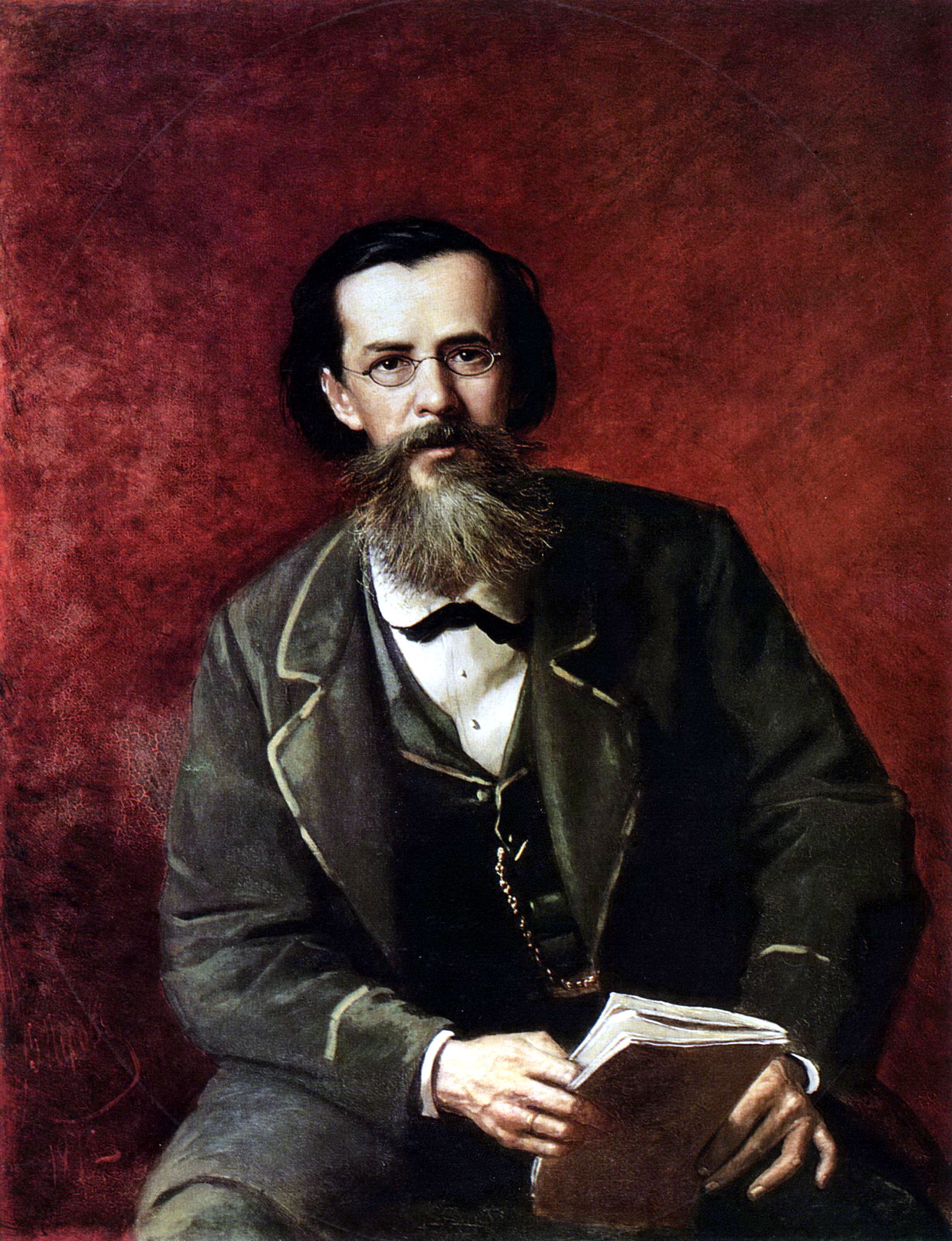
Apollon Nikolayevich Maykov (Russian: Аполло́н Никола́евич Ма́йков, 4 June [O.S. 23 May] 1821, Moscow – 20 March [O.S. 8 March] 1897, Saint Petersburg) was a Russian poet, best known for his lyric verse showcasing images of Russian villages, nature, and history. His love for ancient Greece and Rome, which he studied for much of his life, is also reflected in his works. Maykov spent four years translating the epic The Tale of Igor's Campaign (1870) into modern Russian. He translated the folklore of Belarus, Greece, Serbia and Spain, as well as works by Heine, Adam Mickiewicz and Goethe, among others. Several of Maykov's poems were set to music by Russian composers, among them Rimsky-Korsakov and Tchaikovsky.
Maykov was born into an artistic family and educated at home, by the writer Ivan Goncharov, among others. At the age of 15, he began writing his first poetry. After finishing his gymnasium course in just three years, he enrolled in Saint Petersburg University in 1837.
He began publishing his poems in 1840, and came out with his first collection in 1842. The collection was reviewed favorably by the influential critic Vissarion Belinsky. After this, he traveled throughout Europe, returning to Saint Petersburg in 1844, where he continued to publish poetry and branched out into literary criticism and essay writing.
He continued writing throughout his life, wavering several times between the conservative and liberal camps, but maintaining a steady output of quality poetical works. In his liberal days he was close to Belinsky, Nikolay Nekrasov, and Ivan Turgenev, while in his conservative periods he was close to Fyodor Dostoyevsky. He ended his life as a conservative. Maykov died in Saint Petersburg On 8 March 1897.
Apollon Maykov was born into an artistic family. His father, Nikolay Maykov, was a painter, and in his later years an academic of the Imperial Academy of Arts. His mother, Yevgeniya Petrovna Maykova (née Gusyatnikova, 1803–1880), loved literature and later in life had some of her own poetry published. The boy's childhood was spent at the family estate just outside Moscow, in a house often visited by writers and artists. Maykov's early memories and impressions formed the foundation for his much lauded landscape lyricism, marked by what biographer Igor Yampolsky calls "a touchingly naive love for the old patriarchal ways."
In 1834 the family moved to Saint Petersburg. Apollon and his brother Valerian were educated at home, under the guidance of their father's friend Vladimir Solonitsyn, a writer, philologist and translator, known also for Nikolay Maykov's 1839 portrait of him. Ivan Goncharov, then an unknown young author, taught Russian literature to the Maykov brothers. As he later remembered, the house "was full of life, and had many visitors, providing a never ceasing flow of information from all kinds of intellectual spheres, including science and the arts." At the age of 15 Apollon started to write poetry. With a group of friends (Vladimir Benediktov, Ivan Goncharov and Pavel Svinyin among others) the Maykov brothers edited two hand-written magazines, Podsnezhnik (Snow-drop) and Moonlit Nights, where Apollon's early poetry appeared for the first time.
Maykov finished his whole gymnasium course in just three years, and in 1837 enrolled in Saint Petersburg University's law faculty. As a student he learned Latin which enabled him to read Ancient Roman authors in the original texts. He later learned Ancient Greek, but until then had to content himself with French translations of the Greek classics. It was at the university that Maykov developed his passionate love of Ancient Greece and Rome.
Apollon Maykov's first poems (signed "M.") were published in 1840 by the Odessa Almanac and in 1841 by Biblioteka Dlya Chteniya and Otechestvennye Zapiski. He also studied painting, but soon chose to devote himself entirely to poetry. Instrumental in this decision was Pyotr Pletnyov, a University professor who, acting as a mentor for the young man, showed the first poems of his protégé to such literary giants as Vasily Zhukovsky and Nikolai Gogol. Maykov never became a painter, but the lessons he received greatly influenced his artistic worldview and writing style.
Hub AI
Apollon Maykov AI simulator
(@Apollon Maykov_simulator)
Apollon Maykov
Apollon Nikolayevich Maykov (Russian: Аполло́н Никола́евич Ма́йков, 4 June [O.S. 23 May] 1821, Moscow – 20 March [O.S. 8 March] 1897, Saint Petersburg) was a Russian poet, best known for his lyric verse showcasing images of Russian villages, nature, and history. His love for ancient Greece and Rome, which he studied for much of his life, is also reflected in his works. Maykov spent four years translating the epic The Tale of Igor's Campaign (1870) into modern Russian. He translated the folklore of Belarus, Greece, Serbia and Spain, as well as works by Heine, Adam Mickiewicz and Goethe, among others. Several of Maykov's poems were set to music by Russian composers, among them Rimsky-Korsakov and Tchaikovsky.
Maykov was born into an artistic family and educated at home, by the writer Ivan Goncharov, among others. At the age of 15, he began writing his first poetry. After finishing his gymnasium course in just three years, he enrolled in Saint Petersburg University in 1837.
He began publishing his poems in 1840, and came out with his first collection in 1842. The collection was reviewed favorably by the influential critic Vissarion Belinsky. After this, he traveled throughout Europe, returning to Saint Petersburg in 1844, where he continued to publish poetry and branched out into literary criticism and essay writing.
He continued writing throughout his life, wavering several times between the conservative and liberal camps, but maintaining a steady output of quality poetical works. In his liberal days he was close to Belinsky, Nikolay Nekrasov, and Ivan Turgenev, while in his conservative periods he was close to Fyodor Dostoyevsky. He ended his life as a conservative. Maykov died in Saint Petersburg On 8 March 1897.
Apollon Maykov was born into an artistic family. His father, Nikolay Maykov, was a painter, and in his later years an academic of the Imperial Academy of Arts. His mother, Yevgeniya Petrovna Maykova (née Gusyatnikova, 1803–1880), loved literature and later in life had some of her own poetry published. The boy's childhood was spent at the family estate just outside Moscow, in a house often visited by writers and artists. Maykov's early memories and impressions formed the foundation for his much lauded landscape lyricism, marked by what biographer Igor Yampolsky calls "a touchingly naive love for the old patriarchal ways."
In 1834 the family moved to Saint Petersburg. Apollon and his brother Valerian were educated at home, under the guidance of their father's friend Vladimir Solonitsyn, a writer, philologist and translator, known also for Nikolay Maykov's 1839 portrait of him. Ivan Goncharov, then an unknown young author, taught Russian literature to the Maykov brothers. As he later remembered, the house "was full of life, and had many visitors, providing a never ceasing flow of information from all kinds of intellectual spheres, including science and the arts." At the age of 15 Apollon started to write poetry. With a group of friends (Vladimir Benediktov, Ivan Goncharov and Pavel Svinyin among others) the Maykov brothers edited two hand-written magazines, Podsnezhnik (Snow-drop) and Moonlit Nights, where Apollon's early poetry appeared for the first time.
Maykov finished his whole gymnasium course in just three years, and in 1837 enrolled in Saint Petersburg University's law faculty. As a student he learned Latin which enabled him to read Ancient Roman authors in the original texts. He later learned Ancient Greek, but until then had to content himself with French translations of the Greek classics. It was at the university that Maykov developed his passionate love of Ancient Greece and Rome.
Apollon Maykov's first poems (signed "M.") were published in 1840 by the Odessa Almanac and in 1841 by Biblioteka Dlya Chteniya and Otechestvennye Zapiski. He also studied painting, but soon chose to devote himself entirely to poetry. Instrumental in this decision was Pyotr Pletnyov, a University professor who, acting as a mentor for the young man, showed the first poems of his protégé to such literary giants as Vasily Zhukovsky and Nikolai Gogol. Maykov never became a painter, but the lessons he received greatly influenced his artistic worldview and writing style.
Recent media