
Recent from talks
Adam Mickiewicz
Knowledge base stats:
Talk channels stats:
Members stats:
Adam Mickiewicz
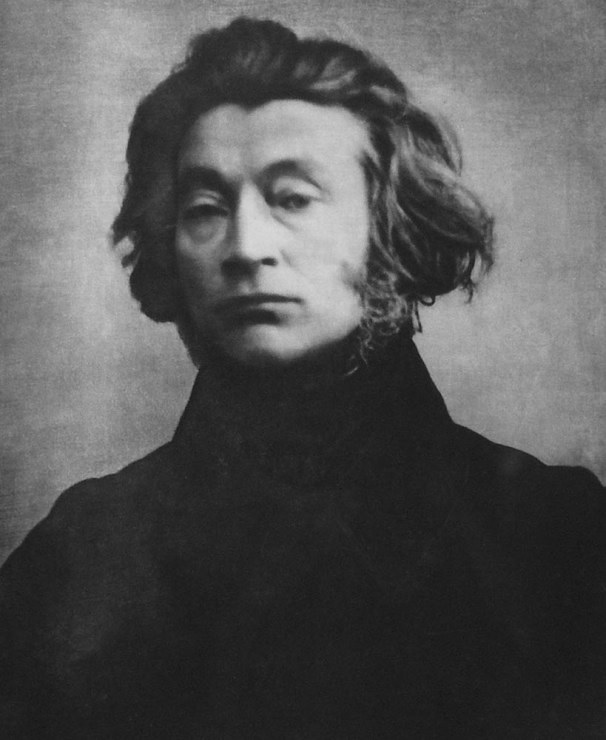
Adam Bernard Mickiewicz (24 December 1798 – 26 November 1855) was a Polish poet, dramatist, essayist, publicist, translator and political activist. He is regarded as national poet in Poland, Lithuania and Belarus. He also largely influenced Ukrainian literature and affected Russian literature. A principal figure in Polish Romanticism, he is one of Poland's "Three Bards" (Polish: trzej wieszcze) and is widely regarded as Poland's greatest poet. He is also considered one of the greatest Slavic and European poets and has been dubbed a "Slavic bard". A leading Romantic dramatist, he has been compared in Poland and Europe to Byron and Goethe.
He is known chiefly for the poetic drama Dziady (Forefathers' Eve) and the national epic poem Pan Tadeusz. His other influential works include Konrad Wallenrod and Grażyna. All these served as inspiration for uprisings against the three imperial powers that had partitioned the Polish–Lithuanian Commonwealth out of existence.
Mickiewicz was born in the Russian-partitioned territories of the former Grand Duchy of Lithuania, which had been part of the Polish–Lithuanian Commonwealth, and was active in the struggle to win independence for his home region. After, as a consequence, spending five years exiled to central Russia, in 1829 he succeeded in leaving the Russian Empire and, like many of his compatriots, lived out the rest of his life abroad. He settled first in Rome, then in Paris, where for a little over three years he lectured on Slavic literature at the Collège de France. He was an activist, striving for a democratic and independent Poland. He died, probably of cholera, at Istanbul in the Ottoman Empire, where he had gone to help organize Polish forces to fight Russia in the Crimean War.
In 1890, his remains were repatriated from Montmorency, Val-d'Oise, in France, to Wawel Cathedral in Kraków, Poland.
Adam Mickiewicz was born on 24 December 1798, either at his paternal uncle's estate in Zaosie (now Zavosse) near Navahrudak (in Polish, Nowogródek) or in Navahrudak itself in what was then part of the Russian Empire and is now Belarus. The region was on the periphery of Lithuania proper and had been part of the Grand Duchy of Lithuania until the Third Partition of the Polish–Lithuanian Commonwealth (1795). Its upper class, including Mickiewicz's family, were either Polish or Polonized. The poet's father, Mikołaj Mickiewicz, a lawyer, was a member of the Polish nobility (szlachta) and bore the hereditary Poraj coat-of-arms; Adam's mother was Barbara Mickiewicz, née Majewska. Adam was the second-born son in the family.
Mickiewicz spent his childhood in Navahrudak, initially taught by his mother and private tutors. From 1807 to 1815 he attended a Dominican school following a curriculum that had been designed by the now-defunct Polish Commission of National Education, which had been the world's first ministry of education. He was a mediocre student, although active in games, theatricals, and the like.
In September 1815, Mickiewicz enrolled at the Imperial University of Vilnius, studying to be a teacher. After graduating, under the terms of his government scholarship, he taught secondary school at Kaunas from 1819 to 1823.
In 1818, in the Polish-language Tygodnik Wileński (Wilno Weekly), he published his first poem, Zima miejska (City Winter). The next few years would see a maturing of his style from sentimentalism/neoclassicism to romanticism, first in his poetry anthologies published in Vilnius in 1822 and 1823; these anthologies included the poem Grażyna and the first-published parts (II and IV) of his major work, Dziady (Forefathers' Eve). By 1820 he had already finished another major romantic poem, Oda do młodości (Ode to Youth), but it was considered to be too patriotic and revolutionary for publication and would not appear officially for many years.
Hub AI
Adam Mickiewicz AI simulator
(@Adam Mickiewicz_simulator)
Adam Mickiewicz
Adam Bernard Mickiewicz (24 December 1798 – 26 November 1855) was a Polish poet, dramatist, essayist, publicist, translator and political activist. He is regarded as national poet in Poland, Lithuania and Belarus. He also largely influenced Ukrainian literature and affected Russian literature. A principal figure in Polish Romanticism, he is one of Poland's "Three Bards" (Polish: trzej wieszcze) and is widely regarded as Poland's greatest poet. He is also considered one of the greatest Slavic and European poets and has been dubbed a "Slavic bard". A leading Romantic dramatist, he has been compared in Poland and Europe to Byron and Goethe.
He is known chiefly for the poetic drama Dziady (Forefathers' Eve) and the national epic poem Pan Tadeusz. His other influential works include Konrad Wallenrod and Grażyna. All these served as inspiration for uprisings against the three imperial powers that had partitioned the Polish–Lithuanian Commonwealth out of existence.
Mickiewicz was born in the Russian-partitioned territories of the former Grand Duchy of Lithuania, which had been part of the Polish–Lithuanian Commonwealth, and was active in the struggle to win independence for his home region. After, as a consequence, spending five years exiled to central Russia, in 1829 he succeeded in leaving the Russian Empire and, like many of his compatriots, lived out the rest of his life abroad. He settled first in Rome, then in Paris, where for a little over three years he lectured on Slavic literature at the Collège de France. He was an activist, striving for a democratic and independent Poland. He died, probably of cholera, at Istanbul in the Ottoman Empire, where he had gone to help organize Polish forces to fight Russia in the Crimean War.
In 1890, his remains were repatriated from Montmorency, Val-d'Oise, in France, to Wawel Cathedral in Kraków, Poland.
Adam Mickiewicz was born on 24 December 1798, either at his paternal uncle's estate in Zaosie (now Zavosse) near Navahrudak (in Polish, Nowogródek) or in Navahrudak itself in what was then part of the Russian Empire and is now Belarus. The region was on the periphery of Lithuania proper and had been part of the Grand Duchy of Lithuania until the Third Partition of the Polish–Lithuanian Commonwealth (1795). Its upper class, including Mickiewicz's family, were either Polish or Polonized. The poet's father, Mikołaj Mickiewicz, a lawyer, was a member of the Polish nobility (szlachta) and bore the hereditary Poraj coat-of-arms; Adam's mother was Barbara Mickiewicz, née Majewska. Adam was the second-born son in the family.
Mickiewicz spent his childhood in Navahrudak, initially taught by his mother and private tutors. From 1807 to 1815 he attended a Dominican school following a curriculum that had been designed by the now-defunct Polish Commission of National Education, which had been the world's first ministry of education. He was a mediocre student, although active in games, theatricals, and the like.
In September 1815, Mickiewicz enrolled at the Imperial University of Vilnius, studying to be a teacher. After graduating, under the terms of his government scholarship, he taught secondary school at Kaunas from 1819 to 1823.
In 1818, in the Polish-language Tygodnik Wileński (Wilno Weekly), he published his first poem, Zima miejska (City Winter). The next few years would see a maturing of his style from sentimentalism/neoclassicism to romanticism, first in his poetry anthologies published in Vilnius in 1822 and 1823; these anthologies included the poem Grażyna and the first-published parts (II and IV) of his major work, Dziady (Forefathers' Eve). By 1820 he had already finished another major romantic poem, Oda do młodości (Ode to Youth), but it was considered to be too patriotic and revolutionary for publication and would not appear officially for many years.
Recent media