
Recent from talks
Arc flash
Knowledge base stats:
Talk channels stats:
Members stats:
Arc flash
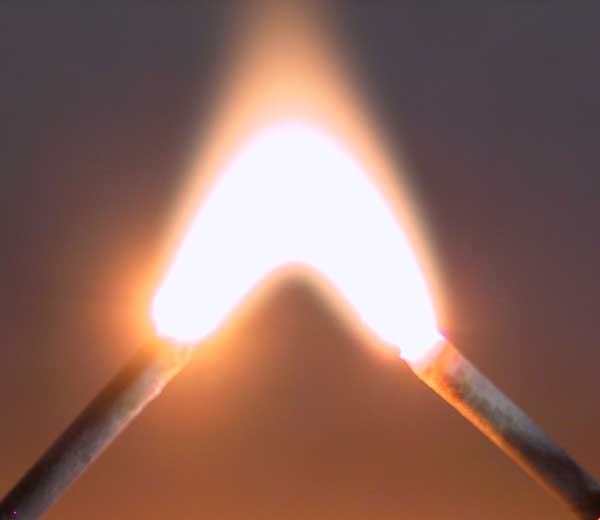
An arc flash is the light and heat produced as part of an arc fault (sometimes referred to as an electrical flashover), a type of electrical explosion or discharge that results from a connection through air to ground or another voltage phase in an electrical system.
Arc flash is different from the arc blast, which is the supersonic shockwave produced when the conductors and surrounding air are heated by the arc, becoming a rapidly expanding plasma. Both are part of the same arc fault, and are often referred to as simply an arc flash, but from a safety standpoint they are often treated separately. For example, personal protective equipment (PPE) can be used to effectively shield a worker from the radiation of an arc flash, but that same PPE may likely be ineffective against the flying objects, molten metal, and violent concussion that the arc blast can produce. (For example, category-4 arc-flash protection, similar to a bomb suit, is unlikely to protect a person from the concussion of a very large blast, although it may prevent the worker from being fatally burned by the intense light of the flash.) For this reason, other safety precautions are usually taken in addition to wearing PPE, helping to prevent injury. However, the phenomenon of the arc blast is sometimes used to extinguish the electric arc by some types of self-blast–chamber circuit breakers.
An arc flash is the light and heat produced from an electric arc supplied with sufficient electrical energy to cause substantial damage, harm, fire, or injury. Electrical arcs experience negative incremental resistance, which causes the electrical resistance to decrease as the arc temperature increases. Therefore, as the arc develops and gets hotter the resistance drops, drawing more and more current (runaway) until some part of the system melts, trips, or evaporates, providing enough distance to break the circuit and extinguish the arc. Electrical arcs, when well controlled and fed by limited energy, produce very bright light, and are used in arc lamps (enclosed, or with open electrodes), for welding, plasma cutting, and other industrial applications. Welding arcs can easily turn steel into a liquid with an average of only 24 DC volts. When an uncontrolled arc forms at high voltages, and especially where large supply-wires or high-current conductors are used, arc flashes can produce deafening noises, supersonic concussive forces, super-heated shrapnel, temperatures far greater than the Sun's surface, and intense, high-energy radiation capable of vaporizing nearby materials.
Arc flash temperatures can reach or exceed 35,000 °F (19,400 °C) at the arc terminals. The massive energy released in the fault rapidly vaporizes the metal conductors involved, blasting molten metal and expanding plasma outward with extraordinary force. A typical arc flash incident can be inconsequential but could conceivably easily produce a more severe explosion (see calculation below). The result of the violent event can cause destruction of equipment involved, fire, and injury not only to an electrical worker but also to bystanders. During the arc flash, electrical energy vaporizes the metal, which changes from solid state to gas vapor, expanding it with explosive force. For example, when copper vaporizes it suddenly expands by a factor of 67,000 in volume.
In addition to the explosive blast, called the arc blast of such a fault, destruction also arises from the intense radiant heat produced by the arc. The metal plasma arc produces tremendous amounts of light energy from far infrared to ultraviolet. Surfaces of nearby objects, including people, absorb this energy and are instantly heated to vaporizing temperatures. The effects of this can be seen on adjacent walls and equipment – they are often ablated and eroded from the radiant effects.
Most 400 V and above electrical services have sufficient capacity to cause an arc flash hazard.[citation needed] Medium-voltage equipment (above 1000 V) is higher potential and therefore a higher risk for an arc flash hazard.[citation needed] Higher voltages can cause a spark to jump, initiating an arc flash without the need for physical contact, and can sustain an arc across longer gaps. Most powerlines use voltages exceeding 1000 volts and can be an arc-flash hazard to birds, squirrels, people, or equipment such as vehicles or ladders. Arc flashes, as bright flashes like lightning that can be seen from long distances, are often witnessed from lines or transformers just before a power outage.
High-voltage powerlines often operate in the range of tens to hundreds of kilovolts, which can result in very long arc-flashes, often referred to as a flashover. Care must usually be taken to ensure that the lines are insulated with a proper "flashover rating" and sufficiently spaced from each other to prevent an arc flash from spontaneously developing. If the high-voltage lines become too close, either to each other or ground, a corona discharge may form between the conductors. This is typically a blue or reddish light caused by ionization of the air, accompanied by a hissing or frying sound. The corona discharge can easily lead to an arc flash, by creating a conductive pathway between the lines. This ionization can be enhanced during electrical storms, causing spontaneous arc-flashes and leading to power outages.
As an example of the energy released in an arc flash incident, in a single phase-to-phase fault on a 480 V system with 20,000 amps of fault current, the resulting power is 9.6 MW. If the fault lasts for 10 cycles at 60 Hz, the resulting energy would be 1.6 megajoules. For comparison, TNT releases 2,175 J/g or more when detonated (a conventional value of 4,184 J/g is used for TNT equivalent). Thus, this fault energy is equivalent to 380 grams (approximately 0.8 pounds) of TNT.[citation needed] The character of an arc flash blast is quite different from a chemical explosion (more heat and light, less mechanical shock), but the resulting devastation is comparable. The rapidly expanding superheated vapor produced by the arc can cause serious injury or damage, and the intense UV, visible, and IR light produced by the arc can temporarily and sometimes even permanently blind or cause eye damage to people.
Hub AI
Arc flash AI simulator
(@Arc flash_simulator)
Arc flash
An arc flash is the light and heat produced as part of an arc fault (sometimes referred to as an electrical flashover), a type of electrical explosion or discharge that results from a connection through air to ground or another voltage phase in an electrical system.
Arc flash is different from the arc blast, which is the supersonic shockwave produced when the conductors and surrounding air are heated by the arc, becoming a rapidly expanding plasma. Both are part of the same arc fault, and are often referred to as simply an arc flash, but from a safety standpoint they are often treated separately. For example, personal protective equipment (PPE) can be used to effectively shield a worker from the radiation of an arc flash, but that same PPE may likely be ineffective against the flying objects, molten metal, and violent concussion that the arc blast can produce. (For example, category-4 arc-flash protection, similar to a bomb suit, is unlikely to protect a person from the concussion of a very large blast, although it may prevent the worker from being fatally burned by the intense light of the flash.) For this reason, other safety precautions are usually taken in addition to wearing PPE, helping to prevent injury. However, the phenomenon of the arc blast is sometimes used to extinguish the electric arc by some types of self-blast–chamber circuit breakers.
An arc flash is the light and heat produced from an electric arc supplied with sufficient electrical energy to cause substantial damage, harm, fire, or injury. Electrical arcs experience negative incremental resistance, which causes the electrical resistance to decrease as the arc temperature increases. Therefore, as the arc develops and gets hotter the resistance drops, drawing more and more current (runaway) until some part of the system melts, trips, or evaporates, providing enough distance to break the circuit and extinguish the arc. Electrical arcs, when well controlled and fed by limited energy, produce very bright light, and are used in arc lamps (enclosed, or with open electrodes), for welding, plasma cutting, and other industrial applications. Welding arcs can easily turn steel into a liquid with an average of only 24 DC volts. When an uncontrolled arc forms at high voltages, and especially where large supply-wires or high-current conductors are used, arc flashes can produce deafening noises, supersonic concussive forces, super-heated shrapnel, temperatures far greater than the Sun's surface, and intense, high-energy radiation capable of vaporizing nearby materials.
Arc flash temperatures can reach or exceed 35,000 °F (19,400 °C) at the arc terminals. The massive energy released in the fault rapidly vaporizes the metal conductors involved, blasting molten metal and expanding plasma outward with extraordinary force. A typical arc flash incident can be inconsequential but could conceivably easily produce a more severe explosion (see calculation below). The result of the violent event can cause destruction of equipment involved, fire, and injury not only to an electrical worker but also to bystanders. During the arc flash, electrical energy vaporizes the metal, which changes from solid state to gas vapor, expanding it with explosive force. For example, when copper vaporizes it suddenly expands by a factor of 67,000 in volume.
In addition to the explosive blast, called the arc blast of such a fault, destruction also arises from the intense radiant heat produced by the arc. The metal plasma arc produces tremendous amounts of light energy from far infrared to ultraviolet. Surfaces of nearby objects, including people, absorb this energy and are instantly heated to vaporizing temperatures. The effects of this can be seen on adjacent walls and equipment – they are often ablated and eroded from the radiant effects.
Most 400 V and above electrical services have sufficient capacity to cause an arc flash hazard.[citation needed] Medium-voltage equipment (above 1000 V) is higher potential and therefore a higher risk for an arc flash hazard.[citation needed] Higher voltages can cause a spark to jump, initiating an arc flash without the need for physical contact, and can sustain an arc across longer gaps. Most powerlines use voltages exceeding 1000 volts and can be an arc-flash hazard to birds, squirrels, people, or equipment such as vehicles or ladders. Arc flashes, as bright flashes like lightning that can be seen from long distances, are often witnessed from lines or transformers just before a power outage.
High-voltage powerlines often operate in the range of tens to hundreds of kilovolts, which can result in very long arc-flashes, often referred to as a flashover. Care must usually be taken to ensure that the lines are insulated with a proper "flashover rating" and sufficiently spaced from each other to prevent an arc flash from spontaneously developing. If the high-voltage lines become too close, either to each other or ground, a corona discharge may form between the conductors. This is typically a blue or reddish light caused by ionization of the air, accompanied by a hissing or frying sound. The corona discharge can easily lead to an arc flash, by creating a conductive pathway between the lines. This ionization can be enhanced during electrical storms, causing spontaneous arc-flashes and leading to power outages.
As an example of the energy released in an arc flash incident, in a single phase-to-phase fault on a 480 V system with 20,000 amps of fault current, the resulting power is 9.6 MW. If the fault lasts for 10 cycles at 60 Hz, the resulting energy would be 1.6 megajoules. For comparison, TNT releases 2,175 J/g or more when detonated (a conventional value of 4,184 J/g is used for TNT equivalent). Thus, this fault energy is equivalent to 380 grams (approximately 0.8 pounds) of TNT.[citation needed] The character of an arc flash blast is quite different from a chemical explosion (more heat and light, less mechanical shock), but the resulting devastation is comparable. The rapidly expanding superheated vapor produced by the arc can cause serious injury or damage, and the intense UV, visible, and IR light produced by the arc can temporarily and sometimes even permanently blind or cause eye damage to people.
Recent media