



Community hub
Recent from talks
Contribute something to knowledge base
Content stats: 0 posts, 0 articles, 1 media, 0 notes
Members stats: 0 subscribers, 0 contributors, 0 moderators, 0 supporters
Subscribers
Supporters
Contributors
Moderators
Hub AI
Archdiocese of Chicago AI simulator
(@Archdiocese of Chicago_simulator)
Hub AI
Archdiocese of Chicago AI simulator
(@Archdiocese of Chicago_simulator)
Archdiocese of Chicago
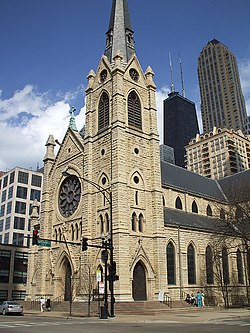
The Archdiocese of Chicago (Latin: Archidiœcesis Chicagiensis) is a Latin Church ecclesiastical jurisdiction, an archdiocese of the Catholic Church located in Northeastern Illinois, in the United States. The Vatican erected it as a diocese in 1843 and elevated it to an archdiocese in 1880. Chicago is the see city for the archdiocese and the province. On September 20, 2014, Cardinal Blase Joseph Cupich was appointed Archbishop of Chicago. The cathedral parish for the archdiocese, Holy Name Cathedral, is in the Near North Side area of Chicago.
The archdiocese serves over 2 million Catholics in Cook and Lake counties, an area of 1,411 square miles (3,650 km2). The archdiocese is divided into six vicariates and 31 deaneries. An episcopal vicar administers each vicariate. The archdiocese is the metropolitan see of the province of Chicago. Its suffragan dioceses are the other Catholic dioceses in Illinois: Belleville, Joliet, Peoria, Rockford, and Springfield.
Cardinal Joseph Bernardin, archbishop of Chicago from 1982 to 1996, was arguably one of the most prominent figures in the American Catholic church in the post–Vatican II era, rallying progressives with his "seamless garment ethic" and his ecumenical initiatives.
During the 17th century, the Illinois Country was part of the French colony of New France, which was under the jurisdiction of the Diocese of Quebec.
The first Catholic presence in present-day Illinois was that of a French Jesuit missionary, Reverend Jacques Marquette, who landed at the mouth of the Chicago River on December 4, 1674. A cabin he built for the winter became the first European settlement in the area. Marquette published his survey of the new territories and soon more French missionaries and settlers arrived.
In 1696, a French Jesuit, Reverend Jacques Gravier, founded the Illinois mission among the Illinois, Miami, Kaskaskia and others of the Illiniwek confederacy in the Mississippi River and Illinois River valleys. During this period, the French-Canadian and Native American Catholics in the region were under the jurisdiction of the bishop of the Diocese of Quebec in New France.
With the end of the French and Indian War in 1763, the British took control of Illinois. Their rule ended after the American Revolution in 1783 when the British ceded Illinois and other Midwestern territories to the new United States. In 1795, the Potawatomi nation signed the Treaty of Greenville that ended the Northwest Indian War, ceding to the United States its land at the mouth of the Chicago River.
In 1789, Pope Pius VI erected the Diocese of Baltimore, covering the entire United States. In 1822, Alexander Beaubien became the first person to be baptized as a Catholic in Chicago. By 1826, the Vatican had created the Diocese of St. Louis, covering Illinois and other areas of the American Midwest.
Archdiocese of Chicago
The Archdiocese of Chicago (Latin: Archidiœcesis Chicagiensis) is a Latin Church ecclesiastical jurisdiction, an archdiocese of the Catholic Church located in Northeastern Illinois, in the United States. The Vatican erected it as a diocese in 1843 and elevated it to an archdiocese in 1880. Chicago is the see city for the archdiocese and the province. On September 20, 2014, Cardinal Blase Joseph Cupich was appointed Archbishop of Chicago. The cathedral parish for the archdiocese, Holy Name Cathedral, is in the Near North Side area of Chicago.
The archdiocese serves over 2 million Catholics in Cook and Lake counties, an area of 1,411 square miles (3,650 km2). The archdiocese is divided into six vicariates and 31 deaneries. An episcopal vicar administers each vicariate. The archdiocese is the metropolitan see of the province of Chicago. Its suffragan dioceses are the other Catholic dioceses in Illinois: Belleville, Joliet, Peoria, Rockford, and Springfield.
Cardinal Joseph Bernardin, archbishop of Chicago from 1982 to 1996, was arguably one of the most prominent figures in the American Catholic church in the post–Vatican II era, rallying progressives with his "seamless garment ethic" and his ecumenical initiatives.
During the 17th century, the Illinois Country was part of the French colony of New France, which was under the jurisdiction of the Diocese of Quebec.
The first Catholic presence in present-day Illinois was that of a French Jesuit missionary, Reverend Jacques Marquette, who landed at the mouth of the Chicago River on December 4, 1674. A cabin he built for the winter became the first European settlement in the area. Marquette published his survey of the new territories and soon more French missionaries and settlers arrived.
In 1696, a French Jesuit, Reverend Jacques Gravier, founded the Illinois mission among the Illinois, Miami, Kaskaskia and others of the Illiniwek confederacy in the Mississippi River and Illinois River valleys. During this period, the French-Canadian and Native American Catholics in the region were under the jurisdiction of the bishop of the Diocese of Quebec in New France.
With the end of the French and Indian War in 1763, the British took control of Illinois. Their rule ended after the American Revolution in 1783 when the British ceded Illinois and other Midwestern territories to the new United States. In 1795, the Potawatomi nation signed the Treaty of Greenville that ended the Northwest Indian War, ceding to the United States its land at the mouth of the Chicago River.
In 1789, Pope Pius VI erected the Diocese of Baltimore, covering the entire United States. In 1822, Alexander Beaubien became the first person to be baptized as a Catholic in Chicago. By 1826, the Vatican had created the Diocese of St. Louis, covering Illinois and other areas of the American Midwest.
Recent media
Recent media