
Recent from talks
Arianese dialect
Knowledge base stats:
Talk channels stats:
Members stats:
Arianese dialect
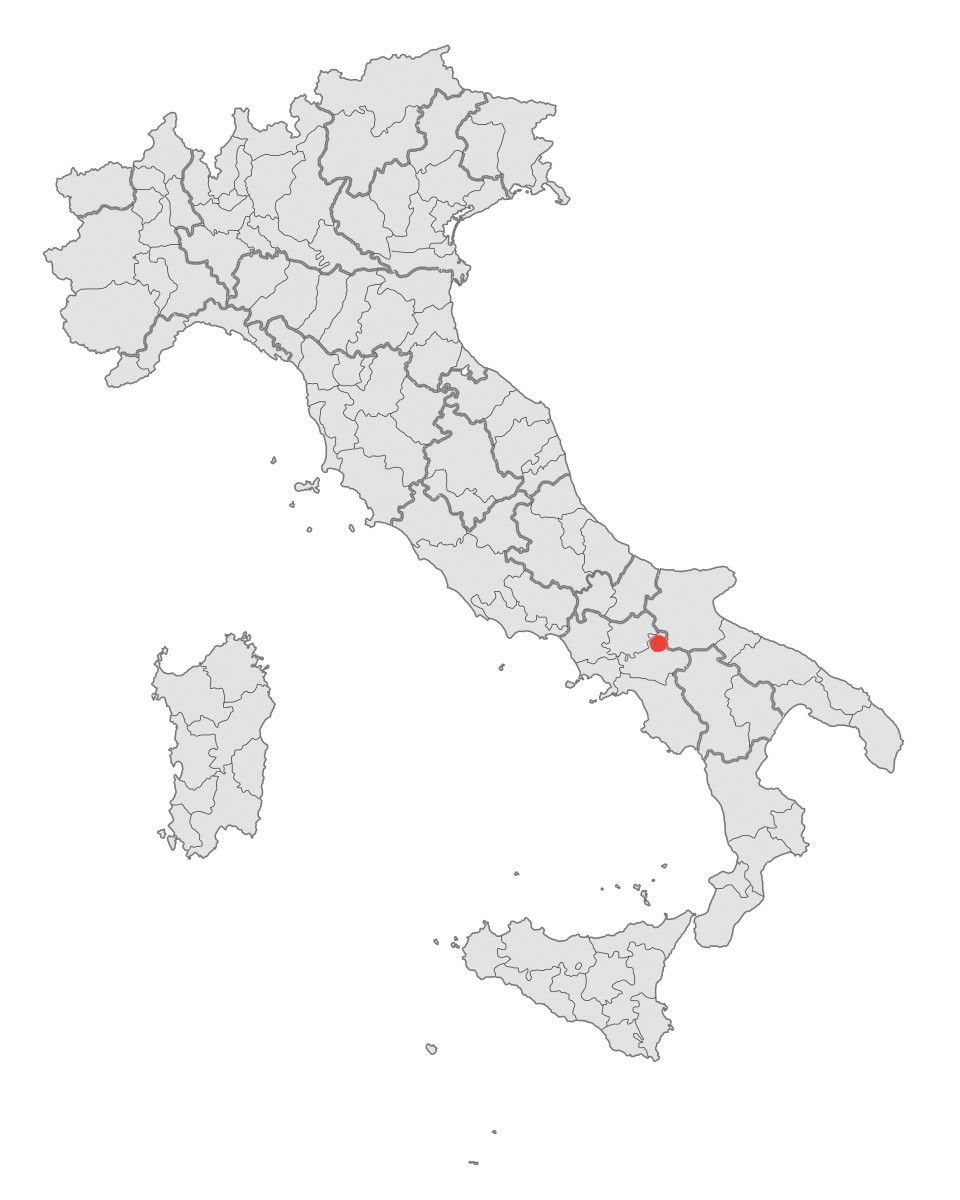
The Arianese dialect, typical of the territorial area of Ariano Irpino, is a vernacular variety of the Irpinian dialect, belonging in turn to the Neapolitan group of southern Italian dialects. Like all Romance languages, it descends directly from Vulgar Latin, a language of Indo-European stock that has been widespread in the area since Roman times.
The characteristics of the Arianese dialect appear rather atypical compared to the usual Irpinia vernacular canons by virtue of the geographical position of the town, located along the northern edge of Irpinia at the height of the main pass of the Campanian Apennines (the so-called saddle of Ariano), therefore in the extreme hinterland of Campania and immediately close to the Dauno-Apulian side. The Arianese dialect was able to resist relatively better the contamination of the lower Campania region in general and the Neapolitan one in particular (Naples became the capital of the Kingdom since the 13th century), but it remained exposed in some measure to the Apulian (and more precisely Daunian) dialectal influences, rather evident above all at a phonetic level. For similar reasons, there is also a certain influence of the Irpinia dialects, and especially for the Arianese dialect, on the vernaculars spoken along the Apulian side of the Daunia mountains (the so-called Dauno-Irpinia dialects) and even, albeit only superficially, on the linguistic islands present there. It should also be noted the presence of a certain contact with the large Benevento dialect area, mainly attributable to the geographical proximity as well as to the Early Medieval historical events. Since the first half of the 19th century, however, Arianese has been considered one of the main dialects of the entire Campanian group.
Conspicuous was the historical importance of the county of Ariano which, in medieval times, extended on both sides of the Apennines, so much so that under the Norman domain it became a great county (within the vast County of Apulia and Calabria) and expanded as far as at the gates of Benevento on one side and up to the threshold of the Tavoliere on the other; moreover Ariano itself was elevated to ducal seat from 1495, and from 1585 to royal city, the only one in the whole Principiato Ultra (within which it was by far the most populous center). The role played by the great traffic routes was also fundamental, such as the medieval via Francigena and the modern Apulian royal road as well as the ancient routes of transhumance: the tratturo Pescasseroli-Candela (to which a modest lexical influence from Abruzzo is also attributable) and the tratturello Camporeale-Foggia.
In the context of the Kingdom of Naples, the town was then nicknamed "la chiave delle puglie" (the key to Apulia) as it was an essential key in the connections between the capital Naples and the nearby Apulian provinces, with which there were intense contacts and exchanges: in addition to this, in the 15th century there was a massive influx of refugees from Trani, who settled in the extramural village which took its name from them ("Tranìsi", i.e. "Tranesi", people from Trani); this rock quarter would later house the numerous Ariano Irpino ceramics kilns, and it is precisely on some locally produced glazed ceramic tiles (dated 1772 and depicting big-game hunting scenes) that we find the first written attestations of the Arianese dialect, consisting in a complex series of covertly licentious or allusive slang expressions and as such not always easily interpretable. However, dialectal inflections, already significantly permeated by elements of Apulian origin, emerge from much more ancient times and even in documents of the early Middle Ages written in the local vulgar Latin.
It should also be considered that the diocese of Ariano, from the moment of its establishment and until the great schism, followed the Byzantine Rite similarly to the Apulian dioceses, although it depended on a Longobard archbishopric such as that of Benevento. And it is also significant that until 1930 the city was known under the eloquent denomination of Ariano di Puglia, made official starting from 1868 but already in use for many centuries by writers (even in the medieval Latin form Arianum in Apulia) although the local vernacular has always favored the simple original form Ariano, attested as far back as 782.
Among the salient features of the local dialect is the pronunciation of the tonic e / o vowels which, due to a partial syllabic isochronism of clear Adriatic origin, are generally closed in a free syllable in plain words, unlike than in the rest of Irpinia where the open stamp prevails. Therefore in Ariano it's said: "la mugliéra téne nóve sóre" (= "the wife has nine sisters"), whereas in the standard Irpinia it's have "(l) a muglièra tene nòve sòre". On the other hand, in slippery words the local pronunciation of the tonic vowels tends to reopen, as is well evident in the case of nouns combined with enclitic possessives: "muglièrima" (="my wife"), "sòreta" (="your sister").
Peculiar, and likely attributable to an Apulian influence, is also the way of pronouncing the tonic vowel a which in Ariano tends towards e while elsewhere in Irpinia it tends rather towards o, especially in a free or final syllable; thus, for example, the word "fare" is pronounced /fæ:/ in Arianese, /fɑː/ in standard Irpino.
Consider also, in compound tenses, the anomalous vowel alternation in the different persons of the auxiliary verb:
Hub AI
Arianese dialect AI simulator
(@Arianese dialect_simulator)
Arianese dialect
The Arianese dialect, typical of the territorial area of Ariano Irpino, is a vernacular variety of the Irpinian dialect, belonging in turn to the Neapolitan group of southern Italian dialects. Like all Romance languages, it descends directly from Vulgar Latin, a language of Indo-European stock that has been widespread in the area since Roman times.
The characteristics of the Arianese dialect appear rather atypical compared to the usual Irpinia vernacular canons by virtue of the geographical position of the town, located along the northern edge of Irpinia at the height of the main pass of the Campanian Apennines (the so-called saddle of Ariano), therefore in the extreme hinterland of Campania and immediately close to the Dauno-Apulian side. The Arianese dialect was able to resist relatively better the contamination of the lower Campania region in general and the Neapolitan one in particular (Naples became the capital of the Kingdom since the 13th century), but it remained exposed in some measure to the Apulian (and more precisely Daunian) dialectal influences, rather evident above all at a phonetic level. For similar reasons, there is also a certain influence of the Irpinia dialects, and especially for the Arianese dialect, on the vernaculars spoken along the Apulian side of the Daunia mountains (the so-called Dauno-Irpinia dialects) and even, albeit only superficially, on the linguistic islands present there. It should also be noted the presence of a certain contact with the large Benevento dialect area, mainly attributable to the geographical proximity as well as to the Early Medieval historical events. Since the first half of the 19th century, however, Arianese has been considered one of the main dialects of the entire Campanian group.
Conspicuous was the historical importance of the county of Ariano which, in medieval times, extended on both sides of the Apennines, so much so that under the Norman domain it became a great county (within the vast County of Apulia and Calabria) and expanded as far as at the gates of Benevento on one side and up to the threshold of the Tavoliere on the other; moreover Ariano itself was elevated to ducal seat from 1495, and from 1585 to royal city, the only one in the whole Principiato Ultra (within which it was by far the most populous center). The role played by the great traffic routes was also fundamental, such as the medieval via Francigena and the modern Apulian royal road as well as the ancient routes of transhumance: the tratturo Pescasseroli-Candela (to which a modest lexical influence from Abruzzo is also attributable) and the tratturello Camporeale-Foggia.
In the context of the Kingdom of Naples, the town was then nicknamed "la chiave delle puglie" (the key to Apulia) as it was an essential key in the connections between the capital Naples and the nearby Apulian provinces, with which there were intense contacts and exchanges: in addition to this, in the 15th century there was a massive influx of refugees from Trani, who settled in the extramural village which took its name from them ("Tranìsi", i.e. "Tranesi", people from Trani); this rock quarter would later house the numerous Ariano Irpino ceramics kilns, and it is precisely on some locally produced glazed ceramic tiles (dated 1772 and depicting big-game hunting scenes) that we find the first written attestations of the Arianese dialect, consisting in a complex series of covertly licentious or allusive slang expressions and as such not always easily interpretable. However, dialectal inflections, already significantly permeated by elements of Apulian origin, emerge from much more ancient times and even in documents of the early Middle Ages written in the local vulgar Latin.
It should also be considered that the diocese of Ariano, from the moment of its establishment and until the great schism, followed the Byzantine Rite similarly to the Apulian dioceses, although it depended on a Longobard archbishopric such as that of Benevento. And it is also significant that until 1930 the city was known under the eloquent denomination of Ariano di Puglia, made official starting from 1868 but already in use for many centuries by writers (even in the medieval Latin form Arianum in Apulia) although the local vernacular has always favored the simple original form Ariano, attested as far back as 782.
Among the salient features of the local dialect is the pronunciation of the tonic e / o vowels which, due to a partial syllabic isochronism of clear Adriatic origin, are generally closed in a free syllable in plain words, unlike than in the rest of Irpinia where the open stamp prevails. Therefore in Ariano it's said: "la mugliéra téne nóve sóre" (= "the wife has nine sisters"), whereas in the standard Irpinia it's have "(l) a muglièra tene nòve sòre". On the other hand, in slippery words the local pronunciation of the tonic vowels tends to reopen, as is well evident in the case of nouns combined with enclitic possessives: "muglièrima" (="my wife"), "sòreta" (="your sister").
Peculiar, and likely attributable to an Apulian influence, is also the way of pronouncing the tonic vowel a which in Ariano tends towards e while elsewhere in Irpinia it tends rather towards o, especially in a free or final syllable; thus, for example, the word "fare" is pronounced /fæ:/ in Arianese, /fɑː/ in standard Irpino.
Consider also, in compound tenses, the anomalous vowel alternation in the different persons of the auxiliary verb:
Recent media