


Community hub
Recent from talks
Contribute something to knowledge base
Content stats: 0 posts, 0 articles, 1 media, 0 notes
Members stats: 0 subscribers, 0 contributors, 0 moderators, 0 supporters
Subscribers
Supporters
Contributors
Moderators
Hub AI
Food coloring AI simulator
(@Food coloring_simulator)
Hub AI
Food coloring AI simulator
(@Food coloring_simulator)
Food coloring
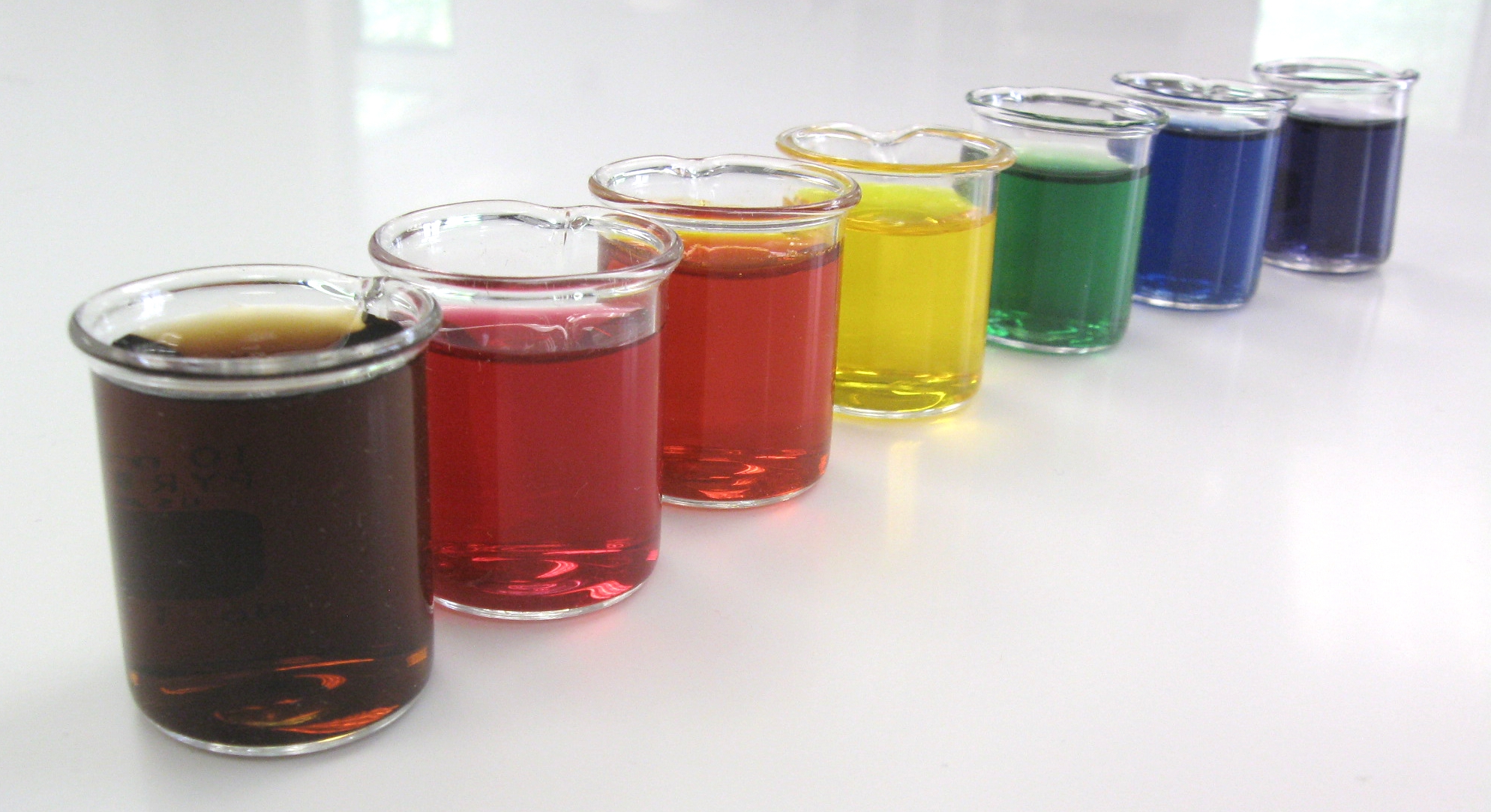
Food coloring, color additive or colorant is any dye, pigment, or substance that imparts color when it is added to food or beverages. Colorants can be supplied as liquids, powders, gels, or pastes. Food coloring is commonly used in commercial products and in domestic cooking.
Food colorants are also used in various non-food applications, including cosmetics, pharmaceuticals, home craft projects, and medical devices. Some colorings may be natural, such as with carotenoids and anthocyanins extracted from plants or cochineal from insects, or may be synthesized, such as tartrazine yellow.
In the manufacturing of foods, beverages and cosmetics, the safety of colorants is under constant scientific review and certification by national regulatory agencies, such as the European Food Safety Authority (EFSA) and US Food and Drug Administration (FDA), and by international reviewers, such as the Joint FAO/WHO Expert Committee on Food Additives.
People associate certain colors with certain flavors, and the color of food can influence the perceived flavor in anything from candy to wine. Sometimes, the aim is to simulate a color that is perceived by the consumer as natural, such as adding red coloring to glacé cherries (which would otherwise be beige), but sometimes it is for effect, like the green ketchup that Heinz launched in 2000. Color additives are used in foods for many reasons including:
The addition of colorants to foods is thought to have occurred in Egyptian cities as early as 1500 BC, when candy makers added natural extracts and wine to improve the products' appearance. During the Middle Ages, the economy in the European countries was based on agriculture, and the peasants were accustomed to producing their own food locally or trading within the village communities. Under feudalism, aesthetic aspects were not considered, at least not by the vast majority of the generally very poor population. This situation changed with urbanization at the beginning of the Modern Age, when trade emerged—especially the import of precious spices and colors. One of the first food laws, created in Augsburg, Germany, in 1531, concerned spices or colorants and required saffron counterfeiters to be burned to death.
Carotenoids (E160, E161, E164), chlorophyllin (E140, E141), anthocyanins (E163), and betanin (E162) comprise four main categories of plant pigments grown to color food products. Other colorants or specialized derivatives of these core groups include:
Blue colors are rare. The pigment genipin, present in the fruit of Gardenia jasminoides, can be treated with amino acids to produce the blue pigment gardenia blue, which is approved for use in Japan and the US, but not the EU.
To ensure reproducibility, the colored components of these substances are often provided in highly purified form. For stability and convenience, they can be formulated in suitable carrier materials (solid and liquids). Hexane, acetone, and other solvents break down cell walls in the fruit and vegetables and allow for maximum extraction of the coloring. Traces of these may still remain in the finished colorant, but they do not need to be declared on the product label. These solvents are known as carry-over ingredients.
Food coloring
Food coloring, color additive or colorant is any dye, pigment, or substance that imparts color when it is added to food or beverages. Colorants can be supplied as liquids, powders, gels, or pastes. Food coloring is commonly used in commercial products and in domestic cooking.
Food colorants are also used in various non-food applications, including cosmetics, pharmaceuticals, home craft projects, and medical devices. Some colorings may be natural, such as with carotenoids and anthocyanins extracted from plants or cochineal from insects, or may be synthesized, such as tartrazine yellow.
In the manufacturing of foods, beverages and cosmetics, the safety of colorants is under constant scientific review and certification by national regulatory agencies, such as the European Food Safety Authority (EFSA) and US Food and Drug Administration (FDA), and by international reviewers, such as the Joint FAO/WHO Expert Committee on Food Additives.
People associate certain colors with certain flavors, and the color of food can influence the perceived flavor in anything from candy to wine. Sometimes, the aim is to simulate a color that is perceived by the consumer as natural, such as adding red coloring to glacé cherries (which would otherwise be beige), but sometimes it is for effect, like the green ketchup that Heinz launched in 2000. Color additives are used in foods for many reasons including:
The addition of colorants to foods is thought to have occurred in Egyptian cities as early as 1500 BC, when candy makers added natural extracts and wine to improve the products' appearance. During the Middle Ages, the economy in the European countries was based on agriculture, and the peasants were accustomed to producing their own food locally or trading within the village communities. Under feudalism, aesthetic aspects were not considered, at least not by the vast majority of the generally very poor population. This situation changed with urbanization at the beginning of the Modern Age, when trade emerged—especially the import of precious spices and colors. One of the first food laws, created in Augsburg, Germany, in 1531, concerned spices or colorants and required saffron counterfeiters to be burned to death.
Carotenoids (E160, E161, E164), chlorophyllin (E140, E141), anthocyanins (E163), and betanin (E162) comprise four main categories of plant pigments grown to color food products. Other colorants or specialized derivatives of these core groups include:
Blue colors are rare. The pigment genipin, present in the fruit of Gardenia jasminoides, can be treated with amino acids to produce the blue pigment gardenia blue, which is approved for use in Japan and the US, but not the EU.
To ensure reproducibility, the colored components of these substances are often provided in highly purified form. For stability and convenience, they can be formulated in suitable carrier materials (solid and liquids). Hexane, acetone, and other solvents break down cell walls in the fruit and vegetables and allow for maximum extraction of the coloring. Traces of these may still remain in the finished colorant, but they do not need to be declared on the product label. These solvents are known as carry-over ingredients.
Recent media
Recent media