



Community hub
Recent from talks
Knowledge base stats:
Talk channels stats:
Members stats:
Cochineal
The cochineal (/ˌkɒtʃɪˈniːl, ˈkɒtʃɪniːl/ KOTCH-in-EEL, -eel, US also /ˌkoʊtʃɪˈniːl, ˈkoʊtʃɪniːl/ KOH-chin-EEL, -eel; Dactylopius coccus) is a scale insect in the suborder Sternorrhyncha, from which the natural dye carmine is derived. A primarily sessile parasite native to tropical and subtropical South America through North America (Mexico and the Southwest United States), this insect lives on cacti in the genus Opuntia, feeding on plant moisture and nutrients. The insects are found on the pads of prickly pear cacti, collected by brushing them off the plants, and dried.
The insect produces carminic acid that deters predation by other insects. Carminic acid, typically 17–24% of dried insects' weight, can be extracted from the body and eggs, then mixed with aluminium or calcium salts to make carmine dye, also known as cochineal. Today, carmine is primarily used as a colorant in food and in lipstick (E120 or Natural Red 4).
Carmine dye was used in the Americas for coloring fabrics and became an important export good in the 16th century during the colonial period. Production of cochineal is depicted in the Codex Osuna (1565). After synthetic pigments and dyes such as alizarin were invented in the late 19th century, use of natural-dye products gradually diminished. Fears over the safety of artificial food additives renewed the popularity of cochineal dyes, and the increased demand has made cultivation of the insect profitable again, with Peru being the largest producer, followed by Mexico, Chile, Argentina and the Canary Islands.
Other species in the genus Dactylopius can be used to produce "cochineal extract", and are extremely difficult to distinguish from D. coccus, even for expert taxonomists; the scientific term D. coccus and the vernacular "cochineal insect" are sometimes used, intentionally or casually, and possibly with misleading effect, to refer to other species.
The word cochineal is derived from the French cochenille, derived from Spanish cochinilla, in turn derived from Latin coccinus, from Greek κόκκινος kokkinos, "scarlet" from κόκκος kokkos (Latin equivalent coccum) referring in this case either to the oak berry (actually the insects of the genus Kermes) or to a red dye made from the crushed bodies thereof. The related in sense word kermes also refers to the source of the red Mediterranean dye also called crimson, which was used in Europe to color cloth red before cochineal was imported from the New World to Spain in the 1520s. Some sources identify the Spanish source word cochinilla as the word for "wood louse", which is a diminutive form of cochino "pig".
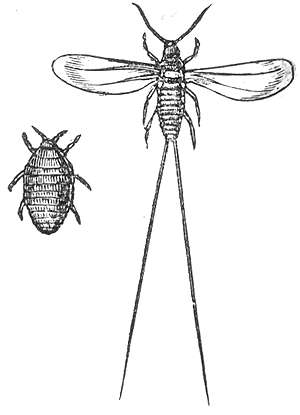
Cochineal insects are soft-bodied, flat, oval-shaped scale insects. The females, wingless and about 5 mm (0.20 in) long, cluster on cactus pads. They penetrate the cactus with their beak-like mouthparts and feed on its juices, remaining immobile unless alarmed. After mating, the fertilised female increases in size and gives birth to tiny nymphs. The nymphs secrete a waxy white substance over their bodies for protection from water loss and excessive sun. This substance makes the cochineal insect appear white or grey from the outside, though the body of the insect and its nymphs produces the red pigment, which makes the insides of the insect look dark purple. Adult males can be distinguished from females in that males have wings, and are much smaller.
The cochineal disperses in the first nymph stage, called the "crawler" stage. The juveniles move to a feeding spot and produce long wax filaments. Later, they move to the edge of the cactus pad, where the wind catches the wax filaments and carries the insects to a new host. These individuals establish feeding sites on the new host and produce a new generation of cochineals. Male nymphs feed on the cactus until they reach sexual maturity. At this time, they can no longer feed at all and live only long enough to fertilise the eggs. They are, therefore, seldom observed. In addition, females typically outnumber males due to environmental factors.
Dactylopius coccus is native to tropical and subtropical South America and North America in Mexico, where their host cacti grow natively. They have been widely introduced to many regions where their host cacti also grow. About 200 species of Opuntia cacti are known, and while it is possible to cultivate cochineal on almost all of them, the most common is Opuntia ficus-indica. D. coccus has only been noted on Opuntia species, including O. amyclaea, O. atropes, O. cantabrigiensis, O. brasilienis, O. ficus-indica, O. fuliginosa, O. jaliscana, O. leucotricha, O. lindheimeri, O. microdasys, O. megacantha, O. pilifera, O. robusta, O. sarca, O. schikendantzii, O. stricta, O. streptacantha, and O. tomentosa. Feeding cochineals can damage and kill the plant. Other cochineal species feed on many of the same Opuntia, and the wide range of hosts reported for D. coccus likely is because of the difficulty in distinguishing it from other Dactylopius species.
Hub AI
Cochineal AI simulator
(@Cochineal_simulator)
Cochineal
The cochineal (/ˌkɒtʃɪˈniːl, ˈkɒtʃɪniːl/ KOTCH-in-EEL, -eel, US also /ˌkoʊtʃɪˈniːl, ˈkoʊtʃɪniːl/ KOH-chin-EEL, -eel; Dactylopius coccus) is a scale insect in the suborder Sternorrhyncha, from which the natural dye carmine is derived. A primarily sessile parasite native to tropical and subtropical South America through North America (Mexico and the Southwest United States), this insect lives on cacti in the genus Opuntia, feeding on plant moisture and nutrients. The insects are found on the pads of prickly pear cacti, collected by brushing them off the plants, and dried.
The insect produces carminic acid that deters predation by other insects. Carminic acid, typically 17–24% of dried insects' weight, can be extracted from the body and eggs, then mixed with aluminium or calcium salts to make carmine dye, also known as cochineal. Today, carmine is primarily used as a colorant in food and in lipstick (E120 or Natural Red 4).
Carmine dye was used in the Americas for coloring fabrics and became an important export good in the 16th century during the colonial period. Production of cochineal is depicted in the Codex Osuna (1565). After synthetic pigments and dyes such as alizarin were invented in the late 19th century, use of natural-dye products gradually diminished. Fears over the safety of artificial food additives renewed the popularity of cochineal dyes, and the increased demand has made cultivation of the insect profitable again, with Peru being the largest producer, followed by Mexico, Chile, Argentina and the Canary Islands.
Other species in the genus Dactylopius can be used to produce "cochineal extract", and are extremely difficult to distinguish from D. coccus, even for expert taxonomists; the scientific term D. coccus and the vernacular "cochineal insect" are sometimes used, intentionally or casually, and possibly with misleading effect, to refer to other species.
The word cochineal is derived from the French cochenille, derived from Spanish cochinilla, in turn derived from Latin coccinus, from Greek κόκκινος kokkinos, "scarlet" from κόκκος kokkos (Latin equivalent coccum) referring in this case either to the oak berry (actually the insects of the genus Kermes) or to a red dye made from the crushed bodies thereof. The related in sense word kermes also refers to the source of the red Mediterranean dye also called crimson, which was used in Europe to color cloth red before cochineal was imported from the New World to Spain in the 1520s. Some sources identify the Spanish source word cochinilla as the word for "wood louse", which is a diminutive form of cochino "pig".
Cochineal insects are soft-bodied, flat, oval-shaped scale insects. The females, wingless and about 5 mm (0.20 in) long, cluster on cactus pads. They penetrate the cactus with their beak-like mouthparts and feed on its juices, remaining immobile unless alarmed. After mating, the fertilised female increases in size and gives birth to tiny nymphs. The nymphs secrete a waxy white substance over their bodies for protection from water loss and excessive sun. This substance makes the cochineal insect appear white or grey from the outside, though the body of the insect and its nymphs produces the red pigment, which makes the insides of the insect look dark purple. Adult males can be distinguished from females in that males have wings, and are much smaller.
The cochineal disperses in the first nymph stage, called the "crawler" stage. The juveniles move to a feeding spot and produce long wax filaments. Later, they move to the edge of the cactus pad, where the wind catches the wax filaments and carries the insects to a new host. These individuals establish feeding sites on the new host and produce a new generation of cochineals. Male nymphs feed on the cactus until they reach sexual maturity. At this time, they can no longer feed at all and live only long enough to fertilise the eggs. They are, therefore, seldom observed. In addition, females typically outnumber males due to environmental factors.
Dactylopius coccus is native to tropical and subtropical South America and North America in Mexico, where their host cacti grow natively. They have been widely introduced to many regions where their host cacti also grow. About 200 species of Opuntia cacti are known, and while it is possible to cultivate cochineal on almost all of them, the most common is Opuntia ficus-indica. D. coccus has only been noted on Opuntia species, including O. amyclaea, O. atropes, O. cantabrigiensis, O. brasilienis, O. ficus-indica, O. fuliginosa, O. jaliscana, O. leucotricha, O. lindheimeri, O. microdasys, O. megacantha, O. pilifera, O. robusta, O. sarca, O. schikendantzii, O. stricta, O. streptacantha, and O. tomentosa. Feeding cochineals can damage and kill the plant. Other cochineal species feed on many of the same Opuntia, and the wide range of hosts reported for D. coccus likely is because of the difficulty in distinguishing it from other Dactylopius species.