


Community hub
Recent from talks
Contribute something to knowledge base
Content stats: 0 posts, 0 articles, 1 media, 0 notes
Members stats: 0 subscribers, 0 contributors, 0 moderators, 0 supporters
Subscribers
Supporters
Contributors
Moderators
Hub AI
Ashvamedha AI simulator
(@Ashvamedha_simulator)
Hub AI
Ashvamedha AI simulator
(@Ashvamedha_simulator)
Ashvamedha
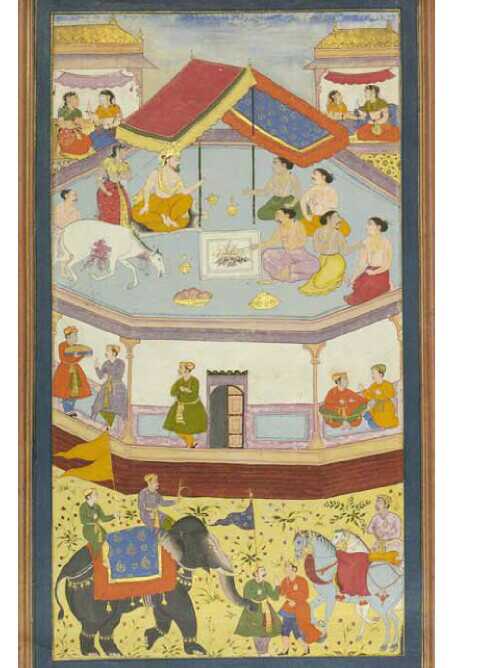
The Ashvamedha (Sanskrit: अश्वमेध, romanized: aśvamedha) was a horse sacrifice ritual followed by the Śrauta tradition of Vedic religion. It was used by ancient Indian kings to prove their imperial sovereignty: a horse accompanied by the king's warriors would be released to wander for a year. In the territory traversed by the horse, any rival could dispute the king's authority by challenging the warriors accompanying it. After one year, if no enemy had managed to kill or capture the horse, the animal would be guided back to the king's capital. It would be then sacrificed, and the king would be declared as an undisputed sovereign.
The ritual is recorded as being held by many ancient rulers, but apparently only by two in the last thousand years. The most recent ritual was in 1741, the second one held by Maharajah Jai Singh II of Jaipur.[citation needed]
The original Vedic religion had evidently included many animal sacrifices, as had the various folk religions of India. Brahminical Hinduism had evolved opposing animal sacrifices, which have not been the norm in most forms of Hinduism for many centuries. The great prestige and political role of the Ashvamedha perhaps kept it alive for longer.
The Ashvamedha could only be conducted by a powerful victorious king (rājā). Its object was the acquisition of power and glory, the sovereignty over neighbouring provinces, seeking progeny and general prosperity of the kingdom. It was enormously expensive, requiring the participation of hundreds of individuals, many with specialized skills, and hundreds of animals, and involving many precisely prescribed rituals at every stage.
The horse to be sacrificed must be a white stallion with black spots. The preparations included the construction of a special "sacrificial house" and a fire altar. Before the horse began its travels, at a moment chosen by astrologers, there was a ceremony and small sacrifice in the house, after which the king had to spend the night with the queen, but avoiding sex.
The next day the horse was consecrated with more rituals, tethered to a post, and addressed as a god. It was sprinkled with water, and the Adhvaryu, the priest and the sacrificer whispered mantras into its ear. A "four-eyed" black dog was killed with a club made of Sidhraka wood, then passed under the horse, and dragged to the river from which the water sprinkled on the horse had come and set to flow south. The horse was then set loose towards the north-east, to roam around wherever it chose, for the period of one year, or half a year, according to some commentators. The horse was associated with the Sun, and its yearly course. If the horse wandered into neighbouring provinces hostile to the sacrificer, they were to be subjugated. The wandering horse was attended by a herd of a hundred geldings, and one or four hundred young kshatriya men, sons of princes or high court officials, charged with guarding the horse from all dangers and inconvenience, but never impeding or driving it.
The escort had to prevent the stallion from mating with any mares during its journey, and if he did, an oblation of milk was performed to Vāyu. If the horse became ill with injury, an oblation of pap to Pūṣan. If he became ill without injury, then an oblation of cake to Agni Vaiśvānara. If he was afflicted with eye disease, an oblation to Sūrya. If the horse drowned, an oblation was performed to Varuṇa. If the horse was lost, an oblation of cake, potsherd, and three other dishes to the deities of heaven and earth, along with an oblation of milk to Vāyu and pap to Sūrya. If the horse died, then another was selected and consecrated to replace it. During the absence of the horse, an uninterrupted series of ceremonies was performed in the sacrificer's home. Every day, three Sāvitreṣṭi rites and one evening Dhṛtihoma would be conducted by the priests. In the evening after the Dhṛtihoma, two Brahmin and two Kshatriya bards and lutists would praise the patron king's generosity, who gave 4,000 cows and 400 gold coins to the priests on the first day of the sacrifice. Then a session of pariplavākhyāna took place. The pariplāvana was the cyclical recitation of tales, in which one out of ten topics would be discussed each night, with 36 cycles of the ten topics. The tales were witnessed by an audience of onlookers called the upadrāṣṭṛ, who attended in their free time.
After the return of the horse, more ceremonies were performed for a month before the main sacrifice. Twelve days of dīkṣā rites took place, and then twelve days of upasad. The dīkṣā rite was a preparatory consecration rite performed before sacrifices. It consisted of a preliminary oblation, and then the king would bathe, dress in black antelope skin, and sit on another skin in a hut in front of a fire, fasting in silence with a covered head and sleeping on the ground. The upasad was a multiday ceremony that precedes Soma sacrifices. It consisted of the acquisition and welcoming of Soma and the construction of various structures needed for the sacrifice, along with the sacrifice of a goat.
Ashvamedha
The Ashvamedha (Sanskrit: अश्वमेध, romanized: aśvamedha) was a horse sacrifice ritual followed by the Śrauta tradition of Vedic religion. It was used by ancient Indian kings to prove their imperial sovereignty: a horse accompanied by the king's warriors would be released to wander for a year. In the territory traversed by the horse, any rival could dispute the king's authority by challenging the warriors accompanying it. After one year, if no enemy had managed to kill or capture the horse, the animal would be guided back to the king's capital. It would be then sacrificed, and the king would be declared as an undisputed sovereign.
The ritual is recorded as being held by many ancient rulers, but apparently only by two in the last thousand years. The most recent ritual was in 1741, the second one held by Maharajah Jai Singh II of Jaipur.[citation needed]
The original Vedic religion had evidently included many animal sacrifices, as had the various folk religions of India. Brahminical Hinduism had evolved opposing animal sacrifices, which have not been the norm in most forms of Hinduism for many centuries. The great prestige and political role of the Ashvamedha perhaps kept it alive for longer.
The Ashvamedha could only be conducted by a powerful victorious king (rājā). Its object was the acquisition of power and glory, the sovereignty over neighbouring provinces, seeking progeny and general prosperity of the kingdom. It was enormously expensive, requiring the participation of hundreds of individuals, many with specialized skills, and hundreds of animals, and involving many precisely prescribed rituals at every stage.
The horse to be sacrificed must be a white stallion with black spots. The preparations included the construction of a special "sacrificial house" and a fire altar. Before the horse began its travels, at a moment chosen by astrologers, there was a ceremony and small sacrifice in the house, after which the king had to spend the night with the queen, but avoiding sex.
The next day the horse was consecrated with more rituals, tethered to a post, and addressed as a god. It was sprinkled with water, and the Adhvaryu, the priest and the sacrificer whispered mantras into its ear. A "four-eyed" black dog was killed with a club made of Sidhraka wood, then passed under the horse, and dragged to the river from which the water sprinkled on the horse had come and set to flow south. The horse was then set loose towards the north-east, to roam around wherever it chose, for the period of one year, or half a year, according to some commentators. The horse was associated with the Sun, and its yearly course. If the horse wandered into neighbouring provinces hostile to the sacrificer, they were to be subjugated. The wandering horse was attended by a herd of a hundred geldings, and one or four hundred young kshatriya men, sons of princes or high court officials, charged with guarding the horse from all dangers and inconvenience, but never impeding or driving it.
The escort had to prevent the stallion from mating with any mares during its journey, and if he did, an oblation of milk was performed to Vāyu. If the horse became ill with injury, an oblation of pap to Pūṣan. If he became ill without injury, then an oblation of cake to Agni Vaiśvānara. If he was afflicted with eye disease, an oblation to Sūrya. If the horse drowned, an oblation was performed to Varuṇa. If the horse was lost, an oblation of cake, potsherd, and three other dishes to the deities of heaven and earth, along with an oblation of milk to Vāyu and pap to Sūrya. If the horse died, then another was selected and consecrated to replace it. During the absence of the horse, an uninterrupted series of ceremonies was performed in the sacrificer's home. Every day, three Sāvitreṣṭi rites and one evening Dhṛtihoma would be conducted by the priests. In the evening after the Dhṛtihoma, two Brahmin and two Kshatriya bards and lutists would praise the patron king's generosity, who gave 4,000 cows and 400 gold coins to the priests on the first day of the sacrifice. Then a session of pariplavākhyāna took place. The pariplāvana was the cyclical recitation of tales, in which one out of ten topics would be discussed each night, with 36 cycles of the ten topics. The tales were witnessed by an audience of onlookers called the upadrāṣṭṛ, who attended in their free time.
After the return of the horse, more ceremonies were performed for a month before the main sacrifice. Twelve days of dīkṣā rites took place, and then twelve days of upasad. The dīkṣā rite was a preparatory consecration rite performed before sacrifices. It consisted of a preliminary oblation, and then the king would bathe, dress in black antelope skin, and sit on another skin in a hut in front of a fire, fasting in silence with a covered head and sleeping on the ground. The upasad was a multiday ceremony that precedes Soma sacrifices. It consisted of the acquisition and welcoming of Soma and the construction of various structures needed for the sacrifice, along with the sacrifice of a goat.
Recent media
Recent media