



Community hub
Recent from talks
Knowledge base stats:
Talk channels stats:
Members stats:
Asiento de Negros
The Asiento de Negros (lit. 'settlement of blacks') was a monopoly contract between the Spanish Crown and various merchants for the right to provide enslaved Africans to colonies in the Spanish Americas. The Spanish Empire rarely engaged in the transatlantic slave trade directly from Africa itself, choosing instead to contract out the importation to foreign merchants from nations more prominent in that part of the world, typically Portuguese and Genoese, but later the Dutch, French, and British. The Asiento did not concern French or British Caribbean, or Brazil, but only Spanish America.
The 1479 Treaty of Alcáçovas divided the Atlantic Ocean and other parts of the globe into two zones of influence, Spanish and Portuguese. The Spanish acquired the west side, covering South America and the West Indies, whilst the Portuguese obtained the east side, covering the west coast of Africa – and also the Indian Ocean beyond. The Spanish relied on enslaved African labourers to support their American colonial project, but now lacked any trading or territorial foothold in West Africa, the principal source of slave labour. The Spanish relied on Portuguese slave traders to fill their requirements. The contract was usually obtained by foreign merchant banks that cooperated with local or foreign traders, that specialized in shipping. Different organisations and individuals would bid for the right to hold the asiento.
The original impetus to import enslaved Africans was to relieve the indigenous inhabitants of the colonies from the labour demands of Spanish colonists. The enslavement of Amerindians had been halted by the influence of Dominicans such as Bartolomé de las Casas. Spain gave individual asientos to Portuguese merchants to bring African slaves to South America.
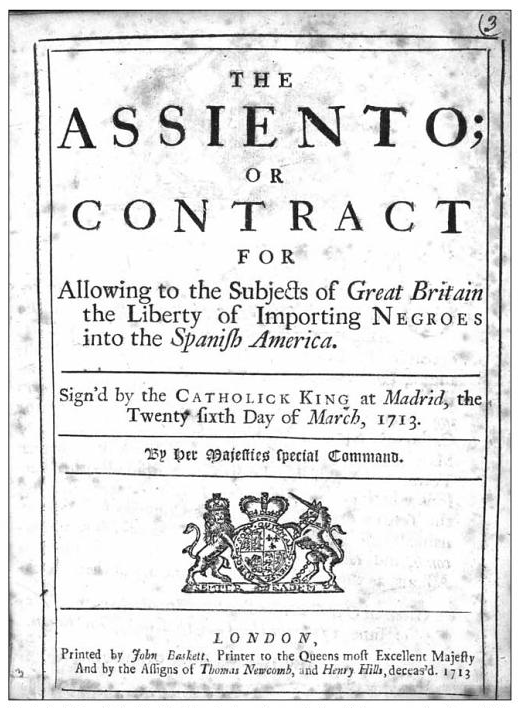
After the Peace of Münster, in 1648, Dutch merchants became involved in the Asiento de Negros. In 1713, the British were awarded the right to the asiento in the Treaty of Utrecht, which ended the War of the Spanish Succession. The British government passed its rights to the South Sea Company. The British asiento ended with the 1750 Treaty of Madrid between Great Britain and Spain after the War of Jenkins' Ear, known appropriately by the Spanish as the Guerra del Asiento ("War of the Asiento").
An asiento, in the Spanish language, is a short-term loan or debt contract, of about one to four years, signed between the Spanish crown and a banker or a small group of bankers (asentistas) against future crown revenues, often included after peace treaties were signed. An asiento covered one or a combination of three specific transactions: an unsecured short-term loan, a transfer of payment, and a currency exchange contract. Between the early 16th and the mid-18th century, asientos were used by the Spanish treasurer to adjust short-term imbalances between revenues and expenditures. The sovereign promised to repay the principal of the loan plus high interest (12%). The participant bankers in Seville, Lisbon, Republic of Genoa and Amsterdam, in turn, drew on the profits and direct investments obtained from a large number of Atlantic merchants. In exchange for a set of scheduled payments, merchants and financiers were given the right to collect relevant taxes or oversee the trade in those commodities that fell under the monarch's prerogative. In this way a set of merchants received the right to ship tobacco, salt, sugar and cacao on a trade route from the Spanish West Indies, some times accompanied by licences to export bullion from Spanish Main or Cádiz. In particular, the asiento would result in great impact for the economy of Spanish American colonies, because the treaty secured or would secure fixed revenues for the crown and the supply of the region with certain commodities, whereas the contracting party bore the risk of the trade. A new asiento was the safest means to get their money back and cash their arrears.
The general meaning of asiento (from the Spanish verb sentar, to sit, which was derived from the Latin sedere) in Spanish is "consent" or "settlement, establishment". In a commercial context, it means "contract, trading agreement". In the words of Georges Scelle, it was "a term in Spanish public law which designates every contract made for the purpose of public utility...between the Spanish government and private individuals."
The Asiento system was established following Spanish settlement in the Caribbean when the indigenous population was undergoing demographic collapse and the Spanish needed another source of labour. Initially, a few Christian Africans born in Iberia were transported to the Caribbean. But as the indigenous demographic collapse was ongoing and opponents of the Spanish exploitation of indigenous labour grew, including that of Bartolomé de Las Casas (although rescinding his views later), the young Habsburg king Charles I of Spain allowed for the direct importation of slaves from Africa (bozales) to the Caribbean. The first asiento for selling slaves was drawn up in August 1518, granting a Flemish favourite of Charles, Laurent de Gouvenot, a monopoly on importing enslaved Africans for eight years with a maximum of 4,000. Gouvenot promptly sold his licence to the treasurer of the Casa de la Contratación de Indias and three subcontractors, Genoese merchants in Andalusia, for 25,000 ducats. The Casa de Contratación in Seville controlled both trade and immigration to the New World, excluding Jews, conversos, Muslims, and foreigners. African slaves were considered merchandise, and their imports were regulated by the crown. The Spanish crown collected a duty on each "pieza", and not on each individual slave delivered. Spain had neither direct access to the African sources of slaves nor the ability to transport them, so the asiento system was a way to ensure a legal supply of Africans to the New World, which brought revenue to the Spanish crown.
For the Spanish crown, the asiento was a source of profit. Haring says, "The asiento remained the settled policy of the Spanish government for controlling and profiting from the slave trade." In Habsburg Spain, asientos were a basic method of financing state expenditures: "Borrowing took two forms – long-term debt in the form of perpetual bonds (juros), and short-term loan contracts provided by bankers (asientos). Many asientos were eventually converted or refinanced through juros."
Hub AI
Asiento de Negros AI simulator
(@Asiento de Negros_simulator)
Asiento de Negros
The Asiento de Negros (lit. 'settlement of blacks') was a monopoly contract between the Spanish Crown and various merchants for the right to provide enslaved Africans to colonies in the Spanish Americas. The Spanish Empire rarely engaged in the transatlantic slave trade directly from Africa itself, choosing instead to contract out the importation to foreign merchants from nations more prominent in that part of the world, typically Portuguese and Genoese, but later the Dutch, French, and British. The Asiento did not concern French or British Caribbean, or Brazil, but only Spanish America.
The 1479 Treaty of Alcáçovas divided the Atlantic Ocean and other parts of the globe into two zones of influence, Spanish and Portuguese. The Spanish acquired the west side, covering South America and the West Indies, whilst the Portuguese obtained the east side, covering the west coast of Africa – and also the Indian Ocean beyond. The Spanish relied on enslaved African labourers to support their American colonial project, but now lacked any trading or territorial foothold in West Africa, the principal source of slave labour. The Spanish relied on Portuguese slave traders to fill their requirements. The contract was usually obtained by foreign merchant banks that cooperated with local or foreign traders, that specialized in shipping. Different organisations and individuals would bid for the right to hold the asiento.
The original impetus to import enslaved Africans was to relieve the indigenous inhabitants of the colonies from the labour demands of Spanish colonists. The enslavement of Amerindians had been halted by the influence of Dominicans such as Bartolomé de las Casas. Spain gave individual asientos to Portuguese merchants to bring African slaves to South America.
After the Peace of Münster, in 1648, Dutch merchants became involved in the Asiento de Negros. In 1713, the British were awarded the right to the asiento in the Treaty of Utrecht, which ended the War of the Spanish Succession. The British government passed its rights to the South Sea Company. The British asiento ended with the 1750 Treaty of Madrid between Great Britain and Spain after the War of Jenkins' Ear, known appropriately by the Spanish as the Guerra del Asiento ("War of the Asiento").
An asiento, in the Spanish language, is a short-term loan or debt contract, of about one to four years, signed between the Spanish crown and a banker or a small group of bankers (asentistas) against future crown revenues, often included after peace treaties were signed. An asiento covered one or a combination of three specific transactions: an unsecured short-term loan, a transfer of payment, and a currency exchange contract. Between the early 16th and the mid-18th century, asientos were used by the Spanish treasurer to adjust short-term imbalances between revenues and expenditures. The sovereign promised to repay the principal of the loan plus high interest (12%). The participant bankers in Seville, Lisbon, Republic of Genoa and Amsterdam, in turn, drew on the profits and direct investments obtained from a large number of Atlantic merchants. In exchange for a set of scheduled payments, merchants and financiers were given the right to collect relevant taxes or oversee the trade in those commodities that fell under the monarch's prerogative. In this way a set of merchants received the right to ship tobacco, salt, sugar and cacao on a trade route from the Spanish West Indies, some times accompanied by licences to export bullion from Spanish Main or Cádiz. In particular, the asiento would result in great impact for the economy of Spanish American colonies, because the treaty secured or would secure fixed revenues for the crown and the supply of the region with certain commodities, whereas the contracting party bore the risk of the trade. A new asiento was the safest means to get their money back and cash their arrears.
The general meaning of asiento (from the Spanish verb sentar, to sit, which was derived from the Latin sedere) in Spanish is "consent" or "settlement, establishment". In a commercial context, it means "contract, trading agreement". In the words of Georges Scelle, it was "a term in Spanish public law which designates every contract made for the purpose of public utility...between the Spanish government and private individuals."
The Asiento system was established following Spanish settlement in the Caribbean when the indigenous population was undergoing demographic collapse and the Spanish needed another source of labour. Initially, a few Christian Africans born in Iberia were transported to the Caribbean. But as the indigenous demographic collapse was ongoing and opponents of the Spanish exploitation of indigenous labour grew, including that of Bartolomé de Las Casas (although rescinding his views later), the young Habsburg king Charles I of Spain allowed for the direct importation of slaves from Africa (bozales) to the Caribbean. The first asiento for selling slaves was drawn up in August 1518, granting a Flemish favourite of Charles, Laurent de Gouvenot, a monopoly on importing enslaved Africans for eight years with a maximum of 4,000. Gouvenot promptly sold his licence to the treasurer of the Casa de la Contratación de Indias and three subcontractors, Genoese merchants in Andalusia, for 25,000 ducats. The Casa de Contratación in Seville controlled both trade and immigration to the New World, excluding Jews, conversos, Muslims, and foreigners. African slaves were considered merchandise, and their imports were regulated by the crown. The Spanish crown collected a duty on each "pieza", and not on each individual slave delivered. Spain had neither direct access to the African sources of slaves nor the ability to transport them, so the asiento system was a way to ensure a legal supply of Africans to the New World, which brought revenue to the Spanish crown.
For the Spanish crown, the asiento was a source of profit. Haring says, "The asiento remained the settled policy of the Spanish government for controlling and profiting from the slave trade." In Habsburg Spain, asientos were a basic method of financing state expenditures: "Borrowing took two forms – long-term debt in the form of perpetual bonds (juros), and short-term loan contracts provided by bankers (asientos). Many asientos were eventually converted or refinanced through juros."