
Recent from talks
Asteria
Knowledge base stats:
Talk channels stats:
Members stats:
Asteria
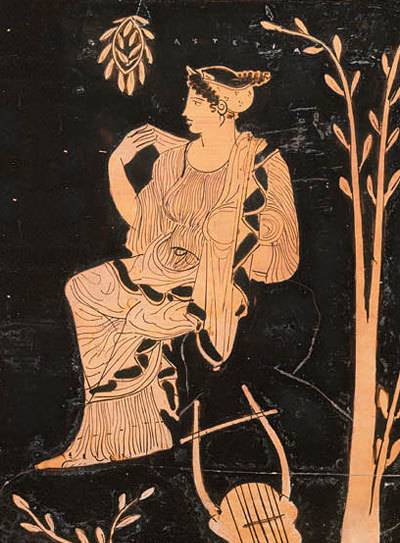
In Greek mythology, Asteria or Asterie (/əˈstɪəriə/ as-TEAR-ee-ə; Ancient Greek: Ἀστερία or Ἀστερίη, romanized: Astería, Asteríē, lit. 'of the stars, starry one') is a daughter of the Titans Coeus (Polus) and Phoebe and the sister of Leto. According to Hesiod, by the Titan Perses she had a single child, a daughter named Hecate, the goddess of witchcraft. Other authors made Asteria the mother of the fourth Heracles and Hecate by Zeus.
Asteria is notable for her pursuit by the amorous god Zeus, who desired her. In order to escape him and his advances, she transformed herself into a bird and then a wandering island. When her sister Leto, impregnated by Zeus, went into labour, Asteria was the only place on earth willing to receive her, defying Hera's orders that forbade Leto any shelter. After Apollo and Artemis were born on her, the island received the name of Delos, and Apollo fixed it in place, making it his sacred land.
The goddess's name "Asteria" (Ancient Greek Ἀστερία, translit. Astería) is derived from the Greek word ἀστήρ (astḗr) meaning "star". Ἀστήρ itself is inherited from the Proto-Indo-European root *h₂ster- ("star"), from *h₂eh₁s-, "to burn". Asteria's name shares an etymology with the names of Astraeus, Asteria's first cousin, and his daughter Astraea.
All surviving sources make Asteria the daughter of the original Titans Phoebe and Coeus, and the younger sister of Leto. Before Cronus was dethroned and cast down by his six children, Asteria married Perses, one of her first cousins, and gave birth to their only child, a daughter named Hecate. In one account attributed to Musaeus, Asteria is the mother of Hecate not by Perses but by Zeus. In this version Zeus kept Asteria as his paramour for some time before handing her over to Perses.
Asteria was an inhabitant of Olympus following the Titanomachy in which the Olympians prevailed over the Titans, and like her sister Leto before her she was beloved by Zeus. After Zeus had impregnated Leto, his attention was next captured by her sister Asteria. Asteria rejected the enamoured Zeus, but he pursued her nonetheless. In order to escape the amorous advances of the god, who in the form of an eagle chased her down, she transformed herself into a quail (Ancient Greek: ὄρτυξ, órtux) and flung herself into the Aegean Sea. It was there that Asteria metamorphosed into the island Asteria (the island which had fallen from heaven like a star), or the "quail island" Ortygia. The island was described in ancient sources as both floating or hidden under the sea. It was small and barren.
This then became identified with the island of Delos, which was the only place on earth to give refuge to the fugitive Leto when, pregnant with Zeus's children, she was pursued by vengeful Hera, the wife of Zeus. Hera had forbidden all places on earth to allow Leto to give birth on them, and sent Ares and Iris to enforce her command, but Delos defied Hera and invited Leto in. According to Hyginus, Leto was borne by the north wind Boreas at the command of Zeus to the floating island, at the time when Python was pursuing her, and there clinging to an olive, she gave birth to Apollo and Artemis. Delos was named so because after the birth of Apollo it became visible and apparent to the world, as before it was hidden beneath the waves, and fixed to the sea bed, so it was no longer floating. Cynthus and Cynthia, two common epithets for the twin gods in antiquity, were derived from Mt Cynthus, a mountain on the island.
Hera, despite being enraged that Asteria had defied her and allowed Leto to give birth to the products of Zeus' liaison, did no harm to Asteria, out of respect for her for not sleeping with Zeus when he chased her, and instead preferring the sea over him, thus not further defiling Hera's marriage. Asteria's power to withstand Hera's threats seems to stem from her parentage as the daughter of two Titans.
A different version was added by the fifth-century poet Nonnus who recounted that, after Asteria was pursued by Zeus but turned herself into a quail and leapt into the sea, Poseidon instead took up the chase. In the madness of his passion, he hunted the chaste goddess to and fro in the sea, riding restless before the changing wind and thus she transformed herself into the desert island of Delos with the help of her nephew Apollo who rooted her in the waves immovable. The narrative with Poseidon only appears in Nonnus's work, and was likely invented by him.
Hub AI
Asteria AI simulator
(@Asteria_simulator)
Asteria
In Greek mythology, Asteria or Asterie (/əˈstɪəriə/ as-TEAR-ee-ə; Ancient Greek: Ἀστερία or Ἀστερίη, romanized: Astería, Asteríē, lit. 'of the stars, starry one') is a daughter of the Titans Coeus (Polus) and Phoebe and the sister of Leto. According to Hesiod, by the Titan Perses she had a single child, a daughter named Hecate, the goddess of witchcraft. Other authors made Asteria the mother of the fourth Heracles and Hecate by Zeus.
Asteria is notable for her pursuit by the amorous god Zeus, who desired her. In order to escape him and his advances, she transformed herself into a bird and then a wandering island. When her sister Leto, impregnated by Zeus, went into labour, Asteria was the only place on earth willing to receive her, defying Hera's orders that forbade Leto any shelter. After Apollo and Artemis were born on her, the island received the name of Delos, and Apollo fixed it in place, making it his sacred land.
The goddess's name "Asteria" (Ancient Greek Ἀστερία, translit. Astería) is derived from the Greek word ἀστήρ (astḗr) meaning "star". Ἀστήρ itself is inherited from the Proto-Indo-European root *h₂ster- ("star"), from *h₂eh₁s-, "to burn". Asteria's name shares an etymology with the names of Astraeus, Asteria's first cousin, and his daughter Astraea.
All surviving sources make Asteria the daughter of the original Titans Phoebe and Coeus, and the younger sister of Leto. Before Cronus was dethroned and cast down by his six children, Asteria married Perses, one of her first cousins, and gave birth to their only child, a daughter named Hecate. In one account attributed to Musaeus, Asteria is the mother of Hecate not by Perses but by Zeus. In this version Zeus kept Asteria as his paramour for some time before handing her over to Perses.
Asteria was an inhabitant of Olympus following the Titanomachy in which the Olympians prevailed over the Titans, and like her sister Leto before her she was beloved by Zeus. After Zeus had impregnated Leto, his attention was next captured by her sister Asteria. Asteria rejected the enamoured Zeus, but he pursued her nonetheless. In order to escape the amorous advances of the god, who in the form of an eagle chased her down, she transformed herself into a quail (Ancient Greek: ὄρτυξ, órtux) and flung herself into the Aegean Sea. It was there that Asteria metamorphosed into the island Asteria (the island which had fallen from heaven like a star), or the "quail island" Ortygia. The island was described in ancient sources as both floating or hidden under the sea. It was small and barren.
This then became identified with the island of Delos, which was the only place on earth to give refuge to the fugitive Leto when, pregnant with Zeus's children, she was pursued by vengeful Hera, the wife of Zeus. Hera had forbidden all places on earth to allow Leto to give birth on them, and sent Ares and Iris to enforce her command, but Delos defied Hera and invited Leto in. According to Hyginus, Leto was borne by the north wind Boreas at the command of Zeus to the floating island, at the time when Python was pursuing her, and there clinging to an olive, she gave birth to Apollo and Artemis. Delos was named so because after the birth of Apollo it became visible and apparent to the world, as before it was hidden beneath the waves, and fixed to the sea bed, so it was no longer floating. Cynthus and Cynthia, two common epithets for the twin gods in antiquity, were derived from Mt Cynthus, a mountain on the island.
Hera, despite being enraged that Asteria had defied her and allowed Leto to give birth to the products of Zeus' liaison, did no harm to Asteria, out of respect for her for not sleeping with Zeus when he chased her, and instead preferring the sea over him, thus not further defiling Hera's marriage. Asteria's power to withstand Hera's threats seems to stem from her parentage as the daughter of two Titans.
A different version was added by the fifth-century poet Nonnus who recounted that, after Asteria was pursued by Zeus but turned herself into a quail and leapt into the sea, Poseidon instead took up the chase. In the madness of his passion, he hunted the chaste goddess to and fro in the sea, riding restless before the changing wind and thus she transformed herself into the desert island of Delos with the help of her nephew Apollo who rooted her in the waves immovable. The narrative with Poseidon only appears in Nonnus's work, and was likely invented by him.
Recent media